


It began in the dead of night, in the kind of quiet corner of the English countryside that rarely makes headlines. In the early hours of September 27, near the perimeter of RAF Fairford in Gloucestershire, British police arrested five men. The base itself was dark, massive, and largely hidden behind security fences—but it was far from dormant. RAF Fairford is not just another Royal Air Force station; it is a key European hub for United States heavy bombers, a place where American strategic power lands, refuels, and launches missions. For years, it has quietly supported some of the most sensitive operations in the U.S. military’s global arsenal. So when police moved in on that autumn morning, it was not a minor incident. It was the beginning of a counterterrorism investigation that would eventually lead to formal charges under the United Kingdom’s National Security Act, raising serious questions about espionage, sabotage, and the growing threat to American military installations abroad. The men arrested were young, in their twenties, and had been found outside one of the most important air bases in Europe. But who they were, what they intended, and who might have sent them remained shrouded in the secrecy that always accompanies such investigations. Now, months later, the first legal answers have arrived: two of those men are facing charges, and British prosecutors say the case involves a foreign intelligence service.
On Tuesday, the Crown Prosecution Service announced that Mohmed Abdulkarim, 24, of London, had been charged with assisting a foreign intelligence service, while Nouman Essghir, 24, was charged with entering a prohibited place for a purpose prejudicial to the United Kingdom. The charges are significant, not only because of their severity but because of what they imply about the incident at RAF Fairford. Under the U.K.’s National Security Act, which was updated in recent years to address modern espionage and state threats, the phrase “assisting a foreign intelligence service” points directly to the involvement of another state. British counterterrorism police have reportedly told Reuters that the country Abdulkarim is believed to have been assisting is Iran. That detail, while not yet proven in court, adds an alarming layer to an already serious case. The second charge, “entering a prohibited place for a purpose prejudicial to the United Kingdom,” is a classic espionage-era offense, echoing an older legal language that speaks to the government’s need to protect its most sensitive sites. Together, the charges paint a picture of a coordinated effort to gain access to or information about a base that serves as a launchpad for American military power in the region. For the public, it was a stark reminder that the fight against terrorism and hostile state activity is no longer happening only in distant conflict zones. It is happening on the fringes of sleepy English villages, outside the gates of bases that have played a central role in modern warfare.
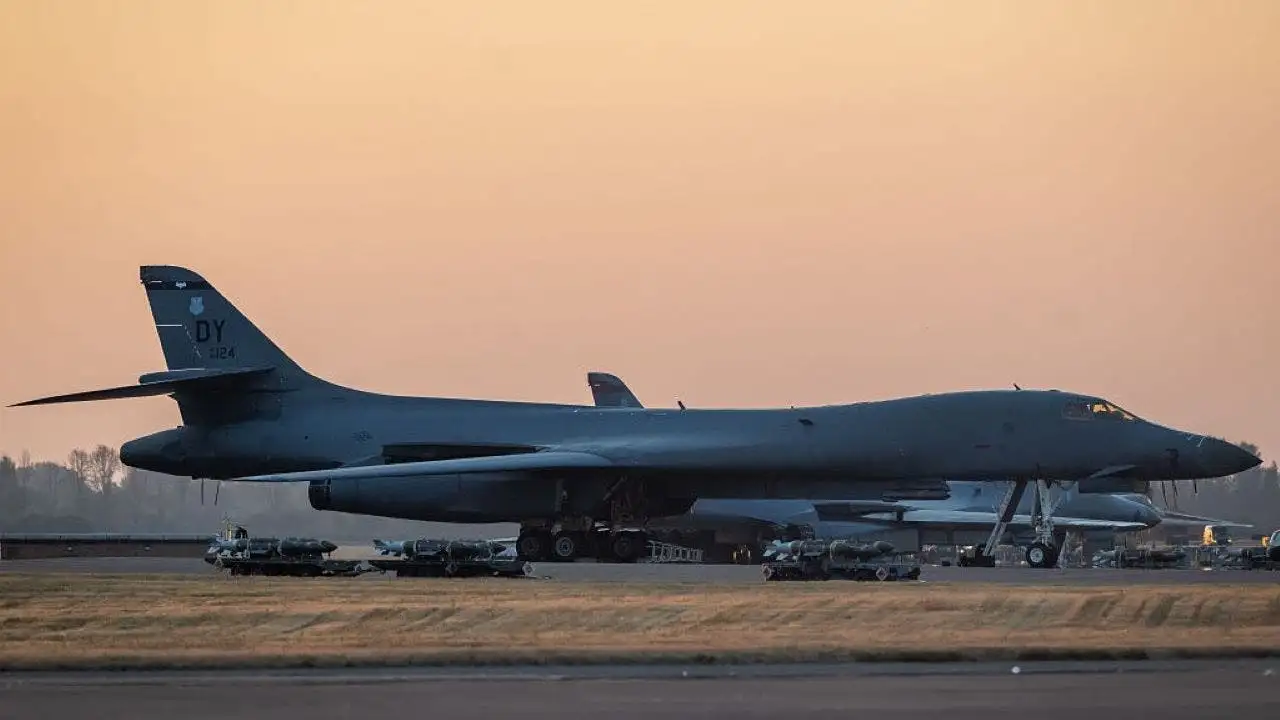
The incident at RAF Fairford did not occur in a vacuum. In the weeks and months leading up to the arrests, the base had been active with U.S. Air Force operations. American B-1 bomber aircraft had been using RAF Fairford as part of a deployment that included missions against Iran. The presence of these heavy bombers was itself a signal of American resolve, a visible reminder of the military reach that allows the United States to project power across Europe, the Middle East, and beyond. But after the arrests, something unusual happened. According to previous Fox News reporting, about a dozen B-1 bombers were later withdrawn from RAF Fairford and returned to their home stations in the United States, reportedly on security grounds. That decision was a telling one. Military planners do not lightly move strategic bombers away from an operating location; doing so disrupts operations, costs time and money, and sends a message to both allies and adversaries. The withdrawal suggested that the threat was taken with the utmost seriousness—that the safety and security of the aircraft and their crews could no longer be guaranteed under the existing conditions at the base. It also raised questions about how vulnerable other installations might be. If a determined group of individuals could approach a base like RAF Fairford, what might they have been planning? Were they simply gathering intelligence, or were they preparing something far more destructive? The fact that the aircraft were moved “on security grounds” indicated that the threat was not considered theoretical. The episode was a stark reminder that even the most powerful military equipment must be protected from threats that do not always appear on radar.
For experts, the foiled plot at the bomber base sent a broader signal about the changing nature of threats to U.S. military installations around the world. For decades, the primary concern at bases like RAF Fairford was the possibility of an overseas attack, a missile strike, or a conventional assault by an enemy force. But the incident outside the perimeter fence highlighted a different, more insidious danger: the threat posed by individuals operating inside allied countries, potentially guided or funded by foreign intelligence services. The fact that the alleged connection was to Iran is particularly significant, given the history between Iran and the United States and the ongoing tensions that have played out across the Middle East in recent years. A base like RAF Fairford is a high-value target, not only because of the aircraft stationed there, but because of the symbolic weight it carries. An attack on such a base, even a successful act of surveillance, would be a major propaganda victory for any adversary. More importantly, gaining intelligence about the movement of heavy bombers could allow an enemy to predict or counter American military operations. The investigation into the five men arrested outside the base is therefore not just about what they did or planned to do at that moment; it is about the broader threat to the network of bases that enables the United States to project power across the globe. Analysts have long warned that the United States’ reliance on forward operating bases creates vulnerabilities that cannot be addressed by fences and security cameras alone. Human intelligence, infiltration, and the use of sympathizers or operatives in foreign countries are all tools that hostile states can use to target these installations from within.
The legal proceedings now underway are being handled with the seriousness that such a case demands. Frank Ferguson, the chief crown prosecutor for the CPS Special Crime and Counter Terrorism Division, said the decision to prosecute the two men followed a “complex” counterterrorism investigation. “We will continue to work closely with our partners as this complex investigation continues,” Ferguson added. His words reflect the reality that the arrest and charges are only the beginning of a long process. Both men were expected to appear Tuesday at Westminster Magistrates’ Court in London, the court that typically handles the early stages of the most serious national security cases. The proceedings were expected to be closed to much of the public, given the sensitive nature of the allegations. But the Crown Prosecution Service took care to emphasize a fundamental legal principle: the charges are not proof of guilt. Both defendants are entitled to a fair trial, and under British law they are presumed innocent until proven otherwise. This is a critical point, especially in a case that involves such serious allegations and so much public attention. The men are young, and the stakes could not be higher. One charge, assisting a foreign intelligence service, could carry severe penalties, while the other, entering a prohibited place for a purpose prejudicial to the United Kingdom, is a direct attack on the security of the state. The prosecutorial process will have to establish not only what happened on that September night, but what the men intended, what they knew, and who, if anyone, sent them to RAF Fairford. In doing so, the court will have to navigate a complex landscape of classified information, national security concerns, and the rights of the defendants—always a delicate balance in cases that touch on intelligence and military affairs.
The story of the RAF Fairford arrests is ultimately about more than two men and a night in September. It is about the shadowy space between war and peace, where hostile states and non-state actors work quietly to undermine the military forces that protect democratic nations. It is about the enduring importance of physical security, even in an age of drones and cyberattacks. A bomber base is a fortress in many ways, but it is also a place with a perimeter, and that perimeter can be approached on foot in the dark. The fact that five men were able to reach that perimeter and raise enough concern to trigger an immediate police response is itself a reminder that vigilance can never lapse. The withdrawal of the B-1 bombers from RAF Fairford is a sign that the threat was taken seriously, but it also carries a cost: every day those bombers are not in Europe is a day that American military planners have lost a convenient staging point for operations in the region. The investigation is ongoing, and questions remain unanswered. What were the men planning? Were they acting alone, or were they part of a larger network? Did they obtain any information before they were arrested? And what does this case say about the security of other bases in the United Kingdom and across Europe? For the people of Gloucestershire, the incident was a jarring reminder that the quiet airfield in their midst serves a much larger purpose. For the broader public, it was a glimpse into a hidden world of espionage and counterterrorism, where everyday scenes can become the backdrop for extraordinary events. As the two men face justice in the months ahead, the case will likely continue to unfold, revealing more about a plot that, for a brief moment, brought the realities of global conflict to the edge of an English field. Ultimately, the message is simple but urgent: in a world of shifting threats, the defenses of democracy must always evolve—and the price of security is constant attention.