



Brazil’s Election Shock Sends Ibovespa Crashing and Stablecoin Trading to Record Highs
Markets Reel as Lula Completes Historic Comeback
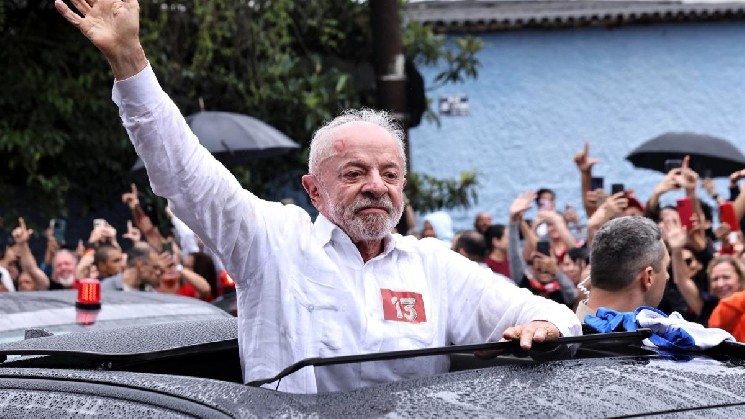
Brazilian financial markets were thrown into turmoil this week after Luiz Inácio Lula da Silva narrowly defeated incumbent Jair Bolsonaro in a fiercely contested presidential runoff, triggering a violent repricing of domestic assets and an extraordinary surge in cryptocurrency trading. The leftist leader’s return to the presidency, sealed by one of the tightest margins in the nation’s electoral history, has upended the assumptions that investors had been quietly banking on for months. The benchmark Ibovespa stock index plunged in its steepest decline since the early chaos of the Covid-19 pandemic, the Brazilian real suffered its worst single-day collapse against the dollar since the currency crises of the late 1990s, and corporate treasurers across the country scrambled into dollar-pegged digital assets with a sense of urgency rarely seen in Latin America’s largest economy.
The market reaction was immediate and unforgiving. After three weeks of cautious optimism following Bolsonaro’s unexpectedly strong first-round showing, traders had increasingly priced in a scenario in which the incumbent would retain the presidency, preserving the free-market economic agenda that had earned him the quiet endorsement of the financial community. Lula’s victory shattered that bet in a matter of hours. Institutional investors who had repositioned their portfolios in anticipation of fiscal continuity were forced to confront an entirely different reality, one in which the founder of the Workers’ Party would once again occupy the Planalto Palace, this time with a deeply polarized electorate and a legislative landscape that promises to complicate even the most routine matters of governance. For many, the immediate response was not measured analysis but raw self-preservation.
Fiscal Uncertainty Deepens as Congress Turns Hostile
At the core of the selloff lies a sobering political reality: Lula will assume office facing a Congress in which strengthened opposition ranks could severely complicate efforts to address Brazil’s persistent fiscal problems. Analysts note that the incoming administration will struggle to forge the broad coalitions needed to advance structural reforms, rein in public spending, and stabilize a national debt that has grown steadily heavier over years of economic stagnation and pandemic-related emergency outlays. The specter of legislative paralysis has unnerved investors, who remember all too well how past episodes of political gridlock in Brasília translated into currency volatility, capital flight, and downgraded sovereign credit ratings.
This standoff has powerfully reinforced the appeal of assets whose prices are set in global markets rather than in the corridors of Brazil’s Congress. Dollar-denominated instruments, international equities, and — increasingly — stablecoins have emerged as the instruments of choice for corporate treasurers determined to insulate their balance sheets from domestic political risk. The pattern is hardly surprising. When a nation’s fiscal trajectory becomes murky and its political institutions appear incapable of delivering credible policy responses, prudent financial managers naturally gravitate toward assets that exist beyond the reach of any single government’s discretion. “The uncertainty is not about who won the election,” observed a São Paulo-based fund manager who requested anonymity. “It’s about whether anyone can govern effectively enough to put the fiscal house back in order. And right now, the signals are deeply worrying.” That sentiment was echoed across trading desks from Rio de Janeiro to New York, where Brazil-focused hedge funds moved swiftly to reduce exposure and raise cash positions.
Ibovespa Slumps 14% as Dollar Surges Against the Real
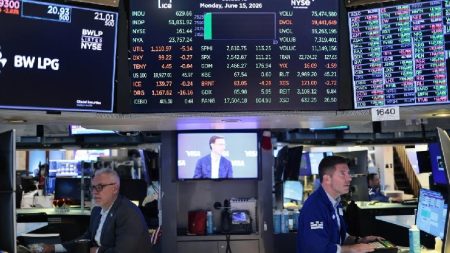
The corporate concerns materialized the very next day, with devastating clarity. The Ibovespa crashed by 14 percent in its worst daily performance since March 2020, the harrowing onset of the global pandemic when markets worldwide froze in terror over an unknown virus and the economic shutdowns that accompanied it. More than a few veteran traders drew direct comparisons between those dark days and the scene that unfolded on the São Paulo stock exchange, where sellers overwhelmed buyers in a cascade of panic that vaporized months of accumulated gains in a single session. Simultaneously, the U.S. dollar surged more than 8 percent against the Brazilian real, marking the currency’s largest single-day advance since 1999 — a year still seared into the collective memory of Brazilian finance as a period of profound monetary dislocation, when the real was forced into a chaotic float after the government spent billions defending an unsustainable peg.
The dual shock was a stark reminder that Brazil’s financial markets remain exquisitely sensitive to political transitions, even those that were long anticipated. Opinion polls had consistently shown Lula leading throughout the campaign, yet markets appeared to have convinced themselves that the polls were wrong, that the silent majority would deliver Bolsonaro a second term. When the final votes were counted, the gap was a mere 1.8 percentage points — a razor-thin margin that nonetheless carried enormous consequences. Trading floors that had been cautiously optimistic in early October were transformed into scenes of frantic repositioning, with equity desks shedding Brazilian exposure and currency traders scrambling to hedge against further depreciation of the real. Analysts were quick to frame the selloff not as a wholesale rejection of Lula’s progressive agenda, but rather as a repricing of risk in light of fiscal ambiguity. “Markets don’t hate any specific ideology,” argued a senior strategist at a global investment bank in London. “They hate uncertainty. And right now, Brazil has uncertainty in abundance.”
Three Weeks That Changed Everything
The response, however, could not stand in sharper contrast to the mood that prevailed just three weeks earlier, when Bolsonaro finished ahead of Lula in the first round of voting. That outcome had prompted an explosion of relief across financial markets, with the Ibovespa jumping 7.7 percent and the dollar weakening by more than 4 percent against the real in a single day, as investors interpreted the result as a decisive signal that the incumbent — and his market-friendly economic team — would likely retain the presidency and continue pursuing a path of fiscal discipline and structural liberalization. Economist Paulo Guedes, Bolsonaro’s finance minister, had become something of a lodestar for investors, and his stewardship of the economy had earned grudging respect even from those who recoiled at the president’s abrasive style and authoritarian tendencies. The prospect of four more years under that economic framework had been enough to spark a wave of optimism that lifted Brazilian assets across the board.
Lula’s victory upended that narrative completely and, in the process, secured him a singular place in Brazilian political history. He became the first presidential candidate in the country’s modern democratic era to win the presidency after finishing second in the first round — a testament to the raw political resilience of a figure who has dominated Brazilian public life for decades. Yet the historic nature of the achievement did little to steady already frayed nerves in the corporate sector. Brazil’s companies, which had spent years navigating the turbulence of an impeachment, a devastating recession, a global pandemic, and the irregular governance impulses of the Bolsonaro era, adopted a conspicuously cautious stance. Neither celebrating nor despairing, they quietly set about the business of protecting their balance sheets. Capital expenditure plans were deferred, exposure to domestic debt was reviewed, and cash reserves were increasingly diversified into assets beyond the reach of domestic political interference.
Corporations Move to Protect Balance Sheets as Retail Traders Step Back
Nowhere was this caution more vividly demonstrated than in the cryptocurrency markets, which have come to serve as a barometer of institutional anxiety in emerging economies. Data from Mercado Bitcoin, one of Latin America’s largest and most influential digital asset exchanges, reveals a striking asymmetry in trading behavior during the election weekend. “The main driver of volume was companies seeking to protect their treasuries,” the exchange said in a detailed statement, noting that retail customers accounted for just 22 percent of trading volume, while corporate clients generated a dominant 78 percent of all transactions processed on Sunday, the day the election result was confirmed. This inversion of the usual retail-dominated trading patterns speaks volumes about the mood within Brazil’s boardrooms. Ordinary investors, many of them digital natives who had piled into crypto during the pandemic-era bull market, largely held their positions or waited for clarity. It was the corporate treasurers — the professionals responsible for safeguarding millions of reais in working capital — who moved with speed and determination.
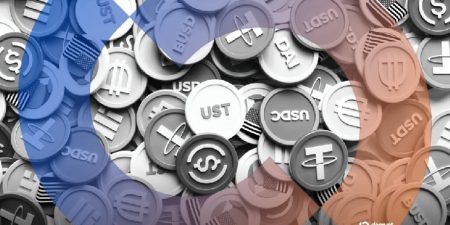
According to the exchange, corporate clients routinely hold up to 15 percent of their assets on the platform, a level of institutional crypto adoption that would have been unthinkable just a few years ago, when digital currencies were dismissed as a speculative sideshow by mainstream financial managers. That figure now underscores the extent to which corporate Brazil has embraced digital assets as a strategic tool for balance-sheet protection rather than as a gamble on price appreciation. The pattern is consistent across the industry. When political risk spiked, companies did not wait for clarity from Brasília; they moved with the speed of institutions that had learned, through years of boom-and-bust cycles, that prudent treasury management demands hedges against sovereign risk. Stablecoins — cryptocurrencies pegged to the U.S. dollar — have become the instrument of choice for such hedging, offering the liquidity of digital assets with the stability of the world’s reserve currency.
Stablecoin Volumes Surge Across Major Crypto Platforms
The burst of real-denominated trading extended far beyond any single platform, spreading across the entire Brazilian digital asset ecosystem. Data from Biscoint, a prominent cryptocurrency data aggregator that monitors prices and trading activity across ten major venues — including global exchange giant Binance and local heavyweights like Mercado Bitcoin — shows turnover in Tether (USDT), the world’s largest stablecoin by market capitalization, against the Brazilian real rose by a striking 150 percent compared with the previous Sunday. Volume in USD Coin (USDC), the second-largest stablecoin, surged an extraordinary 318 percent over the same period. These are not incremental movements; they are textbook manifestations of a flight to safety, executed at digital speed.
The implications extend well beyond the immediate crisis. In a country where the domestic currency has historically been vulnerable to political shocks, the ability to convert reais into dollar-pegged digital assets in a matter of seconds has fundamentally transformed crisis management for corporate treasurers. The infrastructure of modern crypto markets — increasingly efficient, deeply liquid, and operational around the clock — has provided Brazilian companies with a frictionless escape valve that simply did not exist during previous crises. In 1999, when the real collapsed, a corporate treasurer had limited options: buy dollars in the spot market, open offshore accounts, or hope for the best. Today, those same treasurers can move hundreds of millions of reais into stablecoin positions before the markets in São Paulo have even opened for trading. The democratization of digital finance has handed them tools that were once the exclusive preserve of global banks and sovereign wealth funds.
As the Lula administration prepares to take office, it will do so in a financial landscape that has been fundamentally reshaped by this quiet revolution. Capital controls and currency intervention — the traditional instruments of crisis management in Brazil and across Latin America — are far less effective in an era when companies can shift massive sums into dollar-pegged digital assets with a few keystrokes. The immediate focus, of course, remains on the political and fiscal road ahead. Lula’s ability to navigate a hostile Congress, define a credible budget strategy, and reassure both domestic and international investors will determine whether Brazil’s markets can stabilize in the weeks ahead. But one thing is already clear: the 2022 election has permanently accelerated the integration of cryptocurrency into Brazil’s financial mainstream, transforming digital assets from a speculative curiosity into a cornerstone of corporate risk management. The convergence of politics, fiscal policy, and digital finance has rarely been so visible — or so consequential. As Brazil’s new political chapter unfolds, the world will be watching not only the halls of power in Brasília, but the trading screens of São Paulo and the immutable blockchain ledgers that have become the new frontline of financial defense.