


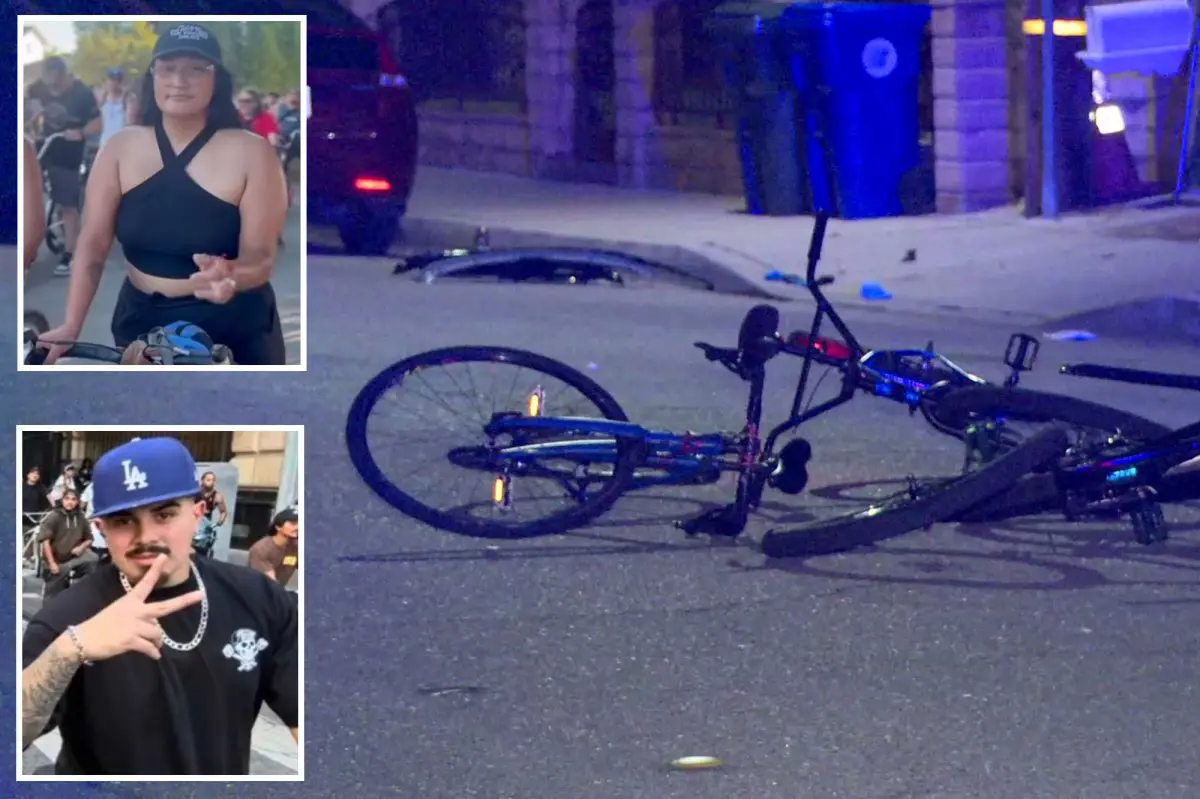
On a Halloween night that should have been filled with costumes, laughter, and the simple joy of being outside together, a group of about 30 cyclists set out on a ride through the streets of Montclair. It was the kind of communal activity that brings people together—friends, neighbors, and strangers united by a love for biking and the easy camaraderie of the open road. But the evening took a devastating turn when, according to authorities, a suspected drunk driver slammed into the group on Kingsley Street near Tudor Avenue. By the time the chaos subsided, two people were dead, dozens were traumatized, and a community was left reeling from a loss that seemed both sudden and senseless. The victims were identified as 25-year-old Robert Garcia Umanzor and 30-year-old Rumor Ortiz, a young single mother. Emergency crews arrived at the scene around 10:39 p.m., but there was nothing they could do to save the two riders. What made the tragedy even more horrific was the report that the driver allegedly dragged one victim for more than a mile before coming to a stop. In the blink of an eye, a night of simple recreation had become a nightmare, leaving families shattered and a city searching for answers.
The details of the crash paint a picture of terrifying suddenness. The cyclists were riding east on Kingsley Street, likely in a group formation that should have been visible to any attentive driver. Yet at some point, a vehicle plowed directly into the pack, sending bodies and bikes sprawling across the road. The force of the impact was so severe that one victim was dragged under or alongside the vehicle for more than a mile, a detail that prosecutors would later describe as especially chilling. The driver did not stop to help. Instead, according to police, he continued to his nearby home in Montclair, where he was arrested in the early hours of Sunday morning. That lack of immediate accountability transformed an already tragic accident into something even more agonizing for the families left behind. In the hours after the crash, news spread quickly through the cycling community and beyond. Friends began posting messages of shock and grief, while strangers expressed their sorrow and anger. The riders who survived the crash were left not only with physical injuries but with the haunting memory of watching fellow cyclists struck down without warning. And for the families of Umanzor and Ortiz, the pain of losing a loved one in such a violent and preventable way was only beginning.
Rumor Ortiz’s death hit her family especially hard. As a 30-year-old single mother, she had a full life ahead of her, and her loved ones remembered her as someone who lit up every room she entered. Her brother took to Instagram to share an emotional tribute that captured the depth of his loss. “I honestly thought I would be the first of my siblings to make [it] to heaven. Rumor, I wish [I] had more time with you, sister, but God’s timing,” he wrote. He went on to say, “I was truly blessed to have a sister like you. Watch over me from heaven time to time…let me know you loved me; meet you in the next life.” The raw honesty of those words resonated with everyone who read them, a reminder that behind every headline is a real person with family members who will never be the same. A close friend, Ani Fine, also spoke publicly about Ortiz, describing her as “kindhearted” and “happy all the time.” She said Ortiz brought “extreme joy to the group,” and that her presence would be deeply missed. Those who knew her described a woman who laughed easily, loved deeply, and devoted herself to those she cared about. The thought that she had been torn away from her child, from her siblings, and from her community by one reckless decision made the tragedy feel even more bitter.
Robert Garcia Umanzor was equally beloved, a young man whose warmth and sociability left a lasting impression on everyone he encountered. His aunt, Yoly Shively, spoke at a vigil and remembered her nephew as fun-loving and outgoing, someone who cherished his family and friends above all else. “He just loved being around people. I know that, and he just loved our family. He was so sociable, I know, with all his friends,” she said. For Shively, the way her nephew died was not just a personal loss but a public warning. “Just the way it happened is a tragedy and a message to just be careful, for sure, driving,” she added. Her words were simple, but they carried the weight of a family trying to make sense of something senseless. Umanzor’s family also launched a GoFundMe page to help cover the costs of his funeral. In a statement, they explained that they were “grieving and also dealing with family hardship at the same time.” They asked for support to “help ease some of the immediate financial burden during an incredibly painful time.” The fundraiser became another testament to the reality that grief does not pause practical concerns. Even as they mourned their beloved Robert, they had to find a way to pay for his final farewell. It is a stark and uncomfortable truth that many families face after sudden tragedy, made even more difficult when the cause of death was entirely avoidable.
The community responded the way communities often do in the wake of such heartbreak: by coming together. About 100 people gathered at the crash scene on Monday night, standing on the very stretch of road where Umanzor and Ortiz had lost their lives. They brought candles, flowers, photos, and tears. They hugged one another, shared stories, and tried to find some measure of comfort in collective grief. Friends and family spoke through their pain, describing the victims as beloved members of the community who would not be forgotten. The vigil was also an opportunity for people to express their anger and demand action. Shively’s plea—“Let’s get these drinkers off the road”—was met with nods and murmurs of agreement. It was a simple message, but it reflected a growing frustration among ordinary people who feel unsafe on streets that should belong to everyone. The gathering was not just about mourning two lives lost too soon; it was also about demanding that something change before another family has to experience the same unbearable loss. In the flickering candlelight, the faces of the victims seemed to remind everyone present that these deaths were not statistics. They were a son, a brother, a mother, a friend. And they were gone because of a choice that someone else made.
Now, the legal system will have to determine accountability. Valentin Alberto Rodriguez, 38, was arrested at his nearby Montclair home early Sunday morning and booked on suspicion of driving under the influence, felony hit-and-run, and gross vehicular manslaughter. He now faces charges of driving under the influence causing injury or death, driving with a blood alcohol level of 0.08% or higher causing injury or death, felony hit-and-run involving death or serious injury, and gross vehicular manslaughter while intoxicated. These charges reflect the severity of the alleged crimes, but for the families of Robert Garcia Umanzor and Rumor Ortiz, no verdict will bring their loved ones back. The tragedy has sparked conversations about road safety, the dangers of impaired driving, and the need for stronger enforcement of laws designed to protect cyclists. It has also served as a painful reminder that the consequences of drinking and driving extend far beyond the driver. Every person who chooses to get behind the wheel after drinking is gambling with the lives of everyone else on the road. On that Halloween night, a group of cyclists rode out in good faith, expecting to return home safely. They did not. And while the legal proceedings will unfold in the months ahead, the real work of healing will happen quietly, in the homes and hearts of those who loved them. Perhaps the most fitting tribute to Umanzor and Ortiz would be a world in which no family has to suffer this kind of loss again—a world where a night bike ride is simply what it should be: fun, free, and safe. Until then, their memory will live on in the stories told by friends, the tears shed at vigils, and the quiet determination of a community that refuses to let their deaths be in vain.