



Paragraph One: The Climb That Stopped the City
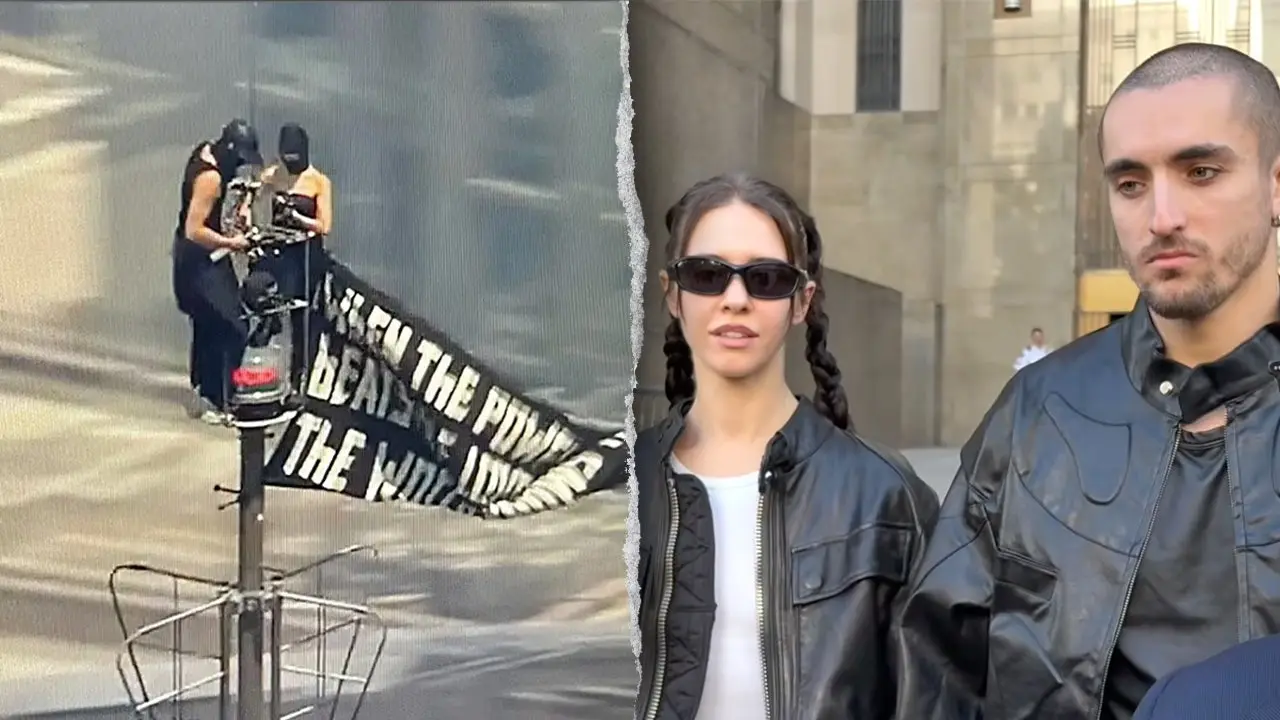
There are love stories told in candlelight, in letters, in quiet promises. And then there is the love story told by Angelina Nikolau, 33, and Ivan Kuznetsov, 32, whose romance unfolded against the skyline of New York City in the most extraordinary and reckless way imaginable. Back in July, the world watched on social media, with a mixture of disbelief and awe, as two small figures inched their way up the gleaming face of the Empire State Building. They weren’t rescue workers, they weren’t maintenance crews, and they weren’t thrill-seekers running from the law. They were a couple in love, and the. This was no simple tourist visit to an observation deck. The pair did not use the elevators, the stairs, or any officially sanctioned path. Instead, they climbed the outer structure of the legendary skyscraper, carrying a massive banner with them, all the way to the top. In that moment, high above Manhattan, Kuznetsov apparently proposed to Nikolau, creating a viral spectacle that captured hearts and headlines around the globe. It should have been a perfect fairy tale: the proposal, the glittering city, the courage of a partner willing to climb to the top of the world to ask that one life-changing question. But the landing was far from soft. When they reached the ground, their celebration was cut short by the arrival of law enforcement. The climb that had made them international celebrities also made them defendants. They were taken into custody, and the fairy tale suddenly became a legal nightmare. In the weeks that followed, what had begun as a romantic gesture would become a lesson in the limits of public spectacle, the rigidity of the law, and the emotional toll that every action carries. For the couple, the city that had watched their proposal would now watch their prosecution.
Paragraph Two: The Heavy Weight of the Law
After their arrest, the reality of what had happened began to sink in. The couple was initially charged with a slew of offenses that made their situation frighteningly serious: reckless endangerment, criminal mischief, burglary, and misdemeanor climbing of a structure. Those are not the kinds of charges one easily shrugs off. Reckless endangerment carries the weight of community concern, the idea that their actions could have endangered others, themselves, and first responders. Criminal mischief suggests property damage, perhaps to the building itself or its infrastructure. And burglary, in the context of climbing a structural landmark, feels alarmingly severe, even though this was no shadowy break-in but rather a very public and impossible-to-miss act. For most people, a criminal record is a lifelong scar, one that affects employment, housing, travel, and relationships. For Nikolau and Kuznetsov, those potential consequences were now hanging over them, clouding what had initially felt like a triumphant personal achievement. They were released, but not free in the way they had been before. The court placed them under supervision, essentially keeping them on a short leash. For months, they had to check in with an officer every thirty days, a quiet and humbling ritual that served as a constant reminder that their fate was no longer entirely in their own hands. Every knock on a door, every ring of a phone, every ounce of mail could have carried bad news. It is difficult to imagine the emotional strain of that period. You have just done something that took incredible physical fitness, mental focus, and romantic devotion, and the world has responded with handcuffs, a docket number, and a probation officer. However, on Tuesday, during their latest appearance in a Manhattan courtroom, there was a small but meaningful reprieve. A judge ruled that they no longer had to participate in those monthly check-ins. In the legal system, such a decision often signals that a case is moving toward its conclusion, and that the court feels comfortable loosening its grip. Yet the underlying charges remain, and the couple knows that the shadow of this case has not completely lifted.
Paragraph Three: A Plea Deal on the Horizon
The courtroom itself is a strange stage for these two individuals. They are used to performing in the open air, with the sky as their backdrop, not in the hushed, fluorescent corridors of Manhattan’s courthouses. On Tuesday, they appeared before a judge for a status conference, a routine but nerve-wracking step in any criminal matter. Their attorney, Noam Biale, stood beside them, acting as their spokesperson and shield against a legal system that can feel baffling even to the most sophisticated defendants. In legal matters, the distinction between a trial and a negotiated resolution can be the difference between years of litigation and a quiet end to the matter. For Biale, the path forward appeared to be becoming clearer. He told reporters outside the courtroom that they were “getting close” to a “resolution” with the district attorney’s office. Those words, while cautious, carry enormous weight for the couple. They mean that behind closed doors, conversations are happening, compromises are being considered, and the district attorney is willing to listen rather than push for the maximum possible punishment. It is likely that the talks involve a plea deal, an arrangement under which the couple may admit to certain charges in exchange for a reduced sentence, community service, or some other form of accountability. For anyone, accepting a plea deal is a vulnerable act. It requires admitting wrongdoing, even if you do not feel like you are a criminal. And for Nikolau and Kuznetsov, two artists who see their work as a gift rather than an offense, that admission may be difficult. After the hearing, Biale spoke with an air of cautious optimism. He addressed reporters, stressing both the humanity and the artistry of his clients. The couple’s next court appearance is set for November 12, which means the coming weeks will be filled with more waiting, more legal meetings, and more quiet anxiety. Biale said he is confident and “hopeful” for a resolution before the end of the year. New Year’s Eve, normally a time for celebration, could come with a final verdict on their future. A resolution by then would mean they could begin their married life together with at least some closure to this chapter.
Paragraph Four: The Artists versus the Law
The role of artistic intention in criminal cases is always a delicate and complicated issue. What is beautiful to one person can be seen as dangerous or destructive to another. In the case of Nikolau and Kuznetsov, their climb was not just a random act of reckless behavior; it was, according to their lawyer, a carefully planned performance. Biale described them as “daring and pathbreaking artists whose performances have captivated people all over the world.” There is, of course, a long tradition of performance art that pushes against social norms, that uses public space in ways that shock, delight, and provoke. Street artists, tightrope walkers, and urban explorers have all, at times, been condemned as criminals even while their work is celebrated by enthusiasts. The Empire State Building climb fits neatly into this category, though it occupies a particularly uncomfortable space between inspiration and terror. When you watch the video of their ascent, your heart beats fast. Your chest tightens. The sheer vertical drop, the wind, the seeming impossible lack of safety equipment—it is both exhilarating and horrifying. To the couple, the risk may have been a necessary part of the message. Their relationship, after all, was never going to be ordinary. A marriage proposal on the ground floor might not have served the story they wanted to tell. They wanted a moment that was as monumental as their love. They wanted to look down at the city and say: we did the impossible together. But the legal system does not always care about symbolism. It cares about facts. It cares about risks. It cares about what could have happened, not only what did happen. Police and prosecutors were left to consider the potential for tragedy. If one of them had slipped, if the banner had fallen, if a gust of wind had turned the carom into catastrophe, the story would have been entirely different. It is impossible to know what the final deal will look like, but it is clear that the district attorney’s office is taking the matter seriously. Their goal is likely to prevent future copycat stunts, to signal to others that such climbs cannot be treated as harmless fun. For Nikolau and Kuznetsov, the irony is clear: the very thing that made them famous is the thing that may stay with them on their record for years. Yet, if the resolution is fair, it will allow them to re-enter the world as artists, chastened but not broken.
Paragraph Five: Beloved by New Yorkers?
In the wake of their arrest, public opinion has been remarkably mixed. New York is a city that has seen everything, and it is not easily impressed. But it is also a city that values grit, courage, and a little bit of reckless romance. After their first court appearance, the couple appeared together, holding hands, showing affection, and for many, that human moment was more compelling than the legal drama itself. At their first hearing, they packed on PDA, kissed, and presented a united front, not as hardened criminals, but as a couple in love. That image stuck. It is hard to hate people who are, at their core, just trying to prove how much they mean to one another. Biale, speaking to reporters, made a striking claim: “They are beloved by New Yorkers, and no one wants to see any harm come to them.” He was not simply playing to the media; there may be truth to his words. In an interview, his demeanor suggested warmth and respect, and he clearly believes that his clients have something valuable to offer the world. He is asking the court to see them not as lawbreakers, but as public artists whose canvas happened to be one of the most famous buildings on the planet. The idea of being “beloved by New Yorkers” is not trivial. In a city of more than eight million people, it is difficult to earn affection, especially when you are an outsider. And yet, the viral response to the proposal seemed to cut across generational and cultural lines. People clapped, commented, reshared, and sent congratulatory messages. Even as the legal system began to process the case, ordinary people were mostly wondering why the city was bothering to punish such a stunning romantic act. Some, of course, argued that the couple needed to face consequences, that stunts like this set a dangerous precedent, and that if everyone decided to scale landmarks, there would be chaos. But even those critics often admitted that the proposal itself was breathtaking. In the public imagination, the couple belongs in the same category as high-wire walkers and cinematic stunt performers—people who risk their lives to create moments of inexplicable beauty. The fact that they also managed to make it a story about love made their narrative almost irresistible.
Paragraph Six: What the Future Holds
The days between now and November 12 will be filled with anticipation. The couple will no doubt continue their lives as quietly as they can, but the legal process is a demanding companion. Every meeting with their lawyer could produce a new offer, a new counteroffer, or a new complication. Biale has described himself as hopeful, a carefully chosen word. It indicates that the final answer is not yet fully written. The Manhattan District Attorney’s Office has not responded to requests for comment, which is typical for an ongoing case. But the silence from the prosecution should not be mistaken for inactivity. Behind the scenes, there are likely discussions about what a just and proportionate resolution would look like. A plea deal could involve some form of community service, perhaps working with outdoor recreation programs to teach young people about safety and respect for private property. It could involve restitution, if any damages were found. It could involve the simple acceptance of a formal guilty plea to a minor offense, with the more serious charges dismissed. Whatever the final outcome, it will be more than a legal arrangement; it will be the end of a long and exhausting chapter for two people who just wanted to say, “I love you” in the most spectacular way they could imagine. There is something deeply human about wanting to be remembered, wanting to create a moment that no one else has ever dared to create. Nikolau and Kuznetsov succeeded in that goal. The world will not forget their climb. But the world will also not forget that actions have consequences, and even the most beautiful gestures must be measured against the safety of others. As they await their next hearing, they can take comfort in the fact that, at least for now, they are together, they are free, and they have a lawyer who believes in them. Hopefully, by the time the year turns, they will have a resolution that allows them to move forward. They might never climb the Empire State Building again, but they will always have the memory of that moment, when the city glittered beneath them, and the future stretched out like a promise. The rest of us can only hope that their love story, having weathered this storm, will be all the stronger for it.