


October 7 and the Ballot Box: The Accountability Question That Refuses to Fade
A National Wound That Won’t Heal
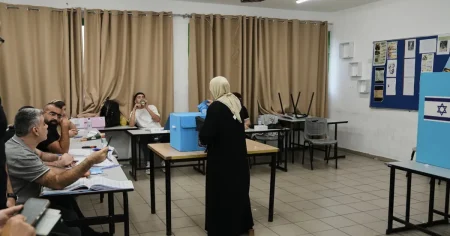
JERUSALEM — The banners are blue and white, the speeches are polished, and the polling stations are ready. But anyone walking through the crowds of this election season in Israel can feel something else in the air: grief, anger, and an urgent, unresolved question that no campaign pledge can fully answer. Who is responsible for the government’s failures before, during, and after the Hamas-led attacks on Oct. 7, 2023? That single question has grown larger with every passing month, and it now hangs over the election with the weight of a national emergency. It is not just a legal or political matter. It has become a moral test for a country still trying to understand how its intelligence agencies, military commanders, and civilian leadership could have been caught so devastatingly off guard. For many voters, the upcoming election is not simply a choice between political blocs. It is a referendum on accountability itself. And regardless of who ultimately wins, the demand for answers is no longer something that can be brushed aside with the next news cycle. The families of the hostages, survivors of the attacks, military reservists, and growing numbers of ordinary citizens have made it clear: they are not looking for vengeance. They are looking for truth — and they expect their leaders to face it.
The Day That Shattered Every Assumption
To understand why accountability has become the single most volatile issue in Israeli politics, one must return to the morning of Oct. 7, 2023. That day, thousands of Hamas-led gunmen breached the heavily fortified border from the Gaza Strip in a coordinated assault that included rockets, drones, and ground infiltrations. They overran military outposts, attacked civilian communities, targeted a music festival, and took more than 250 hostages back into Gaza. It was the deadliest attack on Jews since the Holocaust, and it shattered core assumptions that had guided Israeli national security policy for years. The vaunted intelligence services, celebrated for their reach and precision, did not provide adequate early warning. The military, considered one of the most powerful in the region, was not prepared to defend its own border. The political leadership, which had long boasted of deterrence and management of the Gaza conflict, was caught without a clear strategy or message. In the chaos of those first hours, survivors described desperate calls to authorities while soldiers waited for orders that often seemed not to come. The official death toll was staggering, and the scale of the failure became impossible to deny. Yet in the months that followed, a striking pattern emerged. Instead of a transparent, independent investigation, the country watched its leaders debate process, jurisdiction, and timing. Demands for a national commission of inquiry were met with political maneuvering, legal objections, and accusations of inflammatory motives. The result has been a growing perception, among Israelis across the political spectrum, that those responsible for the catastrophe are determined to avoid being held to account.
A Political System Under Pressure
The push for an official state commission of inquiry has been one of the most wrenching debates in modern Israeli history. For years, state commissions have been the country’s standard response to military and governmental disasters. They have broad powers, independent authority, and the ability to compel testimony. After the 1973 Yom Kippur War, for example, such a commission produced findings that ultimately led to a prime minister’s resignation. That precedent has now become a rallying cry. Thousands of protesters, host families, and active and reserve soldiers have gathered outside government buildings, public squares, and the homes of political leaders, demanding the same kind of reckoning for Oct. 7. But the political establishment has been far more reluctant. Some leaders argue that an inquiry should wait until the war is over. Others warn that a public commission would distract from pressing security challenges. Critics, however, see delays as a strategic retreat — a way to protect senior officials from uncomfortable questions. The attorney general has pressed the government on the issue, while military leaders have acknowledged internal failures and launched their own internal investigations. Yet those internal probes, conducted largely out of public view, have done little to satisfy the demand for independent oversight. The longer the process drags on, the more the public’s distrust deepens. The question is no longer just “What went wrong?” It is also “Why aren’t the people responsible being held accountable?” That shift has transformed the election into a confrontation between those who see the existing system as capable of self-correction and those who believe it is fundamentally broken.
On the Campaign Trail, Questions of Responsibility
As the election campaign intensifies, the issue of October 7 accountability has moved from the streets into the political arena. Candidates who once focused on coalition mathematics and diplomatic achievements now find themselves forced to answer direct questions about their role in shaping the security doctrine that failed. The government’s opponents describe the election as an opportunity to restore public trust by sweeping away a leadership that has lost its moral mandate. Those still loyal to the current prime minister counter with a familiar refrain: the focus must remain on the war, the hostages, and the threats still facing the country. But that message has been harder to sell to voters who remember the long hours on Oct. 7 when the state appeared unable to protect its citizens. For the families of hostages, the connection between political survival and human life is painfully clear. Many have said they fear that an election-driven government, focused on self-preservation, will make decisions based on political considerations rather than the urgent need to bring captives home. Their presence at protest rallies and public events has become one of the most powerful forces in the campaign. They do not speak in partisan slogans. They speak as people who have lost everything, and their moral authority has forced many candidates to address accountability more directly than they would prefer. The result is an unusual election environment in which policy platforms feel almost secondary. The central question voters are asking themselves is simpler and harsher: Who can be trusted to lead a country that has been so deeply betrayed?
More Than Politics: Trust and the Future
The implications of this accountability crisis extend far beyond the election result. At the heart of the debate is the relationship between the Israeli public and the institutions responsible for their safety. The Oct. 7 attack exposed not only operational failures but also a breakdown in the contract between the state and its citizens. Israelis had been told for years that their country was prepared for any threat, that the most sophisticated tools and best-trained forces were in place, and that hard-won deterrence would protect them. None of those assurances proved true. That loss of trust is not easily repaired by a new government or a clever campaign video. It requires something far more difficult: institutional reform, cultural change, and a willingness to confront uncomfortable truths. Many analysts have warned that without a credible public inquiry, future governments will inherit the same systemic weaknesses and the same culture of overconfidence. The next generation of military leaders may be more careful in their intelligence assessments, but the deeper lessons of organizational failure and political responsibility may remain unlearned. At the same time, the constant political conflict over the inquiry process has deepened divisions within Israeli society. The war itself forged a sense of unity, at least in the early days. But the accountability debate has once again exposed fault lines — between right and left, between religious and secular, between those who demand leadership change and those who view the demand as a threat to national unity. What makes the moment especially volatile is that the country is still at war, and the choices made in the coming months will affect security policy for years to come. Accountability, in other words, is not backward-looking nostalgia. It is a matter of future readiness.
An Unfinished Reckoning
Election day will eventually come, ballots will be counted, and a government will be formed. But no matter the outcome, the question of accountability is unlikely to disappear. The families of the victims will continue to search for the full story. The survivors will continue to insist on a thorough, independent examination of everything that happened. The soldiers who held the line will continue to ask why they were left so exposed. And the leaders who remain in positions of power will continue to face a public that no longer accepts official explanations at face value. The Oct. 7 attacks were not an accident of fate. They were the result of a long chain of decisions, assumptions, and missed warnings. To say that is not a matter of partisan blame; it is a matter of historical record. Any credible democracy, when faced with such a catastrophe, demands a transparent reckoning. Israel has done so in the past, and its citizens now expect no less. The election is therefore not the end of a political season. It is the beginning of a deeper, longer national conversation about what went wrong and how to ensure it never happens again. The dead cannot be brought back, and the hostages cannot be returned by an inquiry alone. But accountability can begin to restore something that was shattered on that devastating autumn morning: the people’s faith in the institutions that are supposed to protect them. That is why this issue looms over the election. It is not simply about the past. It is about whether Israel can move forward with honesty, integrity, and a renewed commitment to never again be caught so devastatingly unprepared. The vote will set a direction, but the reckoning is far from finished.