


Here is a summarized and humanized account of the incident, expanded into six paragraphs of roughly 330 words each.
—
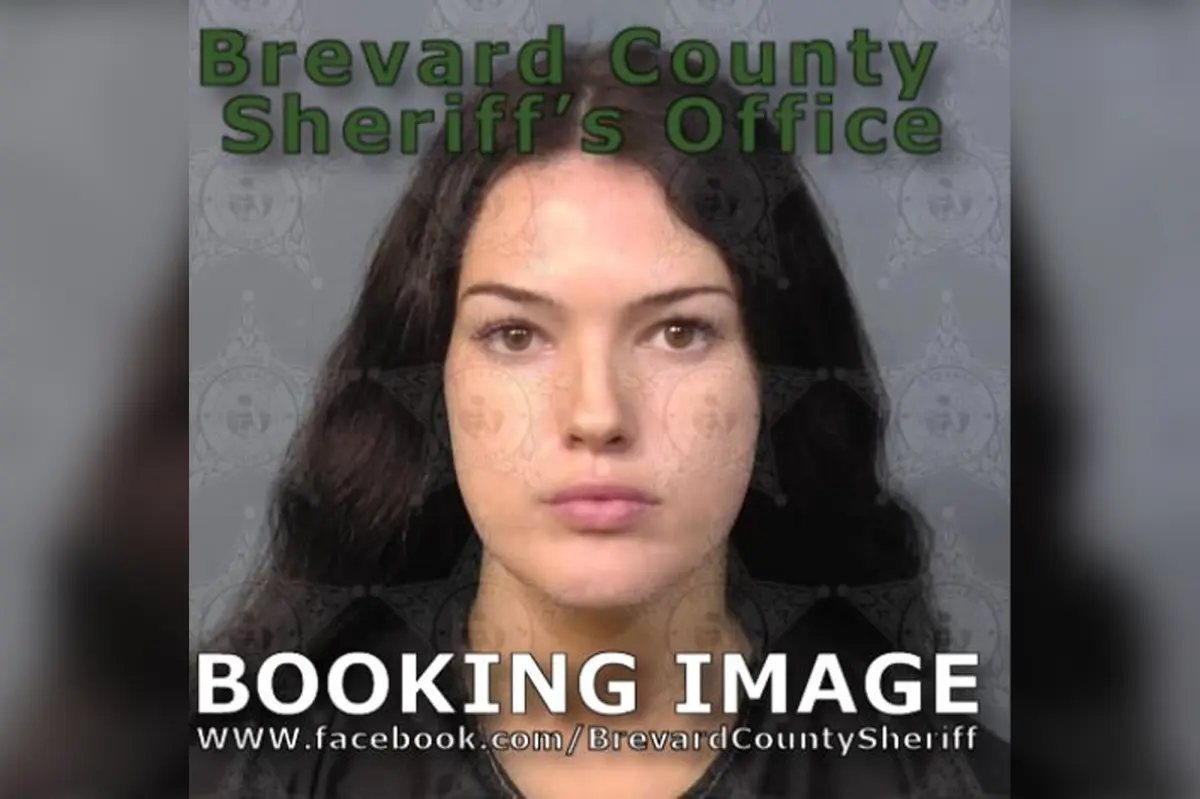
What begins as a story of late-night suspicion and a woman’s gut instinct spirals rapidly into a scene of violence, shattered trust, and a life-altering criminal charge. In the quiet early hours of a Florida weekend, 25-year-old Katherine Kelly found herself consumed by a familiar, corrosive feeling: the certainty that her boyfriend, Elijah Baker, was being unfaithful. According to the police report, Kelly had already texted Baker that night, voicing her suspicions and, in a moment of raw anger, threatening to shoot someone. It was a statement that might have been dismissed as hyperbole, the kind of thing people say in the heat of an argument when they feel powerless. But for Kelly, the feeling did not pass. When Baker took her Volkswagen for a late-night drive on Friday, her anxiety morphed into a terrifying certainty. She was no longer willing to wait at home, stewing in uncertainty; she was going to find out the truth for herself, and the consequences of that decision would ripple outward far beyond anything she could have imagined.
Driven by a mixture of betrayal and obsessive resolve, Kelly did not simply call or text her boyfriend again. Instead, she used the technology at her disposal to track the car’s location, effectively turning her own vehicle into a homing beacon. When she saw where Baker had parked, in the nearby community of Port St. John, she called an Uber and made her way there. The ride must have been a strange, suspended moment—a quiet car ferrying a woman whose thoughts were racing with fury and dread. When she arrived at the location, her worst fears were realized. There was her boyfriend, and there was another woman, Angel Adenau, sitting with him. In that instant, the abstract suspicion became concrete, undeniable proof of his betrayal. The scene must have been devastating: the quiet intimacy of two people caught in a moment, and the sudden, violent intrusion of a third person whose entire world had just collapsed. It was no longer a rumor or a suspicion; it was real, and in that moment, something inside Kelly snapped.
What happened next was a split-second decision that would change three lives forever. According to deputies, Kelly approached the car and fired a pink-and-black Glock handgun into the passenger side, striking Adenau in the shoulder. The detail of the weapon—a pink-and-black handgun—stands out as a jarring juxtaposition. It is an object that might otherwise be seen as a fashion statement or a personal accessory, yet in that moment it became an instrument of near-fatal violence. The sound of the gunshot, the shattering glass, the scream of the victim—these must have replaced the silence of the night with chaos. Adenau was hit but, remarkably, survived, though the severity of her injury was not immediately disclosed. Kelly’s actions were not those of a person defending herself; there was no struggle, no immediate threat. She had come there with a gun, tracked her boyfriend down, and fired at another human being. The police report would later note that she initially tried to claim self-defense, a reflexive attempt to recast herself as the victim in a situation she had orchestrated.
But under the pressure of questioning, the facade crumbled. Kelly told investigators that she had fired the gun not because she feared for her life, but to “make a point” about her boyfriend’s cheating. That cold, calculated admission strips away any remaining ambiguity. This was not a tragic accident or a moment of mistaken identity; it was an act of retribution, intended to punish and to send a message. The phrase “make a point” is chilling in its simplicity. It reveals a mindset in which violence becomes a tool of communication, a way to force someone to feel the pain they have caused. In her mind, perhaps, shooting the other woman was a way to make both Baker and Adenau understand the consequences of their betrayal. But whatever point she was trying to make was lost in the blast of the gun. What remained was a victim with a bullet wound, a shattered car window, and a criminal investigation that would now define Kelly’s future.
The legal aftermath has been swift and severe. Kelly is now facing charges of attempted first-degree murder, a charge that carries a maximum sentence of thirty years in prison. In addition, she has been charged with aggravated battery with a weapon and shooting into a vehicle. These are not minor charges; they reflect the gravity of her actions and the potential for a death that was narrowly avoided. For Kelly, who might have once imagined a future with Baker, that future is now gone. She is looking at decades behind bars, her life effectively derailed by a single, furious moment. For Adenau, the trauma is physical and emotional, a constant reminder of a night she was shot because someone else’s relationship was falling apart. And for Baker, the guilt of his infidelity is now intertwined with the knowledge that his actions set off a chain of events that led to violence. The cost of his late-night hookup is far higher than anyone could have anticipated.
Ultimately, this is a cautionary tale about the destructive power of unchecked jealousy and the terrible consequences of acting on raw emotion. The human heart is capable of immense love, but it is also capable of immense rage, and when that rage is fueled by betrayal, it can overwhelm all reason. Kelly’s story is not just about a cheating boyfriend and a pink gun; it is about the illusion of control. She thought she was taking control of a situation that made her feel powerless, but in doing so, she lost control of her own life. She traded a moment of vengeance for years of imprisonment, and she left another woman with a bullet wound that may never fully heal. The point she wanted to make has been made, but not in the way she intended. It is a point about the fragility of our emotions, the permanence of our choices, and the tragic, irreversible damage that can be done when we let our darkest instincts take the wheel.