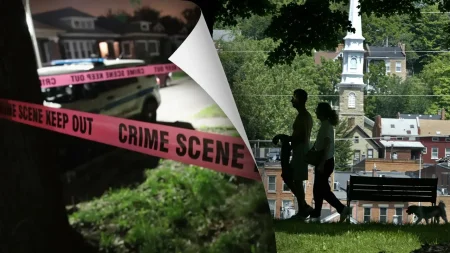



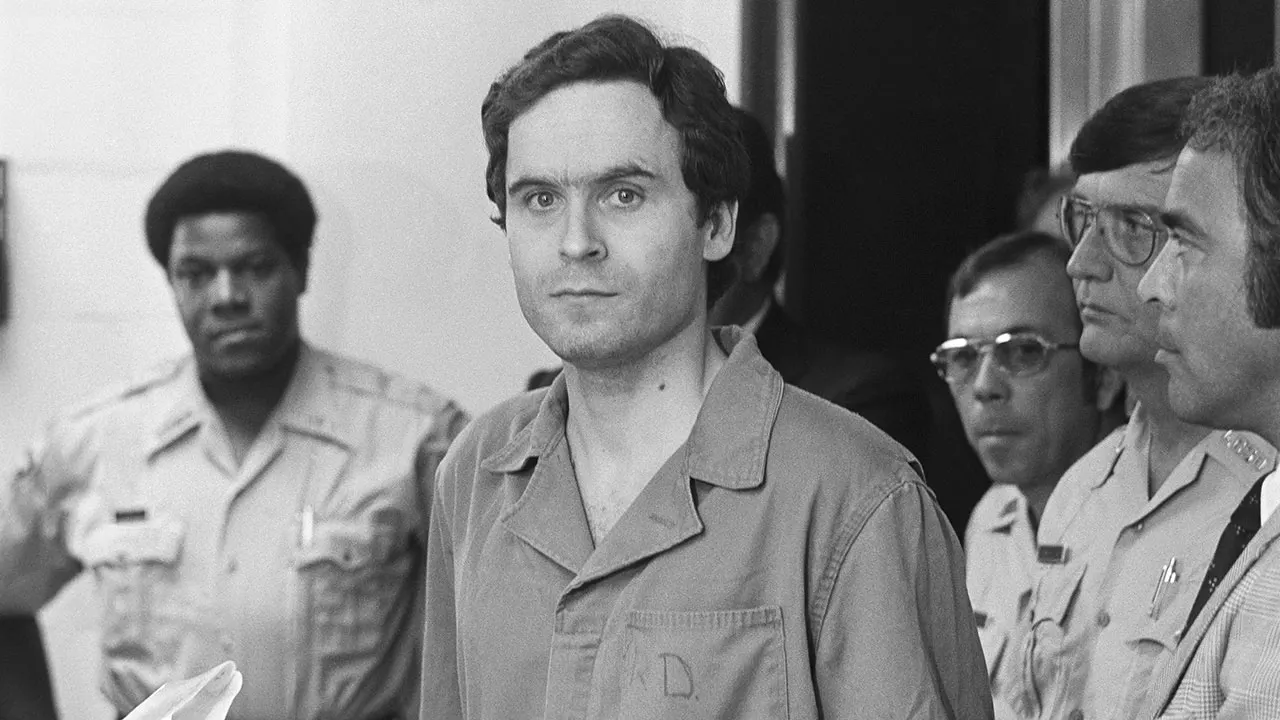
On a quiet Tuesday morning in Summit County, Utah, a roomful of law enforcement officials, journalists, and perhaps a family that has waited a lifetime will gather to do something that should have happened decades ago: speak a victim’s name out loud. The Summit County Sheriff’s Office and county attorney have scheduled a news conference to announce that the long arm of forensic science has finally reached across the years to touch the legacy of Ted Bundy, one of the most notorious serial killers in American history. Decades after Bundy was executed in Florida’s electric chair—and just months after DNA evidence tied him to the murder of seventeen-year-old Laura Ann Aime in nearby Utah County—investigators are expected to link him to another unsolved homicide. The announcement is not simply a headline for true-crime enthusiasts. It is a testament to the patience of detectives, the persistence of prosecutors, and the stubborn hope of families who have spent more than half a century asking the same question: What happened to our girl? The victim’s name has not yet been formally released, though the 1974 death of seventeen-year-old Melissa Ann Smith has long been listed as a cold case, and her name has hovered over this investigation for years. Now, with new DNA technology and a growing network of shared genetic profiles, Summit County is prepared to do what once seemed impossible: identify the victim, present the evidence, and explain why a file that has haunted the community for fifty years is finally being closed. For those who lived through the 1970s, Bundy was not just a killer; he was a terrifying paradox—a handsome, articulate law student who could charm his way into a young woman’s trust and then vanish into the night, leaving behind a trail of broken bodies and unanswered questions. For decades, his shadow lay over many cold cases, and Summit County was no exception. Every time a detective opened a filing cabinet, every time a family called to ask if there was news, Bundy’s name was there, whispered with suspicion but never confirmed by science. Tuesday’s news conference will change that. The announcement will not bring the victim back, but it will restore something almost as precious in the long, terrible aftermath of murder: a sense of truth. It will tell the community that the girl who died all those years ago was not forgotten, that the investigators who inherited the case refused to let it die, and that the scientific breakthroughs of the twenty-first century can reach back and shine a light into the darkest corners of the twentieth. It is a moment that will be measured in more than words—it will be measured in the tears of those who waited, in the silence of a courtroom, in the quiet satisfaction of a detective who can finally close the file and whisper, “We know what happened.”
To understand what this announcement means, we have to travel back to a world before the internet, before criminal profiling, before DNA was even a word in the common vocabulary. In the mid-1970s, the mountains and highways of Utah were beautiful and unforgiving. Young women disappeared with terrifying regularity, and for every family who reported a missing daughter, there was a gnawing fear that the authorities would never find her. Summit County was no exception. At the center of this particular case was Melissa Ann Smith, a seventeen-year-old girl whose death in 1974 was placed in the cold-case files and never forgotten. The details of her final hours have lived in police reports for half a century—pages yellowed with time, typewriter letters fading—and for fifty years, her loved ones have lived in a painful limbo, wondering if anyone would ever be held accountable. The sheriff’s office and county attorney are expected to identify Smith as the victim on Tuesday, finally putting a name to the announcement and giving her story a face. But this is more than a procedural step. It is an acknowledgment that behind every case number, there was a girl who laughed with her friends, who dreamed of the future, who left home one day and never came back. It is an acknowledgment that the memory of her mattered enough to keep the file open, to push for new tests, to refuse to accept that the case was unsolvable. Cold cases are unique in the way they wound people. Unlike a sudden death with a clear explanation, a cold case leaves everything in limbo. There is no verdict, no apology, no final chapter. Every year that passes adds another layer of sorrow. Tuesday’s news conference will not provide complete healing, but it will provide a verdict of sorts, a final chapter. For the family, it will likely be a day of conflicting emotions: relief that the truth is finally being told, grief for the life that was stolen, and perhaps a bittersweet gratitude that their daughter’s name is being spoken in a room full of people who have sworn to do justice in her name.
The path that leads to Summit County winds first through another cold case, one that took fifty-one years to solve. Laura Ann Aime was seventeen years old when she left a Halloween party in 1974 to buy cigarettes and never came back. Her body was discovered by hikers near American Fork Canyon days later. The medical examiner’s findings were brutal: she had been raped, strangled, and murdered. For decades, suspicion hung heavily over a young law student named Ted Bundy, who had enrolled at the University of Utah just two months before Aime disappeared. He frequented the places where young women gathered; he had a knack for appearing injured or helpless, enticing his prey to assist him; and his ability to blend into a college town made him a nightmare that law enforcement could not yet grasp. Bundy’s familiarity with Utah’s canyon roads and his ability to move unnoticed through crowds made him a shadowy figure in many investigations, but until the DNA breakthrough, police could not prove what they suspected. There was no DNA match, no confession, no court date. Aime’s death remained in the files, awaiting a future that had not yet been invented. Then, in 2024, that future arrived. Using new DNA technology, detectives with the Utah County Sheriff’s Office developed a male DNA profile from bodily fluids preserved on Aime’s remains. They entered that profile into the Combined DNA Index System, or CODIS, and the system returned a match in Florida. Further analysis linked the genetic material to Bundy. At a news conference in April, Sheriff Mike Smith stood before the cameras and spoke directly to the family that had waited so long. “We bring this case to a closure and more importantly closure to the Aime family,” he said. Those few words carried an ocean of meaning. They meant that a teenage girl who had been forgotten by the headlines was now remembered. They meant that the monster who took her life was finally, definitively named. And they meant that the same technique could perhaps be used to bring similar answers to other families.
Perhaps the most promising part of the Aime breakthrough was not the match itself, but what came after. The Utah County Sheriff’s Office, aware that Bundy’s murderous path ran through multiple states, shared the DNA profile with other law enforcement agencies. That gesture turned one solved case into the beginning of a broader reckoning. Cold-case detectives across the West began pulling out files that had been shelved for generations, comparing evidence, searching for links to a killer who had died more than three decades ago. Summit County was among those that took a hard look at the old deaths and missing persons reports in its jurisdiction. Tuesday’s announcement is the result. It is widely understood that the victim in the Summit County case is a teenage girl whose 1974 death has sat in the cold-case files for years, and investigators are expected to explain exactly how they connected her to Bundy—what evidence was preserved, how it was analyzed, and why the genetic profile left at the scene matched only one man. The officials will also explain why they are closing the case, a decision that rests on the certainty of the science and the finality of the killer’s death. Detectives often describe these moments as bittersweet. There is relief in having an answer, but also a deep sadness that the answer could not come sooner, when the victim’s parents or siblings were still alive to hear it. There is a bitter irony in all of this. Bundy cheated the system in life, manipulating police and escaping custody twice. In death, however, he cannot hide. His DNA lives on in evidence archives, in court exhibits, in the genetic records of his own body. Every time a cold-case unit finds a new sample and runs it through a database, Bundy’s ghost is forced back into the light. And every time that happens, a family gets a little closer to the truth. It is a process that works slowly, painfully, and without any sense of triumph—but it works. For the people who will speak at Tuesday’s news conference, the goal is not to relitigate the evil that Bundy did. The goal is to honor the girl he took, to stand in front of the public and testify that her life mattered enough to spend five decades searching for an answer.
Ted Bundy’s criminal legacy is vast and horrifying. During the 1970s, he killed at least thirty women and girls across multiple states, and many experts believe the true count is much higher. His crimes stretched from Washington to Oregon to Colorado to Utah to Florida, a zigzag trail of disappearances, abductions, and murders that terrorized the country and confounded police. Bundy had a rare combination of charm and cruelty: he could talk his way out of a traffic stop, persuade a young woman to come to his car, and even charm members of the media and courtroom audiences during his own trial. The horror of his crimes was not only their brutality but their randomness; he chose girls who were simply in the wrong place at the wrong time, and that fact made every young woman feel vulnerable. He was convicted and sentenced to death for the 1979 murders of two Florida State University students, and received another death sentence the following year for the rape and murder of a twelve-year-old girl. In his final days, facing execution in Florida’s electric chair, Bundy began to confess. He admitted to a string of killings, some of which police had never linked to him. But even then, he parsed his words, offered vague recollections, and seemed to take pride in the power of knowing more than the authorities. His confessions were incomplete and sometimes contradicted each other, leaving families in a state of horrible uncertainty. Was their daughter among his victims? Was the case truly closed? Bundy was executed on January 24, 1989, and with him went the only person who could answer those questions. For decades, it seemed as though the full truth would remain locked in the grave. But science refused to let him rest. The DNA profile that emerged from Laura Ann Aime’s case, and the expected link in the Summit County case, show that even a dead man cannot escape accountability forever. Every new match is a reminder that Bundy’s confessions were not the final word. The evidence itself is the final word—and it continues to speak for the victims who were silenced.
At its heart, this story is not really about Ted Bundy. It is about the young women whose lives were cut short, and about the people who loved them. It is about a seventeen-year-old girl leaving a Halloween party to buy cigarettes, a teenager stopping at a gas station, a college student walking across campus—ordinary moments that became eternal tragedies. Every time a cold case is solved, there is a temptation to focus on the killer, the forensic technique, the sensationalized headline. But the people who work these cases understand that the real purpose is more profound. In Summit County, Tuesday’s announcement is an opportunity to turn the spotlight back where it belongs: on the victim. It is a chance to say her name, to acknowledge that her life had value, to recognize the decades of grief carried by her family and friends. Victory is not the right word, because there is no victory when a girl is already gone. But there is a form of justice in the simple act of telling the truth—of standing before the world and declaring that she was not a nameless statistic, but a human being whose story mattered. It is also a reminder that closure is a complicated, lifelong process. No press conference can erase the pain of losing a child. No DNA match can fill the empty seat at the kitchen table. But the families who have lived through these decades deserve to hear their loved one’s name spoken with dignity and not with shame. Victims deserve to be remembered not as victims only, but as daughters, sisters, friends, and human beings with futures that were stolen. For other families still waiting for answers, Tuesday’s announcement carries an even broader message. It says that the past is never truly out of reach. If a DNA profile can be extracted from old evidence, if a database can generate a match decades after the crime, if a case can be resolved more than fifty years after a young woman vanished, then perhaps hope is not lost for them either. The investigators who worked these generations-old cases are proof that human stubbornness can be a force for good. They refused to accept the easy answer that the case was too old, the evidence too degraded, or the suspect too famous to be touched. Instead, they kept pushing, kept testing, kept remembering. On Tuesday, a roomful of people will gather to do what should have been done long ago: speak a victim’s name, present the evidence, and close the case. It will not be a celebration. It will not bring the girl back. But it will be right.