


Israel’s High-Stakes Election: Netanyahu Faces Strongest Challenge Yet as Nation Votes for Its Future
Israel is bracing for one of the most pivotal elections in its modern history, with voters heading to the polls on October 27 in a contest widely viewed as a nationwide moment of reckoning. After more than a year of devastating conflict in Gaza, deep internal divisions over judicial reform, and unresolved questions about the failures surrounding the deadliest attack in the country’s history, this election has become far more than a routine political exercise. It is, for many Israelis and international observers alike, a defining choice about the very character and trajectory of the state — one that carries profound consequences for millions of Palestinians under occupation, for Israel’s relationships across the Middle East, its standing in the global community, and its bond with the Jewish diaspora worldwide. Yet despite the enormity of what hangs in the balance, the outcome remains deeply uncertain, with neither political bloc commanding a decisive majority and no guarantees about who will ultimately lead the country.
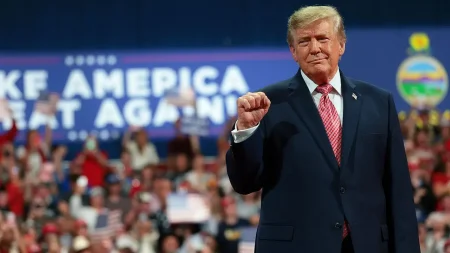
The campaign has crystallized around two dominant figures who represent sharply divergent paths forward. On one side stands Benjamin Netanyahu, Israel’s longest-serving prime minister, who at 77 is fighting for his political survival while simultaneously managing a war, battling corruption charges in court, and facing an international arrest warrant connected to the conduct of the Gaza conflict. Netanyahu’s Likud party has anchored Israeli conservatism for decades, governing for more than 34 of the past 49 years and projecting a populist, hawkish vision that has long appealed to working-class and traditional Jewish communities. But critics argue his promise of “total victory” in the ongoing wars has gone unfulfilled, that he has never truly accepted responsibility for the security intelligence failures that allowed the Hamas-led assault of October 7, 2023, to unfold, and that his pursuit of sweeping judicial reforms — which would reduce the Supreme Court’s powers — has dangerously polarized Israeli society. His opponents also point to his failure to resolve the deeply unpopular military draft exemption for ultra-Orthodox Jews as evidence of a leader ruled more by coalition considerations than national interest. Netanyahu insists he alone has the experience and fortitude to “complete the job” in securing Israel’s borders and defeating its enemies, and he has categorically rejected any prospect of Palestinian statehood.
Standing opposite him is Gadi Eisenkot, a 66-year-old former military chief of staff under whose new party banner — Yashar!, meaning “Honest” or “Straight” — has rallied significant momentum. Eisenkot brings rare credibility to the challenge: he served inside Netanyahu’s own war cabinet during the early phases of the Gaza war, a period of unimaginable personal sacrifice in which his son and two nephews were killed in combat. That lived experience of the war’s human cost, combined with his distinguished military record and his willingness to confront the failures of October 7 directly, has positioned him as Netanyahu’s most formidable adversary. His platform targets the prime minister’s vulnerabilities head-on, endorsing a thorough national inquiry into the intelligence and policy lapses preceding the attack, while offering a vision that is centrist, security-focused, and moderate on the Palestinian question. Though Eisenkot has rejected Palestinian statehood in the near term, he has voiced support for a more restrained approach to West Bank settlement expansion and pledged to crack down on settler violence — a subtle but critical departure from Netanyahu’s posture.
Beyond the two principal contenders, the electoral landscape is crowded with parties scrambling to shape Israel’s next chapter. The opposition front includes B’Yachad, a partnership uniting Yair Lapid’s centrist Yesh Atid party with right-wing former prime minister Naftali Bennett, who together previously managed to oust Netanyahu in 2021 through a short-lived coalition. Now they are attempting to recreate that anti-Netanyahu alliance, campaigning on national unity, expanded military conscription for the ultra-Orthodox, and a comprehensive inquiry into the October 7 failures. Avigdor Liberman’s Yisrael Beiteinu represents a secular Jewish constituency skeptical of both Netanyahu and the rising influence of ultra-Orthodox rabbis — right-wing on security matters but unyielding in its break with the prime minister. Meanwhile, Yair Golan, an outspoken former two-star general, leads the Democrats, a party formed out of the remnants of the once-dominant Labor party and the more left-wing Meretz faction. Golan offers the clearest endorsement of a two-state resolution to the Israeli-Palestinian conflict, appealing to a shrinking but still vocal segment of the electorate hoping to preserve Israel’s identity as a liberal, secular Jewish state.
On the other side of the aisle, Netanyahu’s path to another term runs through a collection of religious and far-right parties whose influence has grown dramatically since October 7. Itamar Ben-Gvir’s Otzma Yehudit, an ultranationalist, anti-Arab faction, has seen its support swell amid the rightward shift in public sentiment; Ben-Gvir, who as national security minister has drawn international sanctions for his inflammatory rhetoric, advocates for what he euphemistically calls the “voluntary emigration” of Palestinians from Gaza — a position practically indistinguishable from ethnic cleansing in the view of his critics. Finance Minister Bezalel Smotrich, leader of Religious Zionism, has been even more methodical, using his authority over West Bank administration to advance Israel’s de facto annexation through relentless settlement expansion, road construction for Israelis, and systematic crippling of the Palestinian Authority. He has openly advocated for permanent Israeli occupation and Jewish resettlement of Gaza. Around these figures orbit the religious parties: Shas, led by Aryeh Deri, representing ultra-Orthodox Jews of Middle Eastern and North African heritage; United Torah Judaism, the alliance for Ashkenazi ultra-Orthodox communities, whose welfare depends on state subsidies and exemption from military service; and a newer right-wing formation called Amcha Yisrael, founded by former brigadier general Ofer Winter, which supports Netanyahu while opposing the ultra-Orthodox draft exemption — a fissure that has complicated, though not broken, the prime minister’s coalition calculus.
Adding another layer of complexity to this volatile landscape are Israel’s Arab parties, representing the approximately one-fifth of citizens who are Palestinian. Mansour Abbas’s Raam, an Islamist party that has pursued a pragmatic strategy of coexistence and engagement with the Israeli political system, made history in 2021 by joining a governing coalition, and his recent recruitment of a Jewish former senior police commander as his second-in-command suggests an ambitious push to break old taboos. The Joint List, an alliance of three parties ranging from a Jewish-Arab communist coalition to Palestinian nationalists, seeks to mobilize Arab voters and expand their parliamentary presence. Although Arab parties have traditionally been excluded from coalition arithmetic by most Jewish parties, the mathematics of this election are so tight that Abbas in particular could prove decisive — if opposition parties can overcome their historical resistance to partnering with an Arab party, his support could be the key to ending Netanyahu’s long reign.
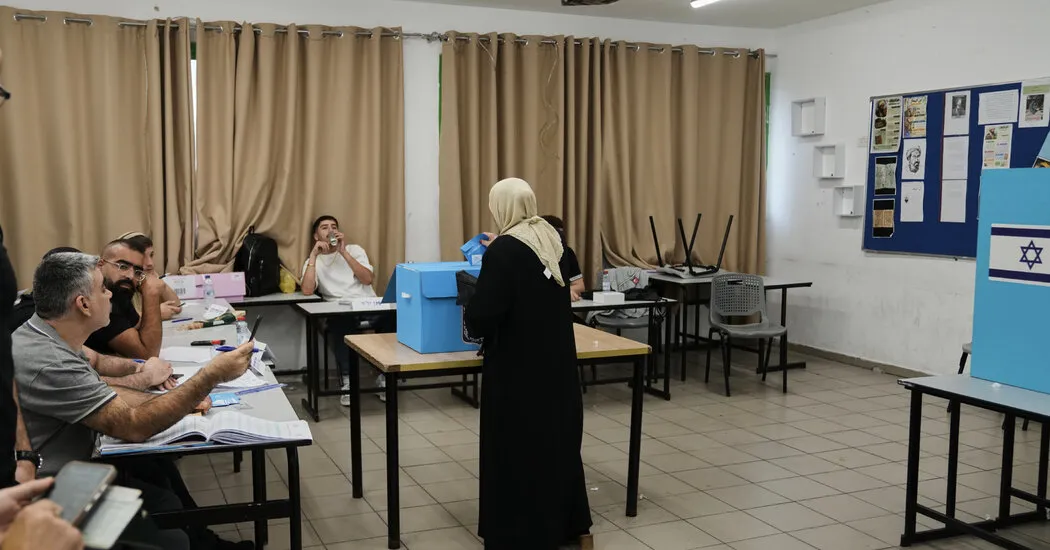
What makes this election so unpredictable is that Israel’s system of proportional representation means the real political drama typically unfolds after votes are counted. Roughly a dozen parties are expected to clear the electoral threshold to enter the 120-member Knesset, but no single party ever wins a majority outright. Instead, the weeks following the election are devoted to a frantic scramble by party leaders to assemble a governing coalition of at least 61 lawmakers — a delicate game of promises, compromises, and backroom negotiations that often produces unlikely alliances and equally unexpected breakdowns. In this environment, smaller parties wield outsized power, and ideological purity frequently gives way to the necessities of survival. The question of who ultimately occupies the prime minister’s office may therefore depend less on the popular vote and more on which coalition architects can overcome their differences, transcend their constituencies’ entrenched positions, and forge — against considerable odds — a government capable of leading Israel through one of the most difficult chapters in its history. For Israelis, for Palestinians, and for a watching world, the stakes could scarcely be higher.