

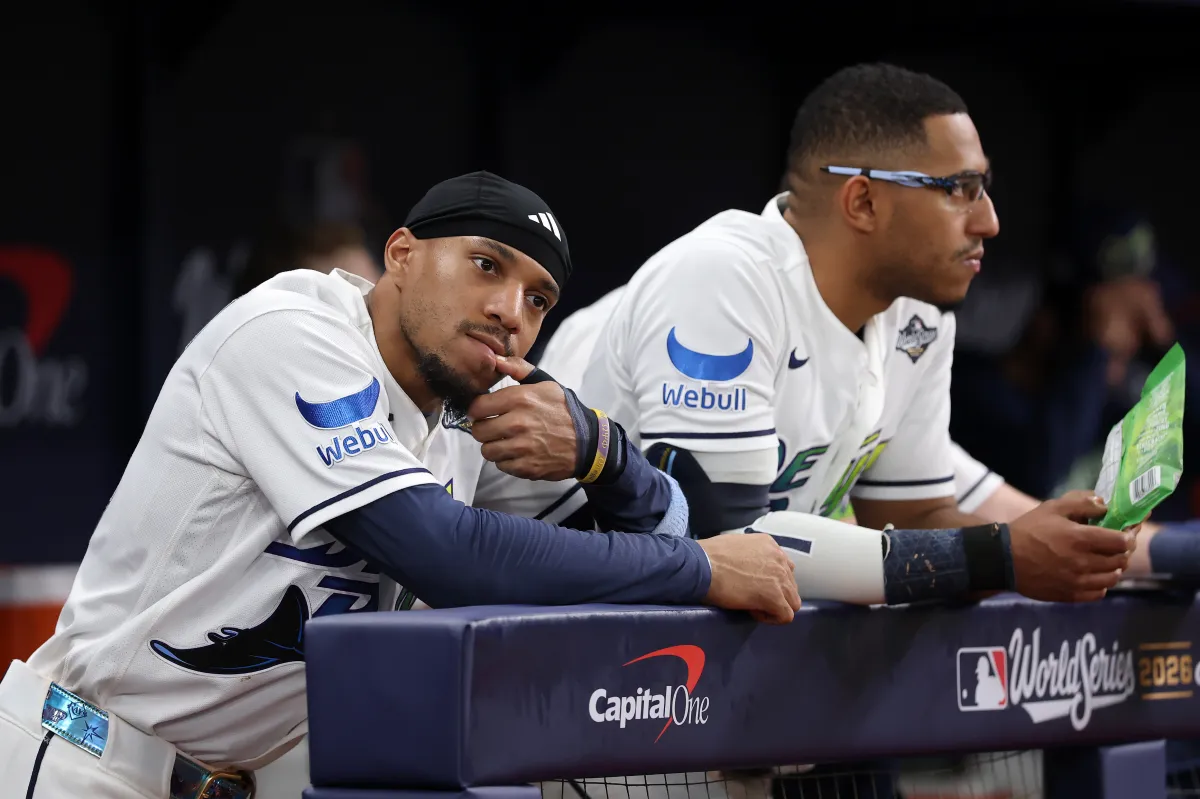
For a certain kind of baseball purist, the Milwaukee Brewers’ 2026 postseason has been absolutely breathtaking—not because of any single moment of brilliance, but because of the sheer, unrelenting way this team has refused to lose. The Brewers, a franchise that has never won a World Series in its entire existence, are 10-1 this month. They stand on the edge of history: with a win over the Tampa Bay Rays in Game 4 of the World Series on Tuesday, Oct. 27, they would become the first team in baseball history to win nine straight postseason games. Yes, that sentence is real. No team has ever done it. And yet, if you live outside Milwaukee, you might have missed the magnitude of what’s happening. The city itself, however, is feeling every ounce of it. Brewers fans have waited 56 years to plan a championship parade. They have watched generations of near-misses, heartbreaks, and quiet Octobers. Now the wait is almost over, and they don’t care if the rest of the country is yawning. For them, this is not anticlimactic. It’s the culmination of everything. You can almost hear the collective exhale across Wisconsin every time another bullpen arm locks down another inning. The anticipation is not just about a trophy—it’s about finally being able to say, in the most unambiguous terms, that this team, this city, this unassuming little ballclub, is the best in the world.
Even the most astute baseball fan, the kind who studies lineup construction and defensive shifts and platoon splits, can appreciate the aesthetics of the Brewers’ strange and wonderful brand of baseball. There is no 50-home-run slugger in the middle of the order, no triple-crown threat, no player whose name alone terrifies opposing pitchers. Instead, the Brewers have built a championship-caliber offense on a foundation of foul balls, walks, and opposite-field singles. It sounds almost quaint, maybe even boring, but it is devastatingly effective. They foul off pitch after pitch, wearing down starters until they’re out of the game by the fifth inning. They take walks with the patience of monks, letting rallies materialize out of nothing. They poke singles to left field, move runners over, and score in a hundred small increments rather than one big swing. Each win has proven that this approach can win a championship without a star-studded lineup of power hitters. There is something deeply satisfying about watching a team that refuses to rely on the long ball, that treats every at-bat as a war of attrition, and that finds joy in the smallest, grittiest details of the game. For purists, it’s a reminder that baseball is not just about highlight-reel home runs. It’s about the grind, the patience, the mental battle between pitcher and hitter. And the Brewers have mastered that battle in a way that feels both modern and old-fashioned at the same time.
In spite of all this—or perhaps, depending on your point of view, because of all this—the 2026 MLB postseason might be the least thrilling in a generation, if not ever. There is no dramatic underdog story, no shocking upset, no Cinderella run. The Brewers have simply been the best team, and they’ve left a trail of inevitable comebacks in their wake. In the National League Division Series, they came from behind to win two games against the San Diego Padres. In the National League Championship Series, they erased deficits in all four games against the Los Angeles Dodgers. At a certain point, watching them fall behind felt less like a problem and more like a formality—they were just giving the other team a false sense of hope before crushing it. No one who watched each dramatic Brewers comeback was surprised to see them erase a 4-0 first-inning deficit to win Game 2 of the World Series on Saturday. The comeback was almost boring in its inevitability. Even the controversial call that ended that game—a play that sparked outrage in Tampa Bay and confusion among neutrals—felt like just another strange twist in a postseason that has somehow managed to be both chaotic and predictable at the same time. The outcome of Monday’s 10-1 victory at Tropicana Field was arguably more surprising, but not because the Brewers won. It was surprising because they finally won by more than four runs for the first time all postseason. The fifth inning, in which the Brewers scored a record eight runs with two outs, made for the least suspenseful finish to a game since September. There was no drama, no late-inning anxiety, no impossible comeback. Just a slow, methodical dismantling that left the Rays gasping for air.
For the neutral fan, the postseason has become something of a problem. A World Series sweep would captivate only Brewers fans. The rest of the baseball world would watch the trophy presentation politely, then move on. Even if the Tampa Bay Rays manage to steal a game or two and force a return series, the larger narrative remains the same: the 2026 postseason will be the first in 40 years in which the higher-seeded team has won every single series. Let that sink in for a moment. In a sport defined by upsets, by wild-card magic, by unlikely heroes and improbable October runs, this year has been a perfect chalk bracket. The best teams have simply won. There has been no drama about seeding, no real controversy about who deserves to advance, no shocking elimination of a favorite. The “Will they or won’t they?” tension that makes October so compelling has been replaced by a quiet, grinding certainty. Every series has gone as expected. Every favorite has advanced. Every game has felt, in hindsight, like an inevitable step toward this final matchup. And while that might be a tribute to the quality of the teams involved, it has also made for a postseason that feels less like a sporting event and more like a coronation. For casual fans, there is nothing to argue about, nothing to hope for, nothing to fear. The suspense has evaporated, replaced by a kind of dreary predictability that no amount of excellent baseball can fully offset.
Meanwhile, the discourse among casual fans around whether the Brewers and Rays are “analytically driven” or “old school” has been absolutely insufferable. It’s the kind of debate that divides retired players and Twitter hot-takers into two false camps, each one arguing that their preferred style of baseball is more authentic, more exciting, more “real.” The Brewers, with their patient at-bats and defensive positioning, are labeled as robots. The Rays, with their openers and platoons and unconventional bullpen usage, are labeled as nerds. But the truth is far simpler and far more human: both teams are just trying to win, and both have found ways to do so with the resources they have. The false choice between analytics and old-school baseball has become a tedious distraction from what is actually happening on the field—which is that two very well-run organizations are playing excellent, disciplined baseball. The Brewers don’t hit home runs because they don’t have to. The Rays don’t spend big money because they can’t. Neither approach is a philosophy; it’s a reality. And once the Brewers’ dominance stopped being a surprise, it became the polar opposite: inevitable and predictable. That’s rare in baseball. It’s also boring in a way that has nothing to do with the usual 21st-century narratives—market size, payroll disparities, roster recognizability, or “Moneyball.” This isn’t a case of David vs. Goliath or big-bad-rich-team vs. plucky-underdog. It’s just one team being better than everyone else, and no amount of framing can make that feel like an epic struggle when it’s not.
It’s impossible to compare today’s postseason, which consists of 12 teams and four discrete rounds, to the pre-1969 format in which the winner of the American and National leagues advanced directly to the World Series. There was no LCS, no wild-card round, no division series. Just two champions meeting head-to-head with everything on the line. But even with that caveat, the 2026 postseason feels historically flat. Consider 1970: both the 102-win Cincinnati Reds and 108-win Baltimore Orioles swept their respective League Championship Series. In the World Series, the Orioles beat the Reds in five games. It was a great series, competitive down to the end, with Hall-of-Famers all over the field. The 2026 version, by contrast, has offered only occasional moments of tension, usually followed by a sudden and definitive dose of reality. On a per-series basis, we might be witnessing the least interesting postseason since that distant era. But here’s the thing: for the people of Milwaukee, none of that matters. They have waited 56 years for this. They have sat through cold Aprils and fading Septembers, through rebuilds and false dawns, through the pain of watching other small-market teams win while theirs came up short. And now, at long last, they have a team that is not just winning, but winning in a way that feels almost effortless. The rest of the country might be yawning. The casual fan might be flipping to football. The pundits might be declaring this postseason a dud. But in Milwaukee, every foul ball is a victory, every walk is a masterpiece, every opposite-field single is a tiny exclamation point. The Brewers have made the 2026 postseason boring to the rest of the world—and absolutely unforgettable to the people who matter most.