


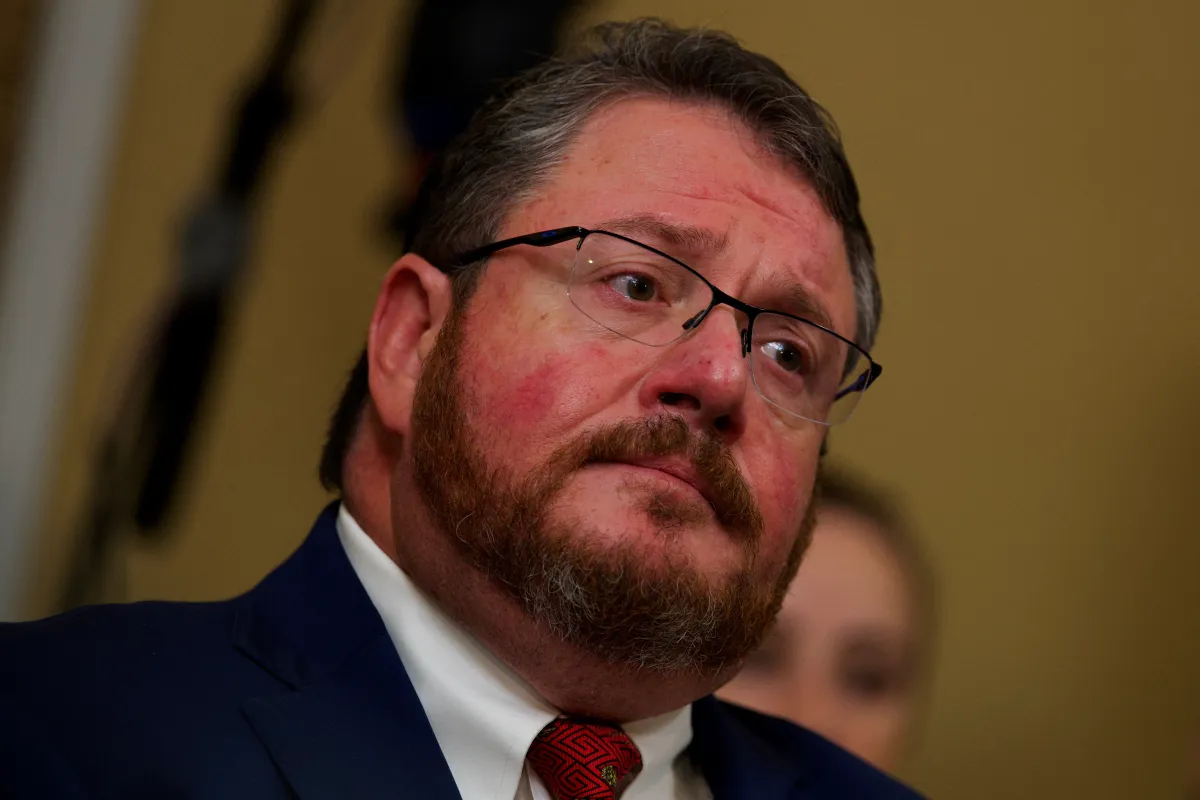
There is a moment in every naturalization ceremony when the room goes quiet. The judge asks the people before him to raise their right hands, and they do, some with tears in their eyes, others with their children pressed close. They have waited years for this. They have studied American history, learned the branches of government, passed background checks, paid fees, and told their stories to strangers in immigration offices. When they finally hear the words “Congratulations, you are now a citizen of the United States,” they are not just receiving a document. They are being welcomed into a family. That is the promise of American citizenship, and it is why the words of Representative Randy Fine, a Florida Republican, feel so jarring. In an interview with NewsNation’s Nichole Berlie on Monday night, Fine was asked a direct question: should the standard he was applying to Representative Ilhan Omar—scrutiny of her citizenship and immigration paperwork—also apply to first lady Melania Trump and billionaire Elon Musk, both naturalized citizens? Fine’s answer was blunt. “Anyone who was not honest in their immigration paperwork,” he said, should be denaturalized and deported. He then acknowledged that he did not know the circumstances of Melania Trump or Musk’s immigration proceedings and was unaware of any allegations against either of them. Melania Trump was born in Slovenia and became a U.S. citizen in 2006, according to the White House. Musk was born in South Africa and became a citizen through naturalization in 2002, according to his biography by Walter Isaacson. Newsweek reached out to the White House and to Musk’s representatives for comment, but the point had already been made. In a single sentence, Fine had suggested that even the most prominent naturalized citizens in the country, including the first lady and the most famous businessman in the world, could be stripped of their citizenship if they had been dishonest on their paperwork. He offered no evidence against them. He simply refused to carve out exceptions. And in doing so, he turned a deeply personal and sacred moment—the moment a person becomes an American—into a conditional arrangement.
Fine did not limit his comments to the first lady or to Musk. He went much further, suggesting that the federal government should reevaluate everyone who became a naturalized U.S. citizen since 1990. His reason for such a sweeping proposal? He said he believed citizenship fraud was widespread in Minnesota, and he cited the allegations surrounding Omar, a Minnesota Democrat, as proof. “So yeah, I think Ilhan Omar needs to be the first. She certainly should not be the last,” Fine said. The scale of what Fine is proposing is difficult to grasp. Since 1990, millions of people have become naturalized citizens. They come from every country on Earth, speak every language, practice every religion. They are doctors and taxi drivers, teachers and engineers, grandparents and newborn babies. They have built businesses, raised families, and served in the military. To suggest that every one of them should be reexamined because of one congresswoman’s alleged paperwork problems is to treat an entire generation of Americans as suspects. It is also to ignore the fact that the naturalization process is already rigorous. Applicants must demonstrate good moral character, pass English and civics tests, and undergo background checks. The idea that fraud is “widespread” is not supported by the evidence Fine presented. He simply asserted it. In a political climate where immigration is one of the most divisive issues in the country, such assertions can take on a life of their own. They create a climate in which naturalized citizens feel they must constantly prove that they belong, even after taking the oath. Fine’s words were aimed at Omar, but they landed on everyone who has ever raised a hand and sworn to support and defend the Constitution. They were a reminder that, for some, the American dream comes with an asterisk.
To understand what this kind of rhetoric means in real life, look at what has happened to Omar. On the morning of October 12, she was at home with her husband and their 20-year-old son in the Washington, D.C., area. Around 6 a.m., agents from Homeland Security Investigations began pounding on both the front and back doors. In an interview, Omar described the scene as chaotic. Her family scrambled to get dressed and go downstairs, not knowing what was happening or why federal agents were surrounding their home. The search was part of an “ongoing federal criminal investigation,” according to the Department of Justice. More than a dozen grand jury subpoenas have been issued, including to some of Omar’s relatives, according to the Associated Press. But Omar has not been charged with any crime. She is, at this point, the subject of an investigation, not a defendant. That distinction has been lost in the noise of political commentary. Omar said she fears returning to her home after the raid, because her address is now publicly known and she has received death threats. “Obviously, I can’t continue to live there,” she told MS NOW. “So have to figure out where to move to.” Imagine being forced to leave the place where you live because you are afraid for your safety—not because you have been convicted of anything, but because federal agents came to your door and the world watched. Imagine being a member of Congress, a person with a platform and a staff, and still feeling that vulnerable. The investigation may ultimately reveal wrongdoing. Or it may reveal nothing. But in the meantime, a family has been uprooted, a public figure has been put in fear, and the country has been given another story to argue about on cable news. That is the human cost of a political battle fought over citizenship.
The political pressure on Omar intensified when President Donald Trump entered the fray. At a rally in Iowa on Thursday, Trump called on Omar to resign from Congress, alleging that she had used a different name to get elected and to take the congressional oath. “It was just revealed just a little while ago that … her name is not Ilhan Omar, the one she used to get elected and sworn into Congress,” Trump said. “She used a fake name to be sworn in. I assume she must immediately have to resign from Congress.” The president offered no evidence for this claim, and none has appeared in the reporting on the investigation. But the accusation fit a familiar pattern. Trump has repeatedly attacked Omar’s background, questioned her citizenship, and used her as a symbol of everything he believes is wrong with immigration. Omar has accused Trump of using the investigation to intimidate her and other political opponents. Whether or not that is true, the effect is undeniable: a sitting member of Congress, a woman of color, a Muslim refugee, is being publicly accused by the president of the United States of being an impostor. The accusation is not just about paperwork. It is about belonging. It is about whether someone who looks like Omar and worships like Omar can ever truly be accepted as an American. For Omar, this is not a new experience. She has been attacked for her background since she entered politics. She has been called names, told to go back where she came from, and accused of all sorts of crimes. But this is different. Now the full weight of the federal government is behind the investigation, and the president is using his platform to call for her removal. The message to Omar is clear: you are not one of us. The message to other naturalized citizens is perhaps even more chilling: no matter what you do, no matter how much you contribute, you may never be safe from suspicion.
The investigation has also brought back an old and unproven story that has followed Omar for years. Critics have alleged that she married her now-former husband, Ahmed Nur Said Elmi, to help him enter the United States, and that Elmi was actually her brother. The accusation has been repeated in conservative media and on social media, but it has never been proven. Omar has denied it repeatedly. In a recent interview, she called the claims “insane.” When asked directly whether she was related to Elmi, she said, “Not to my knowledge.” The fact that this story continues to surface, even without evidence, is a reminder of how hard it can be for immigrants to escape suspicion. Every aspect of their lives becomes fair game. Their marriages are scrutinized. Their names are questioned. Their loyalty is doubted. Omar’s story, at its core, is a classic American story. She arrived in the United States as a refugee from Somalia, fleeing violence and instability. She settled in Minnesota, which is home to a large Somali community, and eventually became a naturalized citizen in 2000. She went on to make history as one of the first Muslim women elected to Congress, representing a district in Minnesota. Her journey from refugee to representative is the kind of story that has traditionally been celebrated in America—proof that the country is a place where anyone can succeed. But now that journey is being picked apart by federal investigators and political opponents. Omar has not been charged with anything. She has not been convicted of anything. Yet she is being asked to defend her citizenship in the court of public opinion, where a rumor can be as damaging as a verdict. The emotional toll of that experience is impossible to measure. To be an immigrant is to have left behind a home and chosen a new one. To have that choice turned into a crime is to be told that you were never truly wanted.
At the center of all of this is a fundamental question: What does it mean to be an American? Is citizenship a permanent bond, earned through years of effort and sealed by an oath, or is it a fragile status that can be revoked if the political winds shift? Randy Fine’s comments suggest the latter. His call to denaturalize and deport anyone who lied on their paperwork sounds like a simple demand for accountability. But the reality is not simple. Immigration paperwork is complicated, and the difference between a deliberate lie and an honest mistake is not always clear. Even when fraud is proven, the punishment is the most severe the government can impose short of imprisonment: stripping a person of their country and sending them to a place they may not know. That is why due process matters. That is why the presumption of innocence matters. Omar has not been charged with a crime. She is entitled to be treated as innocent until proven guilty. The same is true for Melania Trump, Elon Musk, and every other naturalized citizen, no matter how prominent or obscure. The danger of the current moment is that citizenship becomes a weapon, used to attack political enemies and to rally supporters by casting suspicion on entire communities. That is not justice. It is fear. It is possible to insist that the immigration system be honest and that those who abuse it face consequences, while also recognizing that most naturalized citizens are law-abiding people who love this country. It is possible to investigate allegations against a member of Congress without treating her family’s home as a war zone and her personal history as a criminal record. The story of Ilhan Omar is not just a story about one woman. It is a story about the kind of country we want to be. Do we want a nation that welcomes immigrants and protects their hard-won citizenship? Or do we want a nation that treats every naturalized citizen as a potential fraud, forever on probation, forever needing to prove their worth? The answer should be clear. Citizenship is not a favor. It is a right, earned and given in good faith. It should be protected, not weaponized.