



On the ground in Alaska, where the air has turned cold and communities are beginning to brace for another long winter, a quieter and more troubling storm is gathering. This one is not about snow or ice. It is about the machinery of democracy itself, and about the people who trust that machinery to carry their voices. Last week, the Trump administration filed an extraordinary federal lawsuit against the state of Alaska and its election officials, asking a judge to stop the state from certifying the results of the United States Senate race if the Republican incumbent, Senator Dan Sullivan, narrowly loses. On Sunday, the campaign of Democrat Mary Peltola and the Democratic Senatorial Campaign Committee answered with a swift, forceful motion: dismiss the case, and do it now. The legal documents are filled with arguments about voting systems, ballot design, and certification deadlines, but underneath the technical language is a raw and human worry. Peltola’s supporters, and the election workers who have spent months preparing to count every absentee and ranked-choice ballot, are afraid that the lawsuit is not meant to protect voters but to create the impression that Alaska’s election cannot be trusted. They fear this is the opening move in a playbook designed to undermine a legitimate result, especially if Senator Sullivan loses by a small margin. The filing asks the court to rule before Election Day, November 3, so that Alaskans can cast their votes and later see those votes counted without the shadow of a federal lawsuit hanging over every ballot. It is an extraordinary request, but the situation is extraordinary too: for the first time in memory, a sitting president is using the Department of Justice to challenge the election procedures of a state before a single vote has been counted. The people of Alaska are being asked to believe that their election is already suspect, and many of them are understandably uneasy about what that means for their place in the democratic process.
To understand what triggered this legal battle, it helps to look at the ballot itself. In Alaska’s Senate race, voters will see two candidates with the same name. One is the incumbent, Republican Senator Dan Sullivan, a Marine veteran and the Trump-endorsed officeholder who has represented the state in Washington and has a long record of public service. The other is Daniel J. Sullivan Jr., a retired teacher from Fairbanks who is not running as a Democrat and has never held public office. The Trump administration claims, without offering public evidence, that Democrats deliberately arranged for the other Sullivan to enter the race as a spoiler, hoping that voters trying to support the Republican would accidentally mark the wrong bubble and throw away their vote. The lawsuit asks a federal judge to consider a strange hypothetical: if every vote cast for Daniel J. Sullivan Jr. had instead been cast for Senator Dan Sullivan, would the outcome of the race be different under Alaska’s ranked-choice voting system? And if so, should Alaska be stopped from certifying the results? That question is not just unusual; it is almost unprecedented. It would require the court to speculate about voter intent, re-run an election that has not yet happened, and second-guess decisions made by state election officials who were simply following the rules. Democrats argue that ballot confusion, even if it happens, is not a constitutional violation, and that the state has every right to put legally qualified candidates on the ballot. The retired teacher has been thrust into a national drama he never asked for. His crime, according to the Trump administration, is having a name that happens to resemble his better-known opponent’s name. A quiet retired educator in a small community has become the centerpiece of a last-minute legal and political attack, and all of Alaska is watching.
Alaska Democrats’ filing lays bare what they believe is really happening. In their motion, they wrote that they are concerned Trump and the Attorney General will use the pending lawsuit to falsely suggest that there is doubt about the lawfulness of Alaska’s election results, and to lay the groundwork for unlawful efforts to challenge a potential Peltola victory. Let no one misunderstand: this is not a simple dispute over ballot design. It is an attempt to pre-delegitimize an outcome before it exists. The Democrats’ legal team points to the President’s own words as evidence of that intent. On Saturday, Trump took to Truth Social and wrote that the ranked-choice ballot is “a total Democrat scam meant to confuse the voter so that Senator Dan Sullivan will lose votes to a man who has never participated in politics before.” He insisted that Daniel J. Sullivan was “only there because the Democrats want to steal the election.” He described the DOJ lawsuit as an attempt to “stop this impending crime and tragedy,” and he warned that “the Democrats are trying to steal this important Republican Seat and, if that happens, everything we’ve done for Alaska will come to an immediate halt.” For Peltola’s campaign, those words are not just political rhetoric. They are a signal of what is to come. The filing reads like a cry of alarm from people who have seen how an election can be poisoned before the first ballot is cast. They remember the chaos, the threats against election workers, and the myths that spread after the last turbulent national election. They do not want Alaska to become the next place where a counting process is drowned in suspicion before the public even sees the numbers. They want the court to act quickly, not only for the sake of the candidates but for the sake of every Alaskan who has already voted or intends to vote.
At the center of the Democrats’ emergency motion is David R. Fox, an attorney for the Peltola campaign and the Democratic Senatorial Campaign Committee. Fox called the lawsuit entirely baseless and asked the court to fast-track the motions to intervene and dismiss, seeking a ruling before Election Day. The request for speed is deliberate. If the federal judge handles the case on an ordinary timeline, the election could be held and certified while the litigation drags on for weeks or months, leaving Alaska in a state of painful uncertainty. If the judge grants the Trump administration’s request, Alaska’s election officials could be forced to hold the results hostage while courts decide whether a hypothetical reallocation of votes might change the winner. That would be an invitation to chaos. Fox wants the judge to shut the door now, before the narrative of a stolen election has a chance to grow roots. The legal standard is not actually complicated under ordinary circumstances: the state is required to run elections under the laws passed by its legislature, and candidates who meet the qualifications have a right to appear on the ballot. The fact that two candidates share a name is not, by itself, evidence of fraud. But in the charged atmosphere of a close Senate race, the ordinary can be made to look sinister. That is exactly what Peltola’s team fears. They are not asking the court to ignore voter confusion; they are asking the court to look at the facts, apply the law, and make sure that Alaska’s election is not thrown into limbo by a last-minute lawsuit that reads more like a press release than a legal pleading. The motion is also a plea for something more basic: the right to run a fair election without interference from Washington.
One of the most striking aspects of this case is the timing. The administration filed its lawsuit less than two weeks before Election Day. That is not an accident. In an election cycle, the final days are precious. Campaigns are trying to get their supporters to the polls, and any news can move the numbers. By injecting a federal lawsuit into the middle of that process, the Trump administration has made the Alaska Senate race a national story and made every mention of the two Sullivans a potential reason for voters to doubt their own ballots. The lawsuit also suggests that if Senator Sullivan loses, the administration will not accept the result as legitimate. It is asking the court to say, in advance, that a narrow loss for the Republican incumbent is legally suspect because of the presence of the other Sullivan. The Democrats’ motion highlights this danger in stark terms. They argue that the lawsuit is not about protecting voters; it is about protecting a particular outcome. If the judge allows the case to proceed, every subsequent step of Alaska’s election process—the counting of ballots, the certification of votes, the issuance of the official result—will be shadowed by litigation. For the voters of Alaska, many of whom have already cast their ballots by mail or in person, the message would be that their participation in the democratic process is not enough. The government is telling them, in effect, that their votes might be overridden by a judge’s speculative calculation after the fact. That is a deeply unsettling thought, and it is exactly the kind of thought that can keep voters away from the polls or send them into the voting booth angry and afraid. An election is not just a collection of ballots; it is a shared act of trust. When that trust is broken before the counting even begins, the damage can last long after the last vote is tallied.
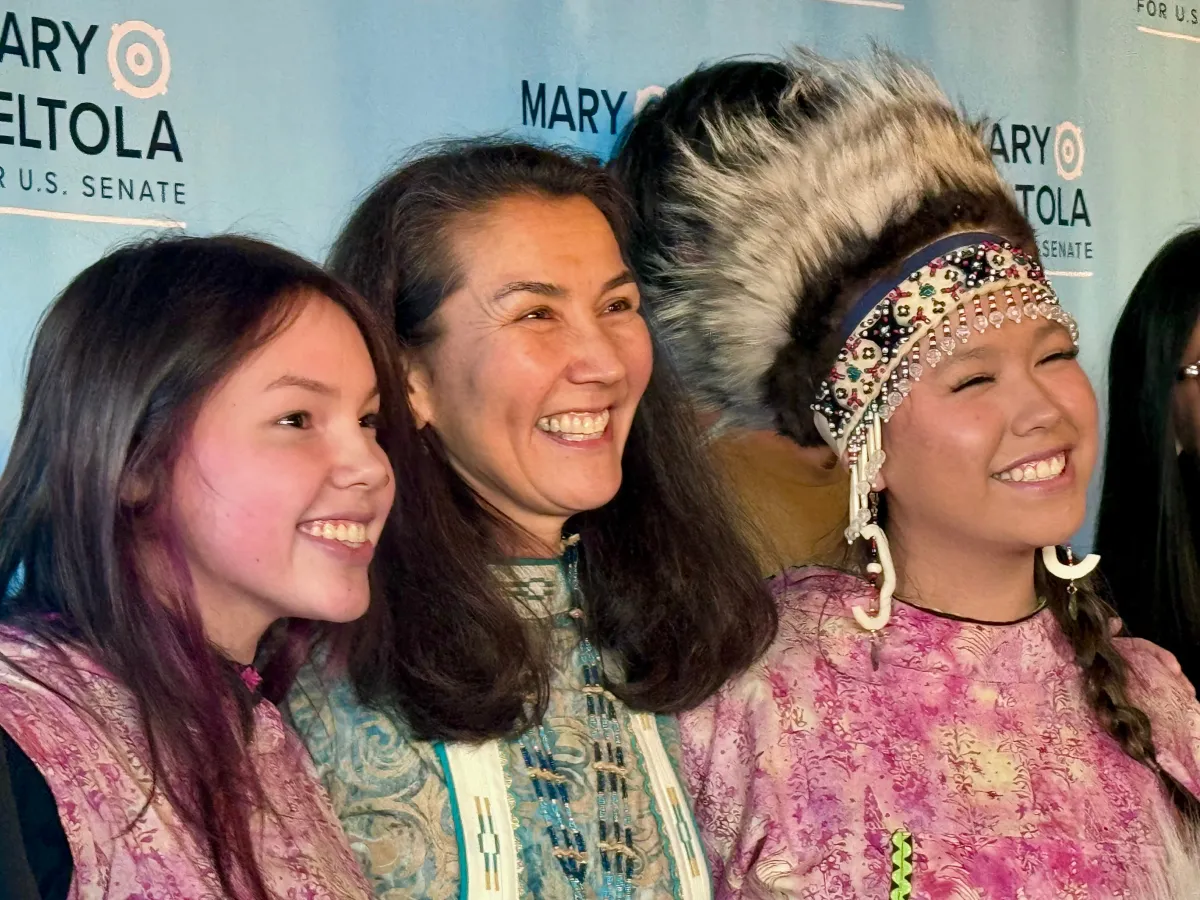
Finally, there is the human dimension, which is easy to lose in legal arguments. Mary Peltola is not a faceless defendant in a federal lawsuit; she is a candidate who has spent months meeting Alaskans in small towns and fishing villages, listening to their concerns about the cost of living, fishing rights, and the future of the state. Daniel J. Sullivan Jr. is not a political operative; he is a retired teacher, a neighbor, a person who simply wanted to put his name forward under the rules of his state. Election officials are not conspirators; they are ordinary Alaskans, many of them volunteers and part-time workers, who are doing their best to run an honest and orderly election. The Trump administration’s lawsuit treats them all as props in a larger political drama. The stakes are enormous: control of the United States Senate could come down to this one race, and the outcome could determine whether the new administration can advance its agenda. But for Alaskans, the deepest issue is simpler: will their votes count? Will their choice be respected? That is the question at the heart of the Democrats’ request to dismiss the case. They are asking a federal judge to say yes, the election can go forward, yes, the votes will be counted, and yes, the result will be certified in accordance with state law. The motion is a legal document, but it is also an appeal to the democratic idea that the people, not presidents or judges, choose their leaders. Neither side knows how the election will turn out, and the candidates will have to live with the result, whatever it is. But if the result is overturned by a lawsuit based on a hypothetical reallocation of votes for a man who was never elected by anyone, that would be a wound that goes far beyond Alaska. It would be a wound to the entire idea that elections mean something. For now, the request is before a federal judge, and the people of Alaska are waiting—not just for the counting to begin, but for a signal that the law will protect their voices. This is a developing story, and more will follow, but the most important moment will come when the voters themselves are heard.