


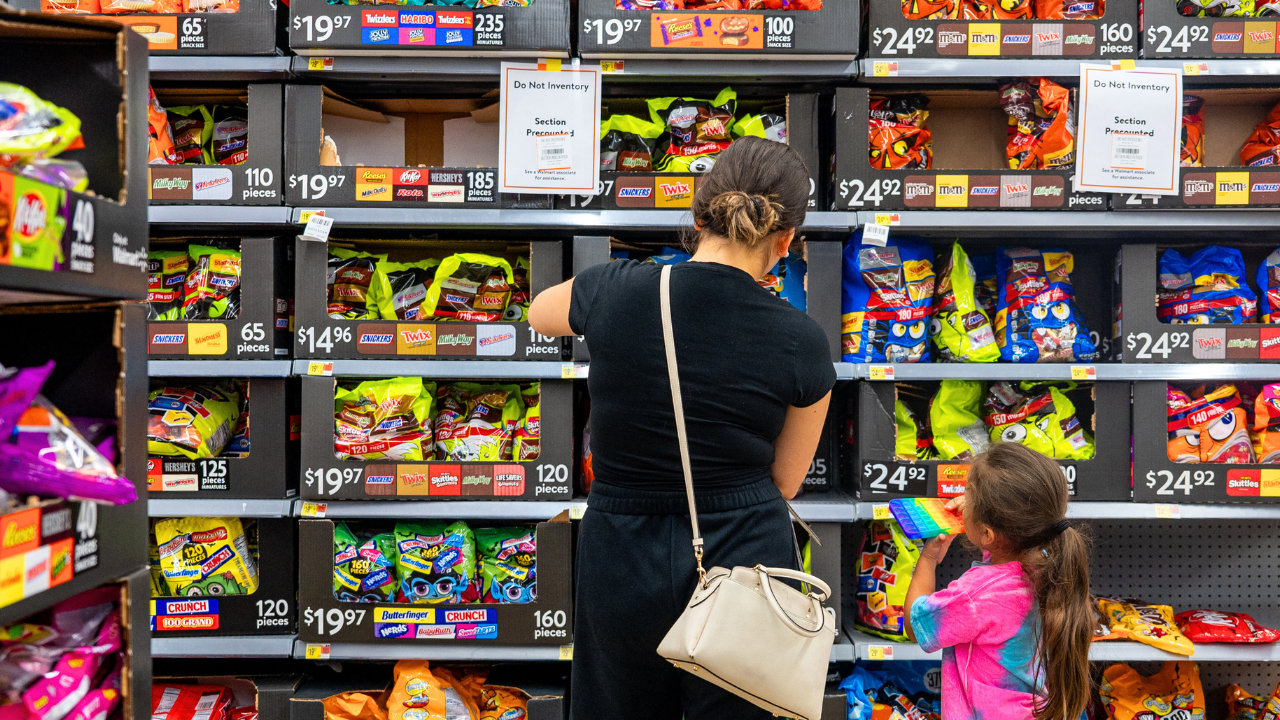
Autumn has arrived, and with it comes the familiar, magical ritual of Halloween: children in superhero capes and princess gowns, porch lights glowing in the dusk, and the rustle of candy wrappers filling the air. But this year, that beloved tradition of trick-or-treating is carrying a heavier weight than ever before. The simple act of buying a few bags of candy to greet the neighborhood’s ghouls and goblins has become a more expensive proposition, and the cost is impossible to ignore. Candy prices have risen by 7.7% over the year through September, a figure that is more than double the overall inflation rate of 3.7%, according to the Bureau of Labor Statistics. This isn’t just a minor bump; it’s a significant leap that affects every household that wants to keep the Halloween spirit alive. For many families, the holiday budget is now a careful calculation, balancing the desire to participate in a cherished community tradition with the very real pressure of rising prices on everything from groceries to rent. The cost of a bag of chocolate bars or gummy worms has become a tangible symbol of a larger economic moment, and it’s forcing families to think about Halloween differently than they have in past years.
Yet, despite this financial strain, candy remains the undisputed heart of Halloween. The National Retail Federation expects Americans to spend a remarkable $4.1 billion on candy alone this year, as part of a record-breaking $13.5 billion in overall Halloween spending. What’s even more telling is that 96% of Halloween shoppers plan to buy sweets, meaning that even with affordability concerns front and center, the treat bowl will not go empty. This isn’t just stubbornness; it’s a testament to how deeply Halloween is woven into the fabric of American life. The holiday represents a moment of joy, a break from the routine, and a chance for communities to come together in a shared experience that is both simple and profound. As Allison Zeller, vice president of industry and consumer insights at the National Retail Federation, put it, “Consumers continue to make Halloween a spending priority, but they are also approaching the season with affordability in mind.” That sentiment captures the balancing act many are performing. Parents who might be cutting back on dining out or delaying a new purchase are still setting aside money for candy, because the idea of turning away a child on Halloween night is unthinkable. The magic of the holiday is being protected, even if it means making sacrifices elsewhere.
But the way shoppers are approaching that spending has changed, and it shows a new level of savvy and intentionality. The National Retail Federation’s survey found that 31% of shoppers plan to comparison shop if prices are higher than they expected, while 26% will actively look for coupons or sales. This is not the frantic, last-minute grabbing of bags off the shelf; it’s a more thoughtful, calculated approach. Shoppers are becoming detectives, scanning weekly ads, clipping digital coupons, and visiting multiple stores to find the best deals on their favorite candies. Retailers are responding to this shift by offering products across a range of price points, ensuring that there is something for everyone, whether you’re looking for a premium chocolate bar or a budget-friendly bag of lollipops. This behavior reflects a broader trend in how consumers are navigating the current economy, where rising costs for housing, transportation, and everyday essentials are reshaping spending decisions. Yet even with those pressures, Halloween remains an occasion that consumers are willing to protect. According to NIQ, people are starting their Halloween shopping earlier, spreading their purchases across multiple trips to the store, and evaluating each item more carefully. It’s no longer about one big, impulsive shopping trip; it’s about a series of smaller, more deliberate decisions, each made with an eye toward value without sacrificing the joy of the holiday.
This resilience in the face of higher prices is not entirely new. Last year’s sales data tells a powerful story about consumer behavior. Halloween confectionery sales rose 7.6% even as unit sales fell 2.5%, which means that people were spending more money but taking home fewer items. The average price per unit went up, and chocolate, in particular, saw the largest average unit-price increase among the confectionery categories NIQ tracked, at 11.5%. This is a classic example of how inflation changes the shape of a purchase. Families are still committed to handing out candy, but they are being forced to make tough choices. Some are buying smaller bags, while others are choosing to give out fewer pieces per child. There’s a sense of wanting to maintain the tradition without being reckless about the budget. Chris Costagli, NIQ’s vice president of food and beverage thought leadership, captured this shift perfectly: “Consumers continue to make room for Halloween. What’s changing is how they participate.” The participation is no longer about overflowing bowls and endless generosity; it’s about a more measured, thoughtful approach that still honors the spirit of the holiday. Parents are explaining to their kids that maybe this year, the candy bowl is a little less full, but the excitement of going door to door remains just as vibrant.
The broader economic context makes this balancing act even more challenging. Families are feeling the squeeze not just at the candy aisle but in nearly every aspect of their lives. Housing costs are up, transportation expenses are higher, and the everyday essentials that fill a grocery cart are all demanding a larger share of the household income. In such an environment, every discretionary dollar is scrutinized, and Halloween candy is, for many, a discretionary purchase. But the National Confectioners Association points out that candy makers and retailers are not oblivious to this reality. They are offering seasonal promotions and a variety of package sizes to give shoppers options at various price points. This means that a family can still find a way to participate, whether that’s buying a larger shareable bag that can be portioned out over multiple nights or picking up smaller, more affordable packs that fit a tighter budget. The industry is adapting to the times, recognizing that the goal is not just to sell candy, but to keep the tradition alive. There is a certain human warmth in this adaptation, a recognition that Halloween is about more than just sugar. It’s about the look on a child’s face when they hold up their pumpkin bucket, the neighborly wave from the person on the porch, and the simple pleasure of being part of something larger than yourself. Those moments don’t have to be expensive, but they do require a certain amount of intentionality, and that’s exactly what shoppers are bringing to the table this year.
In the end, what stands out is the enduring spirit of Halloween. Yes, the price tags are higher, and yes, families are having to make adjustments. But the porch lights will still be on, the costumes will still be worn, and the little voices will still call out “trick or treat” with unbridled enthusiasm. The holiday is proving to be remarkably resilient, adapting to economic pressures without losing its core identity. Shoppers are finding ways to make it work, whether through careful planning, coupon clipping, or simply shifting priorities. The National Retail Federation’s projection of a record $13.5 billion in overall Halloween spending is evidence that this holiday holds a special place in the American heart, one that cannot be easily diminished by inflation. As families navigate this season, they are learning that the true value of Halloween is not measured in the size of the candy bars but in the quality of the experience. The joy of seeing a tiny dragon or a superhero run up the driveway, the laughter shared over a bowl of popcorn while handing out sweets, and the feeling of belonging to a neighborhood that celebrates together—these are the things that matter most. And so, despite the higher costs, the tradition continues, perhaps a little more thoughtfully, but with just as much heart. The magic of Halloween is not for sale, and that is exactly why it remains so precious.