


For decades, the Bush family has stood as one of the most recognizable pillars of American Republicanism, a dynasty built on public service, patrician values, and a certain brand of dignified conservatism. So when Neil Bush—the son of one president and the brother of another—stepped out of his usual private reticence to announce that he had cast an early ballot for a Democratic Senate candidate in Texas, the political world took notice. In a heartfelt and unusually personal Facebook post, Neil broke a self-imposed rule he had maintained for years: never posting anything political on social media, for fear of alienating friends with differing views. But this election, he explained, felt different. With a deep sense of urgency and a desire to speak his conscience, he revealed that he had voted for James Talarico, a Democratic hopeful challenging Texas Attorney General Ken Paxton. For a man who had spent his life carefully avoiding the spotlight of partisan warfare, the decision to go public was not impulsive—it was a quiet declaration that some principles transcend party loyalty, and that the character of a candidate matters more than the letter after their name.
Neil’s explanation for his vote was layered with both personal conviction and political alarm. He cited two central motivations: a profound concern over Ken Paxton’s record and a genuine admiration for the character and principles he sees in Talarico. But his statement went far beyond a simple endorsement. Neil took the opportunity to issue a broader indictment of the direction his own party has taken, writing that he believes Donald Trump and those who have enabled him have done enormous damage to the Republican Party. He worried aloud about a political culture where loyalty to an individual takes precedence over loyalty to principle, and where those in power begin to believe they are no longer accountable to the people they serve. These are not the words of a lifelong partisan trying to score points; they are the lament of a man watching something he once believed in fracture and fade. His vote, he insisted, was about much more than opposition to Paxton—it was a stand for a kinder, more principled kind of politics, one that he feels has been lost in the noise of modern political tribalism.
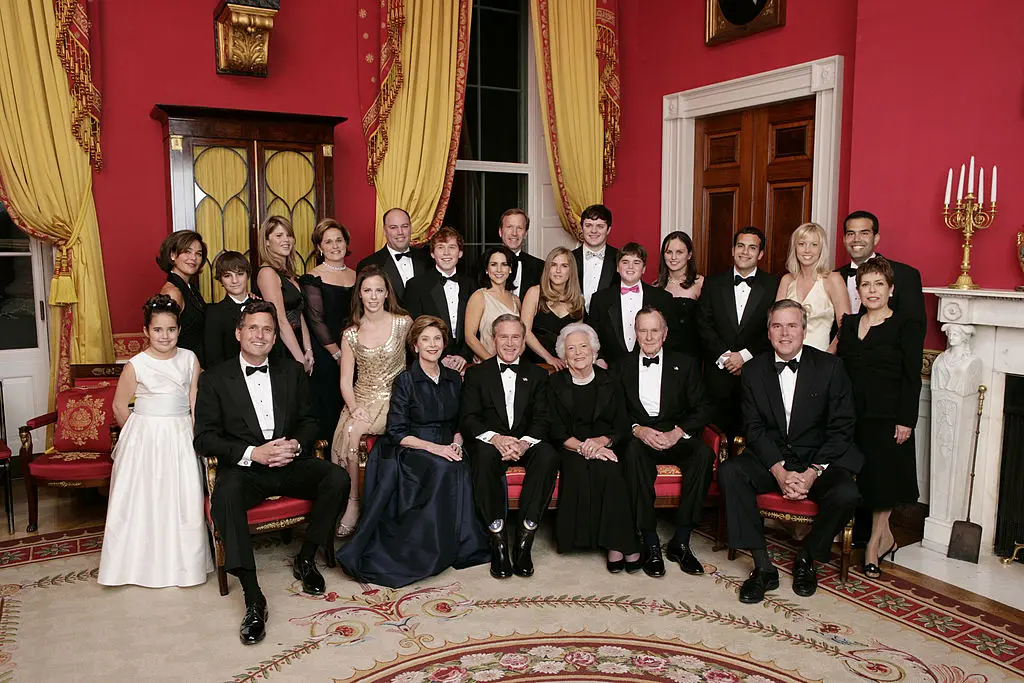
The context of Neil’s announcement makes it all the more striking. He is not just any Republican; he is the son of former President George H.W. Bush and the brother of former President George W. Bush. His family has long been a symbol of a more establishment-oriented GOP, one that valued civility, compromise, and institutional norms. Yet the relationship between the Bush family and the current direction of the Republican Party has been strained for years. Former President George W. Bush has maintained warm and respectful friendships with Democratic former presidents, but his relationship with Donald Trump has been icy since the 2016 Republican primary, when Trump relentlessly attacked Neil’s brother Jeb and mocked their mother, former first lady Barbara Bush. That friction has only deepened over time. Neil’s public embrace of a Democrat is therefore not a random act of disloyalty but rather a calculated moral statement, a quiet rebellion against the political style that he believes has damaged both his party and the country. In a way, his Facebook post reads less like a campaign endorsement and more like a eulogy for a Republican Party he no longer recognizes—one where fealty to a leader has replaced fidelity to ideas.
Neil is not alone in his family’s shift toward Talarico. Just weeks earlier, Barbara Bush—the daughter of former President George W. Bush—made her own contribution to the Democratic cause, donating $2,500 to Lone Star Rising PAC, a super PAC supporting Talarico and opposing Paxton. Federal campaign finance records confirmed the contribution, signaling that the younger generation of the Bush family is willing to cross partisan lines when they believe the stakes demand it. The PAC has become one of the major outside groups spending to bolster Talarico’s candidacy in a closely contested Texas Senate race, and the Bush name carries weight in a state where their family has deep political roots. But the race itself is fierce, and Paxton has drawn significant support from Trump-aligned groups, including a $10 million infusion from a MAGA-affiliated super PAC. The contrast could not be clearer: the Bush family, once the beating heart of Texas Republicanism, is now pouring its influence—however modestly—into the Democratic side of the ledger, while the national MAGA machine rallies behind their opponent. It is a testament to how dramatically the political landscape has shifted, and how even the most storied political families are being forced to choose between their historical identity and their contemporary conscience.
The irony of Neil’s endorsement is softened by his brother’s own post-presidential evolution. George W. Bush has spent his years since the White House deliberately embracing bipartisan friendships, appearing alongside Michelle Obama at the opening of her presidential center in Chicago in June, where the two shared a moment that charmed the nation. Their friendship has become something of a public touchstone—a reminder that political disagreement need not devolve into personal animosity. At the Obama Center opening, Bush recreated a famous moment from Senator John McCain’s 2018 funeral, offering Michelle Obama Altoids, a callback to their shared mint-and-cough-drop exchange that had once warmed the hearts of a divided nation. These gestures may seem small, but they speak to a philosophy of human connection that the Bush family has long tried to embody, however imperfectly. Neil’s vote for Talarico, viewed through this lens, is less a betrayal of family tradition and more an extension of it—a belief that relationships, character, and decency should matter more than party lines. In an era of toxic polarization, the Bush family’s willingness to reach across the aisle, even at the cost of alienating members of their own party, offers a rare and fragile glimmer of hope.
Ultimately, Neil Bush’s decision to go public with his vote is a deeply human reminder that politics is not always about winners and losers. It is about the quiet choices we make in the voting booth, and the stories we tell ourselves about who we are and what we stand for. He did not expect to persuade the MAGA faithful, nor did he likely believe his post would change the outcome of a tough Senate race. But he did it anyway, because he felt compelled to bear witness to his own values. His words reflect a longing for a gentler era of politics, one where you could disagree with someone without demonizing them, and where loyalty to country came before loyalty to any single person. Whether James Talarico wins or loses, Neil Bush has already won something for himself: the freedom to look in the mirror and know that he acted according to his conscience. In a world that often rewards blind allegiance and punishes those who break ranks, that is no small thing. His family may be divided from the modern Republican Party, but they remain united by a belief in service, integrity, and the possibility of redemption—one vote, one small and brave act, at a time.