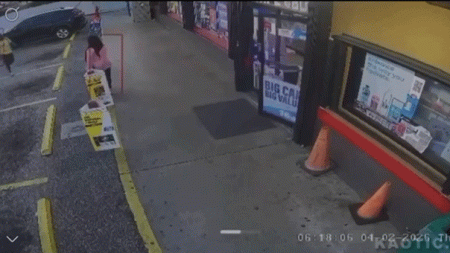



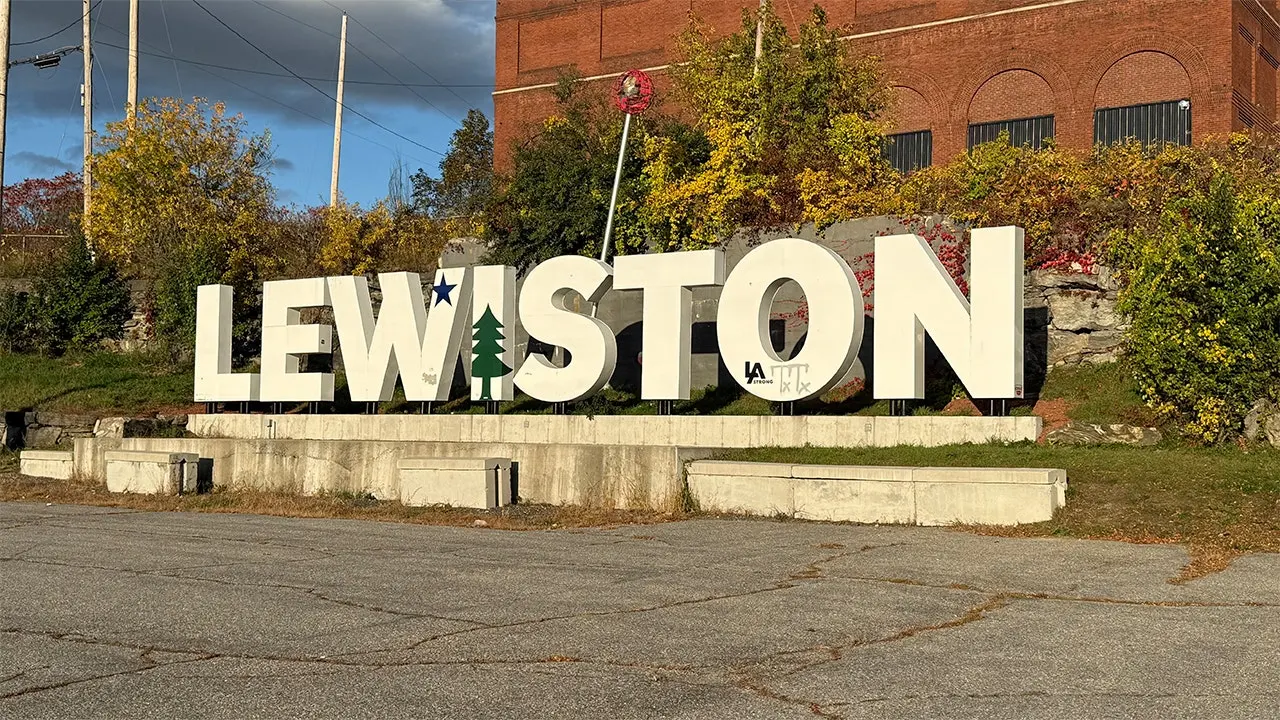
LEWISTON, Maine — The streets of this old New England mill city, where the Androscoggin River once powered textile mills and generations of French Canadian immigrants built their lives, now carry a different kind of tension. Mohamed Muhumed, a teenager standing near a downtown sidewalk, didn’t hesitate when asked how it feels to grow up here right now. “I don’t feel safe. I fear for my life,” he said. He pointed to the spot where he’d seen a young man punched in broad daylight. “It’s crazy.” This is Lewiston, Maine’s second most populous city and a place that has been fundamentally reshaped over the past quarter century by refugees and immigrants, most famously from Somalia. Today, that transformation is colliding with a troubling new reality: a youth gun-violence crisis that has police and city leaders scrambling for answers. According to the Lewiston Police Department, the city has recorded 35 gun-related incidents this year, and 22 of those involved juveniles. Police Chief Carly Conley didn’t sugarcoat the moment, calling gun violence “one of the most serious public safety challenges” facing the city. For the people who live here, especially the kids navigating sidewalks and schoolyards, it’s not a talking point. It’s a daily calculus of where to walk, who to avoid, and whether a fistfight or a feud might end with a gun.
The numbers alone would worry any community, but what makes Lewiston’s situation feel especially urgent is the age of those involved. Jon Fetherston, a reporter for The Maine Wire who has spent months covering the issue, described a pattern that has become disturbingly routine. “The gun violence in Lewiston is very concerning,” he said. “The majority of it has been committed by teenagers.” What alarms him even more is what happens after an arrest. “Multiple times,” he said, “teenagers have been arrested and immediately released by the courts back out on the streets.” The result is a loop that leaves law enforcement frustrated and residents anxious. Fetherston said the court system is being “tapped” — overwhelmed and unable to hold violent young offenders accountable. The district attorney is frustrated that judges won’t keep kids in custody. Police do their part, make arrests, build cases, and then watch the same faces reappear on the same corners. “Residents are scared,” Fetherston said. “Residents are very, very frustrated, and you’ve got kids shooting kids, and it’s almost become commonplace here in Lewiston.” That word — commonplace — is perhaps the most haunting of all. In a city that once prided itself on safety, where neighbors knew each other’s names and kids played without hovering parents, the normalization of violence is a profound loss.
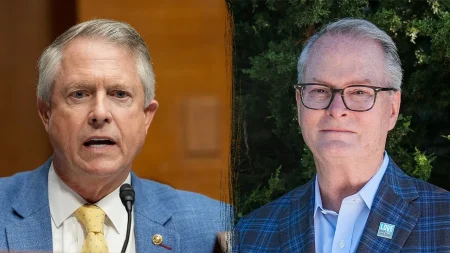
City leaders are not ignoring the crisis. In response, officials have approved an additional $200,000 in police overtime funding to expand patrols and enforcement in the most affected neighborhoods. They have also called for changes to Maine’s juvenile justice system, pushing for more options when dealing with repeat violent offenders and demanding greater scrutiny before high-risk juveniles are released back into the community. Mayor Carl Sheline released a statement last month promising that the increased resources were “sending a strong message to those perpetrating gun violence: we will find you.” But he also pointed a finger closer to home, insisting that “parental involvement and accountability are key to reducing youth gun violence in our city.” It’s a delicate message, one that acknowledges both the need for policing and the limits of what policing can do. Rick LaChapelle, a Republican former city council president now running for mayor, is more blunt about where he thinks the problem lies. “Our biggest problem is the system itself,” he said. “The police department is doing an excellent job catching these people. We have one young man that’s been arrested five times, I believe, for the same thing. He gets arrested, gets brought down to the youth center… gets released.” For LaChapelle, the frustration is not with officers but with a legal framework that he believes has lost its teeth. “It’s been a one-party rule forever that has instilled the rules that there’s no accountability,” he argued. “We need to change the rules of the system.” Whether or not that diagnosis is fully accurate, it reflects the anger of a community that feels the justice system is failing to protect them.
But not everyone sees this as a simple story about law and order, and many in Lewiston are pushing back hard against any suggestion that the violence is rooted in the city’s Somali community. No official city or police data indicates that Somali residents as a group are behind the uptick in gun incidents, and no evidence establishes a causal connection. Still, the perception lingers in some corners, and it has created an uncomfortable undercurrent in the public conversation. Mohamed Adbei, a teenager who spoke with Fox News Digital on the streets of Lewiston, rejected the ethnic framing outright. “I wouldn’t just say it’s the Somali kids,” he said. “It’s youth in general.” Ifraax Saciid, a Somali native who lived in Atlanta, Miami, Ohio, Kentucky, and Minnesota before settling in Lewiston, echoed that sentiment. She argued that the root cause is not culture or ethnicity but economics. “No, that’s not the root cause. I think the root cause is poverty here in Lewiston. Lewiston is very poor and is economically not in a good state,” she said. “I think what’s happening here is happening everywhere. It’s happening in Atlanta. I have lived in Miami and Ohio and Kentucky and Minnesota and have seen what is happening in those states also happening here in Lewiston. It’s nothing new.” Her perspective is important because it reframes the crisis as part of a broader American pattern of youth violence in struggling communities, rather than a problem unique to refugees or immigrants. It also complicates the narrative of Lewiston as a place that was peaceful until outsiders arrived. The same economic pressures, housing insecurity, and lack of opportunity that drive violence elsewhere are present here in abundance.
To understand how Lewiston reached this point, you have to look back more than two decades. The Somali influx began in earnest around the turn of the millennium, as refugees and secondary migrants started relocating to the former mill city in search of safe neighborhoods and affordable housing. They came from war-torn regions, from crowded cities, from refugee camps — looking for a place to rebuild. Many found work, opened businesses, bought homes, and sent their children to school. But the pace of change was startling for a small city, and tensions emerged. In 2002, then-Mayor Larry Raymond made national headlines when he asked Somali leaders to discourage additional migration to Lewiston, arguing that the rapid influx was straining the city’s social services and infrastructure. He was criticized as insensitive, even bigoted, but on a practical level, he was pointing to real challenges: housing shortages, school overcrowding, the need for interpreters, and shifting demographics. Fast-forward to today, and Lewiston has one of the highest per capita Muslim populations in the country, with Somalis along with refugees from other African nations making up a significant share of residents. The city has also become an epicenter in recent years for fraud scandals involving Maine’s joint federal and state Medicaid program, adding another layer of scrutiny and resentment. Fetherston argued that “history has proven him [Raymond] to be correct” in his warning that it was “too much too fast.” He pointed to the struggles now visible in Lewiston as evidence. But Saciid rejected the notion that fraud or violence is tied to any particular group. “Fraud is happening everywhere in the United States and with every skin color, with every class,” she said. “It’s not tied particularly to one people.” Her insistence on context is a reminder that cities across America are grappling with gun violence, opioid addiction, and systemic poverty — Lewiston is not an island.
As the mayor’s race heats up and the midterms approach, the debate over Lewiston’s future is becoming a proxy for larger national questions about immigration, public safety, and the welfare state. LaChapelle, who is running on a platform of tough accountability, acknowledges his own family’s immigrant past. “I’m a French Canadian, so my ancestors came here,” he said. “We need legal immigration in America. We need to grow.” But he argues that the conditions his ancestors faced were different. “We just have to do it logically and legally,” he said. “When my ancestors got here, there wasn’t a free… gravy train all the way down. Now we’re supporting everybody. We have for 30 years, we still have some people that are still on the welfare system 30 years later. That has to change.” It is a sharp, divisive message, one that resonates with some longtime residents who feel left behind or displaced, and one that stings for those who see it as ignoring the structural barriers that immigrants and refugees face. Yet even as the politics harden, the human story remains more complicated than any slogan. Lewiston is a city of contradictions: proud and struggling, welcoming and wary, resilient and exhausted. The young people roaming its streets are not just statistics in a police report. They are Mohamed, who fears for his life. They are Mohamed Adbei, who insists this is not about ethnicity. They are children of refugees and children of mill workers, growing up in the same broken places, looking for safety and hope in a city that is still trying to find itself. The gun violence is a symptom of a deeper ache — a community in transition, a justice system in need of reform, and a struggling economy that offers too little to too many. There are no easy answers, no single villain, and no quick fix. But if Lewiston is going to heal, it will have to move beyond blame and fear, and listen to the voices of the people most affected. They are the ones who know, better than any politician, what is at stake. They are the ones who walk these streets every day. And they are the ones who, more than anything, just want to feel safe again.