


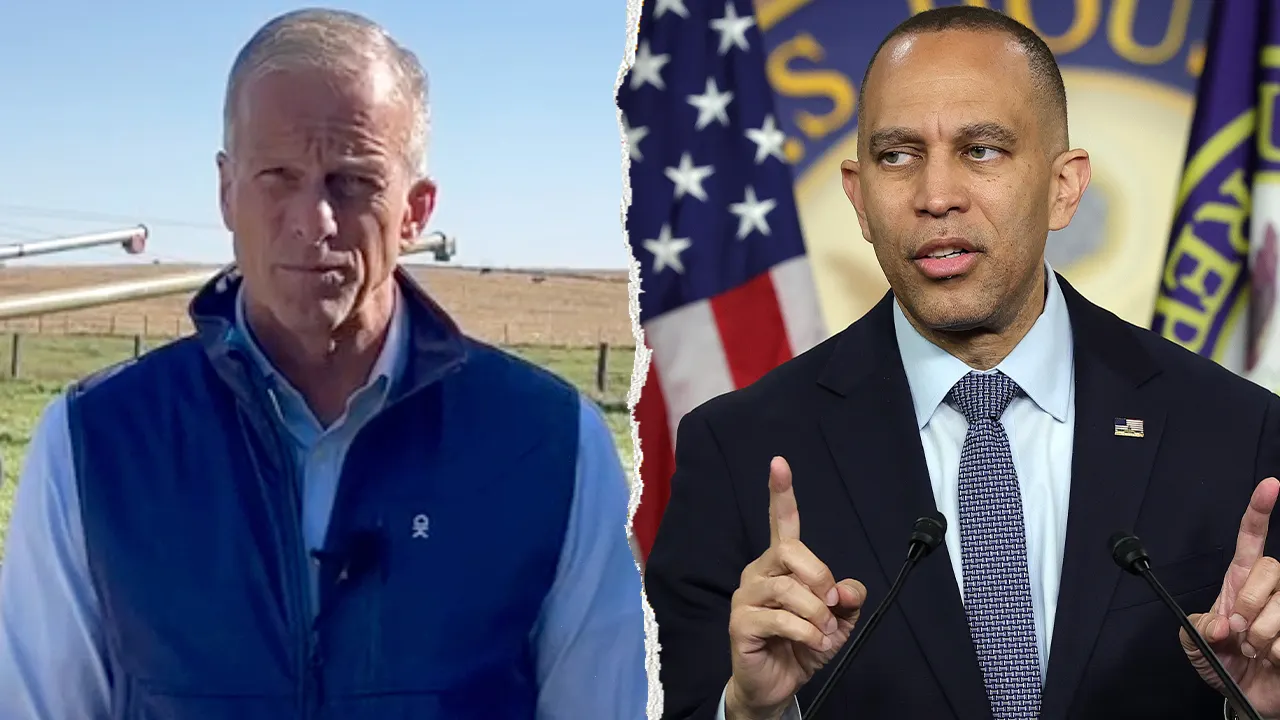
Picture this: it’s the morning after Election Day, and the results are still settling in. If the numbers break the way Democrats hope, the balance of power in Washington gets turned upside down. The House of Representatives flips to Democratic control, and suddenly, the relationship between the two top lawmakers on opposite sides of Capitol Hill becomes one of the most consequential dynamics in the country. On one side, you have Senate Majority Leader John Thune, a South Dakota Republican who has spent years in the gritty, procedural trenches of the Senate. On the other, you have House Minority Leader Hakeem Jeffries, a New York Democrat who has been leading his conference in the lower chamber since 2023. If that scenario plays out, these two men—who have spent the last couple of years trading sharp elbows and sharper words—would have to figure out how to work together for the remainder of President Donald Trump’s presidency. That’s not exactly a recipe for a warm-and-fuzzy political friendship. But it would be the reality of a divided government, where nothing happens unless the people in charge of each chamber can find some common ground. And while Thune acknowledged that would be an “entirely different dynamic,” he wasn’t exactly losing sleep over the possibility. Speaking with Fox News Digital on the campaign trail in Fremont, Nebraska, he made it clear that he fully expects Republicans to hold the line and keep control of both chambers. You don’t have to be a political junkie to understand why that matters: control of just one half of Congress can be the difference between a president getting his agenda through or watching it die in committee.
Thune’s confidence was almost palpable during that interview. He didn’t sound like a man who was bracing for a tough night. He sounded like someone who had done the math, read the polls, and talked to enough candidates to feel good about where things were heading. “I don’t assume for a minute that’s going to happen,” he said, referring to the possibility of a Democratic House. “I still think that when push comes to shove and people look at the choices in front of them that we have a really good shot at hanging on both the House and the Senate.” That kind of optimism might sound like standard campaign fare, but there’s something deeper to it. Thune was careful to frame the stakes not just in terms of political power, but in terms of what that power is actually for. In his view, a Republican Senate is essential to keeping the country moving in the right direction. It’s about confirming judges, advancing policy, and giving President Trump the backing he needs to execute his vision. But here’s the thing about Thune’s confidence: he’s been around long enough to know that the political winds can shift quickly. He’s seen Republicans celebrate early victories only to watch them slip away. He’s also seen the messy reality of governing up close, where a narrow majority can make every vote feel like a nail-biter. Still, he seemed genuinely convinced that voters, when faced with the alternative, would choose the party that had been in charge. That’s not just political spin—it’s a calculated bet on the American electorate’s tendency to pull back from the brink when things get uncertain.
But let’s be honest about why Thune’s party might be sweating a little, even if he isn’t. The House has been a much murkier battleground than the Senate. Republicans have held the lower chamber since 2022, when they flipped it during former President Joe Biden’s tenure. But a lot has changed since then. President Trump’s approval ratings have dipped to historic lows, and economic pressures continue to weigh heavily on everyday Americans. Gas prices, grocery bills, housing costs—these aren’t just talking points; they’re the daily realities that shape how people vote. Election forecasters have noted that the Senate could very well stay in Republican hands, with a handful of toss-up races still up for grabs. The Cook Political Report lists seven Senate races as true toss-ups, which means the math is tight but manageable for the GOP. The House, however, is a different story. Dozens of battleground seats are in play, and many of those districts have been trending in a Democratic direction. That’s not necessarily a wave, but it’s enough to make the GOP’s grip on the chamber feel shaky. Democrats, meanwhile, have been eyeing a takeover with renewed vigor. They look at those battleground races and see opportunity. They see an electorate that is frustrated, restless, and hungry for change. And leading that charge is Hakeem Jeffries, a man who has been quietly positioning himself as the future of the Democratic Party. If the House flips, he wouldn’t just be a passive observer watching from the minority—he’d be the Senate majority leader’s new partner, whether Thune likes it or not.
Now, let’s talk about the relationship between these two men, because it’s anything but warm. This congressional term has been marked by some serious bad blood. When talks over funding the Department of Homeland Security broke down earlier this year, Thune didn’t hold back. He blasted Jeffries and Senate Minority Leader Chuck Schumer, accusing them of being “afraid of their shadows” and being controlled by the left wing of their party. It was a sharp, pointed jab designed to paint Democrats as weak and disorganized. Jeffries, never one to back down, fired right back. He told reporters that it was actually Thune who was “scared of his own shadow” during the partisan standoff. That sort of back-and-forth might make for good cable news soundbites, but it doesn’t exactly lay the groundwork for future collaboration. And the friction didn’t end there. During the 2025 government shutdown, Jeffries accused Thune of “trying to bluff his way into an agreement” on federal spending. For his part, Thune’s office didn’t exactly extend an olive branch. Jeffries’ team didn’t respond to Fox News Digital’s inquiry about whether he could work with Thune if both men ended up in their respective leadership spots. That silence speaks volumes. It suggests that, at least in public, neither side is eager to signal that they’re preparing for the other to gain power. But here’s the reality of Washington: the people leading these institutions don’t always get to choose their coworkers. If voters hand the House to Democrats, Thune and Jeffries will have to find a way to function. They’ll have to negotiate over spending bills, disaster relief, and the endless parade of must-pass legislation that keeps the government running. They might not like each other, but they’ll need each other. That’s not weakness; that’s how the system works, for better or worse.
And honestly, divided government isn’t exactly uncharted territory. Congress has been through this before, and it’s survived. Between 2023 and early 2025, the country had a split Congress in a way that seems almost quaint now: Republicans controlled the House, but Democrats held a razor-thin majority in the Senate. That meant every piece of legislation had to thread a needle through two chambers with very different priorities. It was messy, slow, and often frustrating. But according to data from the Pew Research Center, that split Congress managed to produce 106 laws. That’s not exactly a legislative bonanza, but it’s proof that progress is possible even when the two sides don’t see eye to eye. This current Congress, with Republicans holding both the House and the Senate, has so far produced 121 laws. Some of those have been significant, like the “big, beautiful bill” and a major housing affordability package. But don’t let that number fool you into thinking it’s been smooth sailing. Those accomplishments came between historically long government shutdowns, which are the political equivalent of a child holding their breath until they get what they want. It’s a system that tests everyone’s patience. Yet the fact remains: even in a divided government, things get done. Not always the things people want, and rarely as quickly as they’d like, but enough to keep the country moving. That history might be cold comfort to Thune and Jeffries if they end up facing each other across the aisle. But it also suggests that the dysfunction isn’t permanent. There’s a rhythm to governing that eventually forces even the most bitter rivals to find a way to coexist.
For now, Thune is laser-focused on one thing: making sure that scenario never comes to pass. He’s been crisscrossing the country for weeks, boosting Republican candidates in competitive races that could determine the balance of power in the Senate. He’s not just going through the motions, either. There’s a sense of urgency in his voice when he talks about the importance of holding the majority. “So if you want to see the country succeed and move forward, we’ve got to have a majority in the U.S. Senate to work with this president,” Thune said. He added, “Hopefully with a majority in the House as well, but I am very committed to doing whatever I can in the next couple of weeks getting around the country on behalf of our candidates to ensure that we have that majority in the Senate.” That last part matters. Thune knows that the Senate is the gatekeeper for some of the most consequential decisions a president can make. Judicial nominations. Cabinet appointments. Executive branch positions. None of that happens without a majority that’s willing to confirm the president’s picks. Thune’s argument is simple: if you want this administration to be effective, you need to keep Republicans in charge of the upper chamber. And if you want to avoid the gridlock of divided government, you should probably keep the House red too. It’s a message he’s been delivering everywhere from small-town rallies to packed fundraisers, and he seems to genuinely believe it. Whether voters share that belief is another question. But as Election Day approaches, Thune is doing exactly what any leader in his position would do: fighting with everything he’s got. The outcome will be decided by voters in a few short days. And if the worst-case scenario for Republicans comes to pass, Thune might find himself in the strange position of having to work with a man he’s spent months criticizing—and Jeffries might find himself in the same boat. That’s politics. It’s messy, uncomfortable, and sometimes full of surprises. But it’s also what makes this whole experiment called democracy so endlessly fascinating.