


Paragraph 1: A New Kind of Public Health Warning
In a move that feels less like a government briefing and more like a scene from a high-stakes investigative thriller, the Trump administration is pulling back the curtain on the shadowy world of healthcare fraud. At the center of this effort is Dr. Mehmet Oz, the administrator of the Centers for Medicare & Medicaid Services (CMS), who is taking Americans on a visceral journey through the schemes, scams, and suspected criminal enterprises that are siphoning billions from taxpayer-funded health programs. The result is a 27-minute documentary titled War on Fraud, first obtained by Fox News Digital, which follows Oz across the country as he confronts the people and practices behind the troubling statistics. This isn’t just a policy paper or a dry congressional testimony; it’s a street-level look at how criminals exploit the most vulnerable among us, all while lining their pockets with money meant to heal the sick and care for the elderly. As Oz put it bluntly in the film, “Fraudsters and criminals don’t give a s— about you. They want your money, and they will walk all over your health, sacrifice your life and betray society’s trust to get your hard-earned money.” The documentary features appearances from Department of Health and Human Services Secretary Robert F. Kennedy Jr. and CMS Deputy Administrator Kim Brandt, adding a sense of institutional gravitas to what feels like a personal crusade. The timing is deliberate, with the administration eager to show it is not merely talking about waste and abuse, but actively hunting down those responsible. For the average American, the message is simple: the programs we rely on to care for our parents, our neighbors, and ourselves are under attack from within, and the people entrusted to protect them are finally fighting back with a level of visibility that is rare in Washington.
Paragraph 2: The Shocking Reality of Adult Daycare Fraud
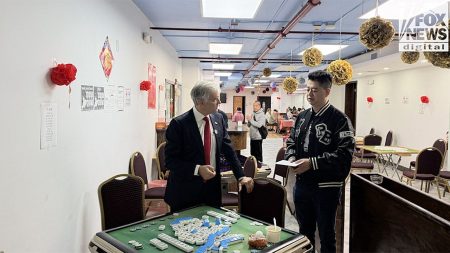
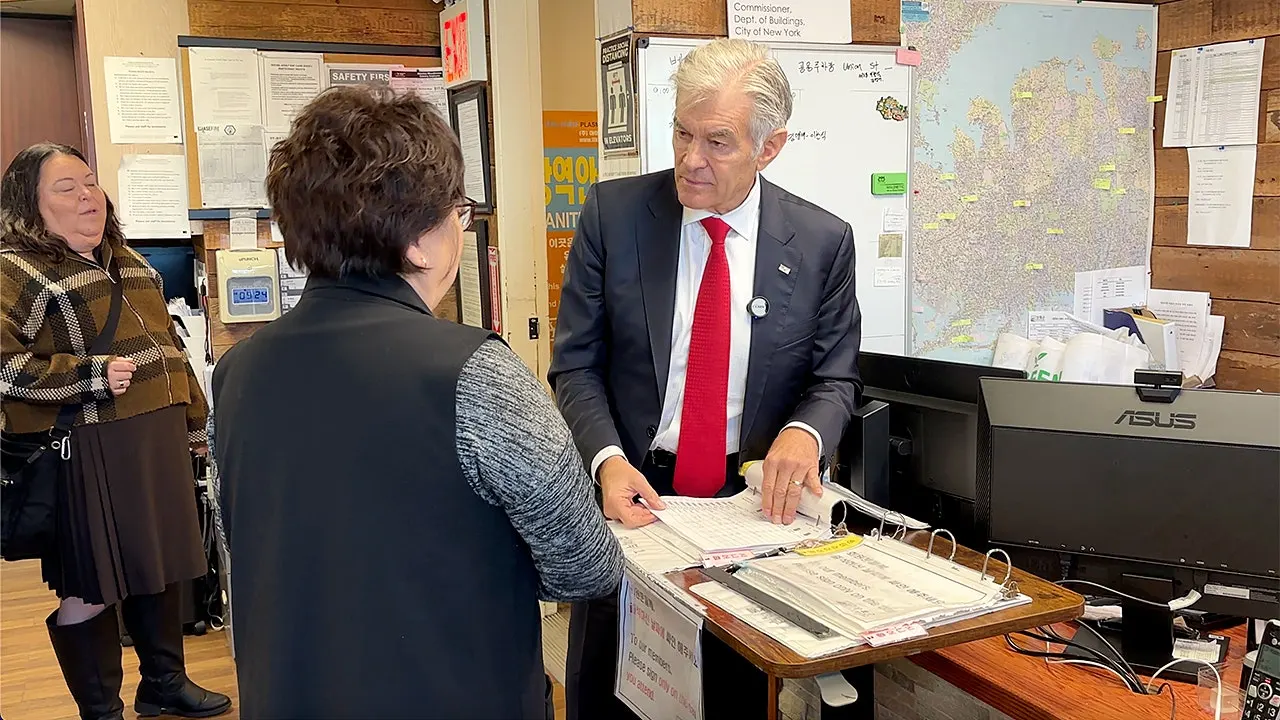
One of the most striking segments of the documentary takes place in New York City, where Oz accompanied federal investigators during a sweeping crackdown on senior daycare centers suspected of questionable Medicaid billing. The scene is almost surreal: more than 80 providers in the city received warning letters from CMS, not as a polite suggestion, but as part of a broader operation involving the FBI, HHS-OIG, NYPD, and other agencies. During the visit, Oz and his team observed what they described as a series of glaring irregularities. There were senior day care centers with suspiciously low attendance, yet their Medicaid billing was sky-high. Wheelchair transportation charges appeared questionable, seniors were seen entering without signing in, and attendance claims were inconsistent from one day to the next. Perhaps most damning were the sign-in sheets containing future-dated entries, as if the fraudsters couldn’t even be bothered to wait for the day to arrive. The FBI confirmed that law enforcement activity was underway in Queens, Staten Island, Brooklyn, and other locations across New York City in connection with ongoing federal investigations. For viewers, this segment humanizes the issue in a way that numbers cannot. These are not faceless corporations; they are neighborhood establishments, often staffed by people who should be caring for our grandparents. Instead, federal officials allege, they are gaming the system, using the elderly as props to bill for services that were never provided. The emotional weight of this section is heavy, as it paints a picture of vulnerable men and women being treated as commodities, their names and Medicare cards turned into billing machines for organized fraud. Oz’s presence on the ground, walking through these centers and pointing out the red flags, transforms a complex policy issue into a personal confrontation with the individuals who are betraying the public trust.
Paragraph 3: Hospice Care and the Shadow of Organized Crime
The documentary then shifts its focus to a particularly dark corner of the healthcare system: hospice care. In the Los Angeles area alone, Oz notes that roughly 2,000 hospice providers are operating, a number so high that it has raised serious concerns about fraudulent billing. Hospice is meant to provide comfort and dignity to those at the end of life, a time when families are at their most vulnerable and least likely to question the details of billing. That makes it an ideal target for criminals. Oz claims in the film that Russian organized crime groups are involved in some suspected hospice fraud operations, alleging that unsuspecting patients are being enrolled in hospice care under false pretenses. The scheme is cold-blooded: patients are falsely declared terminally ill, misleading them into enrolling in hospice care and potentially limiting their access to treatment for conditions that are not truly terminal. Meanwhile, the fraudulent operators bill Medicare for services that were never rendered or were medically unnecessary. It is a cynical manipulation of the most sacred trust in medicine. This segment of the documentary is hard to watch, not because of graphic imagery, but because of the quiet horror of the situation. Imagine a family being told that their loved one has a serious, life-limiting illness, only to later discover that the diagnosis was fabricated to steal money from the government. The result is that patients may be deprived of curative care, their health deliberately mismanaged so that someone else can profit. By bringing these allegations into the public eye, Oz is shining a light on a silent epidemic. It is one thing to talk about abstract budget deficits; it is another thing entirely to show how fraudsters are preying on the sick and dying. The film’s message is clear: this is not a victimless crime, and the consequences extend far beyond the balance sheet, touching the lives of real people in their final, most precious moments.
Paragraph 4: A National Reckoning from Minnesota to the White House
The Trump administration’s broader war on fraud extends far beyond New York and California, with Minnesota emerging as a major focus of the crackdown. Oz points to the state’s $250 million “Feeding Our Future” scandal as a turning point in how the government views large-scale fraud. That case, which erupted into the national spotlight in 2022, involved the exploitation of a federal child nutrition program, with funds funneled to shell companies and used for personal gain. It has since produced a wave of federal convictions, and it served as a wake-up call for the administration. The White House Task Force on Fraud, led by Vice President JD Vance, has joined Oz in a media blitz highlighting alleged scams as the administration ramps up its efforts to combat corruption in taxpayer-funded programs. The collaboration between Vance and Oz is a sign of how seriously the White House is taking this issue, treating it not as a routine administrative matter but as a central pillar of its agenda. The documentary uses Minnesota as a case study in how fraud can take root in ordinary communities, often with the complicity of trusted individuals who are supposed to be serving the public good. The human angle here is the betrayal of trust on a massive scale, where programs designed to feed hungry children and support struggling families are instead being pillaged by people who saw them as an unlimited ATM. The emotional resonance of this segment lies in the contrast between the noble purpose of these programs and the greed of those who corrupted them. It is a story that resonates with everyday Americans, who pay into a system with the expectation that it will be there for them when they need it, only to discover that the money is being stolen out from under them.
Paragraph 5: The Largest Medicare Fraud Scheme in American History
Among the most jaw-dropping revelations in the documentary is the focus on what federal prosecutors allege is one of the largest Medicare fraud schemes in U.S. history, centered in Delray Beach, Florida. The scheme involved approximately $3.7 billion in fraudulent billing claims tied to medical equipment companies. According to federal prosecutors, the masterminds billed for medical equipment that patients never requested, never needed, and in many cases never received. The scale of the operation is almost incomprehensible, yet the documentary presents it in human terms, focusing on the accused ringleader who fled the United States before being captured in Turkey and returned to South Florida to face federal charges. The FBI has even added two fugitives to its “Most Wanted Fraudsters” list as part of a historic $6.5 billion healthcare takedown, a figure that underscores the sheer magnitude of the problem. For viewers, this segment is a reminder that healthcare fraud is not a penny-ante crime but a sophisticated, multi-billion-dollar business that operates with the kind of logistical complexity one might associate with a major corporation. The human cost is twofold: first, the patients who are exploited, often receiving unnecessary or harmful equipment that they did not ask for, and second, the general public, whose tax dollars are being drained at a rate that is simply unsustainable. Oz’s narration brings a sense of urgency to the story, making clear that these are not victimless financial crimes but acts of profound greed that undermine the integrity of the healthcare system and erode public confidence in the government’s ability to protect the most vulnerable.
Paragraph 6: On the Ground in Flushing and the Fight Ahead
The documentary also brings viewers back to the streets of Flushing, Queens, where Oz describes a cluster of businesses—a social adult daycare center, a pharmacy, and a medical center—as a “clubhouse for crooks.” The allegation is that these businesses work together in a coordinated fraudulent billing operation, recruiting seniors, getting them into the system, and then using their ID numbers to submit bogus claims. As Oz explains, the fraudsters “game the system and they use their ID numbers to charge everybody, which means they are charging you.” It is a stark reminder that healthcare fraud is not a victimless crime, and that every dollar stolen is a dollar that could have been used to provide real care to real people. The documentary was released Wednesday at 4 p.m. ET on Oz’s X account, a move that signals the administration’s desire to bypass traditional media and speak directly to the American people. In an era of widespread distrust in institutions, this approach is designed to be transparent and tough, showing that the government is actively hunting down those who would steal from the public. But the deeper message of War on Fraud is both urgent and sobering. The fight is far from over. Every day, new schemes are being devised, new vulnerabilities exploited, and new victims added to the rolls. The documentary is not just a summary of past accomplishments; it is a call to action, a request for the public to pay attention, to demand accountability, and to recognize that the integrity of America’s healthcare programs is not a given but something that must be vigilantly defended. In the end, the film is less about the villains and more about the victims, the seniors, the disabled, the working families, and the taxpayers who deserve better. By humanizing the statistics, Dr. Oz and the Trump administration are hoping to build a lasting movement against fraud, one that will protect the sacred promise of healthcare for generations to come.