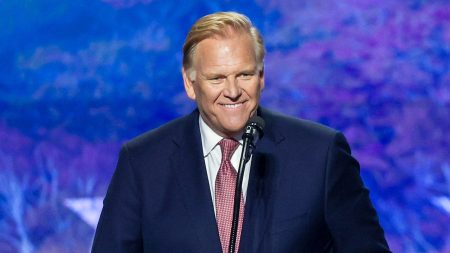



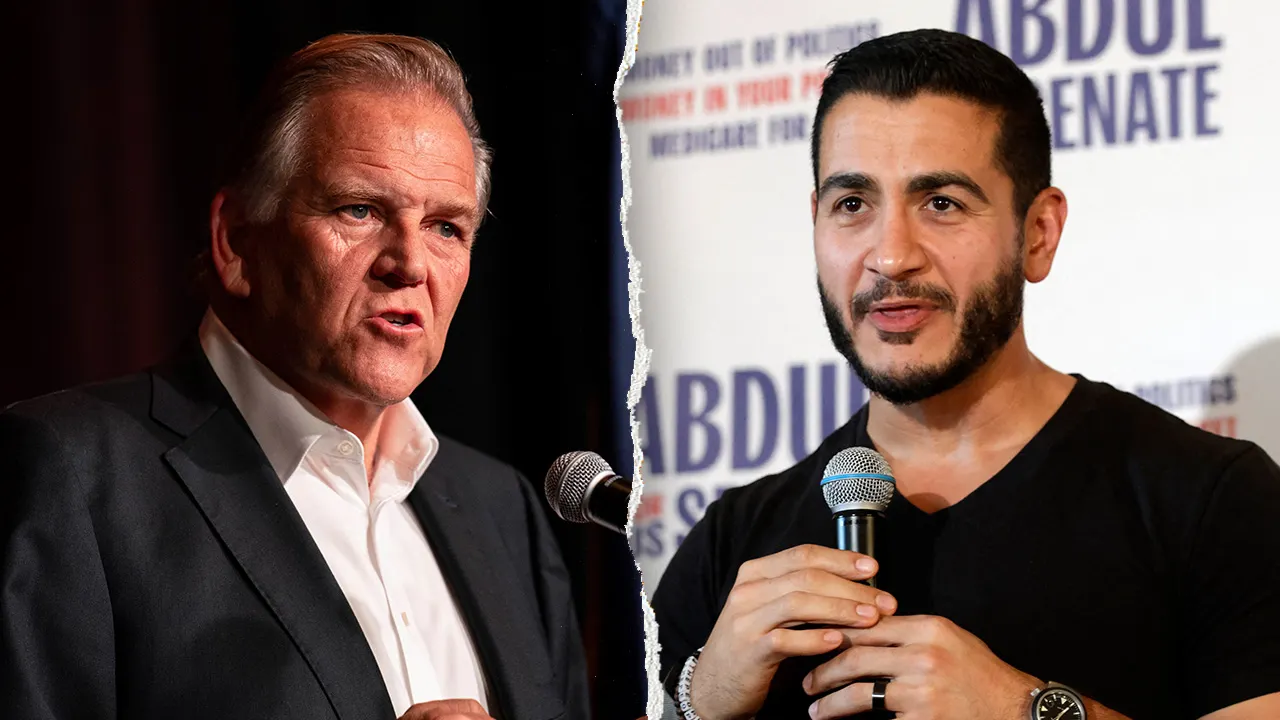
Let’s be honest: there are few things more dramatic than the final two weeks of a campaign, especially in a state like Michigan. Monday night, Fox News brought a town hall to voters there, and Sean Hannity sat down with a slate of Republican candidates who were clearly ready to make their case to a state that could decide some of the most important races in the country. The setting was intimate—a room full of people who had questions, anxieties, and a very real sense that this election matters. The headline guest was Mike Rogers, the GOP Senate nominee, who spent the evening trying to convince Michigan voters that his Democratic opponent, Abdul El-Sayed, is not the progressive champion he seems to be, but rather someone who might alienate the very people Democrats have always relied on. Alongside Rogers, Republican gubernatorial nominee John James talked about money, waste, and the trust between citizens and their government, while House GOP Conference Chair Lisa McClain delivered the kind of red-meat rhetoric that gets a crowd on its feet. The common thread was simple: Democrats, they argued, are too busy spending, hiding, and shifting left to actually solve the problems that Michigan families face every day. And with Nov. 3 now just around the corner, the GOP is betting that a message aimed at the heart—not just the head—can make the difference in a state where every vote feels like it could tip the balance. For undecided voters, the night was a reminder that campaigns are not just about policy papers; they are about stories, identities, and the feeling that someone in Washington or Lansing is actually listening. Rogers, James, and McClain all leaned into that emotion, hoping that by the time the last ballots are cast, Michigan voters will remember not the statistics but the way these candidates made them feel about their own futures.
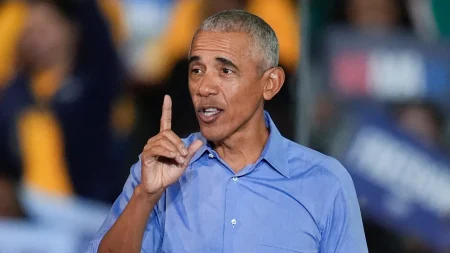
One of the most striking moments came when Rogers tried to peel away a pillar of the Democratic base: Black voters. He didn’t dance around it. Rogers brought up Abdul El-Sayed’s past criticism of former President Barack Obama, specifically El-Sayed’s comment after Obama’s 2012 reelection that Obama was “not the right choice” to push a progressive agenda. In Detroit, that kind of thing can land badly. Rogers said he and his team have talked to dozens of Black pastors and neighborhood leaders in the city, and he described a growing appetite for change. “He is dismissive in Detroit,” Rogers insisted. Now, you don’t have to take Rogers’ word for it, but the strategy is clear: if Republicans can make even a small dent in the overwhelmingly Democratic turnout in Detroit, the math gets a lot harder for El-Sayed. It’s also a delicate argument, because Obama himself is scheduled to campaign with El-Sayed in Detroit on Oct. 24, and the former president has recorded a video urging voters to back the Democratic nominee. But Rogers is betting that Obama’s star power isn’t enough to erase the kind of personal history that local conversations have already surfaced. Whether or not he’s right, he made sure the audience heard that this race isn’t just about suburban independents—it’s about whether the Democratic coalition shows up the way it always has. Black voters are not a monolith, and in a close race, even a few thousand disappointed or disengaged voters can change everything. Rogers is speaking to that quiet frustration, the feeling that too many politicians take certain communities for granted. It’s a risky play, because Obama remains deeply popular in Detroit, but Rogers is hoping that El-Sayed’s own words have created a crack that can be widened. And in the final two weeks, a crack is all you need.
Rogers also trained his sights on another traditionally Democratic constituency: Jewish voters in Michigan. This is a smaller group, numerically, but in a close race it can be decisive. El-Sayed recently found himself under fire when he declined to say whether he viewed Iran or Israel as the greater threat to American interests. In a debate, he answered, “I think both of them have proven dangerous in their own way. One, at risk of attacking us. One, getting us into wars we have no business fighting.” For many Jewish voters who care deeply about Israel’s security, that kind of moral equivalence is a dealbreaker. Rogers made the math personal. He cited the state’s roughly 70,000 Jewish Democrats and argued that if even half of them feel alienated enough to vote Republican, that’s 35,000 votes that used to be automatic for Democrats. And he says that’s already happening. Rogers told Hannity about a campaign event the night before with more than a thousand people in attendance, many of them Jewish Democrats who are “fired up and excited and scared for their children.” He said they are afraid for the world their kids will inherit, and they are ready to break with their usual party loyalty. Whether you agree with Rogers or not, he is clearly tapping into an emotion that goes beyond policy: fear. And in the final two weeks, fear can be a more powerful motivator than any spreadsheet or poll. The broader message is that the Democratic coalition is not as solid as it appears. If a candidate can convince voters that their values are no longer reflected in the party they’ve always supported, those voters don’t just stay home—they might actually cross over. Rogers is betting that El-Sayed’s comments on Israel will push some of those voters into his column, and the enthusiasm he described suggests that he may be finding an audience. It’s a reminder that in a polarized country, the real battle is often for the people who are tired of choosing between two boxes that don’t quite fit.
Then John James took the stage, and the conversation shifted to money. The Republican nominee for governor didn’t have to talk about foreign policy; he wanted to talk about the state budget, and he made it feel like a kitchen-table issue. James pointed to the spending under Democratic Governor Gretchen Whitmer and contrasted it with the last Republican administration. “Michigan is spending 50% more right now under Gretchen Whitmer than we spent under Rick Snyder’s administration,” he said, adding that the state is spending $20 billion more per year than at the height of the pandemic. For voters who feel like they are being nickel-and-dimed while the state government keeps writing bigger checks, this is a potent argument. James summed it up with a line that could have come from a family budget argument: “Michigan does not have a taxation problem. Michigan has a spending problem.” You don’t need to be an economist to understand that. You just need to have looked at your own bills lately. The subtext was that Democrats are good at spending other people’s money, and Republicans—at least in this pitch—are the ones who will go in with a scalpel. James also promised to reshape education and create more scrutiny around government programs and expenses. It’s the kind of message that can resonate in a state where people want to believe their tax dollars are actually doing something, not disappearing into a bureaucratic black hole. He spoke like someone who has sat at a dinner table and watched a family budget get stretched too thin, and he tried to connect that feeling to the state Capitol. The pandemic may have created a temporary excuse for big spending, but James argued that the emergency is over and the habit remains. For voters who worry about their children’s schools, their own property taxes, and the cost of everything from gas to groceries, his words were designed to sound less like a policy lecture and more like a shared frustration. Whether or not his numbers are perfect, the emotional math is powerful: people want to know that their government is spending their money the way they would spend it themselves.
Perhaps the most eyebrow-raising claim came when James brought up fraud. He asked the audience to consider what a young journalist could uncover in Michigan if he had the chance to go digging. “If a 19-year-old journalist named Nick Shirley can find $9 billion of fraud in Minnesota, a state with 50% of our population and 60% of our budget, what do you think he can find here?” The line got attention, but the numbers deserve a closer look. Shirley is a videographer who became known for investigating suspected fraud involving Somali-run child care providers in Minnesota. His work did help draw national attention to a real scandal, and federal and state investigators have uncovered schemes where people billed the government for services that never happened. But the $9 billion figure wasn’t actually Shirley’s finding; it came from former federal prosecutor Joe Thompson, who estimated that fraud across 14 high-risk Medicaid programs could total $9 billion or more. Minnesota officials have pushed back on that estimate. Still, the underlying point resonates with voters who have watched pandemic-era aid programs get exploited. James was making a bigger argument: if a teenager with a camera can expose that much waste in a smaller state, just imagine what a determined auditor could find in Michigan. It’s a rhetorical move that turns a complex policy issue into a simple question of trust: Do you trust the government to watch your money? For many voters, the answer is no. They read the headlines, they see the scandals, and they wonder why the same mistakes keep happening. James is tapping into that anger, promising that if he is elected, he will bring a new level of accountability to Lansing. He didn’t offer a detailed plan for auditing every program, but he didn’t need to. In a town hall, the story is the strategy. And the story he told was one of corruption, waste, and the arrogance of power—a story that can stick in the mind far longer than any budget chart.
Then came Lisa McClain, the House GOP Conference Chair, who offered the most unvarnished attack of the night. McClain said she doesn’t even call Democrats Democrats anymore. “It’s the Communist Party,” she declared, accusing the left of wanting to “pack the Supreme Court, abolish the police, and let people out of prisons.” Those are fighting words, and in the context of a town hall, they serve a purpose: to light a fire under the Republican base and make the election feel like an either/or choice between order and chaos. McClain’s language may seem harsh to some, but it reflects a broader Republican strategy of tying every Democratic candidate to the most progressive voices in the party. The goal is to make a moderate-sounding Democrat like El-Sayed answer for positions he may not even hold. It’s a familiar playbook, and in a state like Michigan—with its mix of union families, suburban mothers, and rural voters—it can be very effective. As the town hall wound down, Hannity and the Republicans made sure to remind everyone that the primary is in the rearview mirror and the real choice is now. Michigan heads to the polls on Nov. 3, along with the rest of the country. In the final two weeks, the candidates will be traveling, debating, and pleading for every last vote. But on this night, the message was simple: Republicans believe they have found cracks in the Democratic coalition, and they are going to keep hammering at those cracks until the polls close. Whether you see it as a strategy or a spectacle, it’s a reminder that elections are ultimately about feelings—fear, pride, hope, and the conviction that your side is the one that understands your life. The town hall didn’t settle every question, and it certainly didn’t bridge the divide between the parties. But it did give Michigan voters something to think about as they get ready to make their choice. And in a race this close, that may be exactly what the Republicans wanted.