

Paragraph 1
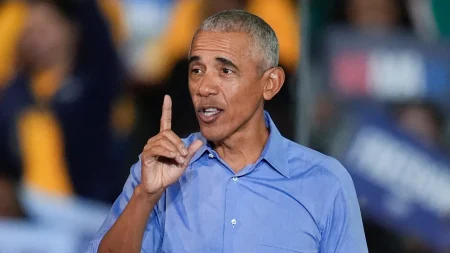
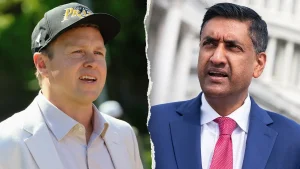
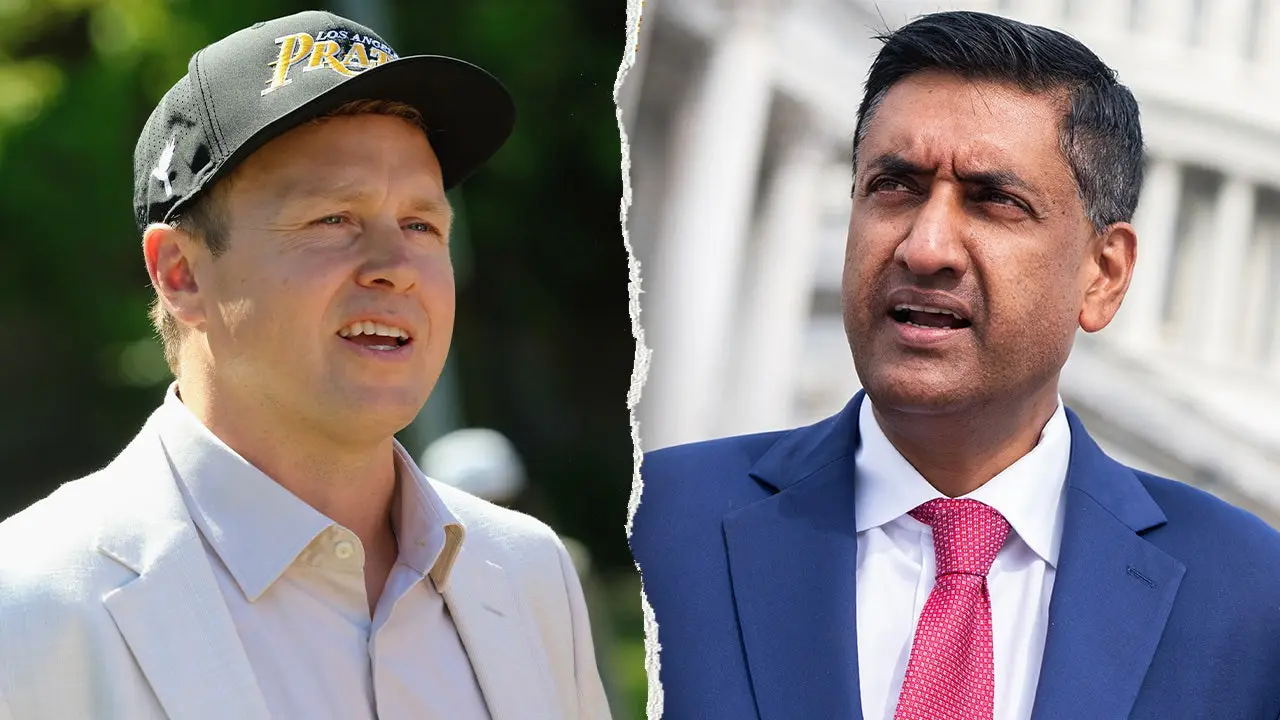
In the late hours of a restless Sunday evening, as images of burning storefronts and tear gas clouds drifted across the Atlantic, Congressman Ro Khanna of California chose to weigh in on a moment of profound national crisis in France—and in doing so, ignited a firestorm of his own. The progressive Democrat, widely viewed as a potential contender for the 2028 presidential nomination, took to X with a stark and provocative thesis: the riots engulfing French cities were not random acts of thuggery, but the inevitable flowering of a society that had allowed wealth and power to calcify at the very top. “This is what happens when the nations let wealth and power accumulate in the hands of a few,” he wrote, before adding a plea that struck many as dangerously romantic: “This is what happens when young people lose hope in their future. In America, let us listen to our young.” With those words, Khanna thrust himself into the center of a roiling debate about political violence, economic inequality, and the responsibilities of those who hold public office in an age of profound social unrest. To his supporters, he was speaking a difficult truth, giving voice to a generation that has been priced out of housing, burdened with student debt, and left to inherit a planet in peril. To his critics, across the entire political spectrum, he was doing something far more dangerous: offering a moral and political alibi for destruction, dressing up arson and looting in the language of noble grievance. The reaction was immediate, fierce, and deeply revealing of the fractures running through American political culture in this volatile moment.
Paragraph 2
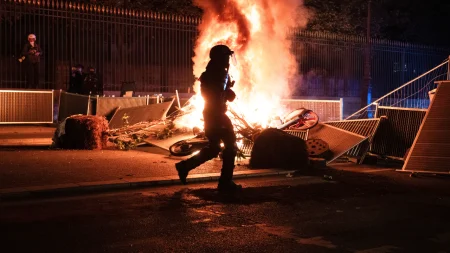
The backdrop to Khanna’s commentary was a spectacle of chaos that had unfolded with alarming speed across France, a nation with a long and combustible history of street protest. What began as planned demonstrations over the soaring cost of living and the steady erosion of public services quickly metastasized, by Saturday, into scenes of raw violence and destruction that shocked even seasoned observers of French politics. In Paris, mobs shattered storefronts along elegant boulevards, set fires that consumed parts of historic buildings, and clashed with police in running battles that lasted well into the night. The damage was not confined to the capital. In the city of Limoges, a fire deliberately set at the town hall caused significant damage to a building that had stood as a symbol of civic pride for generations. Shops were looted in Bordeaux, Marseille, Lyon, and other cities, while public buildings were vandalized or torched in a spasm of anger that seemed to target the very institutions of the state. French authorities, scrambling to regain control, reported that by Sunday evening they had arrested nearly 2,400 people nationwide, including more than 850 in the Paris region alone. Nearly 1,000 police officers and gendarmes had been injured, seven of them seriously, according to the Interior Ministry. And amid the chaos, one protester had died after suffering cardiac arrest during the demonstrations in Paris, a death that added an even more somber note to an already grim weekend. Authorities estimated that more than 550,000 people had participated in demonstrations across the country, while organizers claimed a figure closer to 800,000. It was, by any measure, one of the most significant outbreaks of civil unrest in France in recent memory, and it posed a direct challenge to President Emmanuel Macron, who had already been criticized for attending a concert while his capital burned.
Paragraph 3
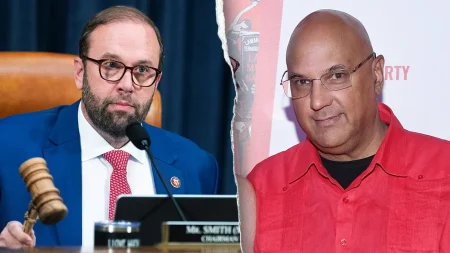
Into this inferno of social rage, Khanna’s words landed like a lit match, and the backlash came from every direction. On the right, the response was swift and scathing. Spencer Pratt, a former mayoral candidate for Los Angeles, wasted no time in eviscerating the congressman’s framing. “Of course Rohit Conman sees mass communist riots destroying businesses and historic buildings in Paris and lies about it as some noble ‘ask’ for justice,” Pratt wrote, his language dripping with contempt. “These commies lie as easily as they breathe.” It was a crude dismissal, but it captured a sentiment that many felt: that Khanna was not merely observing a complex situation but actively taking the side of those who were destroying property and livelihoods. Jonathan Turley, the legal analyst and political commentator, offered a more measured but no less pointed rebuke, drawing on historical parallels that he found deeply ominous. “Ro Khanna has long sought to ride the rage wave to power,” Turley wrote. “Khanna could indeed learn much from France. This is history repeating itself. That history, by the way, does not bode well for establishment figures who pander to the mob.” Turley’s allusion to the French Revolution was deliberate, invoking the memory of a time when the fury of the streets did not stop at the doors of the wealthy but swept away an entire ruling class, including many who had sought to ride the revolutionary wave for their own advancement. The warning was clear: when you stoke the fires of mob anger, you may find that those fires do not discriminate between your enemies and yourself.
Paragraph 4
Perhaps even more striking than the criticism from the right was the condemnation that came from Khanna’s own side of the aisle. Shannon Watts, a Democratic gun control activist who has in recent months emerged as a vocal critic of the far-left factions within her own party, seized on the apparent contradiction at the heart of Khanna’s position. “If you’re a member of Congress who condemned the January 6 insurrection, you don’t get to excuse riots in France as a ‘cry for help,'” Watts wrote in a post that quickly went viral. “Political violence doesn’t become acceptable just because you sympathize with people committing it.” Watts had put her finger on what many saw as the unacceptable hypocrisy of Khanna’s stance. He had, like virtually all of his Democratic colleagues, condemned the attack on the U.S. Capitol in January 2021 as an assault on democracy itself, an act of insurrection that threatened the peaceful transfer of power. But now, when confronted with violence in a foreign country—violence that included arson, looting, and assaults on police officers—he seemed to be reaching for explanations that bordered on justification. To critics like Watts, this was a distinction without a difference. Violence was violence, regardless of the grievances that fueled it. The attempt to dress up rioting as a legitimate form of political expression, she argued, was a dangerous game that would only serve to legitimize the very forces that Democrats had spent years decrying. It was a powerful rebuke, and it underscored the deep unease that many mainstream Democrats feel about the direction of their party’s rhetoric on issues of wealth and power.
Paragraph 5
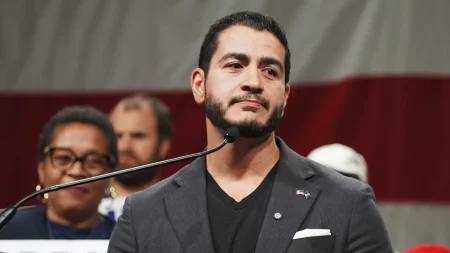
Faced with a growing chorus of condemnation, Khanna quickly moved to clarify his position, though he did not retreat from his core argument. In a follow-up post, he sought to draw a line between understanding and endorsement, between explanation and excuse. “I unequivocally condemn violence and vandalism,” he wrote. “I have always championed my grandfather’s example of non-violent protest.” The reference was to his maternal grandfather, Amarnath Vidyalankar, a freedom fighter who had been imprisoned in the early 1930s for his role in advocating for India’s independence from British rule. By invoking this family history of principled, nonviolent resistance, Khanna was attempting to position himself within a proud tradition of moral struggle, a tradition that had always rejected the use of force. But even as he condemned the violence in France, he returned again and again to the underlying conditions that had given rise to it. “Let us not be blind to the anger young people have against the unholy alliance of wealth and power. The billionaires buying politicians. The corruption,” he wrote. In Khanna’s telling, the riots were not the problem; they were a symptom of a deeper disease that afflicted not just France but the entire Western world, including the United States. The real question, as he saw it, was not whether to condemn the violence—he insisted he had—but whether the political class would finally heed the warnings that such eruptions represented. To his critics, however, this clarification did little to resolve the fundamental tension at the heart of his position. Even former Representative George Santos, the disgraced New York Republican, weighed in, dismissing the idea that the rioters were simply disaffected youth. “These are not mere students… my friend, I regret to inform you, this is an invasion,” Santos wrote, pointing to France’s high intake of refugees in recent years. Khanna, undeterred, fired back: “George, is the lesson not to tackle the vast disparity here and young people’s hopelessness?”
Paragraph 6
The controversy surrounding Khanna’s comments, and his refusal to back down in the face of widespread condemnation, raises profound questions about the state of American political discourse and the future of the Democratic Party. On one level, this was a familiar story: a politician, hungry for national attention, seeking to position himself as the tribune of the young and the restless, willing to court controversy in service of a larger narrative about economic justice. Khanna has long been associated with the progressive wing of his party, an outspoken critic of corporate power and a champion of policies that would redistribute wealth and opportunity from the top of American society to the bottom. His framing of the French riots as a warning to America was entirely consistent with that broader project. But the episode also revealed the profound risks inherent in that project, particularly in a political environment where the lines between legitimate protest and political violence have become dangerously blurred. By choosing to highlight the grievances of the rioters rather than simply condemning their actions, Khanna opened himself—and by extension, his party—to accusations of moral relativism, of excusing violence when it comes from sympathetic quarters. The fact that his fiercest critics included fellow Democrats, people like Shannon Watts who had spent years fighting the rise of right-wing extremism, suggested that this was not simply a partisan attack but a genuine crisis of conscience for a party still struggling to define its relationship to the forces of radical change. Whether Khanna’s gamble pays off in the 2028 presidential race remains to be seen. But the debate he ignited is unlikely to fade away. In a nation as divided and anxious as the United States, with its own vast disparities of wealth and its own legions of young people who feel the future slipping away from them, the questions Khanna raised—about listening to the young, about the corrupting influence of concentrated wealth, about the limits of legitimate protest—are not going to disappear anytime soon. The challenge for Khanna and for the country is whether those questions can be answered through the messy, imperfect, but peaceful processes of democracy, or whether the forces he seeks to channel will ultimately prove impossible to control. The streets of Paris, and the response to them from Washington, have offered a sobering glimpse of what is at stake.