

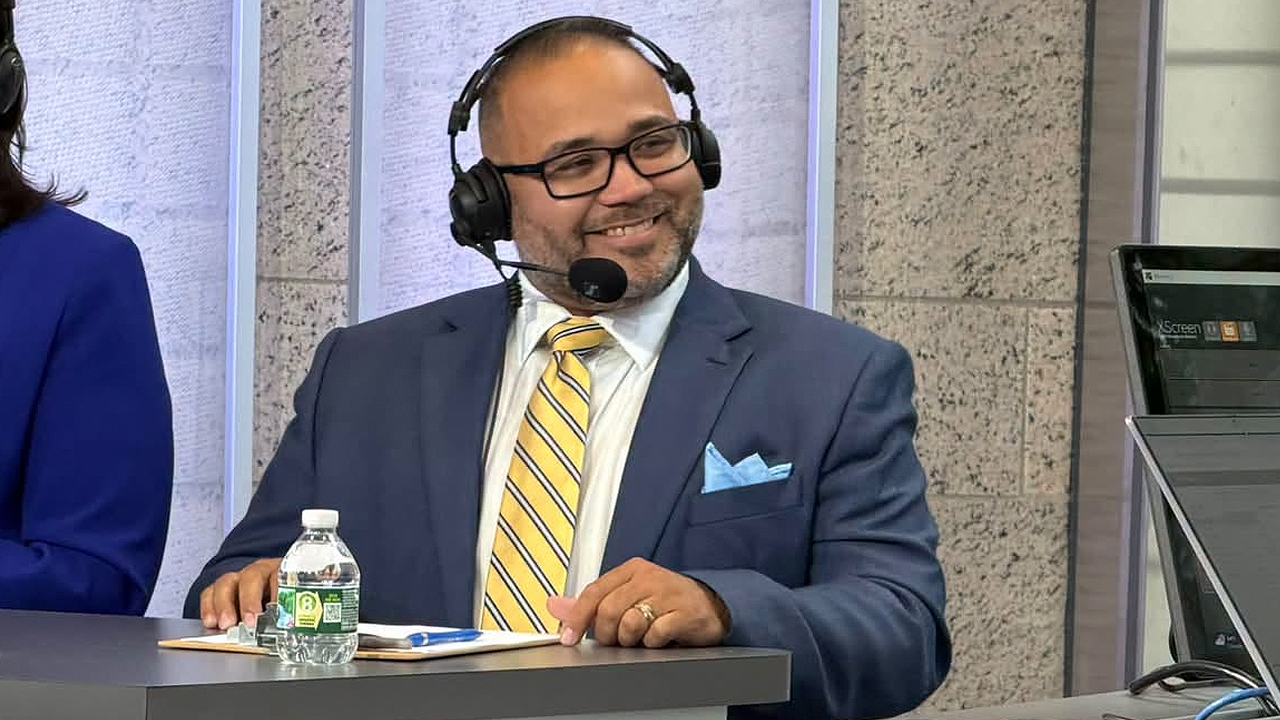
It was just before midnight on a quiet Saturday in New Bedford, Massachusetts, when the silence of the South End was shattered by the screech of metal and the dull thud of a car flipping on its side. A 42-year-old city councilor, a father and grandfather who had spent months crisscrossing the state as the Republican nominee for lieutenant governor, had just seen his life and career violently upended. Shawn Oliver, a man who had campaigned on accountability and public service, was now the subject of a police investigation after his vehicle rolled over, slamming into five parked cars and leaving a trail of damage along Dartmouth Street. The news broke like a thunderclap, not just in New Bedford—a working-class coastal city of about 100,000 that prides itself on its tight-knit community—but across the entire Massachusetts political landscape, where the race for the state’s second-highest office had suddenly been thrown into chaos. For Oliver, a Republican in a heavily Democratic state, the road to November had always been uphill. Now, with just weeks until the election, that road had disappeared entirely, replaced by a hospital bed, a police report, and a career hanging by a thread.
According to the New Bedford Police Department, officers responded to 448 Dartmouth St. at approximately 11:40 p.m. after receiving reports of a rollover crash. What they found was a scene of destruction: a vehicle overturned, its frame twisted and windows shattered, with two of the five parked cars it had struck suffering extensive damage. Oliver, identified as the driver, was taken to St. Luke’s Hospital for treatment of his injuries. He was fortunate to walk away alive, and even more fortunate that no innocent bystanders were hurt. After conducting an investigation both at the scene and at the hospital, police placed Oliver under arrest, charging him with operating under the influence of liquor, negligent operation of a motor vehicle, a marked lanes violation, and speeding. The charges painted a stark picture of a man who had made a catastrophic lapse in judgment, one that could have ended in tragedy. In a city where everyone knows everyone, the news spread quickly, and the initial shock gave way to disappointment, anger, and a profound sense of betrayal. How could a man who had so often spoken about integrity and family values be led away in handcuffs, his political dreams reduced to a booking photo and a breathalyzer test?
The fallout was immediate and unsparing, especially from the top of the Republican ticket. Mike Minogue, the Republican gubernatorial nominee and a businessman and military veteran who had been challenging Democratic Governor Maura Healey, did not mince words. Taking to X, formerly Twitter, Minogue delivered a blistering rebuke, writing, “I am extremely disappointed. Shawn is lucky to be alive and lucky that no one innocent was hurt. There is no excuse for driving under the influence.” The statement was a clear bid to distance the campaign from the scandal, but it was also a deeply personal message from a man who had just watched one of his own stumble in the worst possible way. Minogue went further, revealing that he had spoken directly with Oliver before demanding he step aside. “After speaking with Shawn, I am asking him to suspend his campaign immediately, and when elected, I will formally ask for his resignation,” Minogue wrote. The demand was unequivocal: Oliver had to go. For Minogue, the incident was not just a political liability but a fundamental test of his own leadership and commitment to accountability, themes he had hammered throughout his campaign against Healey. Healey, a Democrat who had signed controversial legislation like the Massachusetts Protect Act, was already a formidable opponent, and Minogue could not afford to be dragged down by a lieutenant governor candidate who had been arrested for DUI.
Oliver’s response came later that same day, a statement posted to his own X account, where he confirmed the suspension of his campaign. “The election is too important to be overshadowed by personal matters,” he wrote, a terse acknowledgment that his presence on the ticket had become an untenable distraction. But the statement was more than just a political exit; it was a quiet admission of failure, a recognition that his own actions had foreclosed any chance of continuing the fight. The 42-year-old councilor, who had represented the city’s Ward 4 and had once seemed like a rising star in the state GOP, now faced the grim reality of his new status: a man whose name would forever be associated with a rollover crash and a DUI charge. New Bedford Mayor Jon Mitchell, a Democrat, also weighed in, posting on Facebook that he was “grateful to the New Bedford Police Department for their prompt response and relieved that no one was seriously injured.” Mitchell added that the allegations against Oliver were “deeply concerning” and that “the public deserves to hear his explanation of what happened.” The mayor’s call for transparency was a stark reminder that Oliver’s troubles were not just personal but public in the most painful sense, and that the city he served had every right to demand answers.
Beyond the political sphere, Oliver’s arrest also had immediate professional consequences. The Massachusetts Department of Correction confirmed to Fox News Digital that Oliver, who worked as an employee of the department, had been placed on restricted work duty. “Shawn Oliver has been placed on restricted work duty while all facts and circumstances are reviewed. He is currently assigned to the Massachusetts Treatment Center,” said department spokesman Scott J. Croteau. The move was a swift administrative response, a clear signal that the state was taking no chances and that Oliver’s position as a public employee was now in jeopardy. For a man who had built his career on public service, the blow was devastating. The combination of criminal charges and administrative scrutiny placed his entire future in question, both as a political figure and as a working citizen. Meanwhile, the Republican campaign scrambled to recalibrate, with Minogue urging Oliver to “focus on his family and take steps to prevent another incident.” Minogue added, “Shawn is a father and grandfather, and he needs to put his family first. He needs to do the work to ensure this never happens again. If he needs help with that, I will help him.” The words were both compassionate and pragmatic, a delicate balance between condemning the act and offering a path forward for a man who had stumbled so badly.
The incident threw the Massachusetts political world into a frenzy just weeks before the November election, with Minogue squaring off against Healey and her lieutenant governor, Kim Driscoll, who was seeking another term. For the state GOP, already the underdogs in a deeply blue state, the scandal was a bitter pill to swallow, undermining their message of accountability and ethical governance. Minogue, ever the soldier, tried to turn the tragedy into a weapon against his opponent, writing, “As governor, I will put the Commonwealth first. That starts with accountability, something Massachusetts has not seen from Maura Healey.” But the attempt to reframe the narrative felt hollow in the face of the raw, human wreckage of Oliver’s decision. The election, which had once been a long-shot bid against a popular Democratic governor, now carried an additional burden: the weight of a candidate’s public disgrace. For Westport, for New Bedford, for the countless voters who had once seen Oliver as a hopeful voice for the working class, the crash was a reminder that political dreams are fragile, and that a single lapse in judgment can undo years of hard work. As Oliver himself acknowledged, the election was too important to be overshadowed by personal matters. And yet, in the end, it was precisely his personal matter that would now overshadow everything. The road ahead, both for Oliver and for the Massachusetts GOP, had become a steep and unforgiving climb, with no guarantee of redemption.