


Behind the stone-and-ivy facade of Cornell University lies a story that has moved from hushed campus whispers to the center of a statewide legal storm. It begins with a young woman, identified only as Jane Doe in court documents, who says she was brutally gang-raped at a Chi Phi fraternity party in 2024. Her allegations have unleashed a torrent of grief, anger, and scrutiny—not only at the Greek life institution that hosted the party, but at the university that oversaw it, the prosecutors who declined to press charges, and now the highest law-enforcement office in New York. This week, New York Attorney General Letitia James stepped into that storm, promising to conduct a “fair” investigation into the seven defendants accused of sexually assaulting the unnamed student. The investigation emerged after a lawsuit against Cornell, Chi Phi, and several other parties placed the Ivy League school’s handling of campus sexual assault under a harsh national spotlight. For Jane Doe, it may feel like a long-awaited hope for accountability; for the accused, it raises serious questions about due process; and for everyone watching, it has become a raw and unsettling test of whether the justice system can be both compassionate and impartial when the stakes are this high.
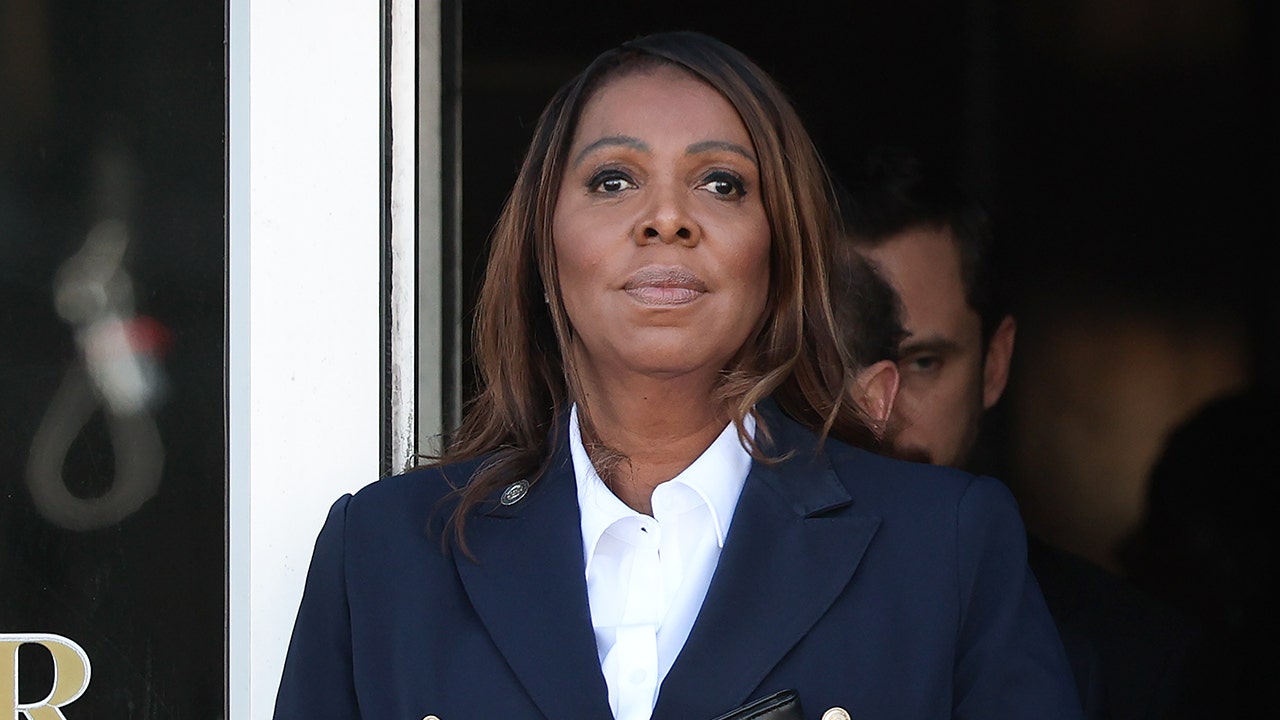
James’s vow of fairness was not offered in a vacuum. She has spent the days since her appointment as special prosecutor in the case repeatedly fielding questions about whether she can truly be neutral. In a brief exchange with a reporter, she insisted that the investigation would be guided by the facts and the evidence, not by politics or public pressure. But her critics are not convinced. Former President Donald Trump, who has clashed with James for years, did not hold back when asked about her role. “Letitia James is a corrupt person,” he said. “She’s totally corrupt, and I can’t imagine it. And I feel badly for whoever she’s looking at because they won’t get a fair shake.” That blunt assessment—delivered after a Fox News reporter asked his view on Governor Kathy Hochul’s decision to appoint James as special prosecutor—captures just how raw and deeply partisan this case has become. It is no longer just about one young woman’s trauma or seven men’s futures; it is also about public trust in the people who hold the power to investigate and prosecute. And the fact that Trump, a longtime adversary, would weigh in so forcefully only underscores the degree to which this case has become entangled in broader political battles that have little to do with the facts themselves.
The defense attorneys for two of the accused men, Gillio Lopes and Winston Lee, have gone a step further: they are actively trying to remove James from the case entirely. Attorney Andrew Miltenberg, who represents Lopes, and Teny Geragos, who represents Lee, have argued in court filings that James is “unquestionably biased” and cannot be trusted to lead a fair investigation. Their main evidence is a social media post that James published on X just days before Governor Hochul appointed her as special prosecutor. “What this young woman has been forced to endure is horrific and unacceptable,” James wrote. “I’m holding her in my heart and in my prayers. To her, and to all survivors: you’re not alone. We stand with you.” To a casual reader, those words may sound like empathy, even comfort—a message of solidarity from a public figure to a survivor who has allegedly suffered an unspeakable violation. But in the context of an ongoing criminal investigation, the defense argues those words amount to prejudgment. How can the attorney general, they ask, be the guardian of justice when she has already publicly aligned herself with the alleged victim? James, for her part, rejects that interpretation outright. During a debate in her campaign for attorney general, she explained that her comments were intended to demonstrate “empathy” for a survivor, not to announce a verdict. She insists that “politics stops at the door” of her office, and that once the investigation begins, the law will be her only guide. It is a difficult line to walk—being both a source of comfort to a wounded community and a neutral arbiter of justice—and James’s critics say she cannot have it both ways.
Governor Hochul, who made the appointment, is standing firmly behind James. She has expressed “every confidence” that the attorney general will “look at the facts, examine the record and draw the proper conclusions.” Yet the governor’s endorsement doesn’t end the debate. The case itself is legally and emotionally complicated. According to the lawsuit filed by Jane Doe, the alleged victim, she was gang-raped at a Chi Phi fraternity house party in 2024. The allegations were first investigated by Cornell University Police, who took a detailed six-page sworn statement from Jane Doe and submitted it to the Tompkins County District Attorney’s Office. But prosecutors declined to pursue criminal charges at the time, concluding that the conduct described in the statement—even if deeply troubling—did not provide sufficient evidence to sustain criminal charges under New York law. For many observers, that decision was a painful reminder of the gap between the trauma a survivor experiences and the proof a prosecutor needs to move forward. For others, it was the correct, cautious application of criminal justice standards. And for Jane Doe, it was likely devastating: after surviving a brutal assault, she reported it, cooperated with the investigation, and then watched as the justice system she was promised failed to deliver a criminal prosecution.
The university, however, took a different path. Cornell conducted its own separate Title IX investigation, which is the formal process used by colleges to address sexual misconduct under federal law. That investigation resulted in disciplinary action against several of the seven defendants. Two students were expelled, and two others were suspended. Those findings suggest that the university believed there was enough evidence to conclude that the accused men violated campus rules—a standard that is often lower than the “beyond a reasonable doubt” threshold required in criminal court. Still, for Jane Doe, the sanctions may have felt incomplete, especially when some of the accused were not punished or when the criminal justice system remained deaf to her plea. The lawsuit she subsequently filed against Cornell, Chi Phi, and several defendants is an attempt to force meaningful accountability, to expose what she calls a failure to protect her and other students, and to hold the institution responsible for the environment that allowed the alleged assault to happen. James’s criminal investigation, launched separately, could potentially change the entire landscape of the case. It could lead to a new grand jury, new charges, and a real reckoning for everyone involved—or, just as easily, it could end the way the initial prosecution did, with too little evidence and too many unanswered questions.
In the end, this is a story about broken trust and the fragile, fraught pursuit of justice. Everyone involved carries something heavy. Jane Doe carries the memory of a night that changed her life forever, and the quiet hope that someone in authority will finally believe her enough to act. The accused carry the stigma of public accusation, the fear of a life derailed, and the right to be presumed innocent until proven guilty. Cornell carries the burden of an institution that may have looked the other way, while Chi Phi carries the legacy of a chapter tainted by scandal. And Letitia James carries the impossible task of being everything to everyone: the fierce advocate survivors long for, the impartial prosecutor the defendant demands, and the public servant Hochul insists she can be. In her moments of reassurance, James has spoken of empathy, fairness, and the rule of law. Those are handsome words, but they will be tested in the cold light of evidence and procedure. The people of New York, and the nation beyond, will be watching closely, not just for the outcome but for something deeper—whether a young woman’s pain can ever be truly honored by a system designed for logic and proof, and whether the truth, when it finally emerges, will bring healing or only more fracture. Whatever happens, the story of Jane Doe and the seven men accused of hurting her will not be easy to watch. But it is a story that reminds us that justice is never perfect, never simple, and never finished—it is, like the people who seek it, achingly human.