


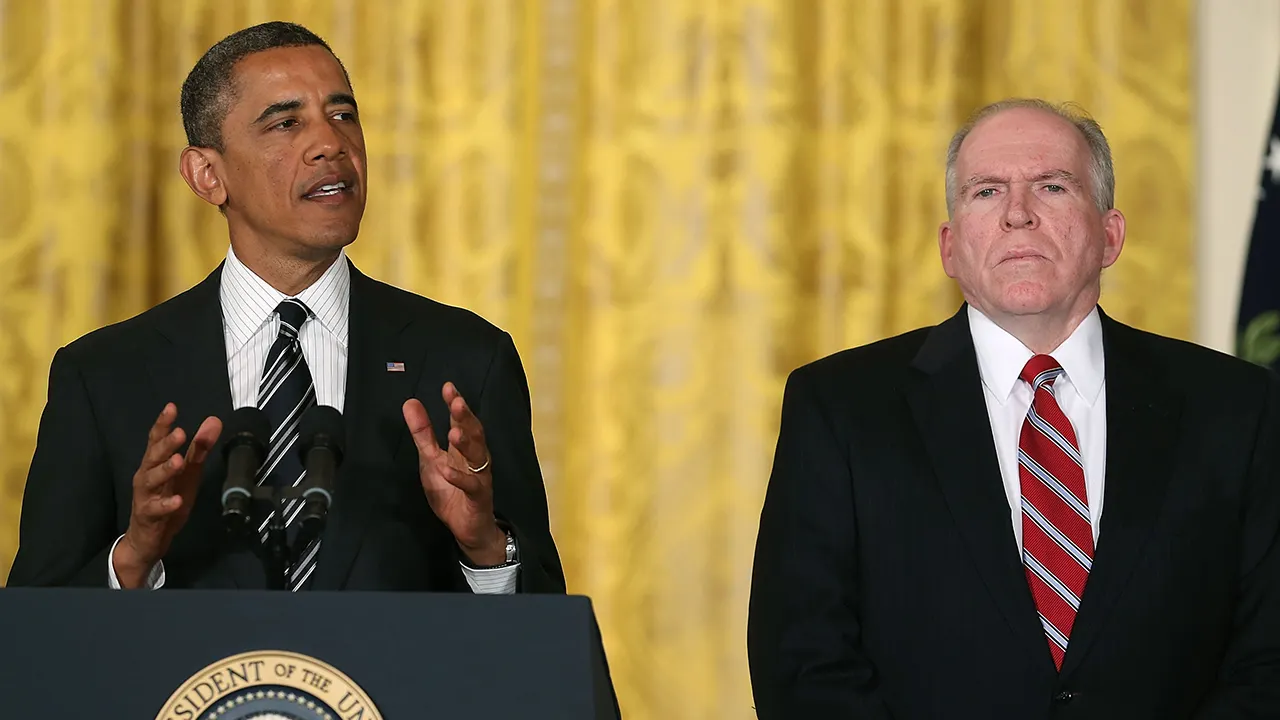
Every serious legal battle contains a human story, and the one former CIA Director John Brennan brought to court was a story about fear, power, and the fragility of memory. Brennan is not just another public figure caught in a legal fight; he is a man who spent his entire adult life in the shadowed world of American intelligence, a career officer who rose to lead the CIA under President Barack Obama. In July 2026, he filed a 46-page lawsuit against President Donald Trump and a collection of senior administration officials—FBI Director Kash Patel, Attorney General Todd Blanche, CIA Director John Ratcliffe, and others—claiming that the federal investigations surrounding him were not ordinary exercises of justice but instruments of presidential revenge. He was not asking a judge to stop those investigations outright, nor was he trying to escape scrutiny. Instead, he was making a quieter, more forward-looking argument: that the same administration targeting him was also destroying the evidence he might one day need to prove his innocence, and that without court intervention, the truth itself could disappear before he ever had a chance to defend himself. U.S. District Judge Jia Cobb, a Biden appointee, ultimately said no. In a ruling that landed like a cold dose of legal realism on a fevered political debate, Cobb dismissed the lawsuit, deciding that Brennan’s fears about lost records were too “speculative” to support standing. She did not mock his worries; indeed, she called them “deeply concerning.” But concern, she explained, is not the same as a concrete injury, and the law cannot act on fear alone. For Brennan, the decision was a profound disappointment—a reminder that even the most alarming allegations can dissolve in the procedural requirements of a courthouse, leaving only the waiting and the uncertainty behind.
The context behind Brennan’s lawsuit is a tangle of investigations, grand juries, and political recriminations that stretches back to the most divisive chapter in recent American electoral history. Brennan has been identified as a target in two separate federal inquiries. One, run by the Justice Department, is examining whether former intelligence officials conspired to violate Trump’s civil rights by facilitating and justifying the investigations into alleged ties between Trump’s 2016 presidential campaign and Russia. The other is focused on Brennan himself: whether he made false statements during 2023 congressional testimony about the role of the Steele dossier in a 2017 intelligence assessment of Russian interference in the presidential election. Trump has long accused Brennan, Obama, and other former intelligence officials of orchestrating what he calls the “Russia collusion hoax,” and he has repeatedly said they should be held accountable. Brennan and his allies reject that framing, insisting the intelligence community’s conclusions were legitimate and that the current administration is using the enormous power of the federal government to punish its political enemies. The investigations have already involved three grand jury inquiries—two in the Southern District of Florida and one in Washington, D.C.—but no criminal charges have been filed against Brennan. He was subpoenaed to testify before a federal grand jury in Fort Pierce, Florida, on October 15, but his scheduled appearance was postponed. That postponement left him in a kind of legal limbo, not formally accused but clearly in the crosshairs. It is against this backdrop that Brennan decided to go to court, not to evade accountability, but to make sure the ground beneath him was not shifting while he waited for a charge that might never come.
Judge Cobb’s opinion was careful, measured, and ultimately fatal to Brennan’s case. The legal doctrine at issue was standing—the requirement that a plaintiff must show a real, concrete injury that the court can address with a meaningful remedy. Brennan argued that the same administration investigating him was also destroying records with impunity, and that if he were indicted, he could not mount a fair defense because the evidence he needed would be gone. But Cobb explained that his theory depended on a sequence of events that had not yet happened. She described it as a chain of dominoes: the government would have to delete relevant documents; a grand jury would have to return an indictment; Brennan would then need those documents to fight the charges; and only then would the injury be complete. The deletion of records, she wrote, was just one domino in that chain. Because the other dominoes had not fallen, and because Brennan could not prove that any specific evidence had actually been destroyed, the court declined to step in. “For Brennan’s constitutional injury to actually accrue,” Cobb wrote, “a series of dominoes must fall, and Defendants’ deletion of records is just one of those dominoes.” Her phrase “deeply concerning” may have been small consolation, but it acknowledged that Brennan’s fears were not absurd. Still, the law, she insisted, must look at what has happened, not only at what might happen. For legal observers, the ruling is a classic example of courts refusing to wade into speculative disputes. For Brennan’s supporters, it is another sign that the political system has been weaponized against him—and that the courts are unwilling to protect him before it is too late.
Much of Brennan’s lawsuit centered on the quiet, technical ways that modern government communication can evaporate. His legal team offered a catalogue of potential losses: deleted social media posts; texts and direct messages that were never preserved; sprawling Microsoft Teams chats that vanished after internal deadlines; questions posed to artificial intelligence tools; and, most prominently, the administration’s heavy reliance on Signal and other encrypted messaging applications with automatic deletion features. They also pointed to alleged failures to preserve evidence in other cases, including the prosecution of Representative LaMonica McIver, a New Jersey Democrat. The argument was simple: if the government can erase the digital trail of its actions, it can also erase the evidence of its motives. Brennan wanted to know whether the investigations were rooted in legitimate law enforcement concerns or in political retaliation. To answer that question, he needed the paper trail. Without it, he would be left to defend himself against accusations while the record of how those accusations began quietly disappeared. In an age of disappearing messages and auto-expiring files, the lawsuit asked a forward-looking question: how can a citizen protect his future innocence in the present? Judge Cobb’s answer, in essence, was that the citizen must wait until the damage occurs. That may be legally coherent, but for a man whose career was built on intelligence, on reading the secret communications of adversaries, and on understanding the importance of preserving the truth, the prospect of waiting is almost unbearable. He knows how quickly digital evidence disappears, how easily a message can be deleted, how often the truth is lost not because someone intended to hide it, but because no one thought to save it.
Brennan’s complaint was not only about technical details; it was also about the unusual way the Justice Department investigation had been conducted. His lawyers pointed to the removal of veteran prosecutor Maria Medetis Long, who was reportedly taken off the investigation in April 2026 after expressing doubts about the strength of the case. She was replaced by Joseph diGenova, a longtime Trump ally, who later resigned from his role amid reported internal disagreements over the handling of the matter. The lawsuit accused the Justice Department of “judge-shopping” by steering grand jury proceedings toward Judge Aileen Cannon, a Trump appointee in Fort Pierce, Florida, rather than letting the case follow the ordinary assignment process. It also questioned why the investigation was centered in Florida when many of the events at issue occurred in Washington, D.C., where the intelligence community and the political establishment are located. Public statements by senior officials added to the sense of spectacle. Attorney General Todd Blanche spoke about issuing “200 grand jury subpoenas” and investigating a “pattern of behavior” aimed at “destroying” Trump. FBI Director Kash Patel discussed the investigations and their targets in public forums, a move that Brennan’s lawyers argued was improper and inconsistent with usual prosecutorial silence. All of this, the complaint said, added up to “unprecedented, irregular conduct” driven by the “president’s retribution agenda.” Judge Cobb did not evaluate those allegations on the merits; she simply concluded that Brennan’s chosen legal vehicle—a pre-emptive lawsuit to preserve evidence—was not the proper way to resolve them. The allegations are now effectively back in the court of public opinion, where they will continue to shape the narrative of a president and an intelligence chief locked in an extraordinary personal and political battle.
Brennan’s response to the dismissal was defiant. His lawyers, Ken Wainstein and Dan Gelber, told the Associated Press that the lawsuit “has served notice that the government’s conduct and its document preservation will be carefully scrutinized in the event of any future indictment.” They pledged to continue defending Brennan vigorously against what they called baseless investigations and to challenge any attempt to use the criminal justice system for personal and political retribution. That promise suggests the fight is far from over. Brennan may still be indicted, he may be called to testify again, and he may eventually have another opportunity to challenge the government’s conduct—but only after the dominoes begin to fall, as Judge Cobb put it. The ruling, in that sense, is a temporary reprieve for the administration and a frustrating setback for Brennan. It also raises broader questions about the fragility of evidence in the digital age, the power of the presidency to shape prosecutorial decisions, and the ability of the courts to safeguard civil liberties before it is too late. Fox News Digital reached out to the Justice Department for comment, but the department’s silence only deepens the ambiguity. For now, John Brennan, a man who spent his career collecting secrets and protecting the nation, must do something deeply human: wait, watch, and hope that the truth, if it ever becomes necessary, has not already vanished into the silence of an auto-deleted file.