


Late on a summer evening in Bend, Oregon, four ordinary people lost their lives in a burst of gunfire that started near a grocery store and made its way to the familiar halls of an elementary school. The gunman, moving with an intent that no civilized neighborhood should have to imagine, arrived at the school and found a locked door. That door was exactly what parents expect, a solid barrier between the rest of the world and the world of children, with their backpacks, their crayon drawings, their small shoes lined up in cubbies. He shot through it. In the moments that followed, a handful of children and staff ran through another part of the building, their lungs burning with panic, their hands reaching for classmates who were screaming, their minds trying to make sense of a place that had become a war zone. By the time the police arrived, the gunman was gone from this world by his own hand, and four people were already dead. For the rest of the country, the news landed with a sickening familiarity, the same headlines, the same graphics, the same interviews with shaken parents and public officials promising to do better. But there was something uniquely disturbing about the detail from the school. It wasn’t that the door was unlocked. It wasn’t that shortcuts were taken or security was lax. The door was locked, and the shooter came through anyway. That detail stripped away one of the last assumptions that parents cling to: if the doors are closed, our children are safe.
This loss of innocence is not a metaphor. For generations, schools have been designed as open places, with light-filled entrances and a front office where every visitor should be seen and stopped. After Columbine, after Newtown, after Parkland, school districts across the country spent millions on entry vestibules, buzz-in systems, cameras, ID badges, and heavy doors. The idea was to create a secure perimeter, a line that an intruder could not easily cross. The shooting in Bend laid bare the vulnerability in this simple chain of trust. A lock is a psychological obstacle, not a physical one. It works against the curious, the lost, the casually malicious. It does not stop a person carrying a rifle who is willing to fire through the glass, to reach around, to unlock, to push through a broken frame, to step over the debris and keep going. The exact moment of entry, described by witnesses and emergency responders, illustrated what security experts have known for years: an active shooter will not look for an unlocked door, he will make it unlock. In the aftermath, the inevitable question arose in the district office, in the mayor’s conference room, in school board meetings and PTA chats at the soccer field. What more should have been done? Should the classroom doors be reinforced with steel plates? Should the entrance be a bulletproof vestibule with a turnstile? Should every teacher be armed? Should there be more police in the building? The questions themselves reflect a deep quiet panic, a desperate hope that there is some list of improvements, some checklist, some concrete product purchased with a grant and installed before September, that will turn this building into a fortress. But a fortress is not a school.
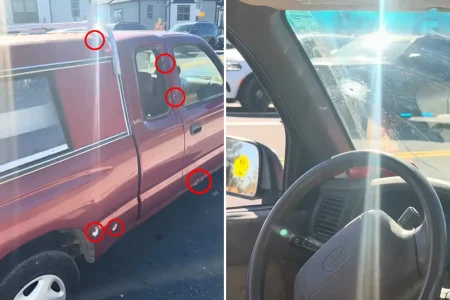
Let us consider, for a moment, the ordinary anatomy of a locked school door. It is a metal or fiberglass slab, often with a narrow window and a crash bar. The lock is designed to keep a child from wandering out, to keep a stranger from walking in, to comply with fire codes. It is not designed to withstand a hail of bullets or to hold its strike plate through the force of a grown man trying to get inside, because that is not the threat we ever wanted to imagine. After each mass shooting, however, the threat expands, and so does the marketplace. Companies sell bulletproof classroom doors, ballistic whiteboards, plate armor that slips into a backpack. There are active attack bookshelves that flip into barricades, window film that holds shattered glass together, locks that allow a teacher to secure a door from the inside without leaving the corner of the room. Some of these products have been tested, some have become profitable, and some give a false confidence that is itself dangerous. The school in Bend had a locked door, but the shooter’s bullet pattern, spread across the glass and frame, allowed him to force his way in. A reinforced frame, a smaller window, a heavy inner vestibule, a double-locking system, these might have delayed him for sixty or ninety seconds. And in the world of active killers, seconds are everything. A response time of five minutes versus six can mean fewer people in the line of fire. This technical conversation is a necessary one, but it quickly becomes unbearable for the parent standing outside the police tape. They don’t want to know about steel studs and anti-shatter film. They want to know why their son’s winter jacket is still inside and now the building is closed indefinitely. They want to know why the grocery store, the school, the evening errand had become a fatal equation. The question “what more can schools do” is, at its deepest level, a question about how willing society is to accept the enormous cost of hardening every public space, and whether there will ever be enough doors and locks to keep a determined killer out. The answer, as experts have tried to say in all the softened language of school boards and safety plans, is no. There is no door that cannot be compromised, no lock that cannot be broken, no safeguard that is absolute, particularly when the gunman is willing to die with the act and has chosen the place to attack.
The loudest tension in the conversation is between the desire to protect children at all costs and the need to let them grow up in an environment that resembles childhood. A school that looks and feels like a prison, with metal detectors, armed guards in hallways, concrete barriers and rapid-response drills, can save a life in a rare emergency, but it also teaches children, every single day, that danger is lurking. The psychiatrists who study disaster preparedness talk about the distinction between safety and security. Safety is the state of being protected from harm; security is the systems and procedures we build in the hope of preserving it. But the perception of danger has its own cost. For a six-year-old, seeing a police officer with a rifle might be reassuring to an adult and terrifying to the child. The lockdown drills in which a class becomes silent, lights out, door barricaded, have traumatized children who spent forty minutes crouching in a closet, hearing nothing but the beating of their own hearts. In Bend, the children who survived will carry images they cannot unsee. They will flinch at the flickering of a fluorescent light, at the sound of a backpack dropping, at the shape of a person walking toward their classroom door. No amount of secure perimeter can prevent those wounds. So when the news asks what more schools can do, some answer with more: more locks, more cameras, more armor. But other voices, quieter perhaps, ask whether the deeper protection lies on the prevention side, in noticing the young person who is furious, isolated, obsessed with weapons, losing grip on reality; in a culture that takes threats seriously before a gunman ever reaches the parking lot; in systems that allow parents and friends to report warning signs without shame; in a society that struggles with what to do about radical online communities, bullying, untreated mental illness, and the almost magical availability of powerful weapons. These are less neat, less concrete, harder to buy with federal funds, but they might actually begin to turn the tide in a way that another armored door cannot.
The staff at Highland Elementary likely did not have time to think in these long terms. In the disorienting seconds after the sound of gunshots carried through the courtyard, they acted on instinct and muscle memory. Some locked their classroom doors and pulled children away from windows. Others herded students down hallways and out through the back exits, not knowing if they were running toward safety or into the shooter’s view. One might have tackled a group of children behind a table. Another might have stood in front of a door and pressed a hand against the cold floor, trying to decide whether it was safe to move. These are not random acts of heroism; they are trained and untrained human responses. Too often in the aftermath of a shooting, the entire responsibility is placed on the inanimate objects: the door, the lock, the failed security system. But the real human factor is the one that cannot be engineered. It is the adult who didn’t run. It is the teacher who counted heads again and again, knowing that one missing child would haunt her for the rest of her life. It is the nine-year-old who held a younger friend’s hand. In the Bend community, the existence of people like these, and the courage they will need in the days to come, is the reason that the conversation about school safety must remain human. For all of the security consultations and threat assessments, the question what more can schools do cannot be answered if it is only asked of security professionals. It must be asked of the teacher, of the counselor, of the custodian, of the child who knows another child’s secret plan, of the parent who keeps a gun safe at home or does not, of the neighbor who saw something strange and didn’t know whether to say anything. A school is a community. Its doors can be made stronger, but its safety will always be inherited from the world around it.
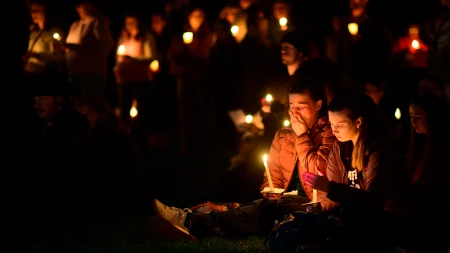
There is no satisfying way to end this reflection, because the story in Bend is not finished. There are funerals to plan, families to hold, and a town that must decide what to do with its broken shopping center and its blood-stained school. The children will eventually return to a building that has been inspected, cleaned, repaired, perhaps marked with a small plaque at the entrance in memory of the lives lost. The municipality will issue a report. The school board will approve a budget for security upgrades. The governor will talk about resources. The public will demand change, and some small portion of change will actually happen. But the deeper answer to the question that the gunman left at that locked door is not in the next purchase order or the next drill. It is in the strength of the bonds that make people recognize one another’s distress, the courage to intervene, the willingness to bear the temporary discomfort of hard conversations, and a social commitment to reduce the number of young people who arrive at such a point of hopeless and murderous rage. In the final analysis, the locked door held up its end. It did what it was designed to do. What failed was everything before and after it: the failure to prevent the shooter from being in that parking lot with that rifle, the failure to protect the four victims who had no idea they would never come home, the failure of a country that has made the same arithmetic of locks, guns, victims, and martyrs, again and again. The families in Bend deserve more than condolences. The children who ran through those corridors deserve more than hero stories. They deserve an honest promise, one that a locked door cannot seal and a bullet cannot shatter, that we will not accept this forever. If that promise is real, it will be kept not by a stronger lock, but by decisions made in voting booths, in school board rooms, in community meetings, and in the privacy of homes where guns are stored and broken hearts are hidden behind ordinary curtains. The school in Bend was locked. The world around it was not.