


Here is a summarized and humanized version of the article, structured into six paragraphs as requested.
—
This is a story about a once-revered civil rights watchdog, a jilted lover turned government informant, and a federal investigation that has plunged one of America’s most powerful nonprofit organizations into legal chaos. The Southern Poverty Law Center, known for decades as the champion that exposed the Ku Klux Klan and other hate groups, now finds itself in the defendant’s chair, accused of something almost unthinkable: secretly funneling money to the very organizations it claimed to be fighting. According to federal prosecutors, the SPLC allegedly gave hundreds of thousands of dollars to members of hate groups—including the white separatist National Alliance—and then used those groups as specters to scare donors into opening their wallets. The organization, which reported roughly $787 million in assets in 2024, has pleaded not guilty, insisting that the payments were legitimate compensation to confidential field sources, a standard investigative technique used to monitor extremist threats. But the image of a clean, well-funded nonprofit battling evil has been badly tarnished, replaced by a messy, ugly courtroom drama involving secret recordings, credit card debt, tax forgiveness, and a love affair that went very, very wrong. The trial is scheduled to begin in February, and the outcome could reshape not only the SPLC’s future but also the way Americans understand the shadowy world of undercover extremism research.
The legal saga did not begin in partisan fury, though it has certainly ended up there. Court papers reveal that the federal investigation into the SPLC was actually launched in 2022, during the administration of President Joe Biden, long before Donald Trump returned to the White House. At the time, the case moved quietly, apparently going nowhere. Then, under the Trump administration, it was revived with sudden energy—so much so that SPLC attorneys tried to have the indictment dismissed as a “vindictive prosecution,” a claim a judge struck down in August. The whiplash has fed a growing narrative, fueled by conservative critics, that the Department of Justice is playing favorites. Attorney General Todd Blanche told Fox News in April that the case had been “mysteriously closed” under the prior administration, adding that investigators had no idea why. Scott Walter, president of the Capital Research Center, a longtime SPLC watchdog, summed up the suspicion more bluntly, claiming that the Biden Justice Department wielded “a double-edged sword”—one side sharpened to attack political enemies, the other dulled to protect political friends, especially “as powerful as the raw partisans at the SPLC.” Whether that charge is fair or simply the feverish rhetoric of political warfare, it shows how easily a criminal investigation can become a weapon in the culture wars. The investigation may have started under Biden, but it has taken on a life of its own under Trump, leaving the SPLC caught in the crossfire of a deeply polarized country.
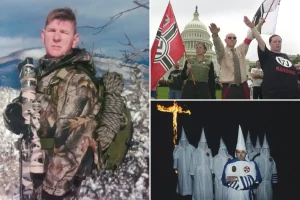
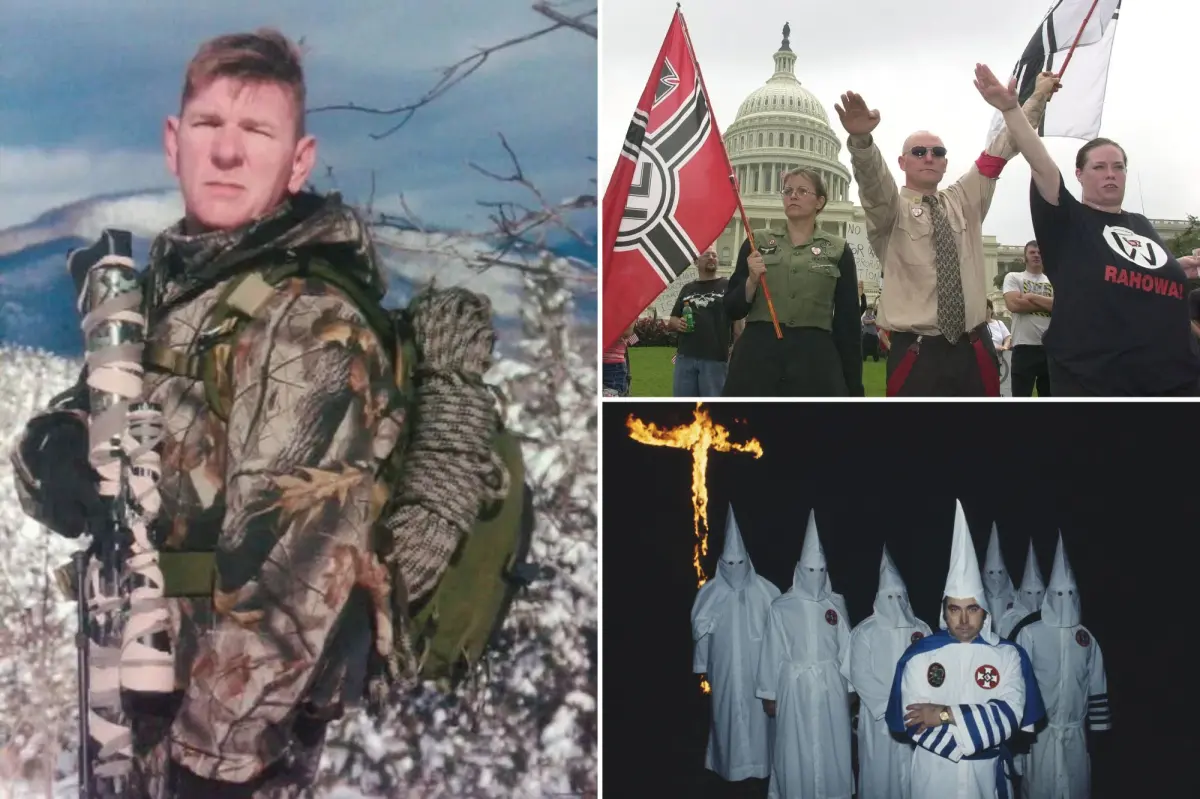
At the heart of the government’s case is a man whose life sounds like the plot of a dark, twisted novel: Lawrence “Scary Larry” Myers, known in court documents only as “F-9.” Myers is a former member of the National Alliance, the white separatist group the SPLC had spent years monitoring. He was also the organization’s official photographer, a role that gave him a front-row seat to the paranoid world of American extremism. But Myers was not just a hatemonger with a camera. For years, he was also an informant for the SPLC, feeding information to its Intelligence Project. This double life eventually became a love story—or at least a strange and consequential romance. At the center of that relationship was Heidi Beirich, the director of the SPLC’s Intelligence Project and a co-defendant in the case. The two were reportedly involved in a “meaningful personal relationship,” though the details of how a civil rights researcher and a white separatist photographer ended up together remain as bizarre as they are unclear. The SPLC has argued that Myers was only a witness, not a member of the prosecution team, but his behavior tells a different story. After his break with the SPLC, Myers allegedly handed over 1.2 terabytes of data from five hard drives and two thumb drives, exchanged more than 1,800 text messages with federal agents, and attended 20 meetings with the FBI and IRS. He even created 162 pages of self-styled “Intelligence Briefings,” complete with PowerPoint slides bearing official FBI and IRS seals, acting as though he were “an actual member of the prosecution team.”
The turning point in this strange tale, according to SPLC lawyers, was heartbreak—and money. Between December 2021 and July 2023, everything fell apart for Myers. His income from the SPLC was “significantly reduced,” his personal relationship with Beirich ended, and his contract as an informant was terminated. The SPLC later described F-9 as bearing “deep resentment” against the organization, with a motive to feed the government only the most damaging material he could find. But the IRS was already closing in on him. Myers, who had reportedly failed to pay his taxes for nearly three decades, suddenly found himself facing serious criminal and financial exposure. Desperate and broke, he pleaded with investigators to forgive his tax debt in exchange for his help. His texts to federal agents read less like the words of a master spy than a man drowning in bills: he had maxed out several credit cards, sold his car, and begged for mercy. In one especially pathetic message, he asked whether there was “a probability—not a possibility—a probability, that the FBI will pay me? They used to pay me!” The image is both pitiful and unsettling: a man betrayed by his lover, cut off from his income, and willing to do almost anything to survive. The SPLC has tried to use this to its advantage, painting Myers as a spurned ex-boyfriend seeking revenge. But for the government, his desperation is precisely what makes him credible: what better witness than a man with nothing left to lose?
Yet there is a dark irony at the center of this case that neither side can fully escape. The SPLC has complained that Myers stole confidential documents and privileged information from them, pointing to his secretive behavior as proof of his untrustworthiness. But, as prosecutors note, that is exactly what the SPLC paid him to do to other groups for years. In 2014, at Beirich’s direction, Myers allegedly broke into the National Alliance’s headquarters in West Virginia, stole 25 boxes of documents, and turned them over to the SPLC, which then copied the materials and used them to produce a public report about the white separatist organization’s finances. The SPLC may now bemoan the loss of its own confidential files, but it cannot claim moral purity in a game where everyone is willing to steal secrets. Myers, meanwhile, has lived his entire life under a cloud of suspicion. As far back as 1996, he was fired from an Indiana-based right-wing militia magazine called Media Bypass after readers accused him of being a federal agent. Fellow members of the National Alliance, paranoid about cameras, remembered how he was constantly snapping photographs during meet-ups and portraits of the group’s founder, William Pierce, and they often wondered what he was really doing with all that intelligence. Today, Myers is reportedly a reclusive potato farmer, still sitting on a storage unit full of six steel filing cabinets containing handwritten notes, files, recordings, and 37,000 photographs—overdue on $15,000 in storage fees, yet still somehow at the center of a major federal prosecution.
As the trial approaches, the story remains unfinished and deeply human in all its messy, contradictory details. The SPLC and Beirich have pleaded not guilty, and they have offered no public response to the allegations beyond their court filings. They insist that Myers is an unreliable, embittered ex-informant whose cooperation with the government is rooted in personal revenge, not justice. The government, on the other hand, presents him as a deeply flawed but essential witness—a man who knew the hate movement from the inside, who was willing to risk everything to tell the truth, even if his motives were less than pure. What makes this case so compelling is not just the legal maneuvering or the political fireworks, but the uncomfortable questions it raises about the world of nonprofit activism. How far should watchdog groups go to expose extremism? Is it acceptable to pay informants with criminal records, or to encourage theft in the name of a good cause? And what happens when the line between infiltrator and participant becomes so blurred that no one can tell who is fighting whom? The SPLC has built its reputation on exposing hate, but this trial may expose something else: the compromises, contradictions, and all-too-human vulnerabilities that exist even in the most righteous of causes. With the trial set to begin in February, all eyes will be on the courtroom, waiting to see whether the SPLC can defend itself against the very tactics it once championed—or whether the scandal will bring down one of America’s most influential civil rights institutions.