

Imagine for a second that you’re talking to a friend over coffee, and somewhere in the middle of a story about your chaotic week, you mention, almost as an aside, that you’ve run out of dish soap. You don’t write it down. You don’t make a mental note. The thought just drifts away, as so many practical little thoughts do. Then later, when you open Amazon.com, there it is: a bottle of dish soap, quietly waiting in your recommendations, as if the internet had been eavesdropping on your life. For years, that scenario has been the stuff of tech paranoia—people half-joking that their phones are listening to them, then serving up targeted ads for things they mentioned aloud. Researchers have never found solid evidence that phones are secretly doing that. But Amazon is now offering something close, except with a twist: it’s fully out in the open, and it’s voluntary. The company announced Thursday a major update to Bee, the AI wearables startup Amazon acquired last year. Bee makes small wearable devices that record and remember what people say in everyday conversations. The new feature takes those offhand remarks and turns them into shopping suggestions on Amazon.com. So if you say you’re out of dish soap, or you mention needing a new phone charger, the product recommendation can appear on Amazon’s storefront and in Bee’s mobile and desktop apps. Amazon frames it as a way to help people remember the things they actually need to buy, without having to track them in their heads.
The shopping integration is not automatic, and Amazon is being careful to say that. It’s opt-in, which means nothing happens unless users deliberately connect their Bee accounts to Amazon.com. Bee also says it will not share data with Amazon without the user’s explicit consent. That consent piece matters because Bee is, at its core, a device that listens to your conversations. It’s designed to be worn or clipped to your clothing, and it captures snippets of dialogue so it can turn them into useful summaries, reminders, and to-do lists. The idea is that you can be fully present in a conversation instead of staring at a notepad or phone screen. Bee keeps track of details like when and where you agreed to meet a friend, what action items came out of a work meeting, or what the doctor said during an appointment. Then it packages all of that into readable summaries in the Bee app. But the new Amazon.com connection adds a slightly different layer: it turns everyday spoken needs into potential purchases. The feature requires a Bee Pro subscription, which costs $12 a month. That same subscription also unlocks unlimited conversation summaries and gives users the ability to ask Alexa+, Amazon’s upgraded voice assistant, about things Bee has captured. For example, you could ask Alexa+ on an Echo device, “What did I say I needed to pick up from the store?” and it would pull from Bee’s memory. For a company like Amazon, this is a way of connecting its hardware, its AI assistant, and its massive online retail operation into one continuous loop. It’s ambitious—and for some people, it will feel convenient, while for others it will raise eyebrows.
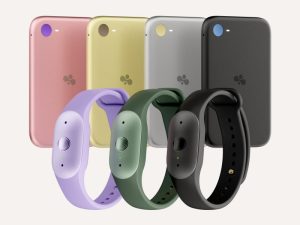
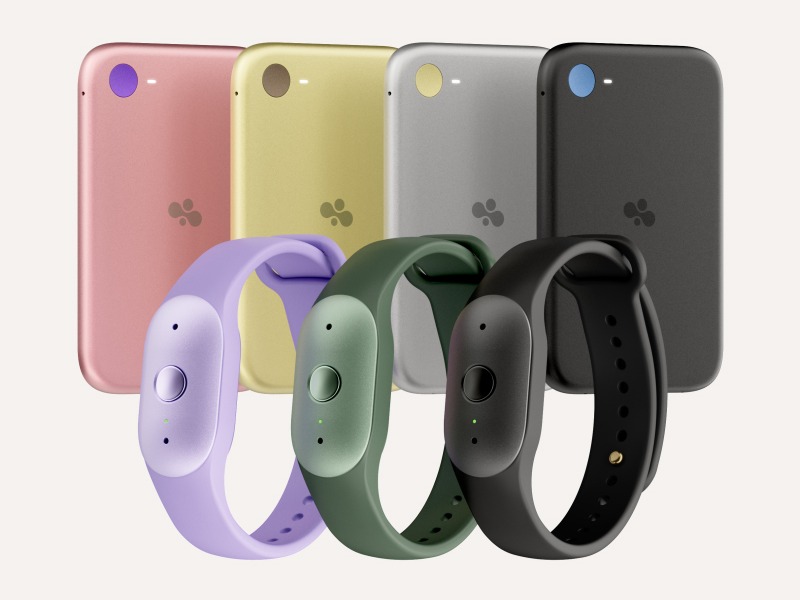
Alongside that update, Amazon introduced the first new Bee hardware devices since it took ownership of the company. One is called the Bee Frontier, a $74.99 wristband that can also be clipped onto clothing. It has dual microphones, a battery that lasts up to seven days, and an IP67 water-resistance rating, meaning it can handle splashes and brief dunks without breaking a sweat. The other device is the Bee Eclipse, which starts at $99.99 and is about the size of a credit card. As the name suggests, it attaches magnetically to the back of a phone, so it can travel with you without requiring a separate accessory. Amazon says the Eclipse will be available soon, and it boasts a battery life of more than 21 days on a single charge. Both devices have a single button to turn them on and off, and both show a small light when they’re actively running, so there’s no question about whether the microphone is live. The design philosophy seems to be about making the listening device feel less like a surveillance gadget and more like a subtle assistant that happens to sit on your wrist or the back of your phone. The Frontier is available now, and the Eclipse is positioned as a more phone-centric option for people who want Bee’s capabilities but don’t necessarily want to wear something all day. By offering two form factors at different price points, Amazon is trying to make Bee feel flexible—something that can slide into a variety of lives, whether you’re a student recording lectures, a caregiver tracking a loved one’s care plan, or a professional who spends hours in meetings and wants an automatic summary without having to type anything.
The software side of Bee is just as important as the hardware. Bee devices turn conversations into structured summaries, to-dos, and reminders, and users can read those summaries in the Bee mobile app or a new desktop app. The summaries are formatted for different kinds of conversations, such as lectures, care plans, and brainstorming sessions, so the experience doesn’t feel like a generic transcript dump. Bee also picks up on recurring themes across conversations and suggests goals or actions based on patterns you might not notice yourself. For example, if you keep talking about wanting to exercise more, Bee might gently note that as a recurring theme and suggest setting a goal. It connects to a range of popular apps, including Gmail, Google Calendar, and Microsoft Outlook. After a call or meeting, Bee can list action items, draft follow-up emails, or create calendar invites based on what was said. That integration is particularly useful for people who live inside their calendars and inboxes. Users can also link Bee to Apple HealthKit and to their photo libraries, which opens the door to more personal context. Most of those features, including the desktop app and third-party integrations, require the Bee Pro subscription. Without a subscription, users still get conversation summaries and 14 days of memory, which is enough to try the core experience. New customers get 30 days of Bee Pro free, which gives them a chance to test the full range of features before deciding whether it’s worth $12 a month. For many users, the question will be whether having a device that remembers conversations is genuinely useful or just another piece of technology to manage. Amazon’s answer is that it reduces mental overhead—you stop trying to remember everything and start trusting Bee to capture the important details.
On the privacy front, Amazon is trying to address the obvious concerns head-on with a system it calls Bee Private Compute. The company says Bee processes conversations in an isolated environment where no one, including Amazon, can access your data. Audio is deleted after it’s processed, and transcripts are encrypted with keys controlled by the user’s device. That architecture is meant to reassure people that the text of their conversations isn’t sitting on some Amazon server, available to engineers or advertisers. Additionally, for phone calls, the Bee Eclipse prompts users to get permission from the other people on the call each time it starts recording. That consent prompt is a crucial detail, because it acknowledges that a conversation isn’t just your data—it belongs to everyone involved. The light on the device serves a similar purpose in person, signaling to people around the wearer that Bee is listening. Of course, there’s a limit to how much any privacy architecture can reassure skeptics. The very idea of a wearable that captures and summarizes conversations makes some people deeply uncomfortable, regardless of encryption or deletion policies. But Amazon appears to be betting that enough users will find the convenience worth the trade-off. The company is also leaning on its acquisition narrative: Bee was founded in San Francisco by Maria de Lourdes Zollo and Ethan Sutin, and it raised only $7 million before Amazon scooped it up in July 2025. At that time, Bee sold a $49.99 wristband called the Bee Pioneer. Now, under Amazon’s vast resources, Bee is being pushed into the mainstream, integrated with Amazon’s store and Alexa+, and positioned as a serious product rather than a niche startup experiment.
Amazon is not the only big company or startup chasing this idea. Bee sits in a crowded and growing field of AI devices that listen to conversations and help people remember them. Startups like Plaud, Omi, and Friend make AI recorders and pendants that serve a similar purpose, while apps like Granola and Otter do the same thing using just a phone, with no extra hardware required. That competition means Bee has to justify its existence as a physical device. Why wear a wristband or stick a card to your phone when an app could do the job? Amazon’s answer is that a dedicated device is more reliable, more passive, and less distracting than pulling out your phone to record everything. It’s always on, always ready, and specifically designed to capture the spoken word without demanding your attention. On another front, Amazon is simultaneously trying to protect its online store from other companies’ AI agents. Last month, it blocked Meta’s Muse assistant from shopping on Amazon.com, after earlier moves against shopping agents from Perplexity, Google, and OpenAI. So while Amazon is opening its own AI assistant and wearable to its store, it’s actively shutting the door on competitors’ AI trying to do the same thing. That tension captures the broader moment in tech: everyone is racing to build AI that understands your life, remembers your words, and helps you act on them—but they’re also drawing sharp boundaries around their own ecosystems, trying to keep rivals out while pulling users further in. For now, Bee is Amazon’s boldest attempt to make that future feel personal, useful, and, at least on paper, consensual. Whether people will trust it enough to wear it, let it listen, and open their shopping lists to it is another question entirely.