


Paragraph 1: The Unveiling of a Quiet Controversy
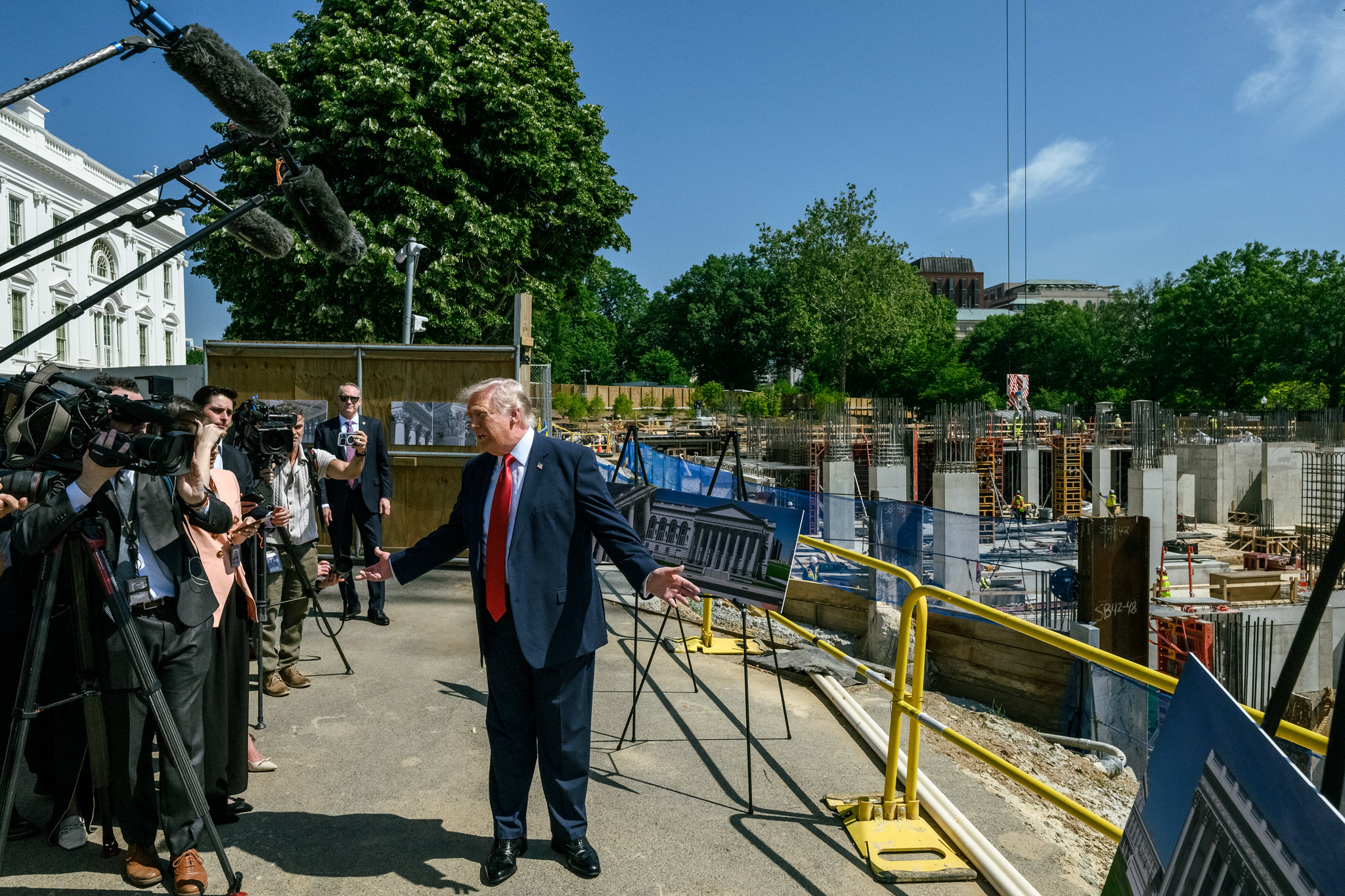
In the shimmering glow of a Washington, D.C., afternoon, a story quietly unfolded that speaks volumes about the intersection of power, money, and the private ambitions of public figures. It began with a simple disclosure: Microsoft had given $10 million to President Trump’s White House ballroom project, while Amazon and T-Mobile each contributed $5 million. These numbers, plucked from an internal donor list obtained by the Washington Post, might seem like mere footnotes in a city accustomed to staggering sums. But they represent far more than construction costs for a historic renovation. They are the latest chapter in an ongoing saga about how the modern presidency finances its personal visions, how corporations navigate a landscape of regulatory threats and opportunities, and how ordinary Americans are left to wonder whether the grandeur of the People’s House comes with strings attached. The ballroom itself—a grand, ceremonial space designed to host state dinners and dignitaries—is a symbol of American prestige. Yet the path taken to fund its restoration bypasses every traditional guardrail of campaign finance, creating a loophole large enough to drive a parade of corporate donors through. As the sun sets over the White House, the question lingers: when the last chandelier is hung and the first waltz begins, whose tune will be playing?
Paragraph 2: The Mechanics of a Loophole and the Silence of the Donors
The details of these contributions are as troubling as they are fascinating, because they expose a system designed to evade scrutiny at almost every turn. Unlike political donations, which are subject to strict federal limits and public disclosure, these gifts flow through a labyrinthine structure. The money is given to the Trust for the National Mall, a nonprofit ostensibly dedicated to preserving the nation’s monuments, and from there it is transferred into a White House account that the president directly controls. This arrangement allows donors to remain largely anonymous, and, more critically, it removes any legal cap on the size of their gifts. The White House publicly named Microsoft, Amazon, and T-Mobile as ballroom supporters back in October, but it carefully omitted the dollar amounts—a move that only fueled speculation. Now that the Post has uncovered the figures, the silence grows more deafening. Microsoft, a company that has built its reputation on corporate responsibility, declined to comment beyond previous statements. Amazon and T-Mobile, both contacted for this story, remained mute, their spokespeople presumably parsing legal risk against public relations fallout. Meanwhile, other donors have requested to be kept entirely off the books, including a subsidiary of mortgage lender Rocket, which committed a hefty $10 million just weeks after a federal agency approved its acquisition of Mr. Cooper. The timing, as they say, is everything. But for the average citizen, the message is painfully clear: when the president asks for help decorating his home, the most powerful companies in America open their wallets—and then close their mouths.
Paragraph 3: A Flood of Corporate Cash and the Dance of Influence
The broader picture is even more disquieting. According to the Post, the ballroom project has raised a staggering $333 million so far, with the overwhelming majority coming from companies and wealthy individuals who have significant business before the federal government. This is not mere philanthropy; it is a strategic investment. The donor list reads like a who’s who of corporate America, with Apple and Nvidia topping the chart at $25 million each. Microsoft’s $10 million places it in a tier alongside the defense contractor Palantir and the military giant Lockheed Martin, while Amazon and T-Mobile rub shoulders with Meta, Cisco, and ServiceNow at the $5 million level. These companies do not hand over eight-figure checks out of sheer love for neoclassical architecture. They do so because they operate in a world where federal regulations, antitrust rulings, and procurement decisions can make or break their futures. Every one of these donors has a lobbyist, a legal team, or a government affairs office whose sole purpose is to ensure favorable treatment from Washington. The ballroom donation is a relatively cheap price to pay for a seat at the table—or, more accurately, a place in the president’s good graces. Experts quoted by the Post warn that such contributions create a perception, if not the reality, of quid pro quo. Companies may feel pressured to give, not because they want to see a beautiful ballroom, but because they fear the consequences of a White House that views them as ungenerous supporters. In a city where access is currency, these checks are the surest way to buy a conversation.
Paragraph 4: Seattle’s Titans and Their Tangled Web of Washington Ties
For the Pacific Northwest, this story is particularly personal, as it features three of the region’s most recognizable corporate giants. Microsoft and Amazon are, respectively, two of the federal government’s largest technology providers, supplying everything from cloud computing services in Azure and AWS to the very tools that power government agencies. Their reliance on federal contracts is immense, making them particularly vulnerable to political winds. T-Mobile, meanwhile, operates in a heavily regulated industry where every new wireless spectrum purchase, every merger, and every expansion requires the green light from federal regulators. The company’s torrid growth through acquisitions, including its blockbuster deal for Sprint, has kept it at the mercy of the Federal Communications Commission and the Department of Justice. But their dealings with Washington are not merely transactional; they are often adversarial. Amazon is currently facing a high-stakes antitrust trial brought by the Federal Trade Commission, which alleges that the company’s treatment of third-party sellers on its online marketplace stifles competition and harms consumers. The FTC, along with 22 states, also sued Amazon in August, accusing it of rigging ad auctions to overcharge advertisers—a claim the company denies. Microsoft, for its part, is at odds with Vice President JD Vance and the Labor Department over allegations that it laid off American workers while simultaneously sponsoring foreign workers for permanent residency. The department has suspended Microsoft from the program, a move that could have significant repercussions for the company’s talent pipeline. These conflicts are not abstract; they are active disputes that will be resolved by the very administration whose generosity [the companies] are now helping to fund. The juxtaposition is uncomfortable, to say the least.
Paragraph 5: The Ethics of a Personal Slush Fund and Public Defenses
The ethical quagmire here is deep and murky. Because the ballroom donations flow into a White House account controlled by the president, they are, in effect, a private slush fund for the chief executive. There are no independent audits, no public reports, and no sunset clauses. This is a radical departure from the norms that govern presidential contributions, whether through campaigns, political action committees, or even the official White House Historical Association, which traditionally funds renovations with small donations from citizens. Critics argue that the arrangement invites corruption, or at least the appearance of it, by allowing wealthy individuals and corporations to demonstrate their loyalty to a particular president—not to the institution of the presidency itself. When the president’s approval is needed for a merger, a contract, or a regulatory exemption, how can we trust that a $5 million check to the ballroom won’t influence the decision? The White House, predictably, sees no problem. Spokesman Davis Ingle, in response to the Post’s reporting, offered a masterclass in deflection, describing the donors as “a wide array of great American companies and generous individuals, all of whom are contributing to make the People’s House better for generations to come.” It is a lovely sentiment, one that conjures images of civic-minded executives simply eager to polish the national treasure. But the reality is more cynical. The president himself has a long history of using his properties and personal brands to solicit favors, and his decision to insert himself into the ballroom’s fundraising—rather than leaving it to professional White House curators—raises obvious questions about where his loyalties lie.
Paragraph 6: What It Means for Democracy and the Seeds of Distrust
In the end, the story of Microsoft’s $10 million and Amazon’s $5 million is not really about a ballroom at all. It is about the erosion of trust between the governed and the governing, and the troubling normalization of pay-to-play politics. When the most powerful corporations in the world are willing to funnel millions of dollars into a president’s personal accounts, with no oversight and no transparency, they send a message to every American: influence is for sale, and the price is whatever the president asks. The pledges also create a chilling effect, as companies that might prefer to stay silent feel compelled to open their wallets simply to avoid being left out. The human side of this story is not just the CEOs signing the checks; it is the average citizen who reads the headlines and wonders whether the federal contracts, the antitrust decisions, and the labor disputes are being adjudicated in good faith. It is the small business owner who cannot afford a $10,000 donation, let alone $5 million, and who knows that the playing field is anything but level. The White House may call these donors patriots, and some of them may indeed have patriotic motives. But the lack of disclosure, the anonymized gifts, the glaring proximity in time between donations and favorable government actions—all of these combine to create a stain on the People’s House that no marble floor can polish away. As we watch the ballroom rise from its scaffolding, we must ask ourselves: what are we building, and for whom? The answer, obscured by the checks and the silence, will determine whether this beautiful room becomes a symbol of national pride or a monument to the influence of the wealthiest few.