


It begins with a simple yet profound idea: what if we could design proteins to do the dirty work of disease-fighting the way a skilled chef uses a knife? At the University of Washington’s Institute for Protein Design, scientists are doing exactly that, creating custom-built proteins that act like molecular scissors, precisely snipping apart the harmful proteins linked to devastating conditions such as Alzheimer’s disease and amyotrophic lateral sclerosis, better known as ALS or Lou Gehrig’s disease. The work is led by a team at UW Medicine’s Institute for Protein Design, a place already famous for using artificial intelligence to invent proteins that do not exist in nature. Now, using sophisticated AI models developed in-house, the researchers have crafted a new class of enzymes called proteases, which are nature’s recyclers and destroyers. Unlike ordinary drugs that simply bind to a problem protein and block it, these proteases are catalytic: they make a cut, release the pieces, and move on to the next target, and the next, and the next. They are not one-shot tools but relentless workers, capable of destroying thousands of copies of a harmful protein in the time it takes a conventional drug to affect just one. It is a fundamentally different way of thinking about medicine, one that could make future treatments far more powerful, far cheaper, and far less dependent on high doses.
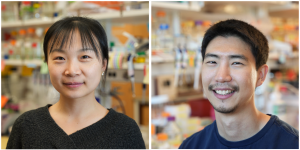
The difference between this approach and traditional pharmaceuticals is like the difference between a key that opens a single lock and a master key that opens every lock on the block, then reshapes itself to open more. Most drugs are like keys in another sense: they bind to a receptor or enzyme, block it, and stay there. That means a patient needs a large amount of the drug to have enough molecules to cover all the targets, and the effect wears off as the drug is metabolized. The newly designed proteases, however, are catalytic. They perform their cutting action, then detach and find a fresh victim. Anqi Chen, a postdoctoral fellow at the institute and one of the lead authors of the new studies, explained the power of this design: “You have this catalytic capability to destroy one target, and then immediately your molecule can hop over to the second, third and thousands of different targets.” Because of that amplification, a single enzyme can neutralize an enormous number of disease-associated proteins. Chen added, “There’s this potential to use your drug at very, very low concentrations.” That could mean smaller doses, fewer side effects, and lower manufacturing costs—a triple win for patients and health systems alike. The research, published today in the journal Nature, is being hailed as a significant breakthrough, not just because the enzymes work, but because they work so well and with such precision.
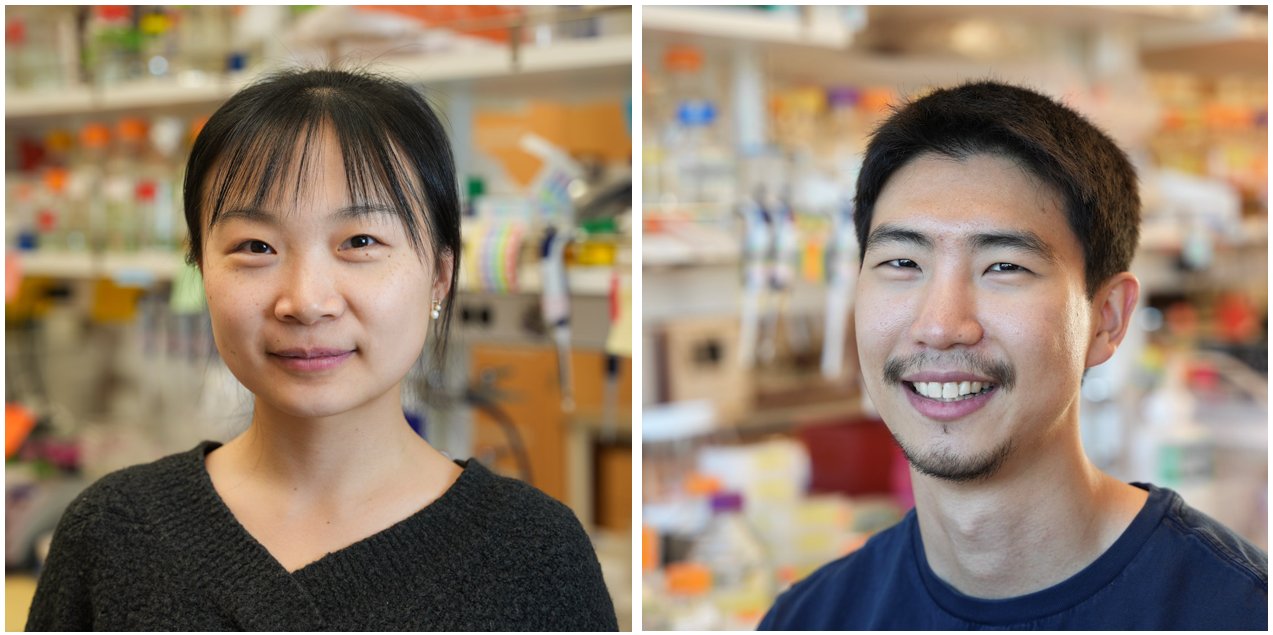
The two papers, both with senior author David Baker—the institute’s director and a 2024 Nobel laureate in chemistry—describe two complementary strategies for building these molecular scissors. In one approach, led by Chen and Kejia Wu, the researchers designed proteases that use a metal ion as the blade. This is a clever twist on nature’s playbook, since most natural proteases use a different chemical group, usually an amino acid, to make the cut. By swapping in a metal ion, the team created a new class of enzymes that proved extraordinarily efficient. More than a third of the designs precisely cut their target, a protein implicated in Alzheimer’s disease, and they did so at speeds that are almost unimaginable: 100 million times faster than the reaction would occur without the enzyme. In the other paper, Hojae Choi, a graduate student at IPD, led an effort using an activated amino acid called cysteine as the cutting blade. These designed proteases had a 19 percent success rate in snipping their targets and were up to 30 million times faster than uncatalyzed reactions. Those numbers may sound technical, but they represent a leap in what synthetic biology can achieve. It is one thing to design a protein that merely binds; it is quite another to design one that acts as a highly efficient, reusable machine. And because these proteases can be directed at any protein of choice, the potential targets extend far beyond the brain.
Indeed, the researchers are already looking beyond Alzheimer’s and ALS to a wide range of diseases and even environmental problems. The same molecular scissors could be aimed at the proteins that malaria parasites use to invade blood cells, or the proteins that drive certain cancers and chronic inflammatory diseases. They could be designed to disarm viruses by cutting the proteins on their surface, or to detoxify the poisons produced by dangerous bacteria. And the applications are not limited to human health. Baker noted, “There’s super exciting applications,” pointing to the possibility of using these enzymes to break down hazardous pollutants and even plastic waste. The same catalytic power that lets a protease chew through a disease protein could be harnessed to chew through environmental toxins, turning a landfill or oil spill into something a protein can digest. It is a vision that ties together cutting-edge artificial intelligence, structural biology, and environmental stewardship. The Institute for Protein Design has already made headlines for its AI-driven approach to creating novel proteins, including work made possible by a huge cloud computing grant from the foundation of Nvidia’s CEO. This latest research builds on that foundation, showing that AI can not only design stable shapes, but also design dynamic, active machines that perform complex chemistry.
But turning these laboratory marvels into medicines for humans will not be easy. There are serious hurdles between a Nature paper and a pharmacy shelf. One of the biggest is the immune system. Our bodies are trained to attack foreign proteins, and a designer enzyme introduced to a patient could be quickly flagged and destroyed before it ever gets a chance to work. This problem, called immunogenicity, is a classic challenge for all biologic drugs, but it is especially tricky for enzymes that need to survive long enough to cut many targets. Another challenge is control: once the molecular scissors are in the body, how do you turn them off? If a protease is too active, it might cut healthy proteins or cause unintended damage. The ideal would be a switch that could turn the enzyme on and off as needed, or a system that limits its activity to a specific tissue or time. Choi, the lead author of the second paper, is already tackling the immune system issue. He is working on a clever workaround: combining the catalytic, cutting component of the enzyme with an antibody that looks benign to the immune system. As he put it, they are creating something like a protease wolf in antibody clothing. “It is a newly launched project, so we don’t have any official data to show to public,” Choi said. “But we’re really working on it.” That kind of humility is typical of scientists who know that a beautiful paper is only the beginning of a long, uncertain journey.
Still, the promise here is enormous, and the excitement in the lab is palpable. The idea that a single tiny protein could be programmed to find, cut, and destroy thousands of harmful molecules opens up a new era of medicine—one built on the same catalytic principles that power every living cell. Instead of flooding the body with millions of drug molecules and hoping enough of them stick to their targets, future therapies might deliver just a handful of engineered enzymes that work like miniature recycling robots. They could be given at far lower doses, making expensive treatments more accessible, and they could be designed to target proteins that have long been considered undruggable. The work also represents a triumph of human creativity amplified by artificial intelligence: scientists dream up the function, and AI helps them find the amino-acid sequence that folds into the exact shape needed to carry it out. It is a powerful partnership, and one that is just beginning to show its potential. As Baker and his team continue to refine these molecular scissors, the possibilities seem almost limitless. For now, the research stands as a testament to what can happen when we look at biology not as something to be treated with blunt tools, but as a set of intricate machines that can be redesigned, rebuilt, and redirected to heal, protect, and even clean up the world around us. The road from laboratory to clinic is long, and there will be setbacks and surprises. But with each new protein that works, the future becomes a little more real—a future in which the scissors are already in the drawer, ready to open doors we never knew were locked.