



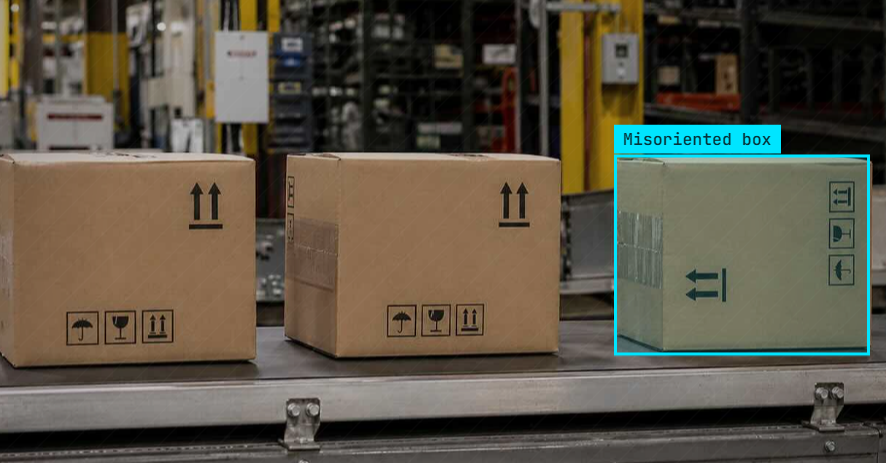
On a morning when most of the tech world was still scanning headlines about model benchmarks and GPU shortages, a quieter piece of news slipped out that said a lot about where artificial intelligence is heading. Prime Intellect, a San Francisco-based AI cloud company with a $1 billion valuation, announced it had acquired Moondream, a tiny startup founded by two former Amazon Web Services engineers in Seattle. The terms weren’t disclosed, and Moondream’s entire team could fit around a single conference table—fewer than ten people, according to The Information, which first reported the deal. But for anyone paying attention to the messy, human side of the AI boom, the acquisition felt less like a startup exit and more like a meeting of kindred spirits. Moondream had built a reputation for doing something oddly unfashionable in an industry obsessed with scale: making small, open-source AI models that could actually understand images without requiring a data center the size of a warehouse. Its vision AI could flag a misoriented box on a conveyor belt, or make sense of a photo on a phone, all while running efficiently enough to fit in the palm of your hand. And now, in a move that married that scrappy pragmatism with billion-dollar infrastructure ambitions, Prime Intellect was folding Moondream’s models and inference technology into its own cloud platform. It was one of those deals that makes you stop and think: the future of AI isn’t only about the biggest models; it’s also about the smallest, cleverest pieces of engineering that make those models usable in the real world.
Moondream’s story began with a familiar Seattle pedigree. Jay Allen and Vik Korrapati, the startup’s co-founders, had spent years inside Amazon Web Services—Korrapati for nine years, Allen for seven—watching the cloud computing giant scale its infrastructure to serve customers around the globe. Before AWS, Allen had worked at Porch, Zynga, and Microsoft, which gave him a broad view of the tech landscape. But the pair didn’t leave AWS to build another cloud. Instead, they launched Moondream in 2024 with a $4.5 million pre-seed round from Felicis, Microsoft’s M12 GitHub Fund, and Seattle-based Ascend. Their pitch was refreshingly contrarian: while the rest of the industry was pouring billions into enormous language models and chasing artificial general intelligence, Moondream wanted to build models small enough to run on phones and other edge devices. The original Moondream model was a proof point—a vision-language model that could run locally, without phoning home to a server, and still perform tasks like describing images, answering questions about what it saw, and identifying objects. It wasn’t trying to be the smartest entity in the room. It was trying to be the most useful thing in your pocket. That vision resonated with developers who were tired of the cloud dependency and privacy concerns that came with larger models, and it gave Moondream a loyal following among tinkerers and startups who wanted AI that could work in constrained environments. In a sense, Moondream was a throwback to an earlier era of software, when doing more with less was a point of pride.
What made Moondream especially attractive to Prime Intellect, though, wasn’t just the models themselves—it was the team’s obsessive focus on making those models run faster and cheaper. The company built something called Photon, an inference engine that took a different approach to running AI models on GPUs. Instead of executing a model as a sequence of separate operations that each wake up the chip and then leave it idle while waiting for the next step, Photon compiled the entire model into a single program on the GPU, something known as a megakernel. That reduced the idle time between tasks and made the whole process dramatically more efficient. Engineers have historically written megakernels by hand, which is painstaking, arcane work that requires a deep understanding of both the model and the hardware. Moondream’s team, according to Prime Intellect CEO Vincent Weisser, had a rare skill for this kind of low-level optimization. In many ways, that skill is more valuable than any individual model checkpoint. The AI industry is full of clever architectures and impressive demos, but the real bottleneck has increasingly become the boring, difficult work of squeezing more performance out of expensive GPUs. If you can make a model run twice as fast on the same chip, you’ve effectively cut your costs in half. That’s not just a technical achievement; it’s a business advantage. And for Prime Intellect, whose entire business model depends on providing computing power to AI developers, bringing Moondream’s optimization expertise in-house was a way to sharpen its competitive edge.
Prime Intellect itself is part of a growing wave of companies known as “neoclouds”—cloud providers built specifically for the AI era, offering access to clusters of GPUs and helping developers run open-source models without having to build their own infrastructure. The company raised $130 million in a Series A round led by Radical Ventures in July, and at the time, it said it had already passed $100 million in annualized revenue. That’s a striking number for a company that’s still relatively young, and it reflects the voracious demand for compute among AI startups and enterprises alike. But Prime Intellect isn’t just renting out GPUs; it also offers inference services, which is the process of running a trained model to generate answers, analyze images, or take actions. That’s where Moondream comes in. Moondream was actually one of Prime Intellect’s earliest customers, according to the blog post announcing the acquisition. The two companies already had a working relationship, which likely made the deal feel more like a deepening of a partnership than a hostile takeover. For Prime Intellect, the acquisition wasn’t just about buying technology; it was about buying people who understood how to make models sing on specific hardware, and who could help Prime Intellect build out its vision for the next generation of AI services. In the neocloud world, the winners won’t just be the ones with the most chips, but the ones who can make those chips do the most work per dollar.
The details of the deal are, as is often the case in the AI industry, a mix of big-picture ambition and practical continuity. Allen and Korrapati are joining Prime Intellect to lead its inference work—the crucial task of running AI models after they’ve been trained—and to expand the company’s efforts in vision and computer-using AI agents. These are the kinds of agents that can look at a screen, interpret what’s happening, and take actions in software, a capability that many in the industry believe will be the next major wave of AI adoption. Moondream’s expertise in vision models fits naturally into that vision. At the same time, Prime Intellect says it will keep using the Moondream name for small, efficient AI models that handle images and other types of data. Moondream’s latest model, Moondream 3.1, is now available through Prime Intellect’s inference service, so existing users won’t suddenly find themselves stranded. And in a nice touch of customer care, Moondream Cloud customers will receive credits on Prime Intellect’s platform, making the transition feel less like an ending and more like an upgrade. There’s also a geographic and emotional dimension to the move. Moondream said earlier this year that it was relocating to San Francisco. Korrapati announced the move in January in an online post, describing AI as “the biggest platform shift we’re going to see in our working lives.” Allen’s LinkedIn profile, as of the time of the announcement, still listed him in Seattle. That small detail captures something about the company’s identity: born in the Pacific Northwest, raised in the cloud, and now heading south to the heart of the AI boom.
In the end, this acquisition is a reminder that the AI revolution isn’t just a story of giant labs and trillion-dollar valuations. It’s also a story of small teams with sharp instincts, of engineers who spent years at AWS and then decided to bet on their own vision of a more efficient, more accessible kind of intelligence. Moondream’s journey—from a $4.5 million pre-seed round in Seattle to an acquisition by a billion-dollar AI cloud company—happened in just a couple of years. That’s a fast arc, but it’s not unusual in this industry. What makes it worth pausing over is the emphasis on smallness and efficiency. While the world’s biggest tech companies are building ever-larger models and ever-bigger data centers, Moondream’s founders believed that there was a future for models that could fit on a phone, run without a constant internet connection, and still do something genuinely useful. Prime Intellect’s decision to keep the Moondream name alive for those small models suggests that they see the same future. It also suggests that the open-source ethos—the idea that powerful tools should be shared and adapted, not locked away—remains a vital force in AI, even as commercial pressures mount. For the founders, joining Prime Intellect is probably a bittersweet moment: the end of an independent startup, but also the beginning of a larger platform where their ideas can reach more people. For Seattle, it’s a reminder that the region’s cloud and AI talent continues to shape the industry, even when the companies end up elsewhere. And for the rest of us, it’s a human-sized story about what happens when a handful of people decide they want to build something smaller, faster, and more personal—and then discover that the world was ready for it.