


Paragraph 1
There are certain actors who seem to exist outside the usual Hollywood machinery, and Nicolas Cage has long been one of them. He is an Oscar winner who has never been afraid to get strange, a movie star who seems to operate on his own frequency, and now, apparently, a man willing to burn bridges with one of the biggest streaming platforms in the world over a matter of principle. The issue, as Cage made clear during a recent panel at New York Comic Con, is artificial intelligence. In an age when studios are increasingly eager to scan, replicate, and digitally manipulate performers, Cage is drawing a hard line. He revealed that he refused to sign an AI waiver for his now-canceled Prime Video series Spider-Noir, and that this decision has effectively ended his working relationship with Amazon. The actor was characteristically blunt about the situation, telling the crowd that Amazon is a very AI-friendly company, pointing to its massive investment in OpenAI, while he, by contrast, is not an AI-friendly actor. His phrasing was simple and cutting: “Connect those dots.” For Cage, this is not a vague philosophical disagreement. It is a concrete, personal clash between his values and the corporate direction of a studio. And the consequence, as he framed it, is that he probably will not be working with that studio again. What makes the moment feel particularly significant is not just that Cage is speaking out, but that he is doing so after his series was abruptly canceled, a move that, in his telling, seems less like a creative decision and more like a corporate shrug. There is something almost old-fashioned about his stance, a refusal to accept the creeping normalization of AI in creative industries. But there is also something deeply contemporary, a recognition that the fight over artificial intelligence is not happening in some distant future, but right now, in the fine print of contracts and in the quiet decisions about who gets to control an artist’s own image. For Cage, the answer is clear: he would rather lose the job than hand over his likeness.
Paragraph 2
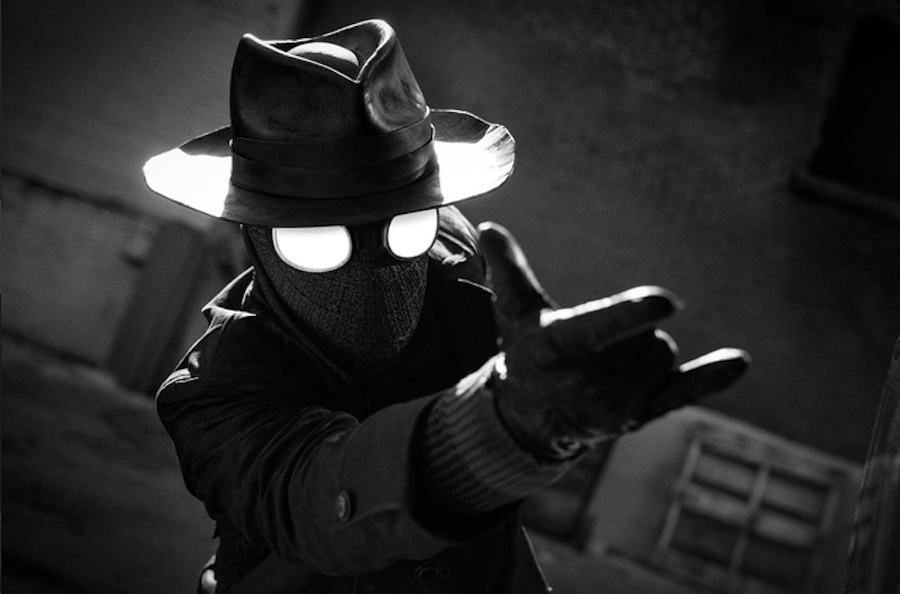
The series at the center of this standoff, Spider-Noir, was itself an intriguing experiment, one that seemed tailor-made for Cage’s particular talents. Inspired by the Marvel Comics character, the show starred Cage as Ben Reilly, an aging, down-on-his-luck private investigator navigating the grimy, rain-slicked streets of 1930s New York City. This was not the wisecracking, web-slinging superhero that audiences might expect. Instead, it was a noir-infused, hard-boiled drama, with Cage playing a man forced to confront his past life as the city’s only super-powered vigilante. The premise was stylish, moody, and unusual, exactly the kind of project that would appeal to an actor who has always been drawn to genre-bending, risk-taking material. And by most accounts, the gamble seemed to pay off, at least critically. The series garnered an impressive eleven Emmy Award nominations, a sign that the creative team had succeeded in crafting something that resonated with voters and, presumably, with audiences. Yet, despite that recognition, Prime Video made the decision to cancel the show after just a single season of eight episodes. The abruptness of the cancellation, coming on the heels of such strong awards recognition, felt jarring. It was a reminder that in the streaming era, even a critically beloved show can be treated as disposable, especially when the numbers don’t align with a platform’s larger strategic goals. For Cage, though, the cancellation was not just a professional disappointment. It was tangled up with the very issue he had refused to accept. He had declined to sign the AI waiver, and now the show was gone. Whether the two events are directly connected is unclear, and Cage did not explicitly claim that the cancellation was retaliation. But the implication hung in the air, and his decision to mention the waiver at all suggests that he sees a throughline between his refusal and the show’s fate. The entire situation has become a case study in the uneasy relationship between artists and the corporations that fund their work, a relationship that is growing more complicated as technology advances and the desire for control intensifies.
Paragraph 3
To understand why Cage is taking such a firm stand, it helps to look at the career he has built. He is not an actor who has coasted on a single persona or repeated the same formula for decades. Instead, he has become known for his willingness to go to unexpected places, to embrace the weird, the wild, and the emotionally extreme. From his Oscar-winning performance in Leaving Las Vegas, where he portrayed a suicidal alcoholic with devastating vulnerability, to the operatic absurdity of Face/Off, to the family-friendly adventure of National Treasure, Cage has never been easy to pin down. He has made art-house dramas and big-budget blockbusters, and he has approached both with the same intense, slightly unhinged commitment. That unpredictability is part of his appeal. Audiences never quite know what he is going to do next, and neither, apparently, do the people who hire him. But this latest chapter is not about a creative choice in front of the camera. It is about the way his image might be used when he is not there at all. For an actor whose entire craft is built on physical presence, on the specific quirks of his face and voice and body, the idea of being reduced to a digital asset is particularly threatening. It is one thing to play a character. It is another thing entirely to have your likeness captured, stored, and potentially manipulated in ways you cannot control and may not even be aware of. Cage’s refusal to sign the waiver is, in that sense, a defense of his own humanity, a way of saying that there are limits to what he is willing to sell. He has made peace with the strangeness of his career, but he is not willing to make peace with the idea that his performance could be replaced or altered by a machine. It is a stance that might seem stubborn or even impractical in an industry increasingly enamored with technological shortcuts, but for Cage, it is a matter of integrity.
Paragraph 4
Even as he distances himself from Amazon, Cage is not retreating from the spotlight. In fact, he appears to be plotting his next move, and it is one that should excite fans of prestige television. During the same Comic Con panel, Cage teased that he is set to star in the fifth season of HBO’s acclaimed anthology crime drama True Detective. The show, which has reinvented itself with each new season, has become a magnet for actors looking to sink their teeth into complex, morally ambiguous roles. From Matthew McConaughey and Woody Harrelson in the first season to Mahershala Ali in the third to Jodie Foster in the fourth, the series has a track record of attracting serious talent. Cage would fit right in. His ability to convey inner turmoil, to oscillate between quiet introspection and explosive emotion, seems perfectly suited to the show’s dark, atmospheric storytelling. The mention of the project was brief, and Cage did not offer many details, but the announcement was enough to generate considerable buzz. It suggests that, despite his clashes with Amazon, he remains in demand, and that he is looking for creative partnerships that align with his own sensibilities. There is also something fitting about Cage joining True Detective. The show has always been about the search for meaning in a fractured world, about characters who are haunted by their pasts and struggling to find some kind of redemption. That is a thematic territory Cage knows well, having spent his career exploring the darker corners of the human experience. It also signals that he is not simply retreating into a bunker of anti-AI anger. He is still actively seeking out challenging work, still hungry for roles that push him in new directions. The move to HBO could represent a fresh chapter, one that allows him to do the kind of serious, character-driven work he clearly values, without the corporate complications that came with his streaming experience. Whether it will be as wild and unpredictable as his past projects remains to be seen, but if there is one thing that seems certain, it is that Cage will not be phoning it in.
Paragraph 5
Cage’s anti-AI stance is not just a rejection of a particular corporate policy. It is also shaping the kind of creative collaborations he wants to pursue going forward. During the panel, he expressed a desire to work with younger, DIY-reared directors, specifically shouting out 21-year-old YouTube sensation Kane Parsons, the creator of the viral Backrooms series. Parsons is part of a new generation of filmmakers who have honed their skills not in film schools or on studio lots, but online, building massive audiences through digital platforms and experimenting with form in ways that feel genuinely new. For Cage, the appeal seems to be that these creators are working from scratch, building their visions by hand, without relying on the same corporate tools and technologies that he finds so troubling. He spoke about them with genuine admiration, saying, “They’re doing it from scratch and by hand. I want to get with that.” The sentiment is telling. It reveals that Cage is not simply opposed to technology in general. He is opposed to the use of technology as a replacement for human creativity, as a way to cut corners or to strip away the messy, unpredictable elements that make art feel alive. He wants to work with people who are engaged in the physical act of creation, who are thinking about images and sounds and stories in tactile ways, not just feeding prompts into a machine. This interest in the next generation also shows a forward-looking side to Cage that might surprise people who think of him as a relic of a bygone era. He is not looking backward. He is looking for the future, but he wants that future to be built on human skills and instincts. Kane Parsons represents, in many ways, the opposite of the AI-driven studio model that Cage is pushing back against. Parsons’ success came from the internet, from viral videos, from a grassroots, organic connection with an audience. That is a form of creative expression that cannot be easily automated or replicated, and it is exactly the kind of energy Cage seems eager to tap into.
Paragraph 6
Ultimately, the story of Nicolas Cage’s refusal to sign an AI waiver is about more than one actor’s contract dispute. It is a snapshot of a larger cultural moment, a moment when the entertainment industry is grappling with the rapid rise of generative artificial intelligence and what it means for the people who make a living from their own faces, voices, and imaginations. There are legitimate questions about how AI might be used to enhance storytelling, to create worlds that would otherwise be impossible, or to help artists work more efficiently. But there are also deep, valid fears about the erosion of human agency, about the devaluation of craft, and about the possibility that performers could one day find themselves competing with digital replicas of themselves, versions that never tire, never age, and never ask for a raise. Cage has positioned himself firmly on one side of that debate, and he is using his platform to make his position unmistakable. He is not interested in compromise, and he is willing to walk away from major opportunities rather than surrender his own image. That kind of resolve is rare, especially in an industry where financial pressures often lead people to accept terms they find uncomfortable. But Cage has always been something of an outsider, and this latest move is consistent with the rest of his career. He has never been particularly interested in playing it safe, and he is not about to start now. Whether his stance will inspire other actors to follow suit remains to be seen. But by speaking openly and refusing to back down, he has made it clear that the fight over AI is not just happening in boardrooms and on Capitol Hill. It is happening on the ground, in the decisions that artists make every day. And for Cage, the choice is simple: he would rather work with people who build their art by hand, who understand the value of human effort, than lend his likeness to a machine. It is a stance that might cost him opportunities, but it is also one that could define his legacy. In an era of increasing automation, there is something profoundly human about an actor who insists on remaining himself, no matter the cost.