

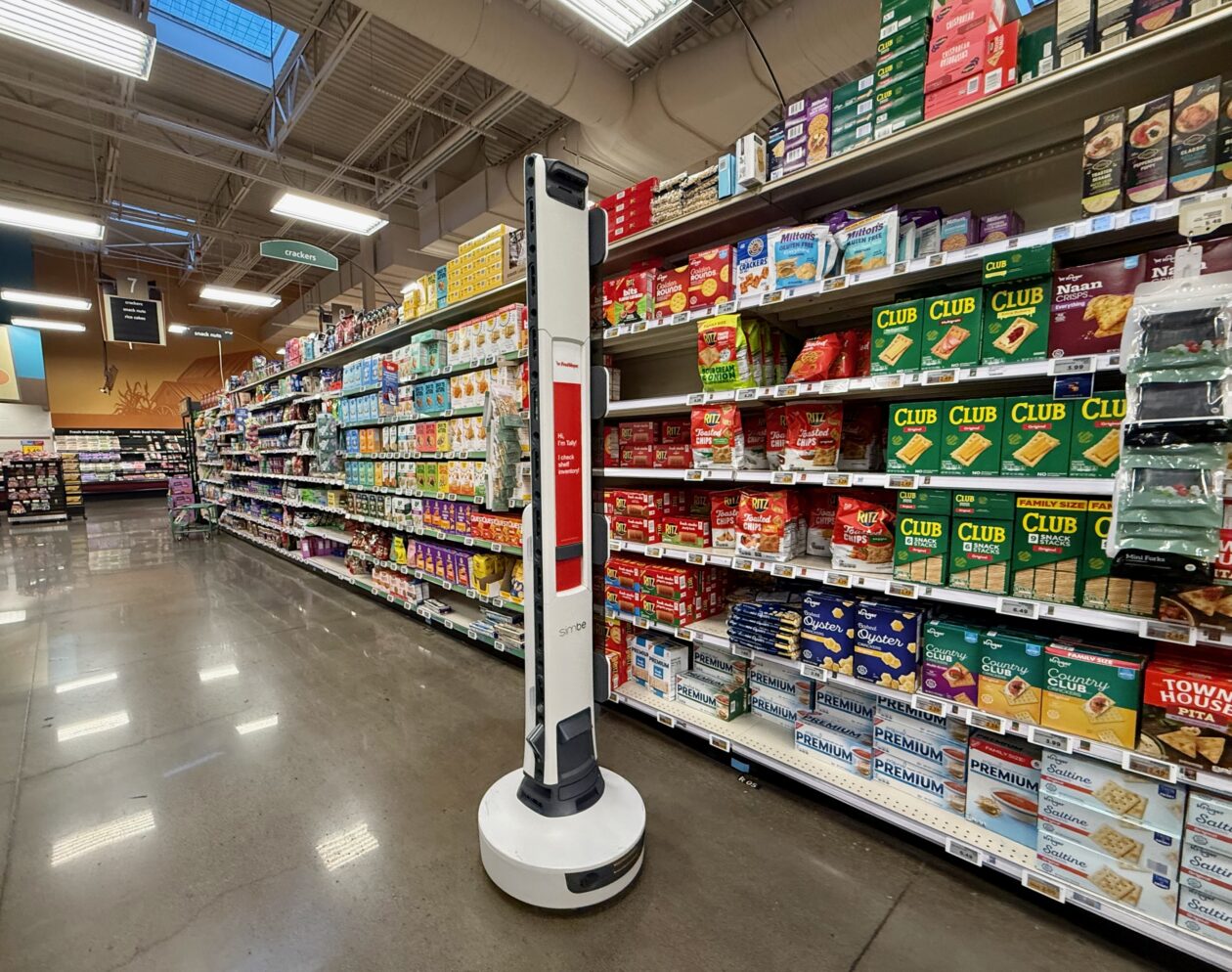
On a crisp morning in Seattle’s Greenwood neighborhood, shoppers weaving through the snack aisles of a Fred Meyer store encountered an unexpected companion: a tall, slender robot named Tally, gliding silently along the polished floors. The machine paused near shelves stacked with chips and cookies, emitted a soft, cheerful beep that echoed like a droid from a science-fiction film, and then continued its journey, scanning digital price tags with a bank of cameras and sensors. For a store aisle, it was a jarring glimpse of the future—a smooth, autonomous presence that seemed both marvelously advanced and strangely out of place among the cereal boxes and produce bins. One shopper, Mark, who offered only his first name, watched the robot with a mixture of wonder and resignation. “It’s kind of wild,” he said, shaking his head. “It’s the Jetsons happening right here, right now. If this is what the future is then I guess that’s what it is.” His sentiment captured the mood of the morning: curiosity, fascination, and a hint of unease about what the whirring machine meant for the people who worked and shopped alongside it.
Tally is not a novelty act, at least not according to its corporate backers. The robot, developed by San Francisco-based Simbe Robotics, has been quietly rolling through Kroger-owned stores since the retail giant began piloting robotic inventory technology in 2024. Kroger, the parent company of Fred Meyer and QFC, described the initiative as a way to “gain real-time insights on product inventory.” Across Washington state, Reddit users have reported spotting Tally in Fred Meyer locations in Lynnwood, Puyallup, Port Orchard, University Place, and Seattle itself, suggesting a broader rollout than the company has formally acknowledged. In an emailed statement, Tiffany Sanders, head of public affairs for QFC and Fred Meyer divisions of Kroger, emphasized that the technology was designed to enhance the customer experience rather than replace human workers. The real-time data from Tally, she explained, helps associates “more easily and quickly identify and address shelves where products are low or out of stock,” freeing up employees to focus on what they do best—serving customers. Yet for all the polished language, Sanders offered few specifics about how many stores use the robots, how many hours a day they patrol, whether any workers have been displaced, or what safeguards exist to protect customer privacy. That silence left room for both hope and suspicion.
Tally’s design is a study in purposeful engineering. Standing more than six feet tall, with a slender tower mounted on a rounded base reminiscent of a Roomba, the robot navigates crowded store aisles at a deliberate, unhurried pace. Dozens of onboard sensors help it weave around shoppers, display racks, and the occasional abandoned cart, while its camera array captures shelf conditions, product placements, and pricing accuracy. But Tally doesn’t scream alerts or summon workers in real time. Instead, it quietly uploads data to Simbe’s cloud-based software platform, which generates prioritized task lists for store employees, flagging empty shelves and misplaced items so they can be corrected efficiently. It is a subtle, almost bureaucratic approach to automation—less about flashy robotics and more about behind-the-scenes logistical optimization. Tally entered the market in 2015, and it now faces a crowded field of competitors, including Badger Technologies, whose googly-eyed robots patrol chains like Stop & Shop, and software platforms from Brain Corp. Simbe, however, has scaled impressively, recently surpassing 3,000 autonomous units under contract globally, including roughly 500 robots scattered across Kroger’s nationwide footprint. The numbers suggest that the quiet revolution in grocery store aisles is only accelerating, even as shoppers adjust to the presence of machines that seem to belong more in a warehouse than a place where families buy bread and milk.
Not everyone believes the solution to inventory tracking requires another machine roaming the floor. A Seattle startup called Augmodo argues that the most effective way to know what’s on a shelf is to leverage the people already walking those aisles every day. Augmodo has developed “smartbadges,” small, passive wearables that employees clip to their uniforms as they go about their normal duties—stocking shelves, organizing back rooms, fulfilling orders. The badges collect spatial data as workers move through the store, using AI to infer which products are missing, understocked, or misplaced, all without demanding extra steps or dedicated robot patrols. Founder and CEO Ross Finman explained the philosophy with a clear-eyed focus on human augmentation: “Augmodo started by knowing what is actually on the shelf, just like robots, but our vision is to augment the physical workforce. People already go up and down the aisles hundreds of times a day, so enabling the existing workforce with simple, inexpensive smartbadges can provide more frequent, cheaper data while also building an AI assistant to add two years of experience to every associate across back of store, delivery, facility maintenance, and more.” Finman was also quick to address the privacy questions that have shadowed autonomous floor bots. The smartbadge, he stressed, is designed to look at products, not people. “We focus on products, not people—we actively filter out any people before anything leaves the store. We do not just filter out anything that could be a person, we filter out anything that is irrelevant.” Augmodo has attracted serious investor attention, raising $21 million this summer after a $37.5 million round the year before, and ranking No. 122 on the GeekWire 200 list of top Pacific Northwest startups. It represents a quieter, less visible alternative to the wandering robots—but one that raises its own questions about workplace surveillance and the boundaries of data collection.
If the technology’s supporters see efficiency and progress, many of the people sharing the floor with Tally see something more troubling. During the GeekWire visit, the robot attracted its fair share of skeptical glances and muttered complaints from shoppers who found it blocking an end cap or lingering too long in front of a favorite brand. A Hershey sales representative named Mike, who regularly stocks candy in grocery aisles, said the robot didn’t personally bother him, but he had heard rumblings among workers about what it might mean for their jobs. Others looked past the inconvenience and worried about a deeper issue: surveillance. Patrick, a Seattle cybersecurity professional, admitted he tries to avoid the aisle whenever he spots Tally rolling by. His concerns were pointed and specific. “First off, it’s taking jobs, but also it’s just more mass surveillance,” he said. “Every time I pass it, I wonder: Is it collecting Bluetooth pings off your smart devices? … I’d be very surprised if it really was just doing cameras on the shelves versus trying to collect data on actual customers as well.” The cameras mounted on Tally’s tower, combined with modern AI tracking capabilities, reminded him of the backlash against automated traffic enforcement cameras like Flock. For Patrick, the robot was not a benign helper but another tool for corporations to extract data and reduce their reliance on human labor. “I think it’s just another way for them to cut the humans out of the labor force and steal more data from customers,” he said.
The tension between innovation and privacy is not hypothetical, especially in Seattle, where the city council recently passed a groundbreaking ban on algorithm-based “surveillance pricing.” That law prohibits retailers from using personal data and AI tracking to set individualized, dynamic prices for shoppers, a practice that many consumers find deeply unsettling. Tally’s own marketing materials paint a friendlier picture—Simbe’s website features shoppers posing for selfies with the robots under the headline “People are more likely to shop at retailers with in-store robots.” But the reality, as experienced in the aisles of Fred Meyer, is more complicated. The robots are undeniably efficient; they never tire, never need breaks, and they can scan thousands of shelf tags in a single shift. Yet their presence also symbolizes a shift in the relationship between stores and the people they serve. Shoppers may enjoy the novelty of a beeping robot gliding past the bakery, but they also wonder who is watching, what data is being collected, and where that information ends up. The answers to those questions are not yet clear, and the silence from corporations does little to ease the discomfort. As Tally and its robotic cousins become fixtures in more stores, the challenge will be finding a balance between the undeniable benefits of automation—fewer empty shelves, better pricing accuracy, more time for human employees to interact with customers—and the equally valid desire for transparency, privacy, and respect for the people who make these stores their own. The future has arrived, but it is still being shaped by the choices we make about how much trust we extend to the machines that now share our shopping aisles.