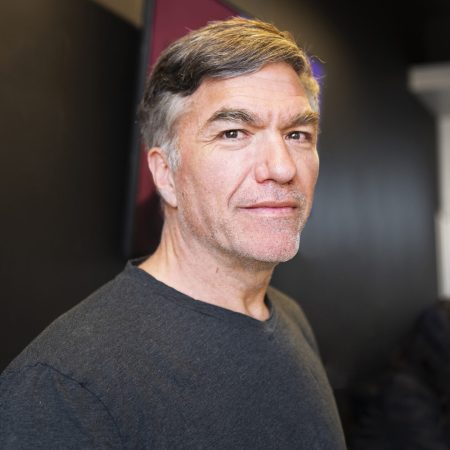



Anyone who has ever handed a set of keys to a relative stranger and asked them to care for a beloved pet knows that the pet-care economy runs on trust as much as on transactions. That trust is at the very heart of Rover, the Seattle-based pet care marketplace that connects pet parents with sitters and walkers in neighborhoods across the world. On Wednesday, Rover announced a significant leadership shakeup aimed at strengthening both the financial backbone and the product experience of the company as it enters a new chapter. Vik Rajagopal, a former Motus CFO and a longtime Amazon executive, will join as chief financial officer, succeeding Charlie Wickers, who held the role from 2022 to 2025. Jensen Harris, co-founder of the AI-powered workplace writing startup Textio, will become the company’s new president of marketplace, product and technology, a position that had been held by Brent Turner before he was elevated to CEO last year. The appointments signal Rover’s intention to double down on both sides of its business: the operational discipline that comes with strong financial leadership and the creative, tech-forward thinking needed to keep a digital marketplace fresh and relevant in a competitive space. With millions of pet owners relying on Rover to care for their dogs, cats, and other animals, the stakes are deeply personal. The new leaders are stepping in at a moment when Rover is not simply maintaining its core service but expanding into training, exploring new products, and testing new ways to serve customers across 18 countries. Their arrival is about more than filling seats; it is a bet that the next phase of pet care will require both a steady hand on the numbers and a bold approach to product innovation.
Vik Rajagopal brings an unusually broad blend of experience that spans large-scale marketplace operations, early-stage entrepreneurship, and the kind of financial discipline that helps companies scale without losing their soul. He spent nearly a decade at Amazon, starting in 2011 as a finance lead for Amazon Global Selling, the program designed to help sellers reach customers in other countries, and later becoming a general manager in Amazon’s retail business. In that role, he ran the U.S. shoes and luggage stores, the home store, and Amazon’s U.S. Vendor Success Program, giving him a front-row seat to how some of the world’s most complex retail systems operate. He left Amazon in late 2020 to become CFO of Logos, a maker of Bible study software backed by private equity firm Cove Hill Partners, and was promoted to CEO about a year later, replacing the company’s founder. He led Logos until April 2024, then moved to Motus, a company that makes software for managing and reimbursing employees who drive for work, where he most recently served as CFO. His earlier career included stints as an investment banker at Wells Fargo Securities and in corporate development at Symantec. Rajagopal’s education is equally solid: a bachelor’s degree from Yale and an MBA from Northwestern’s Kellogg School of Management. But for all of his credentials, what stood out in his announcement was how he framed his new role. “Rover is a Seattle company that was built the right way from day one — solving a real customer pain point with a strong product, solid economics, and a culture that is poised for long-term success,” he said in a news release. That combination of numbers-driven rigor and genuine respect for Rover’s mission suggests he sees his job as protecting the company’s strengths while helping it grow responsibly.
Jensen Harris, on the other hand, is the kind of product leader who seems to be allergic to standing still. He co-founded Seattle-based Textio in 2014 with his wife, Kieran Snyder, after they had both worked on productivity software at Microsoft. Textio used artificial intelligence to analyze workplace writing, including job posts and performance reviews, helping companies identify biased language and communicate more effectively. Harris served as Textio’s CTO for nearly eight years, then became chief experience officer, before taking over as CEO from Snyder in January 2024. He handed the CEO role to Colleen Gallagher in January 2026 and remains with Textio as founder emeritus. Under his leadership, Textio raised $42.5 million from investors, though the company also went through rounds of layoffs in 2024 and 2025, a reminder that even successful startups must make painful choices. As CEO, Harris led the launch of Lavalier, an AI-based interview intelligence platform designed to make hiring conversations more useful and equitable. Before Textio, he spent more than 15 years at Microsoft, where he led the redesign of the Office user interface that produced the familiar Ribbon, and later led user experience for Windows and the touch interface for the original Surface. After leaving the CEO role at Textio, he founded Expedition 60, a firm that helps companies rework how they build software with AI. His statement about joining Rover was characteristically warm and a little playful: “Our pets give us unconditional love, and they deserve the very best in return,” he said, adding that he shares a home with “three very opinionated cats.” That mix of deep technical expertise, AI experience, and obvious affection for animals makes him a fitting person to lead Rover’s product and technology teams.
Rover itself has a story that mirrors the scrappy, resilient spirit of Seattle’s tech scene. The company was born at a 2011 Seattle Startup Weekend event, where venture capitalist Greg Gottesman pitched the idea of a platform for pet sitting and dog walking. Aaron Easterly led the company as CEO for 14 years, steering it through the pandemic, a public offering, and a $2.3 billion take-private deal with Blackstone in 2024. He stepped down last year and became executive chair, handing the CEO role to Brent Turner, who had previously served as president and chief operating officer. The leadership transition now underway is therefore part of a carefully planned evolution rather than a sudden change. Rajagopal and Harris are joining a company that has already survived the challenges of growing from a weekend idea into a global marketplace, and they are being asked to help it take the next step. In that sense, their roles are complementary: Rajagopal will be responsible for making sure the economics of the business remain healthy as it invests in new initiatives, while Harris will be focused on making sure the product experience feels modern, intuitive, and genuinely helpful to both pet owners and the sitters and walkers who power the platform. Together, they represent the twin engines of sustainable growth: financial stewardship and user-centered innovation. The fact that both have deep roots in Seattle’s technology community also reinforces Rover’s identity as a company that values local talent and the collaborative culture of the Pacific Northwest.
Rover’s scope today is far larger than it was at that first Startup Weekend. The company now operates in 18 countries across North America, Europe and Australia, and says that sitters and walkers on its platform have provided 50 million bookings to date. Its brand family includes cat-sitting marketplaces Meowtel and Cat in a Flat, as well as Australia-based Mad Paws, showing that the demand for pet care extends well beyond dogs. Beyond sitting and walking, Rover has begun offering training services in the United States and is testing other services, suggesting that the company wants to become a broader destination for pet parenthood rather than a narrow booking app. For pet owners, this means more ways to get help with the everyday challenges of caring for an animal, from a first walk to house training to navigating the logistics of travel with a cat. For sitters and walkers, it means more opportunities to build meaningful, flexible work around their schedules and their love of animals. The 50 million bookings represent an enormous amount of human and animal interaction, and each one likely began with the kind of nervous trust that comes from leaving a beloved pet in someone else’s hands. Rover’s continued expansion into new services and geographies is a testament to the fact that pet care is not a fad; it is a fundamental part of modern life for millions of people, and the companies that serve them well are positioned to grow for years to come.
In the end, the arrivals of Vik Rajagopal and Jensen Harris are about more than two résumés landing on the right desks. They are about what Rover wants to become in an era when technology, finance, and human relationships are more intertwined than ever. Rajagopal’s experience at Amazon and CFO roles gives him a clear-eyed view of how to manage complexity, while Harris’s background in AI and user experience suggests a future in which Rover’s platform feels smarter, more responsive, and more personal. Their different personalities and career paths are likely to be an asset, because running a marketplace that connects people with their pets requires both hard analysis and deep empathy. The company has already proven that it can weather big challenges, from the pandemic to the pressures of public markets to the transition to private ownership under Blackstone. Now the task is to build on that foundation without losing the warmth and reliability that made Rover a trusted name in the first place. Pets, after all, do not care about quarterly metrics or product roadmaps; they care about consistency, safety, and affection. The humans who love them want the same things, and they want a service that makes caring for their animals easier rather than more stressful. With a CFO who understands how to build sustainable businesses and a product president who sees the potential of AI to improve everyday experiences, Rover is betting that it can deliver on that promise at scale. If the company pulls it off, it will not just be a successful marketplace; it will be a lasting part of how people take care of the creatures who take care of them. For now, the future looks bright and the cats could not be more pleased.