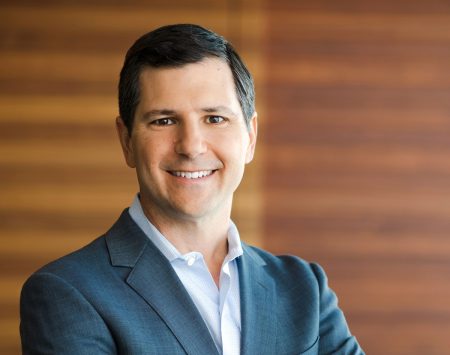





In the high-stakes, high-drama world of startup funding, the email inbox of a seasoned venture capitalist is a roaring floodgate of ambition, despair, and relentless hope. Martin Tobias, a pre-seed investor now based in the quieter confines of Spokane, Washington, felt the full weight of that flood last year. He was pitched by approximately 4,500 startups. Each pitch deck was a meticulously crafted representation of a founder’s life savings, their sleepless nights, their layoff notices, and their unshakeable belief that they had solved a problem the rest of the world hadn’t even dared to name yet. Yet, the cold, hard math of venture capital meant that Tobias could only write checks to a tiny fraction of them—just ten. That leaves roughly 4,490 founders who received a polite “no,” a number so staggering it almost numbs the emotional toll it represents. Behind those numbers are deeply human stories of crushing disappointment, often delivered through a standardized, impersonal email that barely glances at the sacrifice poured into the proposal. But instead of simply moving on to the next wave of pitches, Tobias decided to do something profoundly different about the graveyard of rejected ideas. Rather than closing the door, he built a bridge—a sophisticated, AI-driven tool called “Investor Match.” This platform offers those very same founders a consolation prize that may actually be more valuable than a typical “no”: a highly curated, data-driven list of other investors who might say “yes.” It flips the script on rejection entirely, transforming a dead end into a portal of potential, and turning what could be a bitter pill into a viable, personalized roadmap for survival and eventual success.
Tobias is not a newcomer to the tech ecosystem; his résumé is etched into the geological layers of the Pacific Northwest’s digital evolution. He founded Loudeye, a digital media company that caught the electric wave of the dot-com boom, went spectacularly public, and was eventually acquired by the telecom giant Nokia. He took the helm of Imperium Renewables, a biofuel maker, and guided the group-buying startup Tippr through its own turbulent journey. He served as a venture partner at Ignition Partners, a firm that made a famously astute early bet on the e-signature powerhouse DocuSign, before launching his own vehicle, Incisive Ventures, in 2020 with a $10.5 million fund laser-focused on early-stage B2B software companies. It was inside this crucible of experience that Tobias stumbled upon the fundamental flaw of human networking. He has amassed a colossal contact list of roughly 17,000 individuals over decades of deal-making, but as the psychological principle of Dunbar’s number suggests, the human brain can only truly maintain stable, meaningful relationships with about 150 people. He simply could not keep track of which of those 17,000 contacts were looking to fund a rugged B2B analytics platform versus a niche vertical SaaS product. This cognitive bottleneck was the seed of inspiration. Investor Match began as an internal logistical tool, a private compass to help Incisive’s portfolio companies navigate the murky waters of seed and Series A rounds. It was a pragmatic solution to his own limitations—a way to harness the massive breadth of his network without drowning in the overwhelming deluge of his own memory.
For the founders who receive his rejection email, the link to Investor Match is a lifeline thrown into a stormy sea. The interaction is elegantly simple on the surface: a founder uploads their polished pitch deck, and within moments, the AI engine scans and processes the information contained within. But the magic happens under the hood. The platform does not rely on simple keyword matching; it employs advanced natural language processing to painstakingly read each investor’s public-facing website, scrub their portfolio companies, dissect their blog posts, and even analyze biographical details to identify the subtle nuances of their investment philosophy. It looks for behavioral patterns—what they actually backed, not just what they claim to look for. The tool then returns a curated list of twenty investors, meticulously ranked by what Tobias calls “fit scores.” These scores are calculated using a sophisticated algorithm that weighs stage preference, average check size, geographic focus, and the decisive factor of historical actual investments. Founders don’t receive a blind directory; they receive a personalized map of the capital landscape. A free preview exposes all twenty matches, but only the top three are fully expanded, offering deep insights. To unlock the complete list with all the strategic information required to reach out effectively, founders pay a nominal twenty dollars—a fee Tobias emphasizes only roughly covers the API costs of running the heavy AI, which amounts to about $1,000 a month. Beyond the list, the platform drafts outreach emails tailored to each specific firm, but it deliberately stops short of sending them—a conscious choice to preserve the human touch and allow founders to infuse their own voice into the crucial first connection.
In an ecosystem where countless fundraising platforms are built to drain founders’ bank accounts through expensive monthly subscription fees, Tobias’s approach is radically subversive. Competitors like Metal and OpenVC offer investor matching as part of broader fundraising suites, but they charge recurring fees that can bleed a struggling startup dry. Tobias is openly dismissive of such models, pointing out that OpenVC relies on rudimentary keyword matching, whereas he has invested heavily in the computational cost of reading investor behavior—a process he notes takes “millions and millions of tokens.” But the true divergence is fundamentally moral. Tobias has no desire to monetize the desperation that drives founders to quit their jobs and pour everything into a first $2 million raise. He sees the twenty-dollar fee as a simple cost-recovery mechanism, not a profit center to build a venture-scale business upon. He is fiercely critical of platforms that profit from the startup funding grind, using language that is both blunt and visceral. “I think that’s just f—ing evil,” he stated regarding competitors trying to make money off founders who have already sacrificed so much. He believes that the platform itself is an ethical extension of his own fiduciary duty—a way to offload his rejection cascades into opportunities rather than dead ends. It is a humanist approach to a sector often criticized for its ruthless financial calculations, positioning Tobias as a counter-cultural figure in the venture world, prioritizing the well-being of the founding community over the enrichment of his own auxiliary software offerings.
The proof of the tool’s utility is now beginning to show tangible results. Since its public launch about six months ago, founders have reported raising over $100 million in cumulative capital from investors they first encountered through Investor Match. Tobias is careful to acknowledge that he cannot independently verify this impressive figure, as the money doesn’t flow through the platform—it remains a pure matchmaker, disconnecting the tool from the financial transaction itself. Interestingly, Incisive Ventures appears in the ranking lists just like any other institutional investor, and Tobias has encountered a fair amount of suspicion from founders who were matched with his own firm. They ask if he secretly tilted the algorithm to funnel pitches back to his own desk, a clever digital self-promotion. He adamantly denies this, insisting that he only wants to see pitches that genuinely align with his fund’s strict B2B thesis, and that rigging the system would poison the well of trust. The primary goal is a genuine utility designed to solve a systemic market failure of inefficient information dispersal. Even more importantly, the tool allows investors who hold accounts on the platform to proactively respond to founders, creating a vibrant two-way street of engagement. For the thousands of rejected founders, the sting of the “no” is significantly softened by the dignity of a personalized, actionable roadmap forward—a far cry from the standard form-letter rejection that leaves founders clueless about where to turn next.
Ultimately, Investor Match is far more than a side project for Tobias; it is the living, breathing embodiment of his core investment thesis. His fund specifically seeks out B2B software companies that “reduce friction at scale”—companies that take a complicated, cumbersome, manual business process and reinvent it with clean, elegant, efficient software. DocuSign achieved this for signatures; Salesforce did it for CRM; and Tobias sees Investor Match doing the exact same thing for the capital allocation market. He articulates this vision with clarity: “What’s the friction in the market that you’re dealing with? Investors finding founders, founders finding investors. OK, can software help with that? I think it can.” By automating the deep due diligence of network mapping, he has transformed a subjective, human—often biased—process into a transparent, data-driven utility that levels the playing field. For Tobias, the 4,500-deck pile-up is not a burden; it is the friction itself. And with Investor Match, he has built the software to smooth it out, proving that a “no” from one person can be the catalyst for a much better, data-informed “yes” from someone else. In doing so, he is not just optimizing his own deal flow, but quietly stitching a safety net for the entire startup ecosystem, one rejected founder at a time, turning the solitary grind of fundraising into a collaborative, machine-assisted journey toward a more equitable future.