


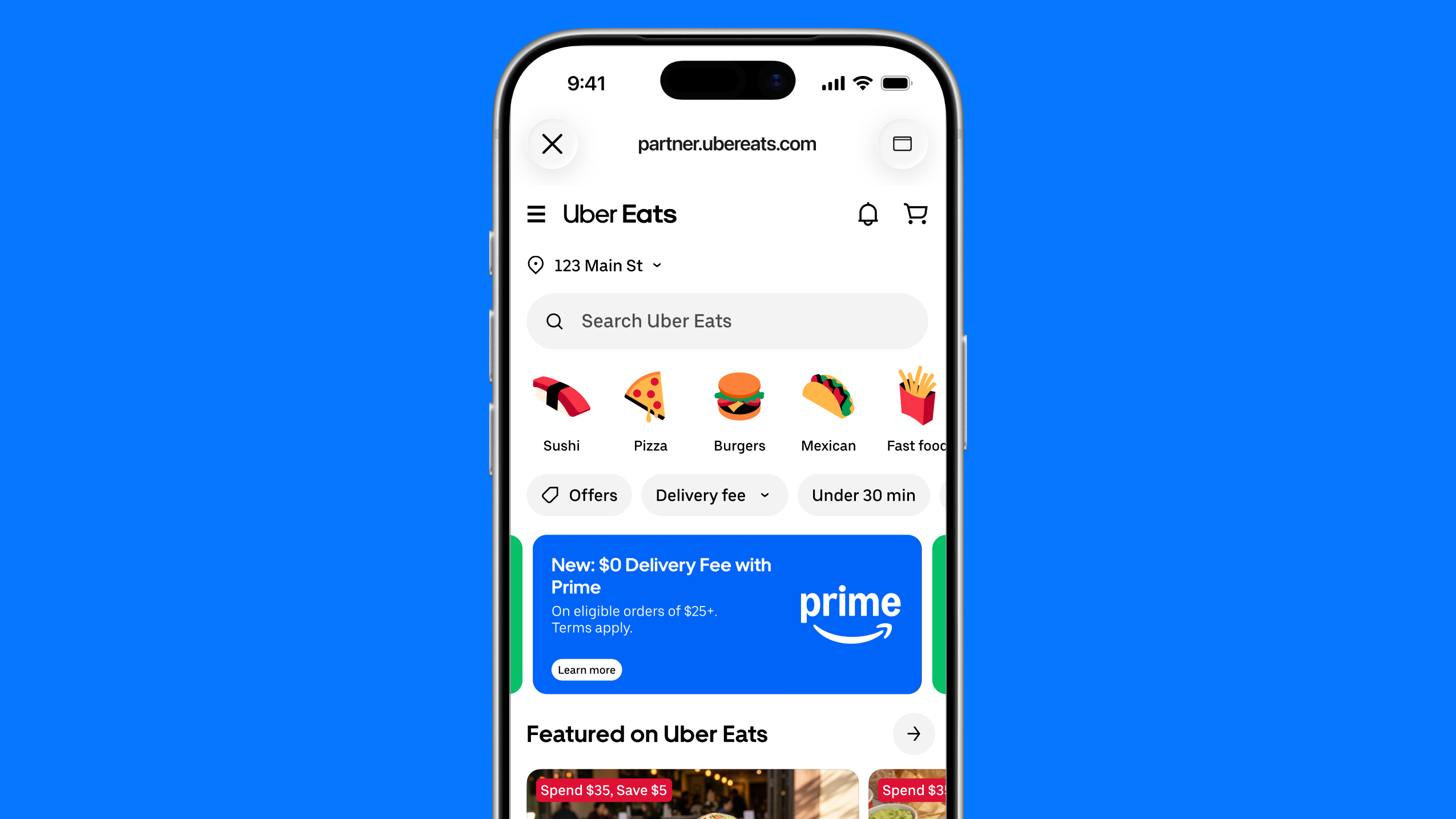
Picture this: it’s late afternoon, you’re tired, the fridge is looking emptier than you’d like, and the last thing you want to do is cook. You reach for your phone, but instead of scrolling through a separate food delivery app, you open the Amazon app you already use for everything else. You browse restaurants, pick a meal, check out with your saved payment method, and the delivery fee simply disappears. That’s the new reality for millions of U.S. Prime members starting November 5, 2026, as Amazon officially brings Uber Eats inside its own app. For the first time, Prime members can order restaurant delivery without needing a separate Uber account, without downloading another app, and without the annoyance of entering payment details from scratch. The move replaces an earlier Prime perk with Grubhub, which Amazon had made an ongoing benefit in 2024 after a successful trial. Amazon says it ended that agreement because it saw an opportunity to deliver an even better restaurant delivery experience. In practical terms, that means the Grubhub era is over and the Uber Eats era has begun. The new benefit covers hundreds of thousands of restaurants in nearly 10,000 U.S. cities and towns, from major metro areas to small rural communities. If you’re a Prime member, you can order from your favorite local spot or a national chain directly through Amazon.com or the Amazon Shopping app. There are no new accounts to create, no new passwords to remember, and no complicated linking steps. It’s the same familiar Amazon interface, now with food delivery woven into it. And if you’ve ever stood in your kitchen at the end of a long day, overwhelmed by options and too tired to make a decision, you know exactly how powerful that convenience can be.
Here’s how the new setup works, and it’s refreshingly simple. If you’re a U.S. Prime member, you can place Uber Eats orders directly on Amazon.com or in the Amazon Shopping app. You don’t need to download Uber Eats, sign up for an Uber account, or link anything. Your existing Amazon credentials and payment methods carry over seamlessly. When you check out, the delivery fee on orders of $25 or more is automatically waived—that’s the headline benefit. But don’t toss your wallet just yet: service fees still apply, and they can vary depending on the restaurant and your location. Amazon says Prime members could save more than $175 a year through the delivery fee waiver and Prime-only promotions. That number is notable because it exceeds the $139 annual cost of a Prime membership. In other words, if you order delivery often enough, the benefit could effectively pay for Prime all by itself. For new users, there’s an especially sweet incentive: $20 off your first two orders of $25 or more within 14 days. And if you hold the Prime Visa, you’ll earn 5% back on Uber Eats orders through Dec. 5, 2026—a nice little cash-back bonus just in time for the holiday season. The partnership covers an enormous range of options, from national chains to local mom-and-pop shops. Amazon says hundreds of thousands of restaurants are part of the program, which means it’s not just for urbanites. People in smaller communities, where delivery options can be scarce, might find new choices appearing on their screens. And there’s a family angle too: members can share the Uber Eats benefit with one adult in their household through Amazon Family. That makes it easy for partners, spouses, or roommates to take advantage of the perk without jumping through hoops. The whole experience feels designed to lower the barrier between craving and satisfaction, turning a once-clunky process into something that feels as natural as ordering a new book or a bottle of laundry detergent.
Of course, the $175 annual savings claim deserves a closer look. It’s easy to get excited about free delivery, but the math depends on how often you order and how much you spend. If you’re a weekly delivery devotee, the savings add up quickly: 52 orders a year, each with a delivery fee of, say, $3.50 to $5.99, easily surpasses $175. But if you only order a few times a month, the savings might be more modest. And because service fees still apply, your final total won’t feel completely free. Still, the convenience factor is undeniable. There’s something liberating about not having to manage multiple apps, accounts, and saved payment methods. Amazon is betting that the simplicity of ordering through its interface will encourage Prime members to order delivery more often, which in turn benefits Uber Eats by bringing in a massive new customer base. For people who already pay for Uber One—Uber’s own subscription that includes $0 delivery fees—the news is less exciting. Those members keep their existing Uber One benefits, but Amazon is quick to point out that the two memberships operate independently. The Prime perk applies only to Uber Eats orders placed through Amazon, not to orders placed directly in the Uber Eats app. So if you’re an Uber One subscriber who loves the standalone app, you can keep doing what you’re doing. But if you’re a Prime member without Uber One, the Amazon route is now the smart play. It’s a clever bit of positioning that gives Amazon a central role in your food ordering habits while still allowing Uber to maintain its own relationship with customers. The result is a bit of a patchwork: two overlapping subscription benefits, each with its own quirks, but both ultimately aimed at making your life easier and keeping you inside their ecosystems.
This isn’t Amazon’s first dance with restaurant delivery, and the history is, to put it mildly, complicated. Back in 2015, Amazon launched its own restaurant delivery service in Seattle, eventually expanding to more than 20 U.S. cities. It was called Amazon Restaurants, and it let Prime members order meals through the company’s website or the Prime Now app. At the time, it seemed like a natural extension of Amazon’s ambition to deliver everything. But the service struggled to gain traction. In early 2018, Amazon cut jobs on the team. Later that year, it shut down the London version. And in 2019, the company pulled the plug on Amazon Restaurants entirely, quietly closing a chapter that had once seemed so promising. Amazon also shuttered Daily Dish, a workplace lunch delivery service it had launched in 2016. The timing was telling: in Uber’s IPO filing earlier in 2019, the ride-hailing company had listed Amazon as a competitor in the food delivery space. Now, years later, Amazon isn’t trying to beat Uber Eats—it’s joining forces with it. This is a classic “if you can’t beat them, join them” strategy. Instead of pouring more money into building its own logistics network for food, Amazon is leveraging Uber’s existing infrastructure and restaurant partnerships. For Amazon, it’s a way to offer a valuable perk without the operational headaches of food delivery. For Uber, it’s a chance to tap into Amazon’s enormous Prime membership base and gain a steady stream of orders. The relationship between the two companies has shifted from rivalry to symbiosis, and the partnership reflects a broader trend in tech: sometimes the most powerful move is collaboration rather than competition. It’s also a reminder that corporate strategies are never static. What looks like a failed experiment one year can become the foundation for a smart partnership a few years later.
The Uber Eats integration is part of a much bigger play by Amazon to make Prime membership feel indispensable. In February of this year, Amazon made its Alexa+ AI assistant free for U.S. Prime members, a move designed to add value beyond free shipping and streaming. Last year, the company ended a program that allowed members to share free shipping with someone outside their household—a subtle but telling sign that Amazon is tightening the boundaries around Prime benefits and focusing on making the membership more personal and more valuable to the people who pay for it. The restaurant delivery perk fits squarely into that strategy. Food delivery is a high-frequency, high-engagement activity. If Amazon can become your default destination for ordering dinner, you’re likely to spend more time in its app, discover more products, and rely on Amazon for more of your daily life. It’s not just about the delivery fee waiver; it’s about creating habits. Every time you open the Amazon app to order a pizza, you’re reminded of all the other things Amazon can do for you. And with the ability to share the benefit with one adult in your household, Amazon is making Prime a family affair. The company seems to understand that convenience is the ultimate loyalty driver. As Andrew Macdonald, Uber’s president and COO, put it in a statement: “We’re excited to connect our restaurant community with new Prime fans, while giving Prime members a seamless way to enjoy great food from restaurants through Uber Eats.” That quote captures the mutual benefit: Uber gets exposure to Prime fans who might not have used Uber Eats before, and Amazon gets to offer a genuinely useful perk that strengthens the case for spending $139 a year on Prime. In an era when subscription fatigue is real and consumers are more willing than ever to cancel services they don’t use, Amazon needs to keep proving that Prime is worth it. This partnership is a powerful argument.
So what does all this mean for you? If you’re a Prime member who loves takeout, it means your next lazy Sunday just got a little easier. You’ll be able to browse restaurants, place an order, and track it all within the Amazon app you already use. The free delivery threshold of $25 is manageable for most families—one nice meal for two or a couple of entrees with appetizers will get you there. And the sign-up bonus for new users, plus the cash-back offer for Prime Visa holders, makes this an especially good time to give it a try. But beyond the practical details, this partnership signals something bigger about the future of commerce. The lines between shopping, transportation, and food are blurring. Amazon is no longer just a retailer; it’s an aggregator of services. Uber Eats is no longer just a standalone app; it’s part of a larger ecosystem. For consumers, the winners are those who embrace these integrations and make the most of the benefits they already pay for. If you’ve been sitting on the fence about Prime, or if you’ve been ordering delivery through separate apps and wondering why it feels so fragmented, this change is worth your attention. It’s a reminder that in the digital age, convenience is the currency that matters most. Amazon and Uber are betting that by working together, they can offer a smoother, more human experience—one that gets you fed without the fuss. And that’s something we can all raise a fork to. As the partnership rolls out across the country, expect to see more promotions, more restaurants, and maybe even more integrations down the road. For now, the takeaway is simple: dinner is just a click away, and it’s wearing the Amazon logo.