



GeekWire’s most-read stories this week felt less like a simple news cycle and more like a weather system moving through the Pacific Northwest tech ecosystem, carrying with it a mix of anxiety, contradiction, ambition, and resilience. The week opened with Amazon once again making headlines for layoffs, but this time the cuts landed with particular sting because they arrived during Prime Big Deal Days, the company’s big October sales event. Customer service teams, selling partner support, and retail engineering groups were among those hit, meaning the very people who help Amazon function smoothly during its most visible commercial moment were suddenly facing an uncertain future. There is something deeply jarring about that timing: the bright banners and countdown timers urging shoppers to grab deals while, behind the scenes, employees were being told their roles were no longer needed. It’s a reminder that in the tech industry, even the busiest, most successful seasons can carry a shadow. For the workers affected, the news was personal before it was statistical. They had likely spent weeks preparing for the surge in orders, questions, and technical glitches that come with a major sales event. Instead of celebrating another record-breaking day, they were cleaning out desks, updating résumés, and trying to make sense of a decision that felt both abrupt and impersonal. Amazon, for its part, framed the moves as part of its ongoing commitment to efficiency and long-term growth, but for the individuals in customer service and partner support, efficiency can feel like a cold and distant concept when it’s your own livelihood on the line. The story resonated so strongly with GeekWire readers because it touched on a broader truth about the modern tech economy: no matter how much a company grows, the ground beneath its workers can shift at any moment.
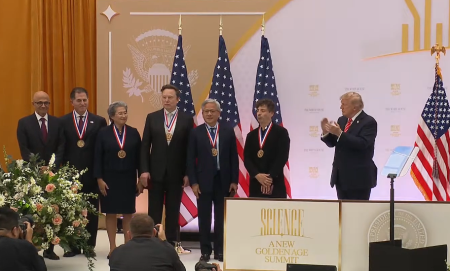
If there was a single image that captured the week’s contradictions, it was the strange, almost surreal juxtaposition involving Microsoft and its CEO, Satya Nadella. On Thursday, President Trump honored Nadella with the National Medal of Technology and Innovation, a recognition of his leadership and contributions to the technology industry. It should have been a purely celebratory moment, a chance to acknowledge the journey of an immigrant who arrived in the United States on a temporary work visa, eventually earned permanent residency, and went on to become one of the most influential executives in the world. Nadella’s personal story is often cited as a quintessential American tech narrative, a testament to the idea that talent and hard work can transcend borders. But the medal ceremony was bookended by a much harsher reality. Hours before the honor, the Labor Department suspended Microsoft from the federal program it uses to sponsor foreign workers for permanent residency, and announced it would not process the company’s pending applications. The timing was almost too on the nose to be believed: one arm of the government celebrating an immigrant CEO while another arm blocked the path for other immigrants hoping to follow a similar road. GeekWire readers were drawn to the story because it laid bare the tangled, often contradictory nature of U.S. immigration policy, especially in the tech sector. Companies like Microsoft rely heavily on highly skilled foreign workers, bringing them in on temporary visas, then navigating a labyrinthine process to help them become permanent residents. The Labor Department’s suspension, whatever its specific cause, sends a chilling message not just to Microsoft but to the broader industry. It also raises uncomfortable questions about how we treat the people who power our most innovative companies, and how easily political symbolism can collide with the very real, very personal aspirations of workers who just want to build a life in the country they’ve helped build.
Money and politics dominated the local conversation as well, with Washington state finding itself at the center of a fierce debate over taxes and economic policy. Venture capitalist Matt McIlwain of Madrona, one of the Pacific Northwest’s most prominent investors, published an opinion piece urging voters to pass Initiative 645 and repeal the state’s new income tax. His argument was direct and urgent: the tax, as written, is not the modest levy on the wealthy that some might imagine. Instead, McIlwain warned, it is structured to expand over time, reaching beyond high earners and eventually touching more and more residents. He pointed to a troubling trend of employers and long-time residents already leaving Washington for states with friendlier tax climates, and he argued that adding a new income tax would only accelerate that exodus. The opinion piece struck a nerve because it tapped into a deeper anxiety about the region’s future. For years, the Seattle area has enjoyed a reputation as a place where innovation flourishes, where companies like Amazon and Microsoft put down roots, and where workers are drawn by opportunity and quality of life. But that reputation is increasingly being tested. Housing costs have soared, traffic has worsened, and the tax burden has shifted in ways that feel unfair to many. McIlwain’s plea was not just about tax policy; it was about identity. He framed the vote on Initiative 645 as a moment of choice for Washingtonians, a chance to decide whether they want to remain a place that welcomes businesses and workers, or whether they are willing to let the state drift toward a higher-cost, higher-tax future that could hollow out the very industries that made it prosperous. Supporters of the income tax would no doubt argue that the state needs reliable revenue to fund education, infrastructure, and social services, but McIlwain’s voice added a powerful counterpoint to the debate, and his words clearly resonated with readers who worry that the region’s best days might be behind it if leaders don’t course-correct soon.
At the city level, Seattle’s new mayor, Katie Wilson, stepped into the economic fray with a visible show of force. She assembled a task force made up of business, labor, and industry leaders, charging them with tackling the city’s most pressing economic challenges. The focus areas were broad but telling: diversifying the economy, attracting and retaining companies, and making it easier to do business in Seattle. It was a recognition, perhaps long overdue, that the city cannot simply rely on the momentum of a few giant tech companies to carry everyone forward. The task force’s creation came at a moment when downtown Seattle is still trying to find its footing, and when the relationship between the city and its corporate residents feels more fragile than it has in years. That fragility was underscored by a joint report from the Downtown Seattle Association and the Seattle Metro Chamber, which GeekWire readers also flocked to. The report’s findings were sobering: city tax collections have nearly tripled since 2013, growing at a pace that far outstrips population and job growth. On the surface, that might sound like good news, a sign of a booming local economy. But the report went deeper, revealing that the tax burden has shifted heavily onto a small pool of major employers. In other words, a handful of large companies are now carrying an outsized share of the city’s financial weight, while the broader economy and population have not grown at the same rate. That creates a fragile situation. If one or two of those major employers decide to pull back, expand elsewhere, or reconsider their presence in Seattle, the city could find itself in serious fiscal trouble. The task force and the report together paint a picture of a city at a crossroads, trying to balance the need for revenue with the need to remain attractive to the businesses that generate that revenue. It’s a delicate dance, and the stakes are incredibly high for everyone who lives and works there.
Beyond the policy battles and corporate layoffs, the week was also marked by a familiar churn of executive talent across the tech landscape. Microsoft, in particular, seemed to be both losing and gaining key figures in ways that captured the industry’s restless energy. Ravi Vedula, a corporate vice president at Microsoft, announced his retirement, closing out a long chapter at one of the world’s most valuable companies. Meanwhile, Rohit Prasad, a former Amazon senior vice president, took on a new role as CEO of Boston Dynamics, the robotics company known for its astonishingly agile machines. The move was a reminder that the lines between the Pacific Northwest tech giants and the broader global tech ecosystem are increasingly porous. Talent flows freely, and no company can assume its best people will stay forever. That sense of movement was reinforced by the news that Pedram Rezaei, a 20-year Microsoft veteran, was joining AWS to work on the Kiro coding tool and the Quick workplace assistant. Rezaei was described as the latest Microsoft executive to make the jump to Amazon’s cloud division this year, a trend that raises eyebrows in both camps. For Microsoft, losing a veteran with two decades of institutional knowledge is never easy. For AWS, gaining someone with that depth of experience is a clear win. But the story is also deeply human. Executives and engineers don’t make these moves lightly. They weigh factors like culture, impact, family, and ambition. They leave behind colleagues and projects they’ve nurtured for years. The constant reshuffling of leadership is a defining feature of the tech industry, but behind every press release about a new CEO or a retiring vice president is a person making a deeply personal decision about the next chapter of their life. The same week also saw new executive appointments at Qualtrics, Overland AI, and Fred Hutch, each one a small reminder that the region’s innovation economy is not just about the giants. It’s a living, breathing ecosystem of companies and institutions, all of them competing for talent and all of them trying to chart a path forward in an uncertain environment.
Finally, amid the layoffs, policy fights, and executive shuffles, there were stories that offered a glimpse of creativity, community, and hope. Wizards of the Coast, the company behind Dungeons & Dragons, announced plans to revisit the Star Wars universe as its next big cross-company collaboration. For fans of tabletop gaming, the news was electric, a promise of new adventures in a galaxy far, far away, brought to life through the collaborative storytelling that has made D&D a cultural touchstone for generations. It was a reminder that technology and entertainment are not just about efficiency and profit margins; they are also about imagination, connection, and the joy of shared experiences. In a week dominated by heavy news, the idea of rolling dice and exploring the Star Wars universe felt like a welcome escape. And then there was The SWELL, a new downtown Seattle hub launched by former tech leader Sally Revell. The SWELL is designed specifically for female entrepreneurs, offering an in-person community, flexible programming, and support tailored to the unique challenges of bootstrapping a business. Operating out of SURF Incubator, the new community had already signed up 53 members in less than ten weeks. That kind of momentum speaks to a real need. For many women founders, the startup world can feel isolating, especially when they are trying to build something from scratch without the backing of a major venture firm. The SWELL offers a space where they can find each other, share resources, celebrate wins, and commiserate over setbacks. It is a small but powerful example of how people are working to make the tech economy more inclusive, more supportive, and more human. Taken together, the week’s most popular stories paint a complex portrait of the Pacific Northwest tech scene. There is anxiety and uncertainty, yes, but there is also resilience and creativity. There are contradictions that are hard to reconcile, but there are also people rolling up their sleeves to build the future they want to see. In the end, that might be the most important lesson of all: the tech industry is not just companies and policies; it is people, and people are always more complicated, and more hopeful, than the headlines suggest.