


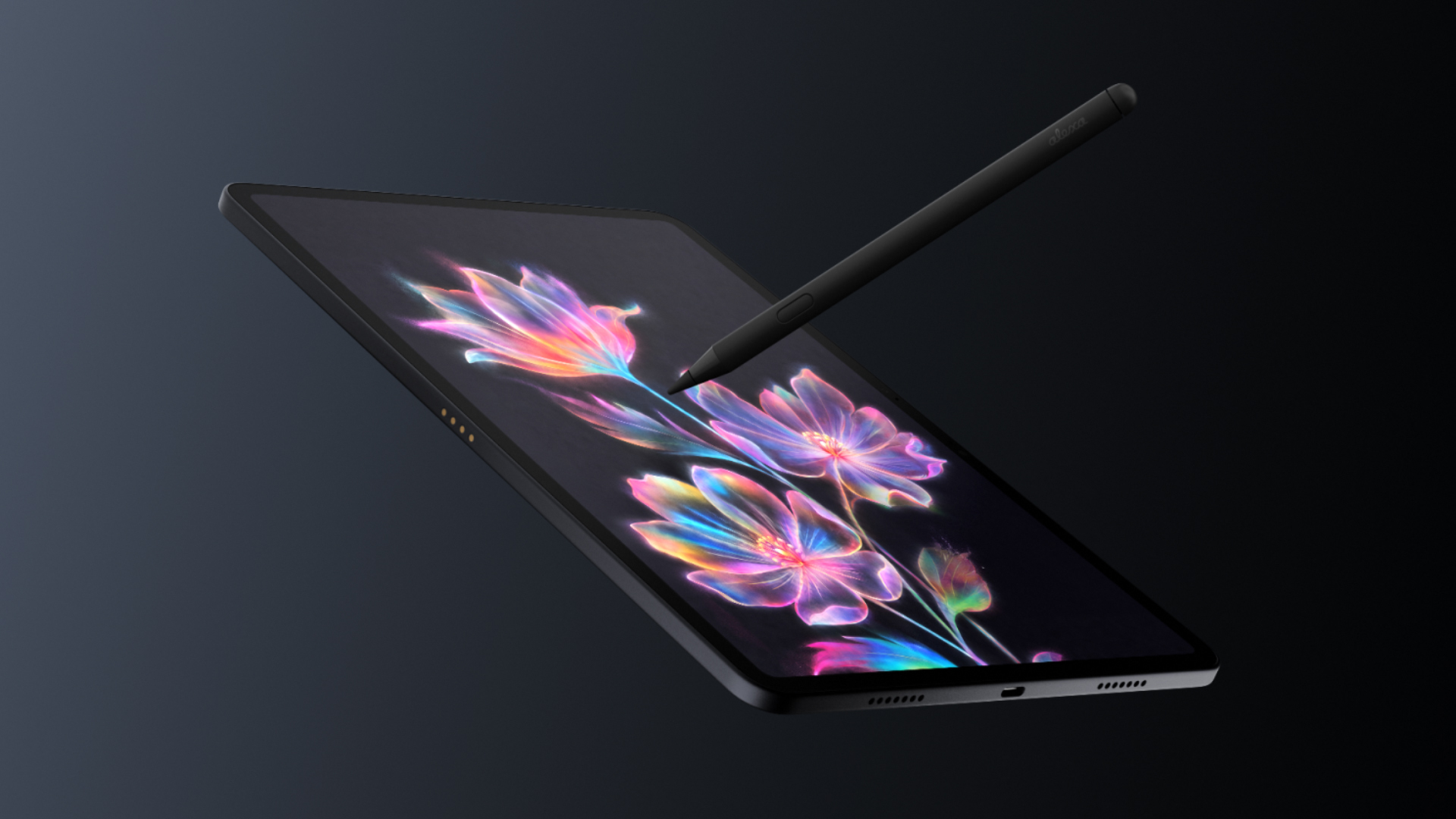
For more than a decade, Amazon’s tablets were the dependable, budget-friendly workhorses of the tech world—cheap enough to buy without much thought, easy to hand to a kid, and deeply tied to Amazon’s own universe of books, movies, and apps. That era is officially over. On Thursday, the company introduced the Amazon Alexa Tablet lineup, a new family of premium aluminum tablets that run on Android and include full access to the Google Play Store. This is a radical departure from the old Fire tablet line, which used Amazon’s custom Fire OS and limited users to the Amazon Appstore. For years, Fire tablets felt like they existed in a parallel universe, one where Google’s apps and services were conspicuously absent. The new Alexa Tablets change that entirely, opening the door to millions of Android apps while still wrapping everything in Amazon’s own services. It’s the biggest transformation in Amazon’s tablet strategy since Panos Panay, the former Microsoft executive who led the Surface hardware team, took over Amazon’s devices business in 2023. Panay knows a thing or two about building premium, productivity-focused hardware, and that influence is immediately visible in the new lineup, especially in the top-tier model, which looks and feels like a Surface Pro for the Amazon crowd. The move signals that Amazon is no longer content to compete on price alone; it wants to go head-to-head with Apple’s iPad and Samsung’s Android tablets, and it’s willing to charge more to get there.
The centerpiece of the new lineup is the Alexa Tablet 12 Pro, a 12-inch powerhouse that starts at $499.99. That price climbs to $549.99 if you add the Nanomatte display, Amazon’s anti-glare screen treatment developed with Corning, which uses a precise photolithography process to etch texture directly onto the glass. Unlike traditional matte screens that rely on sandblasting and tend to scatter light unevenly, Nanomatte keeps visuals crisp while cutting reflections. If you want the full productivity setup, you’ll need the Pro Pen ($89.99) and the magnetically attached Pro Keyboard ($149.99), which brings the total to nearly $790 for the base Nanomatte model with accessories. That’s serious money—iPad territory, Surface Pro territory—and it makes clear Amazon is aiming at people who want a real work device, not just a streaming machine. The 12 Pro’s design cues are unmistakably Surface-like, with a kickstand-friendly form factor, a snap-on keyboard, and a pen that feels natural in hand. The other two models are more modest but still represent a leap forward. The Alexa Tablet 11 starts at $329.99, and the Alexa Tablet 8 starts at $229.99. The numbers, following Amazon’s long-standing naming approach, refer to approximate screen sizes, not model generations. All three tablets go on sale October 14 in the U.S., Canada, and Mexico, with the 12 Pro also available in an anti-glare option that seems tailor-made for people who like to work outside or under harsh lighting.
What really sets the Alexa Tablets apart, though, is the software and the intelligence woven into the experience. All three models come with Alexa+, Amazon’s generative AI assistant, which is far more capable than the old voice assistant. One of the standout features is called On-Screen Intelligence, which allows Alexa to actually see what’s on the screen and take action based on it. Imagine you’re looking at a game schedule on a website; Alexa can pull the relevant dates into your calendar and even flag conflicts. Or if you’re reading a recipe, Alexa can help you set a timer based on the ingredients and steps displayed in front of you. There’s also a live session mode that lets you keep a natural, continuous conversation going without repeating the wake word, and you can choose to share your screen as it changes, making it easier to ask questions about what you’re seeing. Amazon is clearly aware that having an AI assistant constantly looking at your screen raises privacy concerns, so it has baked in some safeguards: the screen-reading features are off by default, users have to explicitly opt in, and there’s a visual indicator any time Alexa can see the screen. It’s a thoughtful approach, though the real test will be how transparent and controllable it feels in daily use. The tablets also include a dedicated Kindle reading mode that kicks in when you open the Kindle app. It silences notifications, cuts down blue light, and stretches battery life to as much as twenty hours, making it a genuine option for long reading sessions. If you’re using the Pro Pen to annotate books, those notes sync to the Kindle Scribe, so you can move between devices without losing your place in the margins.
For anyone who has owned a Fire tablet, this new direction might feel bittersweet. Amazon’s announcement doesn’t even mention the Fire name, and the new products don’t carry it, which raises an obvious question: What happens to Fire tablets? Amazon’s response is reassuring. A spokesperson said Fire tablets will continue to work, and customers will keep access to their apps and content. In fact, Amazon promises at least four years of support after the last Fire tablet it sells, so existing owners aren’t being abandoned overnight. But the strategic shift is unmistakable. The original Kindle Fire was born from a philosophy Jeff Bezos articulated in 2012 when Amazon unveiled the Kindle Fire HD: “We want to make money when people use our devices, not when they buy our devices.” That approach kept hardware prices low and funnelled users into Amazon’s ecosystem, where they would buy e-books, videos, music, and apps. With the Alexa Tablets, Amazon is flipping that script. It’s charging more for the hardware upfront and giving up some control by including Google Play, which means users can download apps outside Amazon’s store. Amazon still puts its own services front and center—Prime Video, Kindle, Audible, and Amazon Music are all baked into the experience, and the home screen is personalized to surface Amazon content—but the walled garden has a big gate in it now. This is a calculated bet that people are willing to pay a premium for a device that feels genuinely modern and useful, and that the money made from services will still flow, even if some of it gets shared with Google or third-party app developers.
The competitive landscape Amazon is stepping into is daunting. Apple’s iPad has dominated the higher-end tablet market for years, setting the standard for performance, app quality, and ecosystem polish. Samsung is the leading Android tablet maker, with its Galaxy Tab line appealing to both casual users and power users who want desktop-like experiences. And Microsoft’s Surface Pro, which essentially invented the template of a tablet with a snap-on keyboard and pen, is a direct rival for the 12 Pro, especially for people who want a laptop replacement. Amazon is betting that it can carve out a niche by combining premium hardware with the convenience and familiarity of its own services, all while offering Google Play compatibility that many Android tablets already have but Fire tablets never did. Under the hood, the new tablets have the specs to back up the ambition. The 12 Pro uses MediaTek’s Dimensity 8400 processor, and Amazon claims it’s nearly three times faster at processing and nine times faster at graphics than any tablet it has ever shipped. It supports up to 16GB of RAM, has a 120Hz display for smooth scrolling and pen input, and offers up to 16 hours of video playback. The 11 and 8 use the MediaTek 8189 chip, which is less flashy but should still be a major upgrade over the old Fire tablets. These aren’t just cheap streaming slates anymore; they’re serious devices that can handle multitasking, creative work, and even some gaming without breaking a sweat.
Amazon isn’t forgetting its family-oriented roots, either. Alongside the Alexa Tablets, the company is releasing new Amazon Kids Tablets in 8.7-inch and 11-inch sizes, complete with kid-proof cases and a year of Amazon Kids+, its subscription service packed with children’s books, videos, and games. That keeps the low-cost, family-friendly spirit of Fire alive, even as the main lineup moves upmarket. The international rollout begins October 19 in the UK, Germany, France, Italy, and Spain, and the tablets will also be available through Best Buy and Target in the U.S., giving people a chance to see the hardware in person before buying. Taken as a whole, the Alexa Tablet launch represents a genuine turning point for Amazon’s hardware business. It’s a bet that the future of tablets isn’t just about cheap consumption, but about intelligent assistance, productivity, and seamless access to the wider Android ecosystem. The success of that bet will depend on execution—whether the AI features feel genuinely useful rather than gimmicky, whether the hardware can compete on quality and durability with Apple and Samsung, and whether consumers are actually willing to pay iPad-like prices for an Amazon-branded device. But for the first time in a long time, Amazon’s tablets feel like products designed for the next decade, not the last one. And that alone makes this launch worth paying attention to, whether you’re a longtime Fire tablet fan or someone who never thought you’d see the day Amazon tried to sell a $790 tablet with a pen and keyboard. The day has come, and it looks surprisingly compelling.