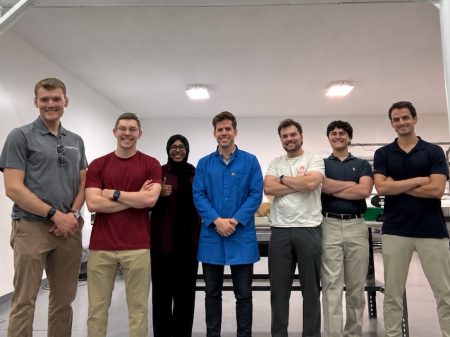


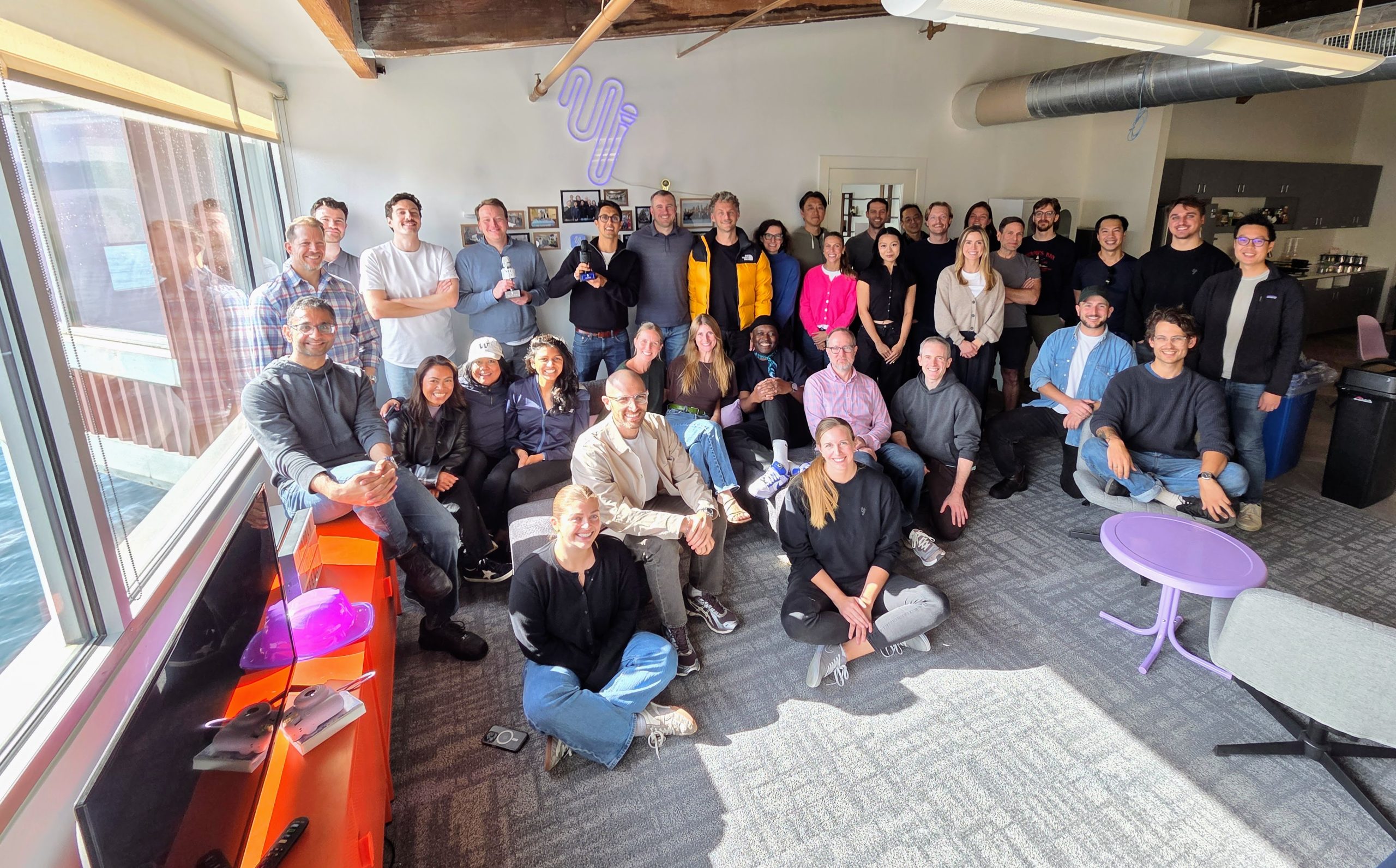
On a damp Seattle afternoon, inside a sprawling new headquarters on Pier 70, the Yoodli team gathers for an impromptu photo beneath a glowing neon version of the startup’s logo. There’s laughter, a little shoving, the kind of easy energy that doesn’t usually survive a company’s hundredth hire. But Yoodli, which began five years ago as a humble AI coach for public speaking, is celebrating something much bigger than a milestone. The company is recasting itself as the “AI platform for human skills,” with an ambitious new vision: AI that doesn’t just critique your presentation or rehearse a sales call, but can teach you almost any skill you need for work, answer your questions in real time, coach you during live meetings, and prove to your manager that you’re actually getting better. For co-founder and CEO Varun Puri, this is deeply personal. “This is all about upskilling humans and believing in the human potential,” he said this week, standing inside the company’s new office. “How do we help humans be the best versions of themselves and get measurably better?” It’s a striking message at a moment when so much AI conversation is dominated by fears of job loss and automation. Yoodli is betting instead that the same technology can make people more capable, more confident, and more valuable in their careers. And with that bet, the company is moving far beyond the practice sessions that built its name, into the much larger and more competitive world of corporate training — where giants like Workday and Microsoft’s LinkedIn are already spending heavily.
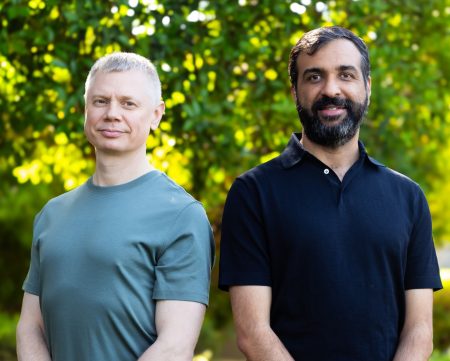
The seeds of this expansion were planted years ago, even before Yoodli had a name. The startup spun out of the AI2 Incubator, now called AI House, with a tool designed to help people improve their public speaking. Puri had run special projects for Google co-founder Sergey Brin and worked at X, the research arm of Alphabet. Esha Joshi, co-founder and chief customer officer, spent more than four years at Apple as a software engineer and product manager, and served as Yoodli’s original chief technology officer. In its earliest days, the company’s AI analyzed your speech for filler words, pacing, and eye contact, giving you a score and suggestions for improvement. It was useful, but limited. Then, about two years ago, Yoodli made a pivot that changed everything: it moved into AI-powered roleplays, letting employees practice sales pitches, job interviews, and difficult conversations with realistic AI personas. The shift pushed the company from selling mostly to individuals to landing contracts with organizations. Today, Google, Snowflake, and Databricks use Yoodli to train their sales teams. The government of El Salvador uses it to train doctors on how to talk with patients. The University of Washington uses it to prepare students for job interviews. The growth has been startling. Yoodli raised $13.7 million in May 2025, then another $40 million in December in a round led by WestBridge Capital, valuing the company at more than $300 million. The startup reported 900% revenue growth when it announced that round, and while Puri declined to share current revenue figures or say whether the company is profitable, he offered a simple summary: “It’s been a very strong year.” With roughly 100 employees now, up from just 25 a year ago, Yoodli is no longer a scrappy little coaching tool. It’s a real company, with real momentum, standing on the edge of something much larger.
The expanded platform is best understood as five products that work together, creating a sort of always-on AI development system for employees. The first, Roleplays, is what Yoodli is known for: an employee rehearses a sales call or a performance review with an AI persona that can push back, ask tough questions, and challenge assumptions. But those sessions now teach as well, with an AI tutor that can explain a topic, pull up relevant slides, and answer questions along the way. The second product, Personas, takes the AI experts companies have already built for practice sessions and puts them to work in the real world. Loaded with a company’s own material, a persona can answer questions on an intranet, a partner site, or even a live call, gracefully handing off to a human when the conversation gets too complex. Yoodli has already built an AI version of Puri himself, so job candidates can chat with him before they ever meet the real CEO. Then there’s Create, a tool that feels almost magical: you type a request for a training program on, say, Google’s Gemini, and within minutes Yoodli produces a full, multi-step course, complete with personas, exercises, and learning objectives. In a demo, Puri typed a simple prompt and watched as the system built an entire curriculum, something that could have taken a team of experts weeks to produce. The fourth product, Coach, is a personal AI guide that lives inside tools like Zoom, Slack, and Teams. It watches how you work, learns your strengths and weak spots, and offers gentle, timely suggestions — Puri compared it to a friend kicking you under the table during a meeting when you’re about to say something you’ll regret. Finally, Measure ties everything together, giving employees and managers real reports on whether skills are actually improving, not just whether training was completed. For sales teams, that can mean connecting training sessions to deals closed, providing a level of accountability that corporate training has rarely offered. These products are available at individual prices of $8 and $20 a month, billed annually, with custom pricing for businesses depending on size and needs.
Yoodli is not entering this space alone, and the competition is formidable. Workday acquired Sana, an AI startup with a corporate learning platform, last year. Microsoft’s LinkedIn has been adding AI coaching features. Salesforce offers AI roleplay coaching inside its massive suite of sales tools. Highspot, the Seattle company that merged with rival Seismic in August, has an AI roleplay tool. A wave of startups, including Hyperbound and Second Nature, are focused specifically on sales roleplays. In some ways, Yoodli’s new direction looks like an attempt to outflank all of them by offering a broader, deeper platform rather than a single feature. It also integrates with some of the big players, including Workday and Highspot, suggesting that Yoodli sees itself as both a partner and a competitor. Asked what keeps Yoodli from becoming just another feature in a larger company’s product, Puri pointed to the depth of the software and the sophistication of its customers. Google, he noted, could easily build its own internal training AI, yet it uses Yoodli to train its own teams on Gemini, one of the most advanced AI systems in the world. That kind of validation matters. It suggests that Yoodli’s technology is not just good enough for small startups, but trusted by the very companies that are building the AI revolution. Still, the pressure will only increase as Yoodli pushes deeper into the corporate training market, where buyers expect enterprise-grade security, integration, and support. The company’s ability to navigate that complexity, while staying true to its mission of helping humans improve, will determine whether it becomes a category leader or gets absorbed into a larger platform.
Inside Yoodli’s new offices, there are signs that the company hasn’t lost its sense of humor or its culture, even as it grows. The headquarters sits on the eastern side of Pier 70, sharing a building with AI House, the incubator and venture fund where Yoodli first began. The conference rooms are named with the kind of inside jokes that only a startup would understand. “Speakeasy” was Yoodli’s code name before launch. “PlankoClock” honors a daily ritual: at 3:45 every afternoon, the whole company stops what it’s doing to do planks together. It’s a small, slightly ridiculous tradition, but it says something about the culture Puri and Joshi are trying to build — one that values discipline, shared experience, and a little bit of fun. Then there’s “Agnes Potts,” named for one of Yoodli’s earliest AI personas, a fictional customer so demanding and so difficult that users wanted T-shirts just for surviving a session with her. Puri laughs when he tells the story, but it’s also a testament to how seriously the company takes its roleplays; if an AI can prepare you for someone like Agnes Potts, the real world starts to feel manageable. Recent executive hires have brought in seasoned leaders, including Josh Vitello, the chief revenue officer, who spent more than 15 years at Tableau and Salesforce, and Derek Sessions, the chief technology officer, who previously worked as an engineering manager at video software company Panopto. The team that gathered for the photo this week was still buzzing with the energy of a much smaller startup, even with the weight of a $300 million valuation and a hundred employees. There’s a sense that something important is happening here, and that the next few months will determine whether Yoodli can fulfill its ambitious vision.
Toward the end of the visit, as employees headed back to their desks after the photo, the conversation turned to the future. I joked that everyone would remember this moment someday, when Yoodli has its IPO in ten years. They laughed and groaned at the suggestion that it would take that long. It was the kind of confident, slightly delusional optimism that every great startup needs — a belief that the best days are still ahead, and that they’re closer than anyone thinks. But underneath the joke is a serious mission. Yoodli is trying to use AI in service of human potential, not replacement. At a time when technology is raising urgent questions about the future of work, Yoodli’s answer is to put an AI coach in everyone’s corner, helping them develop the skills they need to adapt, grow, and thrive. The company’s expansion from public speaking practice to a full-fledged platform for human skills is a bet that the same tools that are disrupting industries can also empower the people who work in them. For Puri, Joshi, and their growing team, the goal isn’t just to build a successful company. It’s to make sure that, as AI transforms the workplace, no one is left behind. Standing under that neon logo, surrounded by people who have built something from nothing, it’s easy to believe they just might pull it off.