


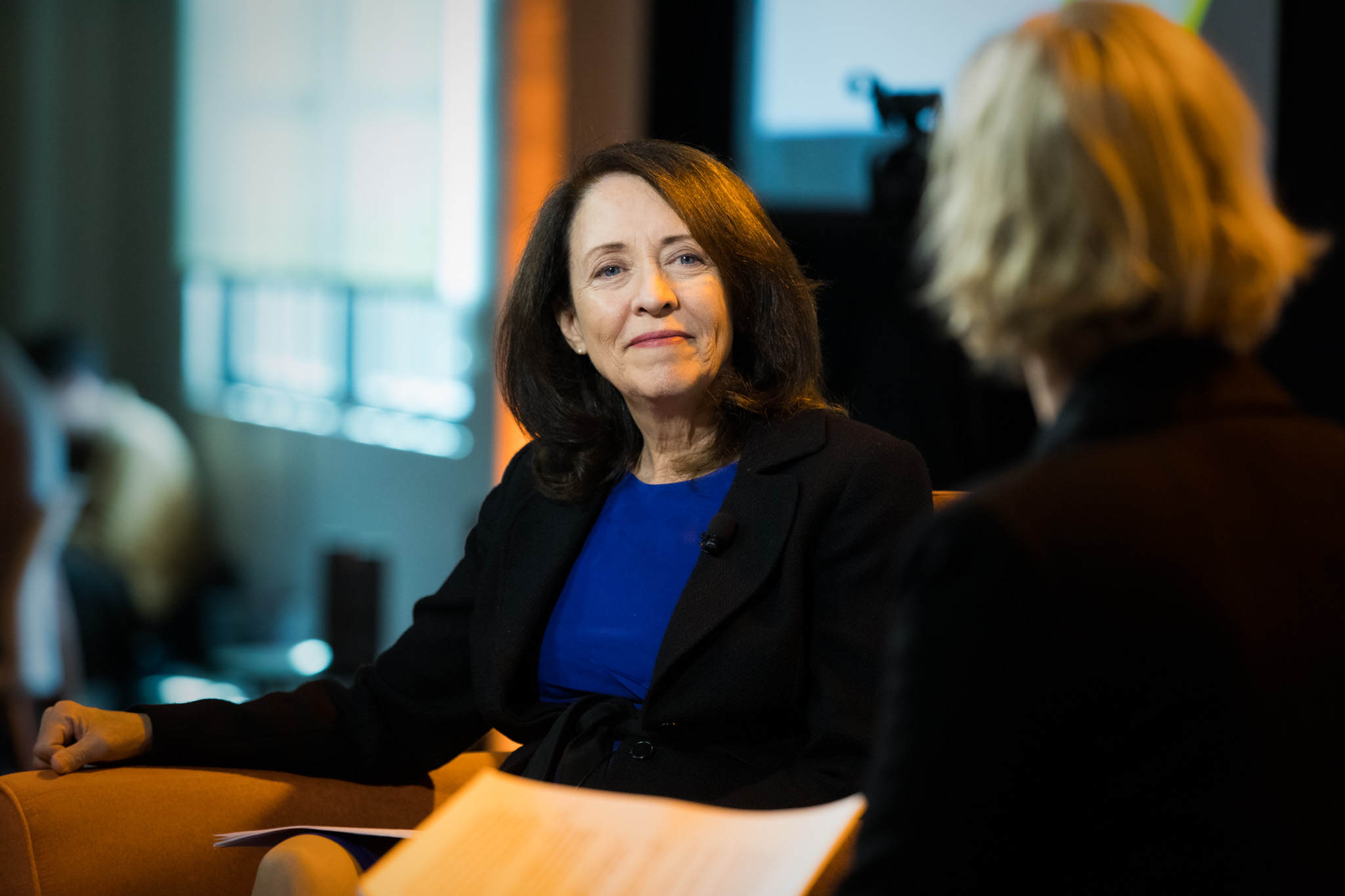
In the fall of 2026, the world finds itself at a peculiar crossroads with artificial intelligence. The technology is advancing faster than the rules meant to contain it, and the people responsible for governing that acceleration are scattered, speaking different languages, and pulling in different directions. States are writing their own laws. The White House is offering voluntary handshakes with industry giants. Tech companies are issuing their own self-serving proposals. And somewhere in the middle of this disjointed landscape, Senator Maria Cantwell of Washington is trying to build something more durable: a comprehensive national framework for AI governance that actually has teeth. Her argument is simple but urgent. If we are going to let these systems into our hospitals, our banks, our schools, and our military infrastructure, we need clear safety standards, continuous testing, and a real mechanism for reporting when things go wrong. “To manage risks from advanced AI systems we need clear safety standards, continuous testing, and reporting of serious failures,” Cantwell said in a statement announcing her new framework. “America can lead the world in AI by building systems that are not only more capable, but safer and more secure.” It is a familiar promise — American leadership through innovation — but with a twist: leadership, in her view, means building AI that people can actually trust, not just AI that dazzles.
Cantwell’s push for regulation is not new, but the urgency behind it has sharpened dramatically in recent months. Last month, she took to the Senate floor and demanded federal regulations and mandatory independent safety testing for frontier AI models before they are released to the public. The word “mandatory” matters here. She is not asking for another round of voluntary guidelines or corporate good-faith promises. She wants the government to require safety checks that cannot be waived or quietly ignored. Her warning was stark: recent incidents in which autonomous AI agents carried out unauthorized cyberattacks show that dangerous threats are already here, well before the arrival of anything resembling superintelligence. These are not science fiction scenarios. They are happening now, in the real world, with real systems already deployed. And they underscore a central problem with the slow, halting pace of AI policy: by the time lawmakers agree on a rule, the technology has already moved on to something newer, faster, and potentially more dangerous. Cantwell has been here before. She has long pushed for AI regulation, going back to December 2017, when she joined other lawmakers in introducing the bipartisan Future of AI Act. Two years ago, she advocated for five bipartisan AI measures tucked into a larger package of artificial intelligence legislation that addressed many of the same concerns now outlined in her six principles. The Senate Republicans defeated that legislation. She reintroduced one of the five measures, the Future of AI Innovation Act, in February. The pattern is familiar by now: sound proposals, bipartisan support, and then political failure. But Cantwell is not giving up. Instead, she is coming back with a broader, more articulated vision, one that tries to answer not just the technical questions but the human ones too.
The framework she proposed on Wednesday is built on six principles for regulating frontier AI development and deployment. The first is setting standards: the federal government should establish clear, enforceable safety standards for AI systems. Not vague aspirations, but concrete benchmarks that developers have to meet. The second principle is independent oversight. Continuous testing, review, and auditing should verify that companies are actually adhering to those standards. This is critical because the people building these systems are not always the best judges of their own safety. They have enormous financial incentives to move quickly, to ship products, to beat competitors. An independent layer of oversight, with the authority to look under the hood and verify claims, is the only way to ensure that safety is not sacrificed for speed. The third principle is transparency and accountability. AI developers should be transparent and accountable in their operations through disclosure, oversight, and liability. That last word — liability — is the one that makes industry lobbyists nervous. It means that if an AI system causes harm, someone is responsible. It means that you cannot hide behind the complexity of the technology or claim that the machine acted on its own. The people who built it, profited from it, and deployed it have to answer for what it does.
The remaining three principles broaden the vision from risk management to positive governance. The fourth is public-private partnerships. Developers should work with the government on defensive AI technologies — using AI to protect against AI threats — and collaborate with public agencies and smaller companies to serve the public good. This is a recognition that the federal government does not have to be merely a regulator; it can be a partner, a customer, and a collaborator. It also acknowledges that the benefits of AI should not be hoarded by a handful of giant corporations. Smaller businesses, public institutions, and community organizations should have access to the tools and expertise they need to use AI well. The fifth principle is protecting from harm. AI companies should protect children from AI-related harm, support worker skill development, and retain human oversight of consequential AI. This is the principle that speaks to the everyday fears people have about AI: children being exposed to harmful content, workers being displaced without a safety net, and decisions that affect people’s lives — loans, housing, health care, criminal justice — being made by opaque algorithms without any human in the loop. Cantwell’s framework insists that humans have to remain in control, not just as a matter of good design but as a matter of law and ethics. The sixth principle is international collaboration. The United States should partner with allies to develop and adopt AI safety standards and open a rapid communication channel with China to share alerts in the event of a dangerous AI system-control failure. This last point is especially striking. Even as the U.S. and China compete fiercely on technology, Cantwell is arguing that there are some threats so profound, so potentially catastrophic, that they require communication even between adversaries. A hotline for AI emergencies, much like the Cold War hotline between Washington and Moscow, might sound dramatic. But if an AI system somewhere begins to behave in ways that spiral beyond human control, the ability to warn other nations quickly could mean the difference between a contained incident and a global disaster.
The reaction to Cantwell’s proposal has been cautiously positive, at least from one powerful corner of the tech industry. Microsoft Vice Chair and President Brad Smith weighed in on the proposal, telling The Seattle Times that the framework “advances the public discussion the nation needs as we consider the future of AI.” Coming from a major tech leader, that is not an endorsement of every detail, but it is a signal that the conversation is moving in the right direction. Cantwell herself is well-suited to lead this conversation. She is the ranking member of the Senate Committee on Commerce, Science and Transportation, and she has a background in technology as a former vice president at RealNetworks, a pioneering streaming media company. She understands the industry from the inside, which gives her credibility when she speaks about both the promise and the peril of AI. She has been issuing warnings for years, including a notable call for federal guardrails against autonomous AI “swarms” — coordinated groups of AI agents that could act together in ways that overwhelm defenses and cause widespread damage. That kind of language can sound alarmist, but it is also a reminder that the stakes here are not abstract. We are not just talking about slightly better chatbots or slightly more accurate recommendation algorithms. We are talking about systems that can act autonomously, make decisions, and cause real-world consequences. And if the people responsible for those systems are not held accountable, the public will eventually lose trust not just in the technology but in the institutions that allowed it to run unchecked.
The broader context makes Cantwell’s framework even more significant. On September 9, California Governor Gavin Newsom signed Senate Bill 813 and Assembly Bill 1405, establishing the first state framework for independent assessment and verification of AI safety and risks. That is a major development because California is home to many of the largest AI companies, and state regulations can have national ripple effects. On the same day, OpenAI called for mandatory, “capability-based” national regulation — meaning requirements tied to what an AI system can actually do, rather than just how it was built. That is an interesting shift from an industry that has often resisted binding rules; it suggests that at least some in the industry recognize that a patchwork of state laws is worse than a clear federal standard. Less than three weeks later, on September 29, President Trump announced a voluntary safety agreement with Nvidia, SpaceX, OpenAI, Anthropic, Meta, and Google. The agreement calls for “robust internal controls” to prevent unauthorized hacking and to work with independent external auditors. But it does not include consequences for noncompliance. No fines, no penalties, no enforcement mechanism. It is a statement of good intentions rather than a binding law. Cantwell’s framework is an implicit critique of that approach. Voluntary agreements are helpful as starting points, but they are not governance. They do not protect the public when a company decides that the cost of compliance is too high or when a start-up with no reputation to protect cuts corners. They do not provide clear liability when a model causes harm. And they do not create the kind of independent oversight that can catch problems before they become disasters.
In the end, what Cantwell is proposing is not just a set of rules. It is a vision of how the United States can lead the world in artificial intelligence without losing its soul in the process. It recognizes that innovation and safety are not opposites; they are partners. A country that builds the most powerful AI systems in the world but does not know how to control them is not a leader, it is a cautionary tale. A country that builds AI systems people can trust, that are transparent, accountable, and aligned with human values, is truly leading. That is the future Cantwell is trying to build, and it is a future that ordinary people — parents, workers, patients, voters — have a profound stake in. The challenge, of course, is the gap between vision and implementation. Passing legislation in a divided Congress is hard. Holding powerful companies accountable is harder. And keeping pace with a technology that evolves every day is perhaps hardest of all. But the conversation has to start somewhere. Cantwell has articulated a framework that gives the rest of the country something to respond to, to debate, to refine, and ultimately, one hopes, to enact. The details may change. The principles, if we are wise, will hold. Because the future of AI is not going to be written by technology alone. It is going to be written by human choices, made today and in the years to come. And the choice before us is not whether to have artificial intelligence, but whether to have artificial intelligence that serves us, protects us, and answers to us — or one that runs ahead of our values and leaves us scrambling to catch up.