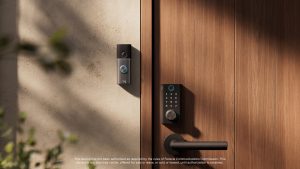


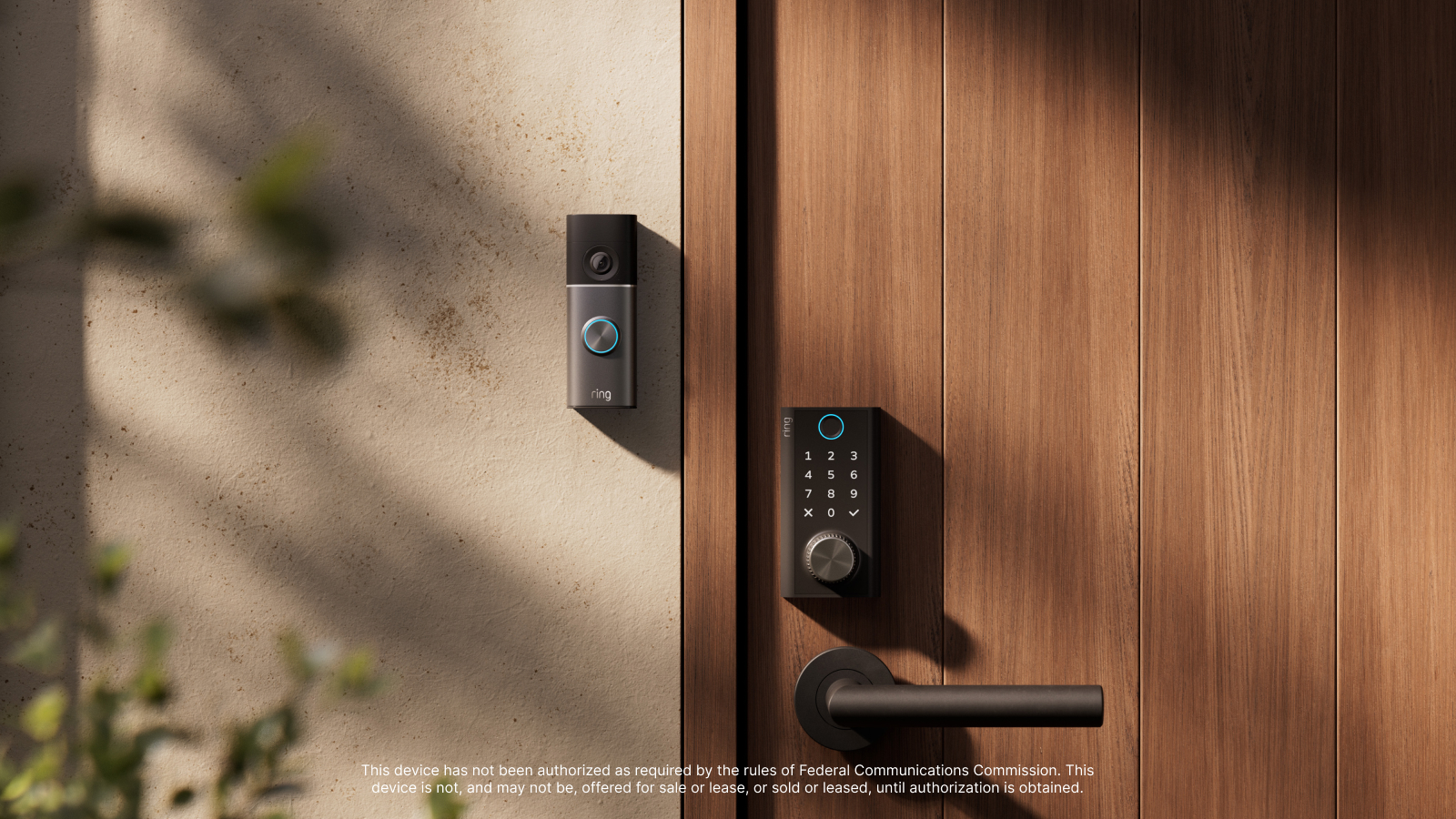
Ring built its name by putting a camera and a doorbell together, turning an ordinary front door into a connected device that lets people see who is outside from anywhere in the world. Now the Amazon-owned company is moving a little farther inside, from the doorbell to the deadbolt. On Wednesday, Ring announced its first smart lock, a $249 deadbolt that has no keyhole at all. Instead, it comes with a small dial on the front, and that dial is the answer to one of the oldest problems in the smart lock world: what happens when the battery dies and you are standing outside in the dark? Jamie Siminoff, Ring’s founder and chief inventor, said that very problem has kept smart locks from becoming as popular as video doorbells. People are afraid of being locked out, and that fear is why many smart locks still include a traditional key as a backup. But Siminoff has never liked that compromise. If you still need a key, he asked, then why are you buying a smart lock at all? His solution is elegantly simple. When the battery runs out, you twist the dial on the lock somewhere between five and ten times, depending on how far and how fast you turn it, and that motion generates enough power to bring the lock back to life. A light turns green when it is ready, and you can get inside using your fingerprint, a keypad code, or the Ring app. It is a low-tech answer to a high-tech problem, and it is meant to rescue someone standing at their own door at one in the morning without a battery, a cable, or any other tool.
Other smart lock makers have tried to solve the dead-battery problem with backup terminals that accept a 9-volt battery or a USB-C cable, but Siminoff points out that those solutions do not help if you do not happen to have a battery or a cable with you. The Ring Smart Lock is designed to ship in the first quarter of next year, and it runs on a standard Ring battery pack that should last about a year under normal use. None of its features requires a subscription, which is a notable departure from the company’s growing focus on paid services. The lock connects through Amazon Sidewalk, the shared network powered by nearby Amazon devices, and it works with Alexa for voice commands and for connections to other smart home devices. That means you can ask Alexa to lock the door, or set up routines that connect the lock to lights, cameras, and alarms. The lock is also designed to show up in the Ring app alongside the company’s doorbells and cameras, so the front door becomes part of a larger picture rather than a standalone gadget. For Ring, this is not just a new product; it is a statement about where the company thinks the smart home is heading. The door is no longer just a place to see visitors. It is a place where security, convenience, and privacy all come together, and Ring wants to be the company that controls that transition.
Siminoff’s path to this moment was longer than it might seem. His first video doorbell, the Doorbot, went on sale in 2013 in a bundle with a smart lock made by another company, and Ring has spent years integrating its products with locks from other manufacturers. He says Ring could easily have put its name on someone else’s lock and sold plenty of them, but he did not think the company belonged in the lock business until it had something genuinely different to offer. The parts inside the new lock are mostly off the shelf, including the components that generate power from the dial. The real invention, he says, was figuring out how to put them together in a way that solved the lockout problem. He admits he is annoyed with himself for not thinking of it years ago. “I literally can’t believe that I just didn’t look at this and just fix the damn thing,” he said. Siminoff, who returned to lead Ring last year, worked out the idea on his own computer at night using Amazon’s AI tools. He estimated the number of cranks, the cost of the parts, and whether everything would fit before handing the concept to Ring’s engineers. A few years ago, he said, answering those questions would have taken five to ten engineers and six months. Now he could do it alone, late at night, with the help of artificial intelligence. That is a reminder that the smart home industry is not just about hardware anymore. It is also about software, data, and the speed of iteration, and Ring is trying to move faster than its competitors.
Ring is entering a crowded market. Established lock makers like Schlage, Yale, and Aqara already offer smart deadbolts, and Apple is preparing its own smart home push. According to a Bloomberg report, Apple plans to introduce its own smart home devices on October 13, including a smart deadbolt lock, a video doorbell, and security cameras developed with LG Electronics and sold under the LG brand. The LG products are not expected to reach consumers for at least a few more months, but the report says the LG lock will support ultra-wideband, a technology that lets a door unlock automatically as its owner approaches. That kind of hands-free convenience is the future many companies are chasing, and Ring will have to compete with it. But Siminoff is not worried about being late. He says Ring waited because it wanted to offer something different, not just another lock with an app. The new lock’s integration with Amazon Sidewalk and Alexa gives it an ecosystem advantage, and the hand-crank dial is a feature no one else has. Still, the market is changing quickly. Apple’s entry into the smart home space could raise the bar for design and ease of use, and LG’s ultra-wideband technology could make automatic unlocking feel standard. Ring’s answer is to focus on the basics: making sure the lock works reliably, never leaves you stranded, and fits naturally into the smart home you already have. Whether that will be enough to stand out remains to be seen, but Siminoff seems confident that the lock’s simple, human-centered design will win people over.
Privacy is a complicated subject for Ring, and the new lock arrives after a difficult stretch for the company on that front. In February, a Super Bowl ad for Search Party, a feature that uses AI to scan footage from neighbors’ outdoor cameras for lost dogs, drew backlash from critics who asked what would stop the same technology from being used to find people. Days later, Ring canceled a planned partnership with Flock Safety, a license-plate-recognition company, that would have let police using Flock’s platform request video from Ring users. Ring said at the time that the integration never launched and no customer videos were shared. Still, the criticism left a mark, and it raises an obvious question: if people are wary of giving Ring access to their doorbell cameras, why would they trust Ring with the lock on their front door? Siminoff’s answer is that privacy and security do not have to be opposites. He points to Throw Away the Key Encryption, or TAKE, which Ring started rolling out in September and says will become its default. With TAKE, Ring deletes its copies of the encryption keys, the digital codes needed to view customers’ videos, after using them. That leaves the keys on customers’ own devices, so Ring cannot access the footage even if it wanted to. “You do not need to compromise on privacy in order to have security,” he said. It is a strong message, but the company will have to prove it over time. The lock itself has no camera, which is a deliberate choice. Siminoff said he thinks a lock should stay a lock. That may be a way to reassure people that Ring is not trying to watch every move they make inside their own homes, even as it expands deeper into the physical security of the house.
At launch, the lock and Ring’s cameras will work together in limited but useful ways. The lock’s activity will show up in the Ring app alongside the company’s doorbells, cameras, and alarms, so you can see who is at the door and unlock it from the app without leaving the couch. But the lock will not open on its own when a Ring camera recognizes a face. Siminoff said deeper connections between the lock and the cameras have not been built yet, and Ring wants to take the time to get them right. He was also cautious about the idea of Amazon delivery drivers using the lock to leave packages inside the house. Garage delivery is a growing business for Amazon, and Siminoff described the garage as “the airlock,” a semi-public space between the outside world and the fully private home. But he said he still does not see a world at scale where people are entering homes without the homeowner there. “It’s not a technology thing. It’s a human thing,” he said. That caution suggests Ring is trying to move carefully, especially after the privacy controversies of the past year. If the deadbolt sells well, Siminoff said Ring will expand to other types of locks and other countries, and tie the lock more closely to its doorbells. He even said he would take on other parts of the door, including the hinge, if he found a way to improve them. For a company that started with a simple video doorbell, that is an ambitious vision. Ring also announced five new cameras alongside the lock. Four add to its 4K lineup: the Outdoor Cam 4K Plus at $149.99, the Spotlight Cam 4K Plus at $199.99, the Floodlight Cam 4K Plus at $219.99, and the Indoor Cam 4K at $99.99, which is the first indoor model in the 4K line. The fifth camera is the $69.99 Pan-Tilt Indoor Cam 2K, which rotates 360 degrees to follow motion. The two indoor cameras go on sale Wednesday in the U.S., and the three outdoor models are available for preorder. With these new products, Ring is making it clear that it wants to be more than a doorbell company. It wants to be the nervous system of the entire front of the house, from the street to the door, and maybe eventually from the door to the garage and beyond. Whether consumers are ready to trust Ring with all of that remains an open question, but Siminoff is betting that a lock that never locks you out is a good place to start.