


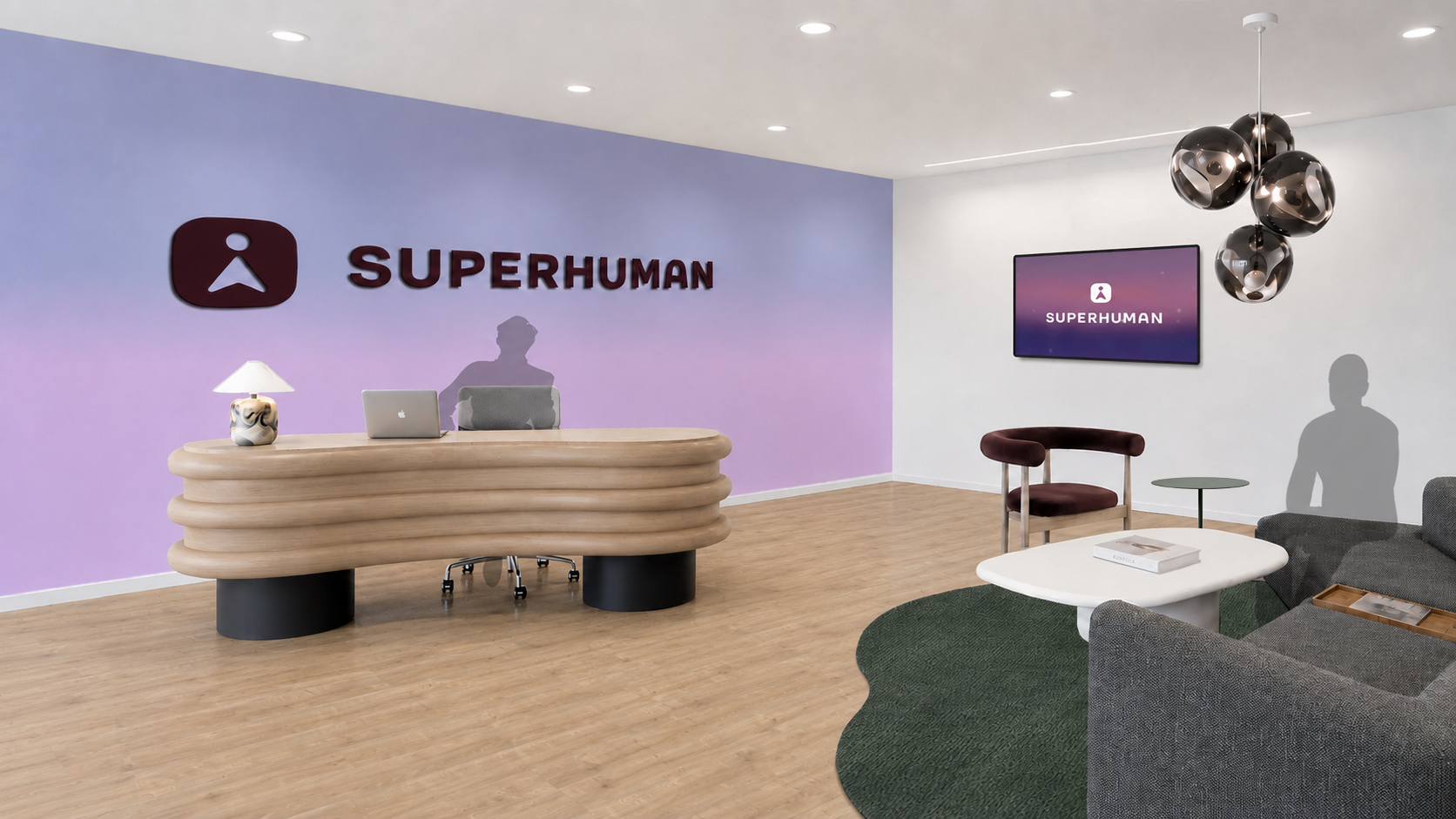
On a Tuesday morning in early October, a company with a familiar name but a new identity quietly put down roots in Seattle’s South Lake Union neighborhood. Superhuman — the San Francisco firm that used to be called Grammarly — opened a 13,501-square-foot office at 1000 Dexter Ave. N., trading in a coworking space for a permanent home. The move came after a year of remarkable transformation. Grammarly, the writing assistant known to millions, acquired the Superhuman email app in July 2025 and then adopted the name Superhuman for the entire company that October. It was an unusual move in the corporate world, where the buyer’s name usually survives and the purchased product can become a faded brand. Here, the opposite happened: the new name came from the acquisition, and the legacy name became a product inside a larger suite. That choice tells you a lot about the company’s ambitions. Grammarly was famous for fixing mistakes; Superhuman is meant to be about going beyond what ordinary humans can do with AI help. The office itself is not enormous by the standards of Seattle’s biggest tech employers, but it has 50 workstations and can hold up to 80 people, which is a meaningful commitment. The move from a coworking space to a dedicated office also carries symbolic weight. It says the company is no longer a passing visitor to Seattle, but a resident with a name on the door and a plan for the future. For employees, the difference between a coworking desk and a dedicated office is the difference between being a temporary guest and being someone who belongs. With a rendering showing a clean, modern reception area, the office projects confidence without pretension. It is built to accommodate growth, but not to show off. That feels appropriate for a company that has spent the past year quietly reinventing itself.
The office itself may look like a typical modern tech workspace, but the policies inside reflect a hard-learned lesson about the post-pandemic workplace. Superhuman has set up the Seattle office for hybrid work under a program called “Ways of Working,” which replaced a more rigid return-to-office mandate in January. The design of that program is interesting because it tries to balance autonomy with presence. U.S. employees get to choose how many days they want to come in, between two and five per week, and their choice directly affects their wallet. According to Entrepreneur, workers who come in more often receive a quarterly wellness stipend ranging from $500 to $2,000, with the larger amount reserved for those who are in the office the most. The system is a nudge, not a shove. Rather than telling everyone to be at their desks on specific days, the company is essentially saying: We trust you to make the call, but we will reward you for making the call that brings you closer to your colleagues. For a company that makes AI tools for work, this approach feels consistent with a philosophy of making work more flexible rather than more enforced. But it also reflects a reality that many managers have had to accept: the old five-day-a-week expectations are gone, and the office needs to be a place people choose to come to, not just a place they’re required to be. With 50 workstations and room for 80, the Seattle office is sized for a team that values both individual focus and collaboration. It is a space that can grow along with the company’s ambitions. There is also something human about the policy. The stipend is not a huge sum, but it is a tangible acknowledgment that coming into the office costs money — for transit, lunch, coffee, and the general friction of leaving home. By tying that money to attendance, the company is trying to make the commute feel less like an expense and more like an investment in the kind of spontaneous conversations and relationships that are hard to replicate over video calls.
But the physical space matters less than what Superhuman plans to fill it with: people. The company says it intends to keep hiring in Seattle for data engineering, data governance and data science roles, and its careers page lists a dozen openings that can be based in the city, including software engineering, site reliability and product management positions. Those roles are more than just a random collection of needs. They paint a picture of a company that is trying to mature. Data engineering and data science, for example, are the kinds of functions that become critical when a company has millions of users and needs to build smarter AI systems. Data governance, meanwhile, is a discipline that has grown more urgent in an era of privacy regulations and AI ethics concerns. It’s one thing to train a model; it’s another to make sure the data behind it is handled responsibly. For Seattle job seekers, the openings are a reminder that the region’s tech ecosystem is no longer just about cloud infrastructure and e-commerce. The city has become a serious destination for AI product development, and Superhuman is part of that wave. The specific roles also suggest something about the company’s strategy. Superhuman isn’t just looking for generic “AI engineers”; it’s looking for people who can build reliable, scalable systems around data and products. That’s the difference between a company that wants to experiment with AI and a company that wants to make AI a durable part of how work gets done. For candidates, this could mean a chance to have real impact in a company that is still small enough for individual contribution to matter, while also being attached to a product with a huge existing user base thanks to Grammarly’s legacy. The hiring focus also speaks to the broader rhythm of the Seattle job market, where companies are becoming more selective, but where specialized technical roles remain in high demand. Superhuman’s list of open positions is a sign that the company is looking for people who can not only imagine new AI features but also make sure those features work reliably at scale.
Superhuman’s decision to open a physical office in Seattle may seem like a small story, but it fits into a much larger pattern. The region has become a preferred landing spot for out-of-town AI companies hungry for technical talent. OpenAI, the creator of ChatGPT, has a growing presence in Bellevue, just across the lake. Anthropic, another major force in the AI world, has been expanding in Seattle as well. These companies could have chosen to simply hire remote workers, but instead they have chosen to create physical hubs in the Pacific Northwest. The reasons are not hard to understand. Seattle has a deep pool of engineers with experience at Microsoft, Amazon and a generation of startups, and many of those engineers are less interested in relocating to the Bay Area than they used to be. Washington has no state income tax, a feature that does not hurt when companies are competing for high earners. The area also offers a quality of life that many workers find appealing — access to water, mountains and a sense of scale that San Francisco no longer provides at the same price. For Superhuman, opening an office in South Lake Union puts it right next to some of the most valuable labor in the country. It also means the company can host meetings, conduct interviews and build culture in a way that remote work makes difficult. The timing is notable as well. While some companies are pulling back on office space, AI companies are doubling down. The result is a friendly but intense talent war. For engineers, product managers and data scientists, that competition translates into more options, better compensation and the ability to stay in the Northwest while working on problems that are at the center of the AI boom. Superhuman may be smaller than OpenAI or Anthropic, but its presence adds another name to a growing list of AI employers that are betting on Seattle. In a neighborhood already crowded with construction cranes and coffee shops, the new office on Dexter Avenue is another reminder that the AI industry is not just a distant conversation in Silicon Valley. It is becoming part of the everyday geography of Seattle.
To understand why Superhuman is opening this office, it helps to look at how the company got here. The story begins with Grammarly, a company that became famous for an AI writing assistant that checks grammar, tone and clarity. Then came the deal in July 2025, when Grammarly acquired the Superhuman email app — a product with a cult following among people who send a lot of email. By October of the same year, the combined company had chosen to call itself Superhuman, a bold rebranding that placed the emphasis on speed and mastery rather than correctness. The chief executive, Shishir Mehrotra, brings an intriguing mix of experiences. He was an executive at Microsoft and YouTube, and he co-founded Coda, a collaborative documents startup that competed, in some sense, with Google Docs. That background is visible in the company’s product lineup. Today, Superhuman offers a suite of AI tools for work that includes Superhuman Go, an AI assistant; Superhuman Mail, the company’s email app; Superhuman Docs; and the Grammarly writing assistant. It has also been actively expanding through acquisitions. Earlier this year, the company announced deals for GPTZero, a startup known for detecting AI-generated text, and Fathom, a meeting notetaker. These moves suggest a company that wants to be present in every major corner of the knowledge worker’s day: writing, email, documents and meetings. The acquisitions also reveal a certain seriousness of purpose. GPTZero, for example, is not simply an addition; it’s a signal that the company wants to be at the center of conversations about authenticity, AI transparency and trust. Fathom, on the other hand, addresses one of the biggest drains on modern work: the endless cycle of meetings. For Seattle employees, joining Superhuman means plugging into a company that is still defining itself, with a product strategy that is evolving in real time. It is not the safest career move, but for people who like building things, it might be one of the more exciting ones. The company has the name recognition of Grammarly behind it, but it is acting like a startup again, making big bets and moving quickly.
For all the details Superhuman has shared, one or two things remain unclear. The company hasn’t announced exactly how many people it currently employs in Seattle, nor has it said who will run the office on a day-to-day basis. Those might seem like small questions, but they matter as a measure of how seriously the company takes its local operation. A single manager with a handful of engineers is a very different thing from a fully staffed regional hub with a director-level leader. Still, the opening of a dedicated office at 1000 Dexter Ave. N. suggests that the answers will eventually lean toward the more serious end of the spectrum. The space has the capacity to grow from 50 workstations to 80, which means the company expects its Seattle headcount to rise over time. The hiring plan, with roles in data engineering, data governance and data science, is not the kind of list you create if you only need a few temporary bodies. It is the kind of list you create when you are building a team you intend to keep. For the city, this is another sign that the AI economy is reshuffling the geography of technology. Seattle may not be the center of every tech trend, but it is increasingly a place where AI companies want to be. For Superhuman, the new office is both a home and a bet. A bet that workers will want to come into a thoughtful hybrid environment, a bet that the company can attract the talent it needs, and a bet that the products it is building — for email, writing, documents and meetings — will remain relevant as AI changes the nature of work itself. The office opened on a Tuesday morning, with desks ready and a future still being written. Whether that future is measured in dozens or hundreds of employees will tell a larger story about whether Superhuman’s rebranding and acquisition spree can live up to the promise in its name.