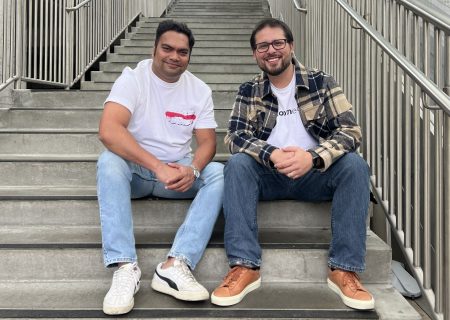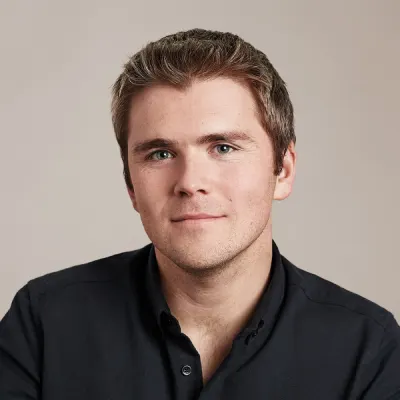



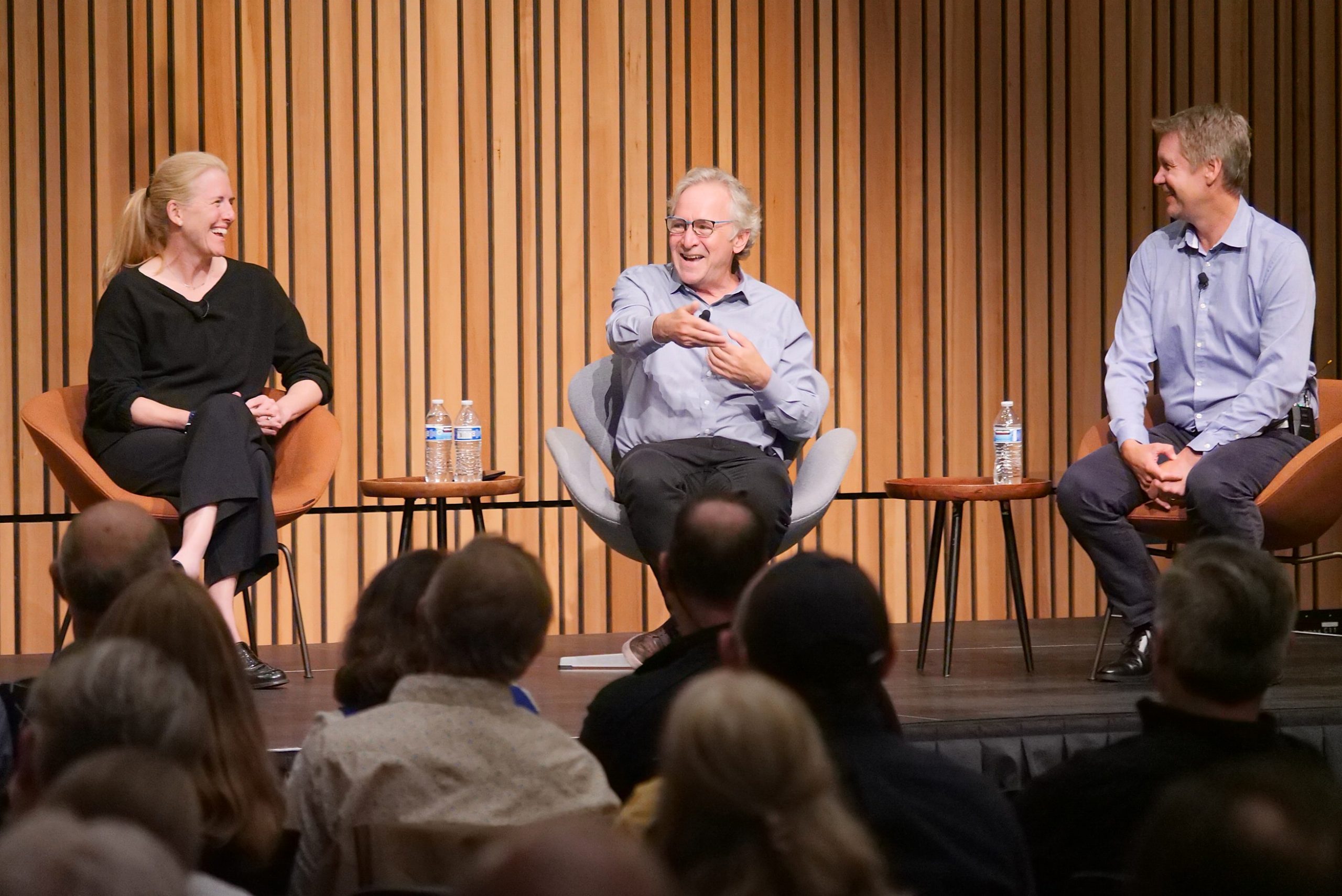
The air in the National Nordic Museum in Seattle felt less like a typical podcast studio and more like a gathering of old friends trying to make sense of a strange, shared history. On stage, historian Margaret O’Mara, journalist Jonathan Weber, and GeekWire co-founder John Cook sat down with David Hyde and Sandeep Kaushik, the hosts of the Blue City Blues podcast, for a joint live taping that was equal parts civic autopsy and therapy session. The subject was the complicated, love-hate relationship between the tech industry and the two great American cities it has transformed over the past three decades. Seattle and San Francisco have both been remade by tech, for better and worse. They have seen jobs and wealth flood in, but also soaring housing costs, political backlash, and a simmering sense that something important was lost along the way. And now, just as neither city has fully resolved those tensions, the artificial intelligence boom has arrived, promising to supercharge everything all over again. The conversation that night was an attempt to understand how we got here, where we might be going, and whether the lessons of the past can help two cities avoid repeating their own mistakes.
The story of tech’s collision with Seattle and San Francisco, as the panel made clear, is not really about tech itself. It is about geography and proximity. Silicon Valley originally grew up thirty or forty miles south of San Francisco, in a sprawling, car-dependent landscape of office parks and orchards. Microsoft, meanwhile, built its own suburban campus in Redmond, Washington, a place O’Mara described as “its own kind of bubble far away from the city.” For decades, the tech industry existed on the periphery of urban life, physically separate from the dense, complicated, messy world of city streets and neighborhoods. That all changed when the industry decided to move into the city itself. Jonathan Weber remembered arriving in San Francisco in 1990 to cover Silicon Valley for the Los Angeles Times and finding that there was essentially no tech presence in the city at all. The dot-com boom of the late 1990s changed that dramatically, and the first real backlash came in the Mission District, where new money and new office spaces began to displace longtime residents and small businesses. Seattle had its own version of this shift with Amazon. John Cook noted that Amazon was “most perfectly positioned” in its earlier headquarters on Beacon Hill, southeast of downtown, completely isolated from the rest of the city. It was only when Amazon decided to plant itself in the middle of South Lake Union, starting around 2010, that things really accelerated. That was when the problems started to come into focus, and Amazon started to get the blame. The physical move from suburb to city was not just a change of address; it was a declaration of intent, and it fundamentally altered the political and social dynamics of both cities.
Underneath the visible conflicts over housing, homelessness, and transit lies a deeper structural tension between the tech industry’s founding ideology and the needs of urban governance. O’Mara pointed to 1978, when California voters passed Proposition 13, which capped property taxes and essentially starved localities of revenue. That same era saw the rise of personal computers and video games, and Silicon Valley grew up inside this world of low taxes and light regulation. It is baked into the industry’s DNA. In Seattle, John Cook explained, Amazon’s view was that it was doing enough simply by bringing jobs and economic vitality to the city. The company saw itself as a benevolent force, creating prosperity for everyone. But Seattle’s progressive political leaders, facing rising rents and visible inequality, wanted more from the tech giant. They wanted impact fees, affordable housing contributions, and a greater share of the wealth that was being generated. Those two philosophies collided in real time in Seattle, and the result was a series of political battles that left scars on both sides. The cities themselves have limited leverage in these fights, as Jonathan Weber noted. A company can always move two miles down the road and avoid whatever taxes or regulations a city tries to impose. This is the fundamental asymmetry of the modern urban economy: cities need the jobs and tax revenue that tech brings, but tech companies do not need any particular city. They can pick up and leave, or simply choose to locate elsewhere, leaving city leaders with little more than moral persuasion and the hope that their city’s amenities will be enough to keep the industry around.
The frustration with this dynamic has reached a boiling point in Seattle, where tech and business leaders have grown deeply unhappy with the city’s political leadership. Asked directly whether Seattle’s tech leaders think they have been getting good leadership from the city’s mayors, John Cook gave a blunt answer: “Short answer: No.” Business leaders feel they are being asked to pay a growing list of new taxes, from payroll taxes to other fees, without seeing meaningful results on the basics that make a city livable: potholes filled, streets cleaned, public spaces maintained. There is a sense that the city government has become preoccupied with ideological battles while neglecting the fundamentals of urban management. In recent months, that frustration has turned into action. Microsoft’s Brad Smith, former Governor Chris Gregoire, and Joe Nguyen of the Seattle Metropolitan Chamber of Commerce have begun forming coalitions, pooling resources, and preparing to engage more aggressively in local politics. Cook described this as going on offense, driven by the feeling that there is a vacuum of leadership and a gap that needs to be filled. Part of the problem, he argued, is that one of a mayor’s most important jobs is to serve as the chief cheerleader for the city and the region. Seattle’s recent mayors have not done that, and the business community feels the absence keenly. In San Francisco, by contrast, Mayor Daniel Lurie has made that role central to his success. Weber noted that even though Lurie is a billionaire, he comes across as a regular San Francisco guy. O’Mara could not resist a wry smile and a quip: “That’s kind of a regular San Francisco guy these days.” The line drew laughter, but it also underscored how much the definition of a local leader has changed in an era of tech wealth.
When the conversation turned to the AI boom, the panel painted a picture of two cities that are deeply intertwined despite their rivalry. San Francisco is currently the undisputed capital of artificial intelligence, home to OpenAI and Anthropic, the two most prominent companies in the field. The boom has brought so much wealth to the city that, as Weber put it, there is a mansion shortage. But the relationship between Seattle and the Bay Area has always been more about mutual dependence than competition. John Cook pointed out that the gap in venture funding for AI between the two regions is astronomical, and Seattle will never match the Bay Area on that front. Yet OpenAI and Anthropic have both opened engineering centers in the Seattle area, hiring talented people who do not want to leave the region. This is not a new pattern. O’Mara reminded the audience that Microsoft and Amazon both raised early money from Bay Area venture capitalists. There is a long-standing piece of advice for Seattle founders, Cook said: start your company and build your company in Seattle, but raise your money in the Bay Area. Seattle has always run second to the Bay Area in the tech hierarchy, and Cook seemed perfectly at peace with that. “Who cares?” he said. “They are their own thing. We’re our own thing.” It was a refreshingly uncompetitive sentiment in a world where cities are constantly ranked and compared, and it hinted at a deeper truth: the two regions are not really rivals but partners in a shared experiment, each with its own character and its own set of problems.
As for what comes next, O’Mara offered a historical perspective that felt both sobering and hopeful. She compared the current moment to the Gilded Age, when fast-growing industries like railroads and steel overwhelmed a small federal government, and the regulation that eventually followed still left plenty of room for people to make enormous fortunes. The lesson, she suggested, is that the novelty of AI should not be used as an excuse to avoid regulation. Overemphasizing how new and unprecedented the technology is “becomes a very convenient excuse not to regulate it.” Weber was more pessimistic, noting that the AI debate is hard to read because most of the people in it are “talking their book,” meaning they have a financial stake in the positions they take. And this is all happening at a time when there is essentially no national political leadership capable of dealing with the issue. Yet O’Mara insisted that just because many things are indeed new does not mean nothing can be done. The conversation ended on a more personal note, with a discussion of what makes a city worth living in. O’Mara argued that building a successful tech hub comes down to three things: capital, institutions like research universities, and quality of place. When asked what Seattle and San Francisco should do differently over the next decade, she chose the third. Quality of place is not just about making things nice for Amazon engineers earning $300,000 a year, she said. It is about making the city safe, vital, and fun for everyone. Weber warned that tech itself can undermine that sense of place, because people who can shop, meet, and find entertainment online do not need the city in the same way. In San Francisco’s traditional nightlife districts, he observed, there is little going on after nine o’clock, while caterers and party planners are busier than ever. A lot of social life has moved indoors into private spaces. John Cook could not resist one last joke: “I just want to enjoy San Francisco in the metaverse.” The laughter that followed was the sound of a city, or two cities, trying to hold on to something real in an increasingly virtual world.