

1. Apple’s Bold Move Into Amazon’s Smart Home Turf
On a crisp Tuesday in mid-October, Apple finally did what many tech watchers had been expecting for years: it stepped directly onto Amazon’s well-manicured smart home lawn. The company unveiled HomeView, a $299 smart display that is clearly designed to go head-to-head with Amazon’s popular Echo Show devices. But this wasn’t just one product launch. Apple came with a whole entourage. Alongside HomeView, it announced a refreshed Apple TV 4K and the HomePod mini 2, both of which will square off against Amazon’s Fire TV sticks and Echo speakers. More surprising, however, was Apple’s decision to wade into the home security market for the first time. With help from LG Electronics, Apple introduced a lineup of cameras, a video doorbell, and a smart lock—products that put it in direct competition with Ring, the Amazon-owned brand that has dominated the category for years. In other words, Apple is not just dipping a toe into Amazon’s territory; it’s cannonballing in. Amazon, for its part, had already made a preemptive strike a week earlier by unveiling its premium Alexa Tablets, including a Pro model that seems aimed squarely at the iPad. So the battle lines are drawn, and the smart home is officially the new battleground for two of the world’s most valuable companies. For consumers, the timing is fascinating. Smart home technology has long been a mess of competing standards, confusing setups, and devices that promise convenience but sometimes deliver frustration. Now two giants are pushing in opposite directions: Amazon wants to sell you a screen that talks to you and controls everything, while Apple wants to sell you a screen that knows your face, your schedule, and your family’s preferences. The question is not just which company has better technology, but which one you trust with the most intimate details of your daily life. Apple is betting that trust—and the loyalty of its existing customers—will be enough to break Amazon’s stranglehold on the market. Amazon is betting that convenience, price, and a head start will keep people in its orbit. Both are probably right, at least for now.
2. Meet HomeView: A Personal, Face-Recognizing Hub for the Family
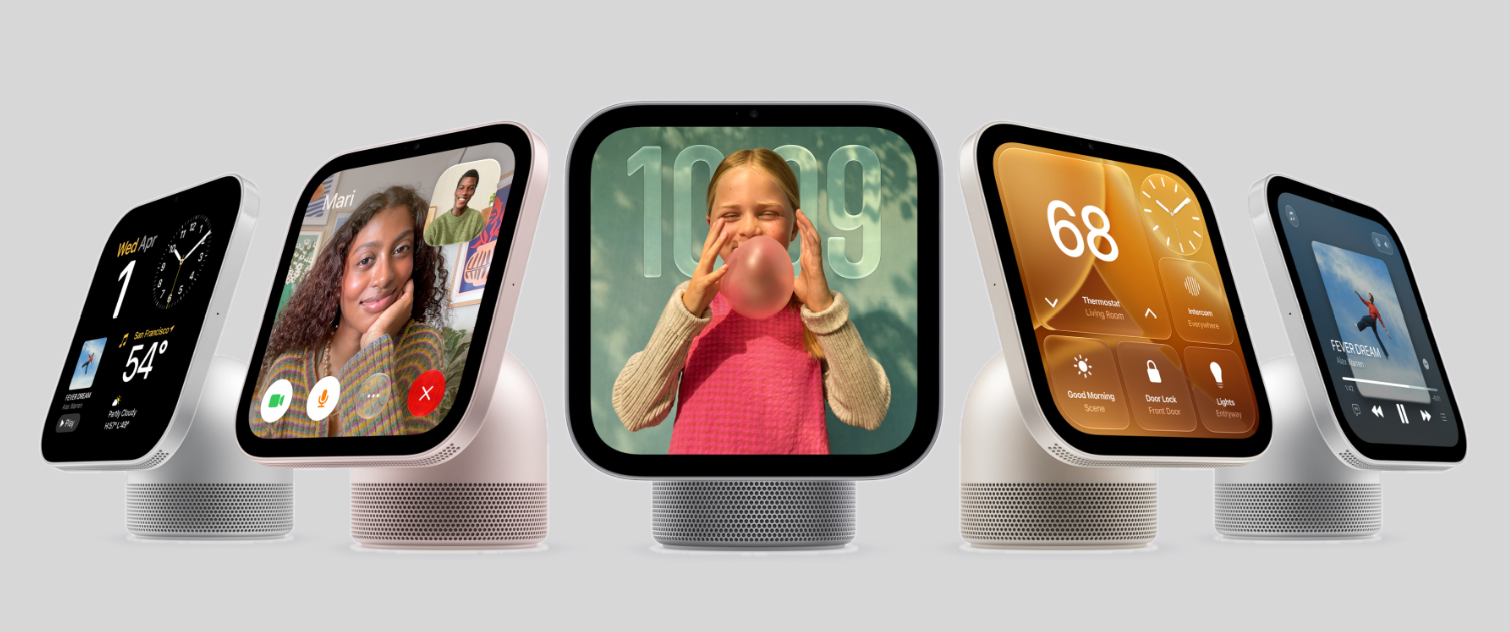
The centerpiece of Apple’s announcement is HomeView, a sleek device with a 7-inch screen that comes in two forms: a tabletop version with a built-in speaker base, and a wall-mounted version that blends into the home like a modern piece of décor. On the surface, it looks like another smart display, the kind of device that Amazon has been selling for years. But Apple is trying to differentiate HomeView by making it deeply personal. The device can recognize up to six different household members by their faces. When you walk up to it, it doesn’t just show a generic home screen; it switches to your messages, your calendar, your apps, and your photos. It’s a clever concept—a shared device that somehow feels individually tailored to whoever happens to be using it at that moment. For a family, that could mean Dad sees his work calendar when he checks it in the morning, while a teenager sees their social apps and a younger child sees a colorful, simplified interface. The magic underneath is Siri AI, Apple’s rebuilt version of its voice assistant, which the company describes as “profoundly more capable and conversational.” That’s a big claim, especially since Siri has lagged behind Alexa and Google Assistant for years in terms of natural language understanding and smart home control. But Apple is hoping that a fresh AI foundation, combined with the tight integration of its ecosystem, will make HomeView feel less like a gadget and more like a helpful companion. Pre-orders opened on the same day as the announcement, with the device scheduled to ship on November 13. The pricing, at $299, puts it in the same general range as Amazon’s higher-end Echo Show models, though it’s more expensive than many of Amazon’s cheaper offerings. Apple is clearly not trying to win on price. Instead, it’s betting that people who already own iPhones, iPads, and Macs will want a smart display that feels like a natural extension of those devices rather than an alien machine from another ecosystem. It’s a bet that could work, but it also means HomeView is not for everyone. You can’t even set it up without an iPhone or iPad, and the most interesting features are tied to Apple services. If you’re an Android user, this device is simply not for you. And if you live in the European Union, you won’t be able to buy it at all, because Siri AI isn’t available there yet, a sign of how regulatory and legal issues are shaping the rollout of AI features around the world.
3. The Smart Speaker Reality Check: Amazon Leads, Apple Lurks
To understand why Apple is making this move, you need to look at the numbers. According to recent data from Consumer Intelligence Research Partners, covering the twelve months ending in June, roughly two-thirds of U.S. smart speaker owners have an Amazon device. About a quarter have a Google device, and only about seven percent have an Apple device. That’s a stunning gap, especially considering how dominant Apple is in other categories like smartphones, tablets, and wearables. Apple’s share of the smart speaker market has hovered in the mid-single digits for years, and the HomePod line has never really caught fire. So why does Apple think it can succeed now? CIRP analysts Michael Levin and Josh Lowitz offered an interesting theory: Apple may not be trying to convert Amazon or Google customers at all. Instead, it might be going after the large number of people who don’t own any smart speaker in the first place. Their research found that only 57 percent of recent Apple buyers have a smart speaker of any kind, which means a significant chunk of Apple’s most loyal customers have simply never bought one. Those are the people HomeView is designed for. It’s a smarter, more personal, more Apple-centric alternative to the generic smart speakers that have been on the market for years. Instead of fighting Amazon for the same customers, Apple is trying to create a new category of buyers: people who were never interested in Alexa, but who might be interested in a device that works seamlessly with their iPhone and feels like a natural part of their Apple setup. That strategy makes sense, but it has limits. For one thing, HomeView’s most advanced AI features are not available in the European Union, which cuts off a major market. And there’s another catch: Apple is already hinting that its AI won’t stay free forever. A footnote in the HomeView announcement says that certain Apple Intelligence features that rely on server-side models are subject to daily limits, and that expanded access will be “available for a fee in the future.” That’s a significant departure from the old model, where you bought the hardware and the software was free. Amazon, by contrast, offers Alexa+ free with a Prime membership, or for $19.99 a month on its own. Apple has not announced pricing for its AI subscription yet, but the fact that it’s coming is a signal that the future of smart home assistants may be less about selling devices and more about selling ongoing services.
4. Apple’s Home Security Lineup: Taking on Ring With Help From LG
Perhaps the most significant part of Apple’s announcement is its entry into home security, a category that Amazon has dominated through Ring. Apple’s new Home Collection, designed in collaboration with LG Electronics and Schneider Electric, includes a $249.95 video doorbell from LG with two cameras, a set of indoor, outdoor, and floodlight cameras priced from $199.95 to $399.95, and a $349.95 smart deadbolt that can unlock automatically as its owner approaches. The accessories are scheduled for release starting in December, with some models arriving in early 2027. This is Apple’s first serious foray into the core categories that made Ring famous, and it’s a direct challenge to Amazon’s strategy of using security products to lock people into its ecosystem. One of the most interesting details is Apple’s approach to subscriptions. Camera video history requires an iCloud+ storage plan, but Apple says there is no separate camera subscription. That’s a notable difference from Ring, which charges for a Ring Protect plan to get video recording and other features. For people who are already paying for iCloud+, the Apple system could end up being more affordable and simpler. Apple’s retail stores will also offer installation by ADT for an extra charge, which gives the company a way to reach people who don’t want to install devices themselves. The LG smart lock is particularly interesting because it uses ultra-wideband technology to detect when the owner is approaching and unlock automatically. That’s the same kind of technology Apple uses in its digital car keys and AirTags, and it represents a different philosophy from traditional smart locks, which usually require you to tap a phone, enter a code, or use an app. The lock also includes a backup key slot, which might seem old-fashioned but is actually a practical concession to the reality that batteries die and technology fails. The timing is no coincidence. LG’s lock was announced just a week after Ring unveiled its first smart lock, a $249 deadbolt with no keyhole at all. Instead, it has a hand-turned dial that can revive a dead battery in an emergency. The Ring lock is due in the first quarter of next year, while LG’s lock will be available starting in December. So the two companies are racing to convince consumers that their approach to smart home security is the right one, and the differences in design philosophy are stark.
5. The Smart Lock Wars: Keys, No Keys, and the Battle Over Convenience
The contrast between Apple’s LG-made lock and Ring’s first smart lock reveals a lot about how these two tech giants view the future of home security. Ring’s lock, designed by the company that Jamie Siminoff founded before Amazon acquired it, is a striking piece of industrial design. It has no keyhole at all, which means there is no way to pick it and no way to use a traditional key. If the battery dies, you use a hand-turned dial on the outside to power the lock just enough to get in. It’s a bold statement that keys are obsolete. Siminoff, who remains the face of Ring, put it bluntly: “If you have to have a key, it’s like, well, why have a smart lock?” That’s a fair question, and it gets to the heart of the smart lock value proposition. A smart lock should make your life easier, not just replace a traditional key with a smartphone app. If you still need to carry a key as a backup, you haven’t really eliminated the thing that a smart lock is supposed to eliminate. Apple, through LG, seems to have a different philosophy. The LG lock includes a backup key slot, which means you can always open your door the old-fashioned way if the technology fails. That might seem less futuristic, but it’s also more practical for people who are nervous about relying entirely on electronics to secure their home. It’s a classic Apple approach: make the technology invisible and easy to use, but don’t force people to trust it completely. The battle between these two designs is really a battle over what smart home technology is for. Ring wants to push forward aggressively, betting that people will embrace a future where keys simply don’t exist. Apple is more cautious, betting that people want convenience without giving up the safety net of familiar technology. Both approaches have merit, and the market will ultimately decide. But one thing is clear: the smart lock category is finally getting the kind of attention and innovation that used to be reserved for smartphones and laptops. With Apple now in the game, and Amazon doubling down with Ring, consumers will have more choices than ever before. And for people who have been waiting for smart home technology to mature, that’s a good thing.
6. What It All Means: Ecosystem Wars, Paid AI, and the Future of the Smart Home
Taken together, Apple’s announcement is a clear signal that the smart home has become the next great battleground in the tech industry. For years, Apple seemed content to let Amazon and Google fight over smart speakers, while it focused on its core devices. No longer. The HomeView, the new HomePods, the Apple TV, and the LG-powered security lineup represent a coordinated effort to build a complete smart home ecosystem that is deeply integrated with Apple’s existing services. The strategy is classic Apple: don’t compete on price, don’t try to be everything to everyone, and don’t rush into a market until you have a product that feels polished and differentiated. Instead, leverage the trust and loyalty of existing Apple customers, and make the experience so seamless that leaving the ecosystem becomes unthinkable. Amazon’s move into premium tablets, meanwhile, shows that the competition is not just about hardware; it’s about controlling the interfaces through which we interact with our homes. Alexa is Amazon’s wedge into the living room, just as Siri is Apple’s. But the most intriguing development is the growing importance of AI subscriptions. Apple’s hint that some Apple Intelligence features will eventually cost money suggests that the future of smart assistants is not in selling hardware at a profit, but in monetizing the AI services that power them. That could change the economics of the smart home in profound ways. Consumers might soon find themselves choosing not just between devices, but between monthly subscriptions to different AI ecosystems. Amazon already has Alexa+, and Apple is clearly planning something similar. Google, no doubt, is watching carefully. For now, the immediate winners are likely to be Apple fans who have been waiting for a more personal, more private smart home experience. The HomeView, with its face recognition and deep integration with Apple services, offers something that Amazon and Google have never quite delivered: a shared device that feels individual. But the bigger story is the long game. Apple is playing for the same thing it always plays for—ownership of the customer relationship. And in the smart home, that relationship is about to become more intimate, more intelligent, and more valuable than ever. The only question is whether consumers will embrace the future that Apple is offering, or whether Amazon’s head start and broader reach will prove too strong to overcome. Either way, the next few years are going to be very interesting for anyone who cares about technology, privacy, and the place where both meet the place we call home.