



Paragraph 1
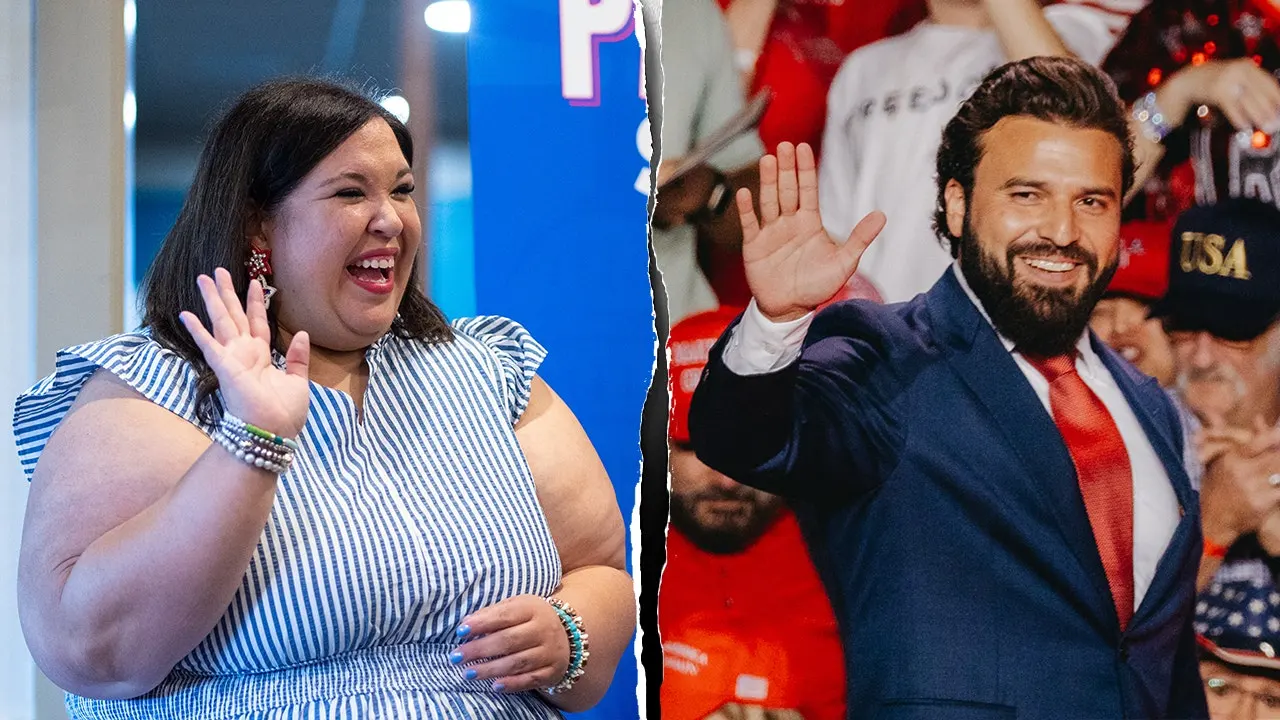
Campaign finance reports usually live in the dusty corners of the internet, read by watchdogs, opposition researchers, and the occasional insomniac who enjoys flipping through PDFs. But every once in a while, a line item jumps off the page and becomes a story of its own, because underneath all the abbreviations and legal jargon, campaigns are not really spreadsheets. They are networks of human beings who need to eat, drink, gather, and feel appreciated. That is exactly where Katy Padilla Stout, the Democratic nominee in Texas’s 23rd Congressional District, now finds herself. According to federal election records cited in a recent RedState report, her campaign spent $4,338.14 across five transactions in March and April. The purchases were not the usual campaign expenses like television ads, digital strategy, or voter-data software. They included $675 in cookies, $1,289.22 at Total Wine, and $2,373.92 at Las Guitarras Cocina Mexicana, a beloved San Antonio spot known for its lively atmosphere, long happy hours, and sizzling plates of Mexican food. On March 30, a payment with the stated purpose “COOKIES FOR EVENT” went out; on April 21 and 22, two payments for “BEER AND WINE” followed; and then came the restaurant tabs on April 27 and 28. It is, in short, a paper trail of a few weeks in the life of a campaign that was hungry, thirsty, and perhaps a little generous. When the expenses surfaced, the immediate reaction was predictable: cheap jokes and sharper attacks. But the Stout campaign was not defensive. In a statement to Fox News Digital, she said the disbursements were for campaign and fundraising events attended by supporters. She leaned into the Texas symbolism with a smile, noting that sugar cookies, especially Texas-shaped ones, hold a special place in local culture, and that the cookies came from a bakery because she believes in supporting small businesses. The image of a congressional candidate buying Texas-shaped cookies from a local bakery is either a charming piece of political folklore or a case of astonishing tone-deafness, depending on one’s vantage point. What the filings cannot do is tell the rest of the story: whether any of the purchases were improper, whether they were for personal use, or how many people actually attended the events. They simply show that a campaign made choices, and now those choices have become part of a much larger conversation.
Paragraph 2
The line-item detail has become the basis of a sustained attack by Republican nominee Brandon Herrera. Herrera, a firearms manufacturer and online personality who has adopted “Let’s Go Brandon” as his campaign slogan, is no stranger to internet controversy himself, but he has tried to turn Stout’s spending into an ethics issue. His opposition website, The Real Katy Stout, devotes a section to the cookie order under the catchy heading “Cookie gate.” There, the $675 payment is displayed prominently, along with the stated purpose in all-caps. The website identifies the payee as Denise Gamboa Zelle and characterizes the expense as a campaign event expenditure, a detail that adds a layer of mystery because it sounds less like a catering company and more like an individual receiving a person-to-person payment. The site also uses the opportunity to hit Stout on immigration, taxes, and other issues, making what might have been a strange but forgettable expense line into a centerpiece of opposition research. Yet in an era when every dollar spent by a politician is fair game, the lack of context does not stop the outrage. Was the Total Wine purchase intended for a staff party, a donor reception, or perhaps an election night celebration that never happened? The records provide no answer. Were the beer and wine bought at noon or in the evening? The filings do not say. Did the campaign reimburse itself? That too is untold. The records only show that the money left the campaign account, which in a heated race is sometimes enough to create the impression of a scandal. It is worth remembering that campaigns across the country routinely spend money on food and drinks for volunteers, donors, and staff members. It is not illegal, and it is not even unusual. The optics, however, can be awkward, especially when the purchases happen to be beer, wine, and cookies, rather than the more mundane sandwiches and coffee served at campaign headquarters. In a district where voters are already skeptical of politicians, a report like this reinforces the feeling that some campaigns treat donor money like a personal credit card, even if no actual abuse occurred.
Paragraph 3
The dispute over taco dinners and wine bottles might be dismissed as a sideshow, but it takes place against a consequential backdrop. Texas’s 23rd Congressional District is one of the largest in the country, covering vast stretches of West Texas and the borderlands. It begins on the outskirts of San Antonio and runs westward for hundreds of miles, skirting the Rio Grande and taking in ranches, military towns, small border communities, and miles of desert landscape where the realities of migration are part of daily life. It is a district where the border is not an abstraction, and voters are used to candidates descending with promises about walls, agents, fentanyl, and the economy. The seat became vacant earlier this year when former Republican Rep. Tony Gonzales resigned after acknowledging an affair with a staffer, a stunning fall from office that left many constituents cynical about the political class. Into that vacuum stepped two unconventional candidates. Stout is a former teacher and child welfare attorney who has centered her campaign on affordability and corruption, promising to be a watchdog in Washington and to fight for families struggling with rising costs. Herrera is a firearms manufacturer and online content creator who has turned his internet fame into a political movement, campaigning on border law enforcement, lower taxes, and Second Amendment protections. His slogan, “Let’s Go Brandon,” is not just a catchphrase; it is a middle finger to the establishment, and his online following loves him for it. The district itself is a microcosm of American political tension, with rural conservative areas, urban liberal pockets, and suburbs that swing unpredictably. The winner will represent one of the largest geographic constituencies in the country, but the campaigns have often felt less like a high-minded debate over policy and more like a cable news argument. The spending story gives Herrera a way to paint Stout as someone who cannot be trusted with money, while Stout and her allies see the attacks as desperate mudslinging from an opponent who would rather make memes than answer for his own online history.
Paragraph 4
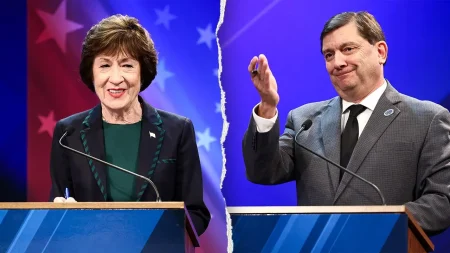
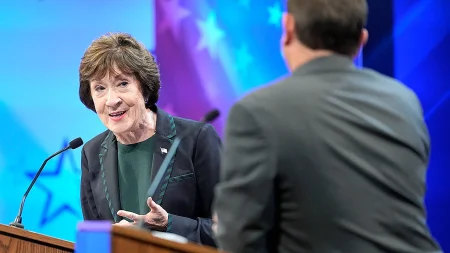
All of these currents converged during Tuesday’s televised debate in San Antonio, hosted by WOAI/KABB. The candidates sparred over gun rights, immigration, and the cost of living, but the moment that will be remembered came when Stout tried to portray Herrera’s online fame as a character flaw. Herrera has built a huge following by making irreverent videos about firearms, history, and politics, often with a wink and a weapon. In a heated exchange, Stout said, “He made millions of dollars after making jokes online, making fun of Nazis, making fun of all of these things that we know he does not need to be doing.” As soon as the words left her mouth, it was clear she had handed Herrera something better than a policy attack. He turned to her and replied, deadpan, “And here I thought making fun of Nazis was a good thing.” The line landed hard, and the audience, even if only metaphorically, seemed to gasp. Stout, visibly aware of the slip, later apologized during her closing remarks. “I apologize, I did misspeak,” she said. Then she tried again, explaining that Herrera chooses to goose-step on YouTube for clickbait and money so that he can promote that type of ideology, and that he chooses to shame women. The message was clearer, but the damage to her original phrasing was already done; the exchange had become another viral slice of election-season content. In a race that is already chaotic, the moment reinforced the impression of two candidates who are not polished standard-bearers but unpredictable street fighters, each capable of making a mistake and turning it into a PR disaster. For Herrera, the debate was a small victory, because he managed to make Stout the one who seemed confused about whether mocking Nazis is acceptable. For Stout, it was a frustrating reminder that a single clumsy sentence can undo weeks of careful messaging.
Paragraph 5
After the debate, Stout took to a written statement to Fox News Digital to correct the record with the kind of detail that is hard to compress into a 30-second exchange on a debate stage. “Mocking Nazis is fine, and that is not what I objected to, nor is that what my opponent does,” she said. “I object to content that trivializes veteran suicide, rape, child murder, women’s bodies and the Holocaust, the type of content he churns out. You can hear his disgusting commentary straight from his own mouth at HeReallySaidThat.com.” She went on to give examples, citing a video posted May 24, 2022, in which Herrera goose-steps to the German song “Erika” while showing off an MP-40 submachine gun. She also pointed to a June 23, 2020 video in which he says “for the fatherland” before firing a World War II-era Nazi STG-44 rifle, calling it “like a religious experience.” Stout rejected the notion that these are harmless jokes, arguing that the “I’m only joking” defense is a familiar tactic among neo-Nazi and antisemitic content creators seeking to normalize their ideas online. She further noted that Herrera’s content has drawn bipartisan condemnation, including from the Republican Jewish Coalition, which, according to Stout, called him “a goose-stepping extremist who pals around with online Nazis.” That is a heavy charge for any candidate, and it shifts the conversation from a cookie bill to something far more unsettling. Herrera’s campaign did not immediately respond to Fox News Digital’s request for comment, and he has not publicly explained the videos in question beyond describing them as jokes. But in the closing weeks of the race, Stout’s team is hoping that voters troubled by the material will search for it themselves on the website she cited. Whether voters will see the videos as evidence of extremism or as another example of edgy internet humor is an open question, but the controversy has added another sharp edge to an already bitter contest.
Paragraph 6
Whether the controversy over a $4,000 line item will ripple through the district is uncertain. Campaign finance reports have a way of being more interesting to journalists and opponents than to actual voters, who are often more concerned with their own gas bills and grocery prices than with a candidate’s cookie order. But in a race this close, every misstep gets magnified, and every detail becomes a metaphor. Stout’s spending shows the often-boring reality of field operations: volunteers are hungry, donors expect hospitality, and local businesses want the chance to provide for a campaign. Herrera’s attacks show the no-holds-barred nature of modern negative campaigning, where even a small purchase can become a “gate.” The debate stumble shows how easily a candidate can be knocked off message, and the subsequent apology shows the value of humility, at least until the next outrage cycle begins. Both candidates bring unusual stories to the ballot: one is a former teacher who entered politics to fight corruption, and the other is a gun-toting internet star who wants to disrupt the establishment. The 23rd District, stretching from San Antonio toward El Paso, encompasses a broad swath of American life, including military bases, border towns, desert highways, and suburban subdivisions. Its voters will choose between two very different definitions of leadership. Early voting begins Oct. 19, and Election Day is Nov. 3. By then, the cookie aisle may be empty and the debate clips old, but the decision will matter for a long time. In the meantime, both campaigns will continue to do what campaigns do: organize, argue, apologize, raise money, and buy the next round of coffee, food, and yes, maybe even cookies for the next event. Politics, after all, is a human business, and human beings need nourishment to keep fighting for the causes they believe in.