

1. A Presidential Pitch That Turned Heads
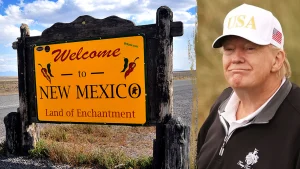
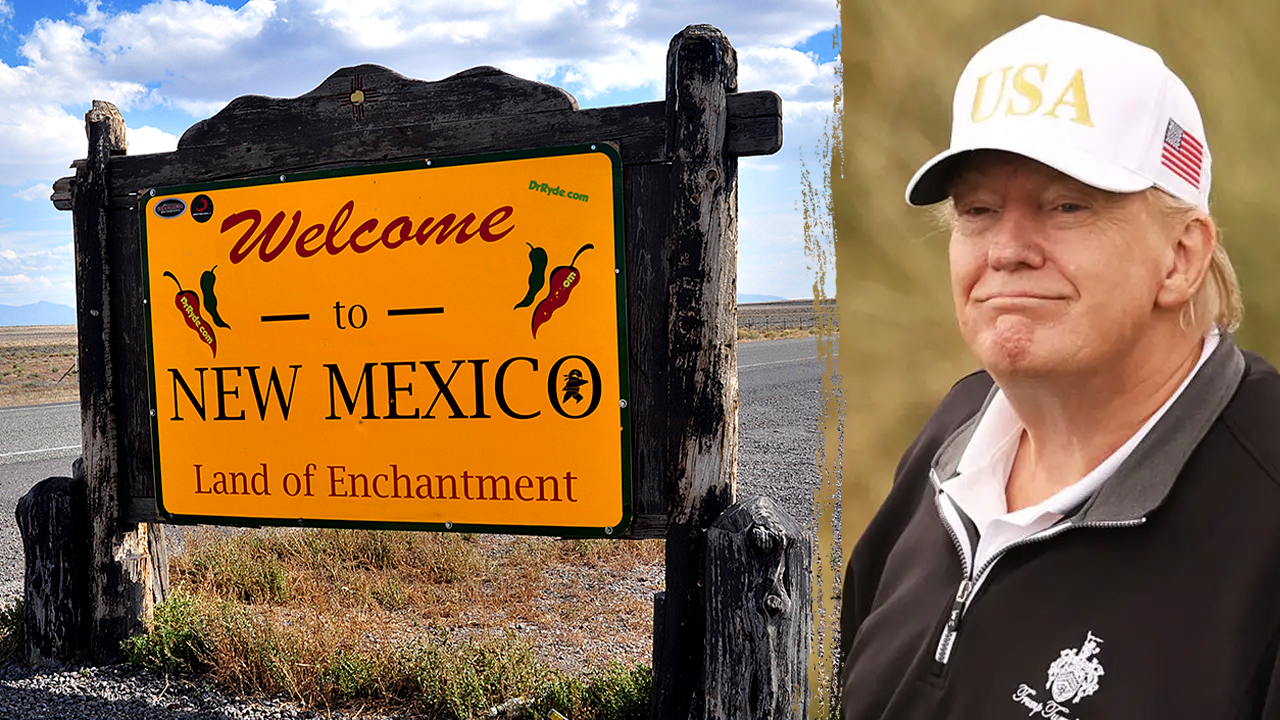
President Donald Trump has once again set social media ablaze with a proposal that is equal parts provocative and unorthodox: renaming New Mexico to “New America.” In a Truth Social post that seemed to arrive with the force of a headline-grabbing campaign rally, Trump made his case to the state’s residents with the kind of blunt enthusiasm that has become his trademark. “New Mexico should immediately change its name to New America. We are not Mexico, we are the United States of America!” he wrote. But the president didn’t stop there. He reached for a language of transformation, claiming the new name would “add great value and prestige to the State!” and even went so far as to suggest that “Home Values and Incomes would rise, and you would be even prouder while saluting our beautiful American Flag!” It’s the kind of promise that sounds too good to be true to skeptics, and yet undeniably compelling to those who embrace symbolism as a form of renewal. Worse still, for his critics, Trump tied the proposal to a familiar grievance, suggesting that perhaps even the “Crooked Elections” for which New Mexico is supposedly known would “become honest again” under the new moniker. It was a rhetorical grenade—one that mixes hardline patriotism with a swipe at the state’s political integrity, all in fewer than 100 words. The post didn’t include any evidence for the election claim, nor did it explain how a simple name change could raise property values or increase wages. But in the world of presidential messaging, the absence of data rarely dulls the impact of a memorable idea. What remains is a vivid, headline-grabbing proposal that has ignited conversations from living rooms in Albuquerque to television studios in Washington, D.C.
2. A Familiar Suggestion Wrapped in New Packaging
For those who follow Trump’s rhetoric closely, the latest push for “New America” had a distinct ring of déjà vu. Just a month earlier, the president had shared a map on social media with the word “Mexico” crossed out in red pen and replaced with “America,” a visual gesture that felt more like editorial cartooning than formal policy. The White House amplified that post on its official X account, signaling that the idea was not merely a stray thought but something the administration was willing to publicly endorse. Trump also floated the concept during remarks at the RNC Midterm Convention in September, where he made the case with theatrical charm. “You have a neighboring state, New Mexico. We think it should be called New America,” he told the crowd. “I’ll tell you, the people love the idea.” He then added a caveat that sounded both defiant and self-aware: “I don’t know about the radical left. I’m sure it doesn’t like it, but the people love it.” That framing—casting himself as the voice of ordinary folks against an out-of-touch liberal establishment—is central to his appeal. It doesn’t matter that no formal poll has ever been taken on renaming the state. What matters is the emotional truth of the claim to his supporters. The repetition of the idea, from social media to convention stages, suggests that Trump sees it as a winning message: a simple, patriotic, uncomplicated remedy for a complicated world. It also serves as a test balloon for how far national identity politics can stretch when framed as a matter of pride rather than practicality.
3. The Governor’s Bridge Too Far
If Trump expected New Mexico’s leaders to embrace his rebranding with open arms, he was quickly disabused of that notion. Democratic Governor Michelle Lujan Grisham didn’t mince words in her response, telling Fox News Digital that the state’s name “isn’t up for debate—it’s been ours since before the United States existed.” That declaration is not just rhetorical flourish; it’s historically grounded. New Mexico’s name predates the United States itself, rooted in Spanish colonial naming conventions from the 16th century and carried through Mexican rule before the territory became part of the U.S. after the Mexican-American War. For many residents, the name is a badge of honor that honors a unique blend of Indigenous, Spanish, Mexican, and American heritage—not a mispronunciation or an error to be corrected. Lujan Grisham also took a sharp jab at the president’s priorities, accusing the White House of “wasting time coloring on maps” while her administration focuses on “child care, education, health care and housing.” In a single sentence, she painted a contrast between symbolic gestures and substantive governance, between politics as performance and politics as service. She was joined by many local voices, historians, and cultural commentators who pointed out that renaming a state isn’t like renaming a sports stadium. It’s a deeply personal matter for the people who live there, tied up in identity, memory, and pride. And, as the state constitution makes clear, the matter isn’t open to presidential decree. Article I of New Mexico’s constitution states plainly, “The name of this state is New Mexico.” Changing it would require a constitutional amendment, a supermajority of lawmakers, and presumably a political will that simply doesn’t exist in Santa Fe.
4. The Broader Canvas of Renaming
Trump’s New America proposal didn’t emerge in a vacuum. It’s part of a broader fascination with renaming geographic landmarks as a way to assert national pride and cultural dominance. Shortly before the New Mexico push, Trump had moved to rename Lake Ontario—one of the Great Lakes—to “Lake America” for federal use, a decision that drew eye rolls from Canadian officials and pointed criticism from New York Governor Kathy Hochul. Likewise, his earlier renaming of the Gulf of Mexico to the “Gulf of America” was framed as a victory for American exceptionalism, even before it was officially adopted in some federal and cartographic contexts. These efforts share a common thread: they treat names as symbolic battlefields where the nation’s identity is fought over and redefined. For Trump, renaming isn’t merely administrative—it’s a form of theater that tells a story about strength, sovereignty, and pride. It’s a way to speak directly to a base that feels alienated by internationalism, multiculturalism, and the gravitational pull of global norms. By proposing to rename a state, a lake, and a gulf, he taps into a deep vein of nostalgia for a simpler, more muscular America. Yet critics see a different narrative. To them, these proposals are distractions—cleverly crafted headlines that divert attention from more complex issues like inflation, border policy, election security, and international diplomacy. They argue that renaming a geographical feature doesn’t solve a single problem and can feel like a cheap substitute for action. Still, one cannot deny the power of a name. Thinkers have long recognized that to control the language is to control the story. In that sense, Trump’s renaming campaign is not trivial; it’s a deliberate attempt to shape how Americans see themselves and their place in the world.
5. What Would “New America” Actually Change?
It’s tempting to dismiss the entire idea as political fantasy, but doing so ignores the real questions it raises. If New Mexico were renamed New America, what would actually change? Would a homeowner in Santa Fe suddenly find their property more valuable? Would a teacher in Las Cruces be paid more? Would lines at the grocery store move faster? Almost certainly not. Economic development is driven by infrastructure, education, labor markets, and investment—not by words on a map. Likewise, election integrity is a matter of voting systems, security protocols, and civic trust, not nomenclature. Yet Trump’s suggestion that a name change could lift incomes and purify elections is not entirely illogical in the realm of social psychology. Names matter because they shape perception. A state called “New America” might, at least in theory, attract certain businesses or tourists looking for a more patriotic brand. It might also give residents a stronger sense of allegiance to the union. But those benefits are speculative, unmeasured, and deeply contested. And there is a real cost to changing a name with centuries of history behind it. Erasing the word “Mexico” would be seen by many as an act of cultural erasure—a denial of the rich Indigenous and Hispanic heritage that makes New Mexico unlike any other state in the union. The very elements that make the state distinctive—its adobe architecture, its fusion of culinary traditions, its Native pueblos and Spanish colonial legacies—are all tied to the moniker “New Mexico.” To rename the state would be to rewrite its soul. And that is why, despite the president’s confident claims, most residents seem far more interested in keeping the name they have than in trading it for a slogan that feels imported from a marketing department rather than born of lived experience.
6. A Namesake Debate as Old as the Nation
In the end, the “New America” proposal is less about geography and more about the ongoing argument over what it means to be American. Renaming initiatives are not new in the United States—places have been renamed before, from mountains to military bases, as the country has wrestled with its past and present. But there is something uniquely evocative about Trump’s desire to scrub “Mexico” from the map. It speaks to a vision of the nation that is confident, assertive, and impatient with ambiguity. For his supporters, it may feel like a long-overdue correction, a way of saying that American identity should be unmistakable, unapologetic, and unchallenged. For his detractors, it feels like a dangerous simplification of a complex heritage, a refusal to acknowledge the many threads that weave together the fabric of the country. The dispute over the name is, at its core, a dispute over memory. Do we celebrate the United States as a melting pot that absorbed diverse cultures, or do we see it as a fortress that must constantly defend its borders—linguistic, cultural, and geographic? The answer may never be fully settled. But in the meantime, the debate itself is a reminder that language is never neutral. Every name carries with it centuries of stories, struggles, and triumphs. Whether we call it New Mexico or New America, the place itself remains the same—a land of mountains, deserts, and resilient people. The only question is whose story we choose to tell. And for now, the people of New Mexico have made it clear that their story is their own, thank you very much, and no red pen from Washington can rewrite it.