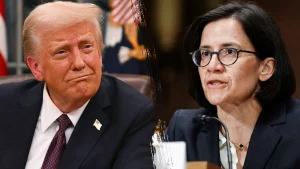



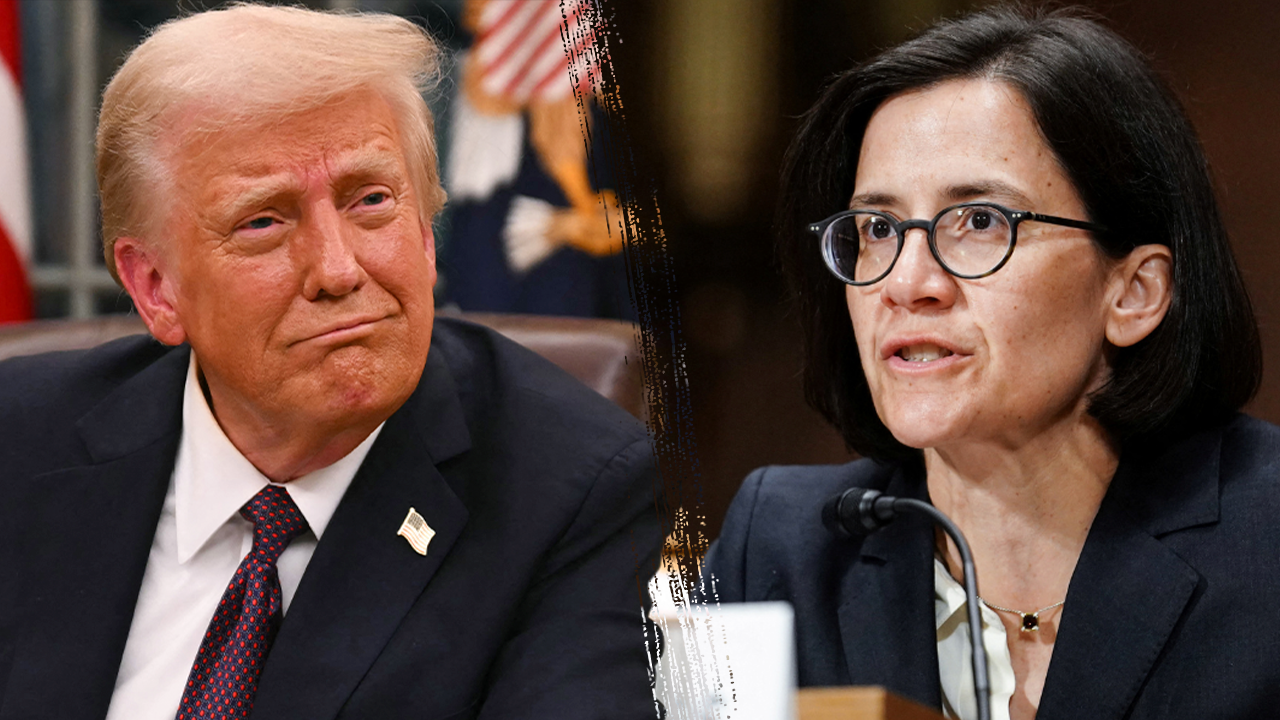
It was a dramatic turn in a Washington courtroom: after nearly seven hours of tense arguments, Judge Ana Reyes suddenly backed away from the very demand that had set the room on edge. Appointed by President Joe Biden, Reyes had been locked in a bitter dispute with the Trump administration over the removal of hundreds of trees from a federally owned golf course in the nation’s capital. But by the end of Monday’s marathon hearing, she announced she was dropping her insistence that Justice Department attorneys identify themselves on a controversial court filing. “Late breaking news,” Reyes said. “I’m going to withdraw request that DOJ refile yesterday’s brief with identification of who signed it. We’ve all got better things to spend our time on.” That moment capped an extraordinary day in which President Donald Trump had already called Reyes a “crazed lunatic” on social media, and in which the judge had invoked a federal rule that could have exposed government lawyers to sanctions. The reversal was the latest twist in a case that has become a flashpoint for tensions between the judiciary and the executive branch, blending politics, property, and the power of the presidency in an unusually personal confrontation.
At the center of the fight is East Potomac Golf Links, a public course in Washington, D.C., that Trump wants to transform into a “world-class, U.S. Open-caliber” destination. The legal battle began in February, when a lawsuit was filed challenging the administration’s plans for the course. But tensions boiled over earlier this month when the National Park Service removed roughly 430 trees from the property over a single weekend. The Interior Department insisted the removals were part of a long-standing effort to restore the course’s historic design and had nothing to do with Trump’s proposed overhaul. Even though the action did not violate any existing court order, Reyes was not satisfied. She imposed a temporary restraining order barring further tree removals, and during an October 12 hearing she was described as “screaming” at government attorneys. That aggressive approach prompted Associate Attorney General Stanley Woodward Jr. to seek Reyes’ removal from the case, accusing her of bias and “open hostility” toward the Trump administration. Woodward also joined Trump in demanding that the court release audio recordings of the hearings, arguing that the tapes would show just how far outside normal judicial behavior Reyes had gone.
The conflict escalated further over the weekend, with Trump taking to Truth Social to weigh in directly on the dispute. On Monday, hours before the hearing began, Trump posted that Reyes was a “crazed lunatic” whose “courthouse tapes will reveal, may be insane?” He claimed the tapes had been blocked by the judge and insisted that the administration had every “right” to turn the course into a “great, safe, and prestigious” golf course. “Work is scheduled to begin IMMEDIATELY!” Trump wrote, adding that the finished product would be “World Class” and would bring income and prestige back to D.C. That was not all. Over the weekend, Trump had also posted that Interior Secretary Doug Burgum and famed golf course architect Tom Fazio had developed a plan to revamp East Potomac Golf Links and that work would begin on November 15. Those statements caught the attention of Reyes, who ordered the Justice Department to file a response by 8 p.m. Sunday. The judge said Trump’s characterization conflicted with a previous filing in which the government had stated there was “no agency action” related to Trump’s golf course plan. The filing that followed was signed only by Woodward, and that single signature quickly became the flashpoint for Monday’s hearing.
When the hearing opened, Reyes demanded to know which attorneys had actually worked on the Sunday filing. She asked the lawyers in the room to “raise your hand” if they would be willing to sign their names to the brief. Woodward pushed back, calling the request “not an appropriate” one. Reyes then invoked Rule 11 of the Federal Rules of Civil Procedure, which requires attorneys to certify that their filings are grounded in fact and law, and which allows courts to impose sanctions for violations. She ordered the attorneys to come to the podium and sign the filing. They refused. Reyes initially gave them a 3 p.m. deadline to comply, but later extended it to noon Tuesday and offered a compromise: instead of requiring signatures, she would accept having their names listed on the brief. In the end, she abandoned the demand altogether. The standoff underscored a growing friction between the bench and the Department of Justice, where attorneys are increasingly hesitant to put their names on politically charged filings for fear of professional repercussions. The judge’s reversal, while defusing the immediate crisis, left observers wondering whether her handling of the case had gone too far or whether she was right to press for accountability from the government’s lawyers.
Legal observers quickly weighed in on the significance of the signature fight. Abhishek Kambli, a former federal prosecutor, explained on X that high-level DOJ appointees sometimes sign briefs as a matter of leadership. “If there is something that is likely to be contentious with a judge, a DOJ leader signs their name on the brief so that any issues someone has with the brief is directed at them rather than lower level attorneys,” Kambli wrote. “Regardless, it goes without saying that a decision such as this should not be something a judge is inquiring into.” Others framed the issue in more partisan terms. Rachel Boulvard, vice president of programs at the Conservative Partnership Institute, argued that DOJ line attorneys increasingly avoid signing briefs because of “Dem lawfare,” saying Democrats have gone after the bar licenses of young DOJ attorneys who are simply doing their jobs. These reactions highlighted a broader shift in how government lawyers view their own exposure in high-profile cases. What was once a routine procedural question—who wrote and signed a legal filing—has become a politically charged issue, with judges, activists, and officials on all sides using the legal system to make broader points about accountability, loyalty, and the rule of law. For the attorneys involved, the stakes were personal: putting their names on a filing could mean becoming the target of harassment, disciplinary complaints, or even efforts to strip them of their licenses to practice law.
Reyes is no stranger to controversy. Appointed by Biden in 2023, she had already faced a judicial-misconduct complaint over her handling of litigation involving Trump’s restrictions on transgender individuals serving in the military. During a February 2025 hearing, Reyes questioned a Trump administration attorney about what Jesus Christ would say about policies excluding transgender people from homeless shelters. That unusual line of questioning drew sharp criticism from then-DOJ Chief of Staff Chad Mizelle, who filed a formal complaint with the D.C. Circuit accusing Reyes of “hostile and egregious misconduct” and potential bias. The complaint was ultimately dismissed, with the circuit’s chief judge concluding that the proper way to challenge Reyes’ conduct was through a motion to recuse, not a misconduct complaint. That earlier episode set the stage for the current confrontation, which now includes demands for audio recordings, accusations of insanity, and a judge who appeared to back down after a marathon hearing. The golf course case, on its surface, is about trees and turf. But it has become a proxy for a much larger struggle over the limits of judicial power, the autonomy of the executive branch, and the increasingly personal nature of political-legal conflict in Washington. With work on the golf course still halted, at least for now, and with calls for transparency growing louder, the next chapter in this saga is likely to come quickly. For now, the image of a federal judge reversing course after seven hours of heated argument—and a president calling her a lunatic from his social media account—captures the strange, volatile atmosphere surrounding the American legal system today.