


Paragraph 1: The Surprise That Broke the Political Mold
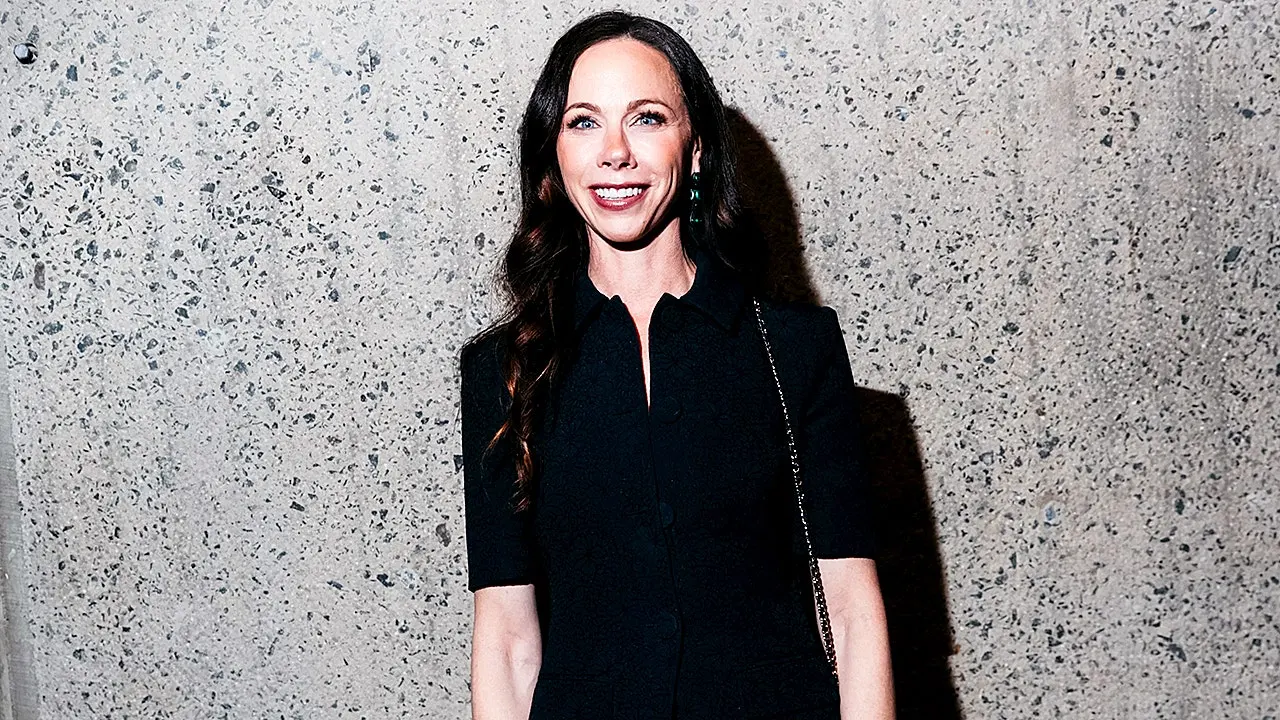
In the often-predictable world of campaign fundraising, where donors tend to stick to their partisan corners and every check is carefully calculated for maximum political impact, a quiet but remarkable ripple has emerged from the Texas Senate race. Barbara Bush, the 44-year-old daughter of former President George W. Bush and the twin sister of television host Jenna Bush Hager, has made a small but symbolically loaded donation to a political action committee supporting James Talarico, the Democratic candidate for U.S. Senate in Texas. The donation, just $2,500, was confirmed through Federal Election Commission filings and went to the Lone Star Rising PAC, which has become the primary outside spending vehicle for Talarico’s campaign. At first glance, the amount is modest—pocket change in the world of megadonors and super PACs, especially when compared to the $150,000 contribution from Eagles co-founder Don Henley. But the identity of the donor and the very public nature of the gift have turned a routine campaign finance report into a talking point across the political spectrum. For a state that has not elected a Democrat to statewide office in decades, and for a party that is fighting to hold its narrow Senate majority, this donation is more than a footnote. It is a glimpse into how the Bush family, once the beating heart of traditional Republicanism, is navigating a political landscape now defined by Donald Trump—and how even small gestures can carry outsize meaning in a polarized era.
Paragraph 2: The Candidate and the Context
To understand why Barbara Bush’s donation matters, one must first understand James Talarico and the strange, high-wire act of his campaign. Talarico is a young, progressive-leaning Democrat from Round Rock, Texas, who has made a name for himself as a public school teacher, a former state representative, and a fiery critic of corporate influence in politics. He has lambasted big money in elections, decried the role of billionaires and dark money groups, and spoken passionately about a political system rigged in favor of the wealthy. In his race against Republican Senator John Cornyn—and a contentious Republican primary challenge from Texas Attorney General Ken Paxton—Talarico has positioned himself as a populist champion of working families, educators, and everyday Texans. He frequently argues that the real divide in America is not between left and right, but between top and bottom, and he has called out both parties for cozying up to the donor class. Yet running for Senate in a state as expensive and sprawling as Texas requires enormous financial resources. Talarico has acknowledged this tension openly, saying he will not “unilaterally disarm” while Republicans pour millions into political action committees. That pragmatic admission has made the Barbara Bush donation all the more striking: here is a Democratic candidate who rails against the influence of dynastic wealth, accepting support from the granddaughter of a president and the daughter of another president. It is not hypocrisy, perhaps, but it is a complicated reality—one that Talarico’s critics and supporters alike have noticed.
Paragraph 3: Why Barbara Bush’s Open Gift Matters
The significance of the donation goes beyond the check itself. In the world of political giving, anonymity is a luxury that many wealthy donors cherish. Contributions to certain nonprofit groups, known as 501(c)(4) organizations, can be made without any public disclosure, allowing donors to shape elections from the shadows. Barbara Bush, however, did not choose that route. She gave directly to a political action committee, which means her name, her address in Brooklyn, New York, and her contribution are all a matter of public record. As Texas campaign finance expert Andrew Cates noted, this transparency matters. She could have hidden her involvement, but she did not. That decision suggests a deliberate willingness to be associated with Talarico and his campaign, even if the amount is relatively small. It also carries a deeply personal and familial weight. The Bush family’s relationship with Donald Trump has been fraught since the 2016 campaign, when Trump viciously mocked former President George W. Bush’s brother Jeb, insulted the family patriarch and matriarch, and generally represented a style of politics that the Bushes—for all their own partisan history—found distasteful. Barbara Bush’s donation is not the first sign of anti-Trump sentiment within the Bush orbit, but it is one of the more concrete and public manifestations. By supporting a Democrat in a high-profile Senate race, she is not just helping Talarico; she is sending a message about what she believes the Republican Party has become, and about which values she considers worth defending.
Paragraph 4: The Irony of Big Money and the Realities of Running
There is an undeniable irony in the image of Barbara Bush—the daughter of a Republican president, the granddaughter of a Republican president, a woman whose name is synonymous with American political royalty—writing a check to a PAC that supports a Democratic populist who has built his career on criticizing dynastic wealth and corporate power. Talarico has repeatedly said that he wants “corporations and billionaires” out of elections, and he has made campaign finance reform a cornerstone of his platform. Yet here he is, benefiting from a PAC supported by wealthy donors, including musicians and now a Bush. This is not a contradiction unique to Talarico; it is the fundamental dilemma of running for office in modern America. The very system he criticizes is the system he must navigate to be competitive. His campaign’s reliance on outside PACs, even one that reports its donors transparently, highlights how difficult it is to unilaterally disarm in a political environment where the other side is spending freely. Talarico has been candid about this, telling reporters that he cannot simply stand aside while Republicans use every tool available to them. But the Barbara Bush donation adds a new layer of nuance: it shows that not all big money is conservative, not all dynasty is the same, and not all donors fit neatly into the boxes we imagine. For a candidate who talks about bringing people together across divides, having a Bush in his corner is both a badge of honor and a political Rorschach test.
Paragraph 5: Barbara Bush, Beyond the Name
To humanize Barbara Bush is to remember that she is far more than a surname. She has built a career of her own, separate from the family business of politics. She currently serves as Vice President of Social Impact and Inclusion at the National Basketball Association, where she works internationally to use the “convening power of basketball” to address humanitarian challenges, from social justice to health equity to sustainability. She co-founded the Global Health Corps, a nonprofit that empowers young leaders to tackle global health disparities, and she has written children’s books with her twin sister Jenna. Her life has been marked by tragedy as well as privilege; she has spoken openly about the loss of her grandfather, the late President George H.W. Bush, and the deep love she holds for her grandmother, the first lady who shared her name. She lives in Brooklyn, far from the Texas of her childhood, and her professional world is one of corporate social responsibility and progressive causes. In many ways, her donation to Talarico makes sense when viewed through this lens. She is not a typical Republican donor; she is a socially conscious executive who has spent her adult life working on issues that are often associated with Democratic priorities. Her decision to give to a Democrat is less a betrayal of her family’s political heritage than an extension of her own values. It is a reminder that political dynasties are not monoliths, and that the children of presidents are, in the end, individuals with their own consciences and convictions.
Paragraph 6: A Small Check with a Big Echo
What does a $2,500 contribution from Barbara Bush really mean in the grand scheme of a Texas Senate race? On paper, very little. Senate campaigns and their allies spend tens of millions of dollars, and a few thousand here or there rarely changes the outcome. But politics is never just about paper. It is about symbols, narratives, and the subtle signals that shape public perception. Barbara Bush’s donation signals that there are Republicans—even Republicans with the most famous political name in the modern era—who are uncomfortable with the direction of their party and willing to cross the aisle to support candidates they believe in. It gives Talarico a story to tell, a humanizing anecdote that shows his appeal extends beyond the Democratic base. It also complicates the simple story that Texas is a red state where no Democrat can compete, and that the Bush family and the Trump movement are one and the same. For Senator John Cornyn and for Ken Paxton, the donation is an awkward reminder that the Republican coalition is not as united as it might appear. For voters, it is a small but meaningful moment of humanity in a political process that often feels cold and transactional. In a time when every dollar is scrutinized and every donor is a potential scandal, Barbara Bush chose transparency, chose a Democrat, and chose to let her name be associated with a candidate who wants to change the system she grew up inside. That is not a revolution, but it is a gesture. And sometimes, in politics, a gesture is enough to start a conversation that matters far more than money.