


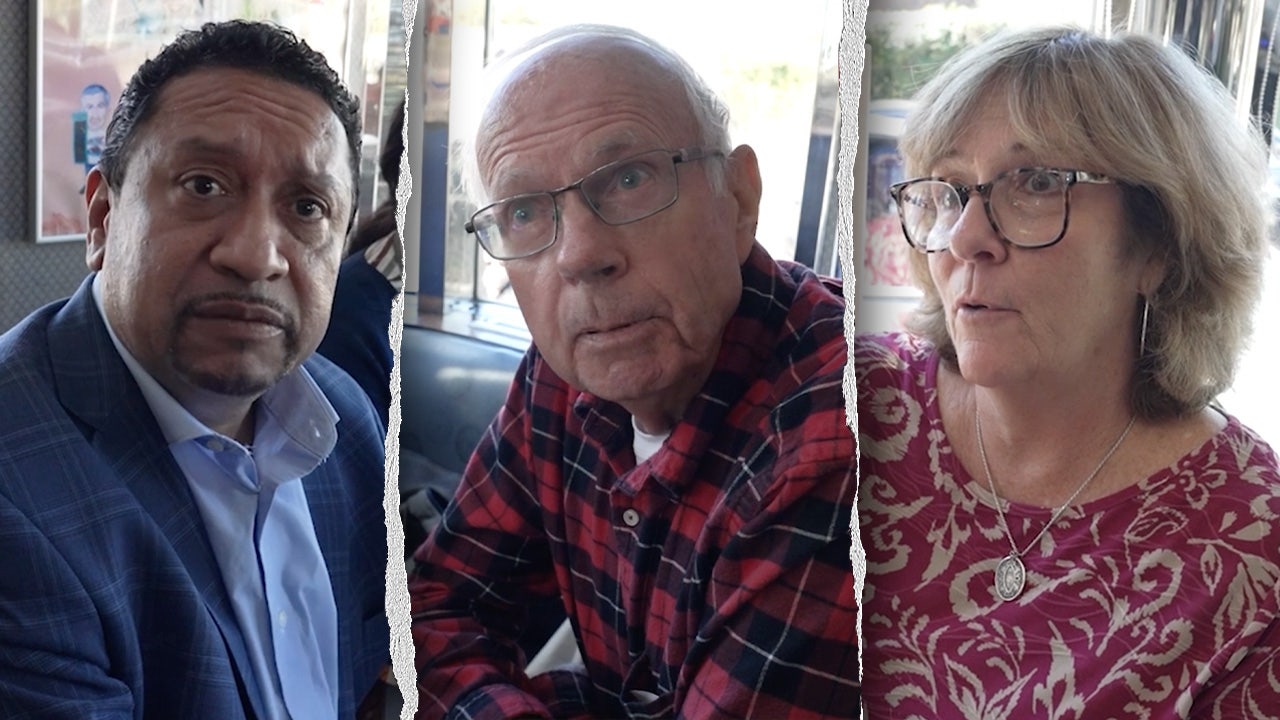
At the Crosstown Diner in the Bronx, steam rises from coffee cups and the air smells like bacon, onions, and decades of history. It’s the kind of place where regulars know the staff and politics are discussed over hearty breakfasts, where the booths have seen thousands of arguments about elections and rent and crime. This is the unlikely setting where Republican gubernatorial candidate Bruce Blakeman has chosen to make his stand. Running in a deeply blue state against Democratic Governor Kathy Hochul, Blakeman is not trying to convince the usual Republican base. Instead, he is courting Democrats who feel estranged from the party they have voted for all their lives. He says it is working. “Every time I go out and meet the people, another Democrat comes up to me and says, ‘Bruce, I’m a lifelong Democrat. I’ve never voted Republican in my life. We’re voting for you,’” Blakeman told Fox News Digital. Standing alongside him was Stephen Kaufman, a former Democratic Assemblyman from the Bronx, whose criticism of his own party was as sharp as any Republican’s. “They’re not Democrats. They’re socialists and communists,” Kaufman said. “They’re just not Democrats, they’re not moderates.” He accused the party of becoming “rapidly a house of hatred” that no longer welcomes the kind of moderate voices he once represented. That sense of loss and betrayal is central to Blakeman’s strategy. He is not asking Democrats to become conservatives. He is asking them to follow their frustrations to the voting booth and pull a lever they never expected to pull.
The frustration among voters at the diner was raw and personal. Lisa, a resident of the Bronx’s Throggs Neck neighborhood, captured the mood with a line that seemed to hang over the whole conversation. “It’s not your Democratic Party anymore. It’s not your grandfather’s Democratic Party. It’s become the Democratic Socialist, a.k.a. Communist Party,” she said. Another man chimed in with an economic grievance that went beyond ideology. “The socialists here literally said we’re land-hoarding if we only have a single-family home or a four-family home and that we were a problem,” he said. “Kathy was all in support and quiet about it. She didn’t defend the homeowners.” That complaint is about more than housing policy. It’s about feeling abandoned by the party that once stood for working people. A registered Democrat at the diner put it in even plainer terms. “I’m a registered Democrat. Ask me if I vote that way,” he said. “I vote to what affects me, my community, the people I live with. I vote who’s going to help the middle class.” For Blakeman, those are the exact words he wants to hear. The anger is not confined to one conversation. A poll cited by the campaign shows Hochul’s lead shrinking to single digits in a state that usually hands Democrats enormous victories. With only weeks before the election, that is a dangerous sign for the governor and a reason for hope for the challenger. The political math in New York may still favor the Democrat, but the emotions at the diner suggest the old assumptions are cracking.
Blakeman is not running on vague promises. He has a specific indictment of Hochul’s administration, and he delivered it like a prosecutor reading out a report card. “Kathy Hochul has raised taxes. She’s raised utility rates 48 times. Programs like cashless bail make it easier for criminals to operate in our neighborhoods. So now I have the evidences. I have her report card and it’s straight F’s,” he said. The utility increases are a particularly visceral issue for voters who watched their heating bills climb through the winter. A related Fox News headline from the reporting captured the sentiment: “The Iran War didn’t make your heating bill this high. Blue-state energy policy did.” Blakeman and his allies argue that Hochul’s energy policies, from closing power plants to blocking the construction of new gas lines, have driven up costs for ordinary families. Stephen Kaufman, the former Democratic assemblyman, said Hochul has only responded to her troubles by moving further left. “Every time she has a problem, she goes crying to the hard left. She’s totally controlled by them,” Kaufman said. He cited 42 increases in electricity rates over time, a refusal to permit new gas lines, and utility plants that have been shut down. “All she does is move harder and harder to the left. Which don’t represent people in this neighborhood,” he added. Blakeman has also taken the campaign into the city’s transit system, hammering Hochul and democratic socialist Zohran Mamdani over subway safety during a ride on the New York City subways. The message is simple: New Yorkers are being squeezed by higher costs and unsafe streets while their leaders talk about ideology instead of results. For working-class voters who do not follow every party debate, that disconnect resonates.
Against that record, Blakeman offers his own. As Nassau County executive, he says, he has not raised taxes a penny in five years. Instead, he has cut taxes by $150 million. “I’ll take my record, compare it to hers,” he told Fox News Digital. His campaign promises are direct and concrete: “I will cut taxes. I will cut utility bills. And I will make for safer communities just like I did in my own county as county executive.” In a state where voters have grown accustomed to politicians promising everything and delivering little, Blakeman is betting that the suburban executive’s track record will sound more believable. He presents himself as a practical manager, not a firebrand. He is trying to turn the election into a referendum on competence. Hochul, in his telling, is a governor who failed the basics: she allowed criminals to cycle back onto the streets through cashless bail, she let utility companies raise rates again and again, and she refused to stand up to the socialist wing that dismisses homeowners as hoarders. Blakeman’s message to frustrated Democrats is that they do not have to agree with him on every issue. They just have to be tired enough to try something different. At the diner, that message appeared to land. Voters nodded as he talked about taxes and safety. Several said they were ready to vote Republican for the first time in their lives. Whether that will be enough to overcome the state’s overwhelming Democratic registration is another question, but Blakeman is clearly betting that enough cracks in the coalition can change the outcome.
The broader backdrop to this political struggle is the rising influence of the Democratic Socialists of America and candidates aligned with that movement. Kaufman accused the DSA of taking over the Democratic Party from within. The article points to a string of victories that feed those fears. In New York, democratic socialist Zohran Mamdani has become a powerful political force, and DSA-backed candidates have managed to topple Democratic incumbents in congressional primaries. The movement has also claimed victories beyond New York, with DSA-backed Melat Kiros defeating longtime Democratic Representative Diana DeGette in Colorado and self-described democratic socialist Janeese Lewis George capturing the Democratic mayoral nomination in Washington, D.C. For voters who remember the party of their parents or grandparents, these wins are not a sign of fresh energy. They are proof that the party has been radicalized. One Bronx voter remembered the socialists calling homeowners land-hoarders, a phrase that stuck in his throat. Blakeman and Kaufman point to these developments to argue that Hochul is not a moderate being pulled left against her will. They say she is a willing participant, someone who turns to the far left whenever she faces pressure. Kaufman was blunt: “She’s totally controlled by them.” Fox News Digital reached out to Hochul’s office for comment, but the article does not include a response. In the midst of a close race, that silence may speak as loudly as any statement. It also reinforces the narrative that the governor is not listening to the ordinary Democrats who feel left behind.
In the end, what happened at the Crosstown Diner was less a rally than a reckoning. It was a group of people, many of them lifelong Democrats, trying to find a political home in a party that no longer feels like home. Their complaints are not abstract or academic. They are about heating bills that are too high, streets that feel unsafe, and a government that seems more concerned with ideological purity than with helping the middle class. “It’s not your grandfather’s Democratic Party anymore,” Lisa said, and the nostalgia in that sentence is real. Blakeman is trying to harness that nostalgia and turn it into votes. He is running as the adult in the room, the man who balanced a county budget and did not raise taxes, the candidate who is willing to ride the subway and talk about safety in concrete terms. Whether he wins or loses, he is forcing a conversation about what it means to be a Democrat in New York. The state remains deeply blue, and Blakeman faces enormous odds. But the shrinking poll numbers and the defections happening in diners across the boroughs suggest that a growing number of voters are willing to cross lines they thought they would never cross. If they do, it will not be because they changed their values. It will be because they felt unheard, ignored, and abandoned. Politicians come and go, but the feeling of being left behind is powerful and durable. At its core, this election is about whether New York’s Democratic coalition can hold together a group that includes everyone from socialists to moderate homeowners. The people at the diner are proof that it can no longer be taken for granted.