




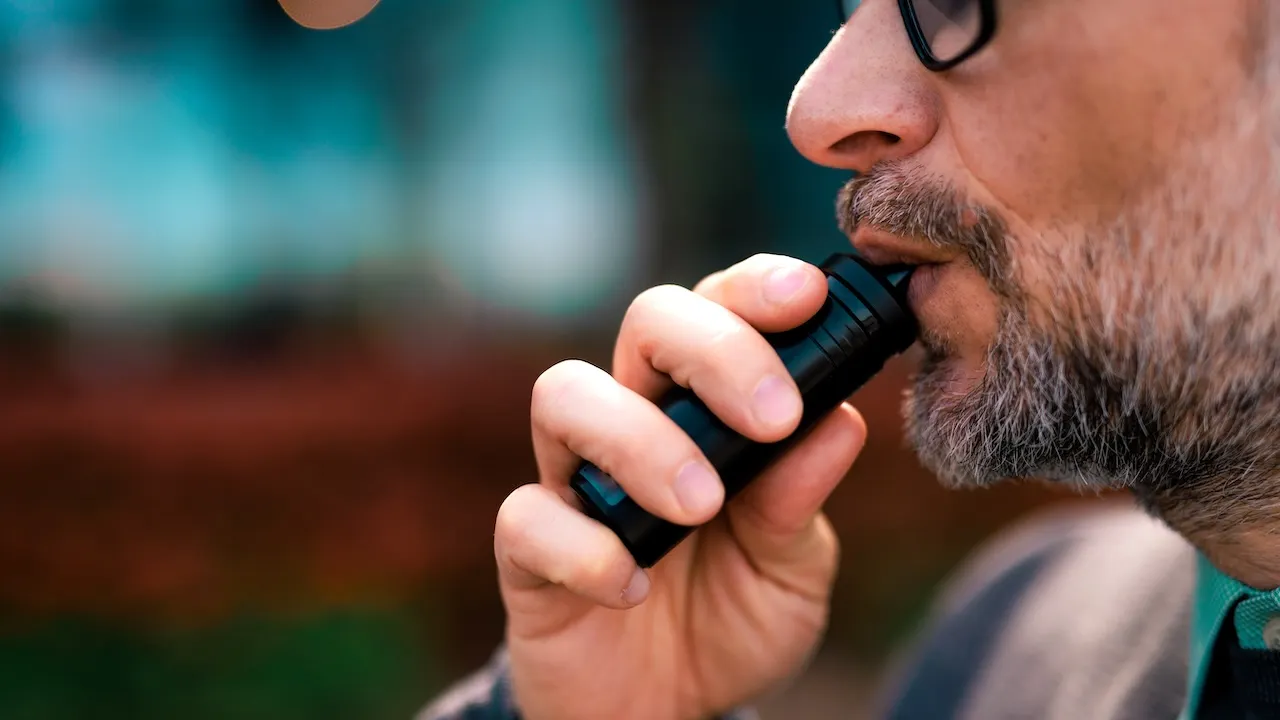
When Selena Gomez recently opened up to her millions of followers about the damage her vaping habit had done to her voice, it was one of those rare celebrity confessions that felt less like a carefully staged announcement and more like a genuine, slightly embarrassed admission from a friend. She called the habit “stupid,” and in that single word, there was a world of recognition—the kind of self-awareness that comes only after you’ve watched something you enjoyed slowly turn into something you regret. Her voice, once effortless and clear, had changed, and she could hear the difference every time she sang or spoke. It wasn’t just a cosmetic issue or a temporary scratchiness; it was a physical toll that had become impossible to ignore. And while her platform gave her confession a global audience, the truth is that her experience is not unique. It is playing out in quieter ways in the lives of millions of Americans who reach for their e-cigarettes every morning, every time they feel stressed, every time they get in the car, every time they finish a meal. What makes her story so powerful is not that she is a celebrity with access to the best doctors, but that she is honest about something many people feel ashamed to admit: that a habit they once believed was harmless has quietly become a part of who they are, and that it is taking a toll they can no longer pretend not to notice. Her voice, in a very literal sense, became the symptom of a deeper crisis—one that medical professionals have been warning about for years, even as the sleek devices and sweet flavors continue to lure in new users.
The irony is that e-cigarettes were originally sold to us as the safer alternative, the clever workaround for people who wanted the ritual of smoking without the smoke. But medical experts have spent the last decade unraveling that narrative, and what they’ve found is troubling. When you vape, you are not just inhaling water vapor and a little flavoring. The aerosol that fills your lungs contains ultra-fine particles, heavy metals like nickel and lead, and a host of organic compounds that your body simply was not designed to process. The immediate effects are often felt in the throat and voice box, which is exactly what Selena Gomez experienced. Otolaryngologists—doctors who specialize in the ear, nose, and throat—have seen an uptick in patients presenting with hoarseness, vocal cord irritation, and chronic coughing, all linked to vaping. The heat and chemicals irritate the delicate tissues of the larynx, causing inflammation that alters the way the vocal cords vibrate. Over time, that inflammation can become a persistent condition, leading to a voice that sounds permanently raspy or tired. But the damage doesn’t stop there. As the aerosol travels further down into the lungs, it triggers an inflammatory response in the airways, which can lead to bronchitis-like symptoms and a reduction in lung function. Young people, whose lungs are still developing, are especially vulnerable. What many users don’t realize is that the very thing that makes vaping appealing—the smooth, clean hit, the absence of smoke and ash—does not mean your respiratory system is treating it gently. It is still a foreign substance entering one of your most delicate internal environments, and your body is responding accordingly, often in ways you don’t feel until years later.
At the heart of the issue is nicotine, and this is where the conversation gets even more serious. Vaping devices are capable of delivering nicotine in doses that are far more concentrated than what you would get from a traditional cigarette. This is not a minor detail; it is the engine of addiction. Nicotine rewires the brain’s reward system, creating a rapid connection between the act of vaping and a feeling of relief or pleasure. The more frequently you vape, the more your brain learns to crave that hit, and the stronger the cycle becomes. Trent Carter, a nurse practitioner and CEO of Renew Health in New Mexico, has seen this pattern up close. He points out that with e-cigarettes, you can get an extremely high dose of nicotine very quickly, and that high dose directly correlates with how difficult it is to quit. It’s not just a matter of willpower; it’s biochemistry. The brain has literally been changed by the substance, and every time the craving is satisfied, that neural pathway is reinforced. But the effects are not confined to the brain. Nicotine is a stimulant, and regular use can raise your heart rate, increate your blood pressure, and put a strain on your cardiovascular system. For people who already have underlying heart conditions or hypertension, this can be dangerous. Even for those who are healthy, chronic nicotine use is linked to sleep disturbances and increased anxiety. There is a cruel irony here: many people start vaping to cope with stress, only to find that the nicotine itself contributes to a low-level hum of anxiety that makes them want to vape even more. It’s a cycle that feeds itself, and breaking it is not simply a matter of throwing away the device.
Perhaps the most alarming part of vaping is what happens to the e-liquids themselves when they are heated. The liquid in e-cigarettes typically contains a combination of nicotine, flavorings, propylene glycol, and vegetable glycerin. On their own, those ingredients might not seem particularly concerning, but the story changes dramatically when they are heated by the device’s coil. High temperatures cause these liquids to break down into new compounds, including formaldehyde and acrolein. Both of these are known to be toxic to cells, and both have been linked to respiratory damage. The American Lung Association has made it clear that the aerosol produced by e-cigarettes is not harmless water vapor. It contains fine chemical particles that, over time, can cause chronic airway inflammation, irreversible scarring of lung tissue, and obstructive pulmonary conditions. And here is the uncomfortable truth that doctors are increasingly speaking about: we simply do not yet know the full long-term consequences of vaping. Traditional cigarettes were on the market for decades before the devastating links to lung cancer and heart disease became undeniable. E-cigarettes have only been widely used for a little over a decade, which means we are watching a massive public health experiment unfold in real time. The people who started vaping in their teens and twenties are only now reaching their thirties and forties, and the cumulative effects of years of inhaling heated chemicals are still unknown. Doctors stress that immediate symptoms like hoarseness, coughing, and reduced endurance are only the tip of the iceberg. The deeper concern is what the chemicals are doing to vital organs over the long haul—and by the time those effects become obvious, it may be too late to reverse them.
So what does quitting actually look like? For many people, the hardest part is not just the physical craving for nicotine; it is the behavioral ritual. You reach for your vape when you’re driving, when you’re stressed, when you’re scrolling through your phone, when you’re sitting in the backyard trying to unwind. It has become attached to nearly every moment of your day. That is why nicotine patches and gum often feel insufficient for people who are trying to quit. They address the chemical withdrawal, but they do nothing to address the habit itself. As Trent Carter explains, if you aren’t addressing the behavioral aspect, you’re missing a huge component. Vaping can become constant throughout the day, almost subconscious. You might not even realize how frequently you are reaching for the device, or that you are using it to cope with underlying anxiety, loneliness, or lack of sleep. The device becomes a companion, a fidget, a soothing mechanism. Taking it away can feel like losing something familiar, even if you know it’s hurting you. That is why the most effective approaches to quitting tend to involve comprehensive support—counseling, peer support, mindfulness practices, and strategies for managing the moments that trigger the urge. It’s about understanding your own patterns and finding new ways to navigate them. For those who are inspired by Selena Gomez’s honesty, the message from health professionals is clear: don’t just switch to a different nicotine delivery system. Don’t trade one master for another. The goal should not be to find a new way to consume the same addictive substance; the goal should be to treat the dependence itself, to break free from the chemical hooks and the emotional habits that keep you tied to the device.
In the end, Selena Gomez’s story matters because it humanizes a struggle that often feels invisible. When you are in the middle of an addiction, it can feel like you are alone, like no one else understands why you can’t just stop. But the reality is that millions of people are in the same boat, many of them drowning silently. The voice change that Gomez experienced is a warning, but it is also an opportunity. It is a reminder that our bodies are constantly speaking to us, and that we have a choice: we can ignore the signs until they become too loud to bear, or we can listen now, before the damage becomes permanent. There is no shame in having developed a habit that you didn’t fully understand. The shame would be in knowing the risks and continuing anyway, telling yourself that it’s fine, that you will quit tomorrow, that the statistics are about someone else. The truth is that every single puff is a deposit into a physical account that will eventually come due. But the encouraging news is that the body has an incredible capacity for recovery. The inflammation can subside. The voice can clear. The lungs can begin to heal. The anxiety can ease as the brain chemistry begins to restore its natural balance. The first step is the hardest, but it is also the most important. It starts with a moment of honesty—a moment like Selena Gomez had, when you look at yourself and admit that this thing you once thought made life more manageable is actually taking away more than it gives. If you are reading this and feeling that pull of recognition, let this be that moment for you. The journey to quitting does not have to be perfect, and it does not have to be accomplished in a day. It starts with one conversation, one call, one deep breath, and one decision to treat your own health as something worth fighting for. You are worth that fight, and it is never too late to begin.