


The Battle for Dogecoin’s Soul: Corporate Consolidation Strains the People’s Crypto to Its Core
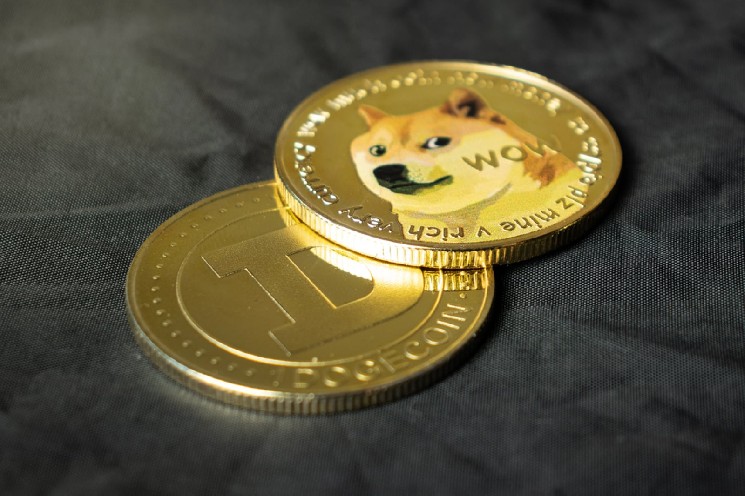
There is an unwritten rule inside the Dogecoin community that has held the project together through spectacular bull runs and punishing bear markets alike: this is the people’s coin, not a product to be bought, sold, or quietly appropriated by corporate insiders. That rule is now facing its most serious test. A growing backlash has erupted across Dogecoin’s online forums and social channels, led in part by the influential community commentator Mishaboar, who has openly accused the Dogecoin Foundation of corporate shilling and of wresting control over territory that rightfully belongs to the grassroots. It is a fight that has been simmering for years, but a single corporate maneuver has brought it to a boil. The criticism is pointed, principled, and difficult to dismiss. An honest business, the opposition argues, should be willing to build its own media resources from the ground up, earning trust and attention the hard way, rather than taking over channels that a worldwide community of enthusiasts spent years cultivating through tips, memes, and charitable giving. For these purists, the very notion that a handful of corporate entities could now claim to speak for Dogecoin is an affront to the token’s founding promise — a promise that rejected gatekeepers in favor of shared ownership. What began as quiet unease has escalated into a defining ideological battle over the future of Dogecoin, one that pits the token’s scrappy, anti-establishment origins against the ambitions of a newly consolidated corporate machine. At the eye of the storm sits a major merger that stunned many long-time holders: the MyDoge wallet, the DogeOS platform, and the Such App payment service have all been absorbed into a single new entity known as Dogecoin Labs, with the explicit backing of the Dogecoin Foundation and the American public company House of Doge, whose shares trade under the ticker HODO. Framed by its architects as a necessary step toward institutional legitimacy, the consolidation has instead opened a profound philosophical rift — a collision between those who believe Dogecoin must professionalize to survive and those who fear it will be unrecognizable once it does. At stake, ultimately, is nothing less than the identity of the meme coin that refused to die.
The Deal That Changed Everything
To understand why this merger has ignited such a firestorm, it is worth unpacking exactly what each of these entities brings to the table. The MyDoge wallet is one of the most widely used mobile wallets in the Dogecoin ecosystem, a trusted gateway for everyday users to store, send, and receive DOGE. DogeOS has positioned itself as a platform for practical blockchain applications, built specifically around Dogecoin’s network. Such App, meanwhile, is a payment service designed to let merchants and consumers use Dogecoin for real-world purchases, moving well beyond the speculation that has historically dominated the token’s trading activity. Together, these three formed the backbone of Dogecoin’s emerging commercial layer. Under the newly created Dogecoin Labs structure, they will now operate under a single banner, with a unified commercial strategy and a clear eye on expanding the ecosystem’s reach. The presence of House of Doge in the background adds a further layer of corporate gravity. As a publicly traded American company, HODO operates under obligations to its shareholders — obligations that do not always align neatly with the values of a decentralized crypto movement. For community purists, the introduction of publicly traded structures into a token that began its life as a joke in 2013 represents a profound betrayal of the ethos that built Dogecoin. The expectation, they say, was always that the project’s infrastructure would remain open, transparent, and resistant to capture. The merger, in their view, blurs those lines and hands a small group of decision-makers outsized influence over the network’s future direction. Indeed, the symbolic weight of the merger is as heavy as its structural implications. Dogecoin was never supposed to have a corporate overlord. It was launched by software engineers Jackson Palmer and Billy Markus as a lighthearted send-up of an industry already taking itself far too seriously. That it now finds itself navigating boardroom-style consolidation is, for many, an irony too bitter to swallow. There is a sense among long-time observers that this consolidation has been in the works for some time, and that the community’s outburst may be as much about lost trust as it is about the merger itself.
Survival or Betrayal?
The leadership of Dogecoin Labs, headed by Jordan Jefferson, has little patience for such sentimentality. The merger, Jefferson has argued, is not a betrayal of Dogecoin’s origins but the only realistic path to its long-term survival, a conviction he has repeated in interviews and public statements. His reasoning is straightforwardly pragmatic: without a unified commercial infrastructure and without meaningful mass adoption of payment tools, Dogecoin will remain what its critics have always called it — a speculative asset whose fate rises and falls on the whims of celebrity tweets. For years, the token’s price has been notoriously sensitive to the social media activity of influential figures, most notably Elon Musk, whose casual mentions of DOGE have repeatedly sent markets into motion. Jefferson’s vision is to change that dynamic entirely: to transform Dogecoin from a token that moves on hype into a currency that moves goods. In his telling, the consolidation of wallets, platforms, and payment services under one roof is the necessary price of maturity. Scale demands coordination. Mass adoption demands a level of polish and reliability that volunteer-driven open-source projects rarely achieve on their own. There is a compelling logic to this position, and it has won over a substantial share of the community — particularly those who see Dogecoin’s sluggishness in building practical infrastructure as the real threat to its future. But critics note that the logic cuts both ways. If Dogecoin depends on a corporate entity for its growth, can it still claim to be independent? And if the token’s value ceases to be tied to community energy, what exactly is being preserved? The danger, they warn, is a slow and silent transformation — not a hostile takeover, but a gradual drift in which the token’s governance, messaging, and priorities come to reflect the interests of its commercial handlers rather than the people who actually use it. That concern, once raised, is not easily dismissed.
The Foundation Walks a Tightrope
Amid this war of narratives, the Dogecoin Foundation is attempting to walk a careful line between the project’s decentralized heritage and its corporate future. In public statements, the Foundation has insisted that it is not taking sides in the dispute. The development of Dogecoin Core — the underlying blockchain software that keeps the network running — will remain open and community-led, the Foundation insists, while Dogecoin Labs will take responsibility for market expansion, partnerships, and commercial adoption. It is a tidy division of labor on paper: one hand keeps the code pure, the other goes out into the world to drum up business. Whether such a separation can survive contact with reality is the very question at the heart of this conflict. The Foundation’s endorsement of the merger — and its ongoing relationship with the companies now housed under Dogecoin Labs — suggests that the boundaries between church and state are porous at best. Money, as the old saying goes, has a way of crossing lines that organizational charts have drawn. The skeptics’ case is blunt: a foundation that blesses a merger and continues to share board members, advisors, or strategic goals with the merged entity is not neutral, whatever its press releases may claim. They point to the Foundation’s own history and its carefully cultivated relationships with high-profile figures, arguing that the organization has slowly drifted from its role as a community representative into something closer to a corporate cheerleader. Others, however, defend the Foundation, noting that it has been transparent about its mandate and that its efforts to professionalize Dogecoin have been met with suspicion by a community that treats any change with reflexive distrust. What cannot be disputed is that the Foundation now occupies an enormously consequential position. It is the bridge between two cultures that do not trust each other: the volunteer developers and passionate users who constitute the original Dogecoin ethos, and the investors, executives, and institutional players who see DOGE as a vehicle with untapped commercial potential. If that bridge collapses, the entire ecosystem may fracture. And the cracks, by many accounts, are already beginning to show.
A Compromise Within Reach?
Amid the escalating rhetoric, a group of independent market participants has stepped forward with a proposal that could serve as a middle ground — a compromise designed to appease both the hard-line decentralization crowd and the consolidation-minded pragmatists. The core idea is simple: strip Dogecoin Labs of any monopoly over information and introduce genuinely decentralized management of shared community accounts. Under the proposed model, official communication channels would be governed collectively rather than by a single corporate entity. Content decisions would be made through transparent voting, and moderators would be subject to regular rotation, preventing any one company from cementing control over the community’s public voice. This would, in theory, give the community a meaningful seat at the table while allowing Dogecoin Labs to proceed with its commercial ambitions. It is an elegant concept, rooted in the same principles of collective governance that inspired blockchain technology in the first place. The underlying philosophy is clear: a commercial enterprise is welcome to build products, pursue partnerships, and seek profits — but it must earn its influence organically. If Dogecoin Labs wants a following, let it build one from scratch. If it wants to communicate with the Dogecoin community, let it do so as one voice among many, not as the proprietor of the town square. To the proposal’s supporters, this represents a healthy middle path: corporate efficiency where it matters, community control where it counts. To the skeptics, however, it is a compromise that misses the deeper point. Asking a corporation to share power on the community’s terms, they argue, underestimates the enormous resources at the company’s disposal and the inherent asymmetry in the relationship. Even so, the proposal has injected a fresh sense of possibility into a conversation that was beginning to feel like a shouting match. Whether it gains traction inside the Dogecoin Foundation and the leadership of Labs will be a telling indicator of how serious the decision-makers are about preserving the community’s sovereignty. For now, it remains the furthest any faction has gone toward translating frustration into a workable structure.
A Test Case for the Entire Crypto Economy
The conflict is far from resolved, and both sides appear prepared to hold their ground for the foreseeable future. But the implications of this battle extend well beyond Dogecoin’s dedicated fan base. What is unfolding now is a trial run for a question that will soon confront nearly every successful cryptocurrency project: how does a decentralized movement scale into a global economic infrastructure without losing its autonomy in the process? Dogecoin, ironically, may be the best-positioned project to answer that question. Its history as a joke that became a movement has given it a thicker layer of cultural resilience than most of its competitors. Its community has weathered scandals, hacks, price collapses, and extended periods of obscurity, emerging each time with its identity intact. This latest struggle is different, though, because it is not being fought against an external enemy but from within. The outcome will set a precedent. If the corporate structure comes fully to dominate the project, other blockchain communities may be encouraged to follow suit, accepting institutionalization as the inevitable endgame of any successful token. If, however, Dogecoin manages to integrate commercial enterprises without surrendering its decentralized character, it will provide a model for the entire industry — proof that grassroots governance and professional enterprise can coexist. For now, the battle over who truly owns the people’s cryptocurrency continues, argued in public forums, fought over social media, and decided in the quiet choices of the people who hold DOGE’s future in their hands. The community that built Dogecoin is watching closely. The rest of the crypto world is watching too. One thing is certain: the days in which Dogecoin could be laughed off as a trivial internet joke are long gone. It now stands as a test case for the entire cryptocurrency economy — a coin caught between the mythology of its past and the disciplines of its future. How the story unfolds will not only determine the fate of a beloved meme; it will also offer a compelling lesson about what happens when the internet’s most trusted currencies collide with the machinery of modern business. In the coming months, the decisions made by the Foundation, Labs, and the community will determine whether Dogecoin emerges as a genuine payment network or fades into the long history of internet experiments that outgrew their own folklore.