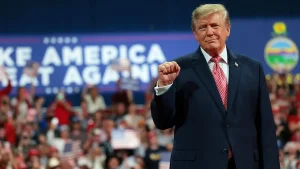



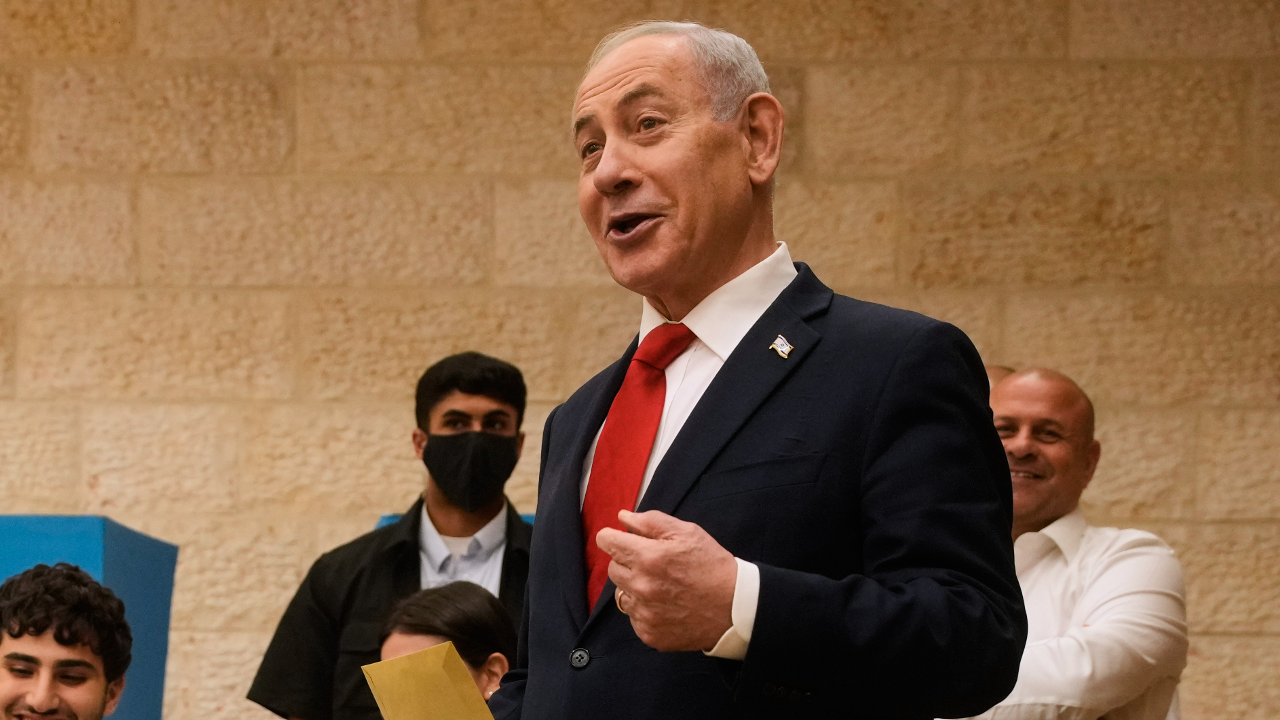
In the high-stakes countdown to Israel’s national election on Oct. 27, former President Donald Trump has stepped squarely into the arena with a sweeping endorsement of Prime Minister Benjamin Netanyahu’s re-election bid. Trump called Netanyahu a “great warrior” and an “even greater partner for peace,” while framing the Israeli leader as a crucial ally in the ongoing confrontation with Iran. The backing arrives at a profoundly sensitive moment: this is Israel’s first national vote since the Hamas-led massacre of Oct. 7, 2023, and for many Israelis, the election feels less like a routine political contest and more like a painful national referendum. The question on the ballot, in practical terms, is whether Netanyahu should be granted another term to pursue the war objectives he has relentlessly championed—disarming Hamas and Hezbollah, restoring deterrence, and countering the nuclear threat from the Islamic Republic. Netanyahu was quick to thank Trump for what he called an “extraordinary endorsement,” and he repeated the promise that has become his central campaign pledge: “Together we will never let Iran’s regime get nuclear weapons.” That phrase is not just a slogan; it carries the weight of decades of Israeli security policy, and it lands differently now that Israel has already shown it is willing to take unilateral military action against Iranian targets. For Netanyahu’s supporters, Trump’s endorsement is powerful proof that Israel’s closest and most consequential ally still believes in the prime minister’s vision. For his critics, it is merely a reminder that Netanyahu’s entire political identity is bound up with crisis management and confrontation—and that he has staked his legacy on promises that remain unfinished.
Doron Spielman, international spokesman for the Israeli Prime Minister’s Office, told Fox News Digital that no personal or professional bond in the history of U.S.-Israel relations compares with the current partnership. That is a bold statement, given the long and storied history of American presidents standing beside Israeli prime ministers, but Spielman was unequivocal: “Israel and the U.S. have stood together as the two countries bearing the torch for the West, and that is a direct result of the incredible relationship between President Trump and Netanyahu.” He also made clear that preventing Iran from acquiring atomic bombs remains Netanyahu’s long-standing foreign-policy priority and central campaign promise. Israel, he said, prefers to act in coordination with Washington, which has been Israel’s greatest ally and friend and has already joined the fight on the front lines twice. But he was equally clear that Israel does not require permission to defend itself. Referencing the June 2025 military mission against Iran known as Operation Rising Lion, Spielman noted that Israel acted for more than a week before the United States joined the operation. That point is central to understanding Netanyahu’s appeal to many Israeli voters: he presents himself as the leader who will not wait for the world’s approval when the survival of the Jewish state is at stake. It is also a subtle warning to Iran and its proxies that diplomatic pressure and international norms will not deter Israel if it perceives an existential threat. The partnership with Trump, in this telling, is powerful but not necessary—Israel will stand with America when it can, and stand alone when it must. That message resonates deeply with a public still processing the trauma of Oct. 7 and worried about the possibility of another surprise attack.
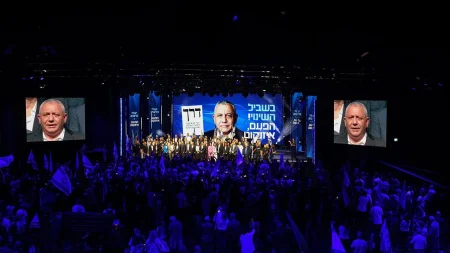
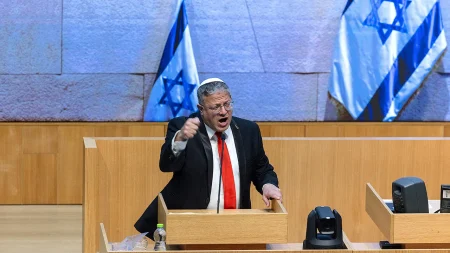
Netanyahu is Israel’s longest-serving prime minister, with roughly twenty years in office, and his political biography reads like a case study in resilience and reinvention. He began his diplomatic career in 1982 as deputy chief of mission at Israel’s embassy in Washington, D.C., then served as Israel’s ambassador to the United Nations from 1984 to 1988 before entering politics with Likud. He became the party’s chairman in 1993 and was first elected prime minister in 1996. After losing the 1999 election, Netanyahu returned to government in 2002 as foreign minister and later served as finance minister, then returned to the premiership in 2009, serving until 2021 and again from late 2022. Along the way, he has been widely credited with liberalizing Israel’s economy and helping transform the country into a global high-tech hub—no small achievement for a nation that has spent much of its existence under military threat. His current political alliances reflect the pragmatic—and at times uneasy—coalition math of Israeli politics. His bloc includes Itamar Ben-Gvir’s Otzma Yehudit, Bezalel Smotrich’s Religious Zionism-Zehut, and the ultra-Orthodox parties Shas and United Torah Judaism. A newcomer, Amcha Yisrael, led by Ofer Winter, could also join the bloc, although Winter is currently feuding with Likud over concerns that his party, hovering near the electoral threshold, could split the right-wing vote and potentially “waste” tens of thousands of ballots. The electoral map is genuinely uncertain. According to most Hebrew-language media polls, neither Netanyahu’s bloc nor the opposition led by former Israeli army chief Gadi Eisenkot currently has a clear path to securing the sixty-one Knesset seats needed to form a government. If no candidate can assemble a governing coalition, Israel could head back to the polls yet again, repeating the cycle of political instability that saw the country hold four national votes between April 2019 and March 2021. That would be an exhausting outcome for a nation already stretched thin by war and grief, and it is exactly the kind of uncertainty that makes this election so consequential.
The security challenges facing the next government are enormous, and there is little expectation of quick victories. Dan Diker, president of the Jerusalem Center for Security and Foreign Affairs, told Fox News Digital that any incoming government will face the same formidable threats as the current one. The major challenge, he said, is what Netanyahu has discussed in terms of adjusting the national security concept to prioritize prevention. That means taking very serious, assertive and aggressive military counterterrorism and nonmilitary actions against Israel’s enemies. That language may sound abstract, but in practical terms it means continued operations in Gaza, ongoing campaigns against Hezbollah and Iranian-backed militias, and a constant state of readiness for the possibility of conflict with Iran itself. It also means making difficult choices about resources, intelligence, and international diplomacy. Not everyone believes Netanyahu is the right person to lead that effort. Professor Tamar Hermann, a senior researcher at the Israel Democracy Institute, argued that the Israeli left, center, and even far-right believe Netanyahu has failed to meet the expectations associated with his image as “Mr. Security.” “He promised to topple the Iranian regime, he promised to dismantle Hamas, he promised to crush Hezbollah. None of it was achieved,” Hermann told Fox News Digital. She also accused him of giving a green light to vigilantes in the settlements who act against Palestinians, and of giving too much to ultra-Orthodox parties by abandoning the ideal of universal conscription. For Hermann, Netanyahu’s current term has been his least successful, beginning with the judicial reform push that triggered mass protests in 2023 and followed by the devastating terror attacks on Oct. 7. Netanyahu subsequently faced intense public anger over his handling of the hostage crisis, although he ultimately secured the return of all the captives in coordination with Trump and his envoys. That mixed record—from catastrophic failure to hard-won success—makes him a deeply polarizing figure in Israeli life.
Hermann’s view of Netanyahu’s legacy is stark: “In the eyes of some, his legacy will be that he inflicted a huge disaster upon Israel in terms of what happened to civilians on Oct. 7 and the deterioration of Israel’s international image.” But Michael Oren, a former Israeli ambassador to the United States, offers a very different framework for understanding the prime minister. Oren framed the upcoming election in terms of legacy and how Netanyahu will be remembered fifty years from now. “There are two types of leaders: leaders in history and leaders of history,” he told Fox News Digital. “There are leaders who go into office and perform as best they can, and there are leaders who go into office and see themselves as transformative, as having a historical role like Abraham Lincoln, Roosevelt or Churchill. Benjamin Netanyahu belongs to this category.” According to Oren, Netanyahu sees his mission as nothing less than saving Israel from existential threats, foremost among them Iran—a goal he has not yet achieved. And that unfinished mission explains a great deal about his behavior. “He is willing to endure virtually limitless criticism and condemnation around the world, as well as mass demonstrations against him, to fulfill this one role,” Oren said. “To understand that is to understand Benjamin Netanyahu: He is a leader of history.” That distinction matters because it suggests Netanyahu is not simply campaigning for another term in office; he is campaigning for a place in the story of the Jewish people. The election, in his mind, is not just about taxes or coalition agreements. It is about whether history will judge him as the leader who protected Israel from annihilation or as the leader who was overwhelmed by the forces arrayed against it.
At its heart, then, this election is a collision between two very different ways of understanding Netanyahu’s legacy—and indeed, two very different ways of understanding Israel’s present predicament. For his supporters, Netanyahu remains the indispensable leader, the man who has walked through the fires of war and diplomacy and emerged with Israel stronger than before. For his critics, he is a figure who promised too much, delivered too little, and bears real responsibility for the darkest day in the nation’s history. The human dimension is impossible to separate from the political calculus. Israeli voters are not just choosing a government; they are wrestling with fear, trauma, and the need for reassurance in a region where threats seem to multiply with each passing year. They are also watching the world, trying to determine whether Israel still has friends it can rely on or whether it must trust only in its own strength. Trump’s endorsement may give Netanyahu a boost, and it certainly reinforces the image of a prime minister with powerful international allies. But in the end, the decision rests with ordinary Israelis—people who endured surprise attacks, lost loved ones, served in endless reserve duty, and attended too many funerals. They will ask themselves uncomfortable questions: Can Netanyahu actually achieve what he promises? Is anyone else better positioned to protect the country? And what price is Israel willing to pay for victory, stability, and peace? The answers to those questions will shape not only the outcome of the Oct. 27 vote but also the future of the region for years to come. Whatever the result, Netanyahu’s story—and Israel’s story—will continue to be written with uncertainty, courage, fear, and hope. And the world will be watching, because the decisions made in Israel’s voting booths will echo far beyond its borders.