


A Political Firebrand Rises in Israel’s Upcoming Vote
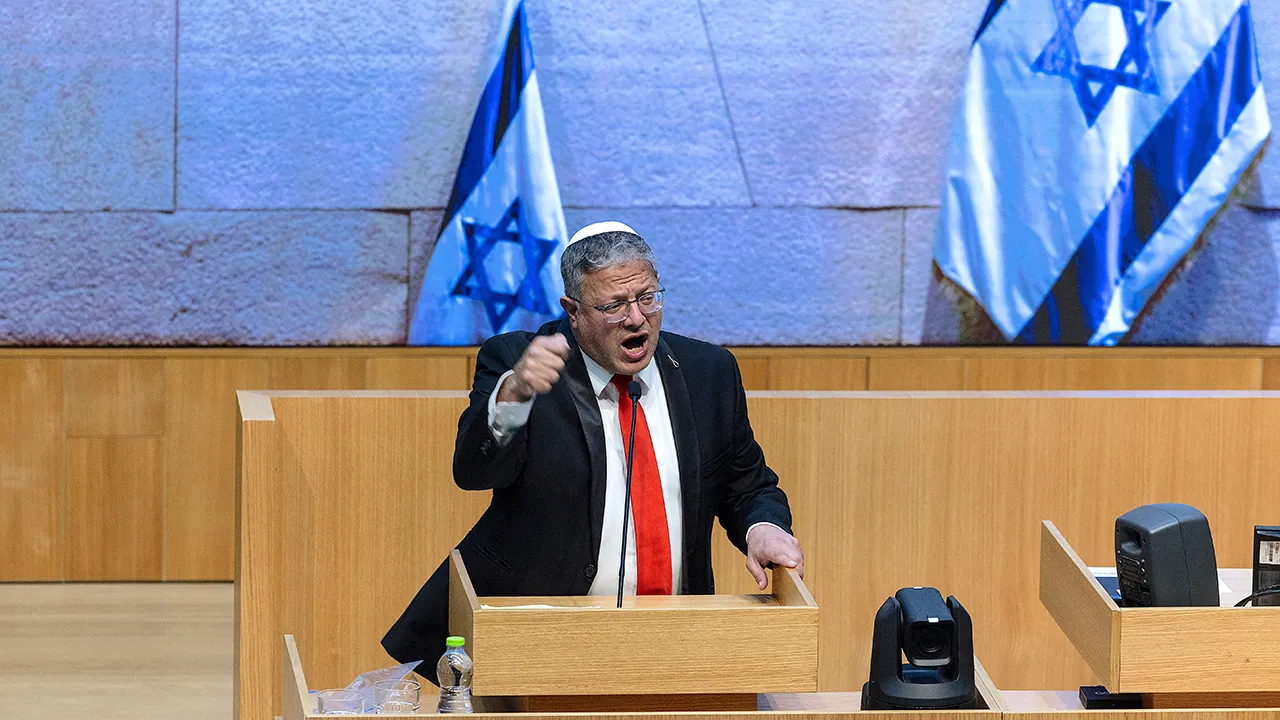
Israel stands on the edge of another fiery election, and this time one of the most polarizing figures in its modern politics is poised to hold the balance of power. With voting set for October 27, recent polling suggests that National Security Minister Itamar Ben-Gvir and his Otzma Yehudit Party could secure anywhere from seven to ten seats in the 120-member Knesset. That projection is far from a landslide, but it may be enough to make him the essential kingmaker in any future coalition led by Prime Minister Benjamin Netanyahu’s Likud Party. If the numbers hold, Ben-Gvir would be in a position to demand even greater power, with senior ministerial portfolios and decisive influence over the government’s direction. His ascent is not an isolated phenomenon. Across Europe and the West, a wave of blunt-talking, anti-establishment, hardline nationalists are gaining ground against traditional conservative parties—from Marine Le Pen and Jordan Bardella’s National Rally in France to Geert Wilders’ Party for Freedom in the Netherlands, from Australia’s One Nation to Italy’s Matteo Salvini and Germany’s Alice Weidel of the AfD. Ben-Gvir, who oversees Israel’s police, prison service, and civilian firearms licensing, is in many ways the Israeli expression of this global mood: loud, defiant, unapologetic, and increasingly mainstream.
To his supporters, Ben-Gvir is not a dangerous radical but a plain-spoken guardian of order in a chaotic region. Yishai Fleisher, international spokesman for the Jewish community of Hebron and a candidate ranked number twelve on the Otzma Yehudit list, painted a vivid picture of him for Fox News Digital. “I always say that Minister Ben-Gvir, if he were in America, he would just be called a Texan,” Fleisher said. The comment was meant as a compliment: law and order, the death penalty for murderers, harsh conditions for imprisoned jihadists, and the right of ordinary Jewish citizens to carry guns for their own defense. In Fleisher’s telling, Ben-Gvir stands for simple, tough, commonsense policies that make the Jewish state safer while the rest of the West struggles with the consequences of its own permissiveness. Fleisher drew a sharp contrast with Europe, arguing that mass immigration had opened the door to Islamist extremism and civil unrest. “There is a jihadist takeover that has come in through immigration, and now the streets of Paris are burning, and the people of Belgium and the U.K. want their countries back,” he said. For him, Israel must not repeat those mistakes. The answer is to elect leaders who embrace law-and-order politics, who have no patience for soft treatment of terrorists, and who show no hesitation in asserting Jewish sovereignty. In this vision, Ben-Gvir is the necessary strongman, the one willing to say what polite politicians won’t and do what timid bureaucrats cannot.
Yet for every enthusiastic endorsement, there is a sharp rebuke. Danny Ayalon, a former Israeli ambassador to Washington and former deputy foreign minister, offered a blistering assessment of Ben-Gvir’s tenure. “Ben-Gvir spoke in a way that turned the entire world against Israel, portraying it as a racist country by making statements that made Israel a pariah state,” Ayalon told Fox News Digital. In his view, Ben-Gvir has been a diplomatic catastrophe, undermining Israel’s image with incendiary rhetoric that gives critics ammunition to paint the country in the worst possible light. Ayalon also dismissed the claim that Ben-Gvir has made Israel more secure. “During his tenure, Israel has become less secure internally because crime is rising,” he said. He recalled that many young voters had placed their hopes in Ben-Gvir’s promises to bring authority and governance to the country’s neglected peripheries—the Negev and the Galilee—where lawlessness has long been a deep problem. In Ayalon’s eyes, those promises have not been kept. The hard-edged nationalism, the dramatic gestures, the social media provocations—these have not translated into safer streets or more functional government. Instead, he argues, they have alienated allies and emboldened those who seek to delegitimize Israel. It is a sobering counterpoint to the enthusiasm of Ben-Gvir’s base, suggesting that his rise has come at a real cost, both internally and abroad.
The path Ben-Gvir has taken to national prominence is anything but conventional. He was an activist from a young age, deeply opposed to the Oslo peace process with the Palestinians, and he paid a price for it. “He was arrested and stopped many times because of that, and he faced the court many times,” Fleisher recounted, adding that even the late Chief Justice Aharon Barak once suggested he go study law. Ben-Gvir did exactly that, and eventually entered the Knesset in 2021. After the 2022 elections, Netanyahu appointed him minister of national security. But his past remains a flashpoint. In 2007, Ben-Gvir was convicted of supporting a terrorist organization and inciting racism. His campaign says the conviction stemmed from displaying a sticker of Rabbi Meir Kahane, whose Kach party was outlawed in 1994, and insists that Ben-Gvir was simply expressing his Jewish nationalist beliefs. “As a young man, Minister Ben-Gvir was an intense Jewish nationalist. He has said many times, publicly, that he has matured since then and moved on from those positions,” his campaign told Fox News Digital. Whether that maturation is genuine or tactical is a matter of fierce debate. What is beyond debate is that he continues to operate with the instincts of a fighter rather than a diplomat. His recent social media activity has raised questions about his relationship with Netanyahu. On October 15, Ben-Gvir shared a Hebrew media report quoting Netanyahu as saying he would not serve again as national security minister. Ben-Gvir fired back with a pointed warning: “Dear Prime Minister, only the people will decide. Ben Gvir is strong, Israel is strong!” Not long afterward, Likud’s official WhatsApp channel appeared to walk the statement back, insisting that “Ben-Gvir is a senior minister in our government, and he will remain so in the next government—provided that the bloc consisting of the Left and Arab parties does not win.” The flurry of statements revealed the uneasy alliance at the top of Israel’s right wing.
When it comes to policy, Ben-Gvir’s supporters point to a record of concrete, if controversial, achievements. Fleisher credited him with tripling the number of personal firearms and gun licenses issued to Israelis over the past four years, establishing a thousand rapid-response teams across the country, overhauling the prison system, and demolishing nine thousand illegally built homes, especially in the Negev. These are not abstract talking points; they are tangible changes in the daily texture of Israeli life. Ben-Gvir has also been the driving force behind a death penalty law for terrorists, which the Knesset approved in March. For his supporters, this is justice finally catching up with a security reality that many Israelis feel has been handled with excessive leniency. “No more hotel-like conditions in our prisons. You’ll know you are being punished for your crime, and these simple policies ultimately deter jihadism,” Fleisher said. The message is one of strength, deterrence, and national pride. “They understand that he represents a full-throated pushback against the jihadist takeover of our land,” Fleisher added. “Ben-Gvir also represents a strong Jewish identity, strong policies and strong laws to ensure that we don’t lose control of our country.” For his followers, Ben-Gvir is not merely a politician but a symbol of resistance against forces that they believe threaten Israel’s existence from within and without.
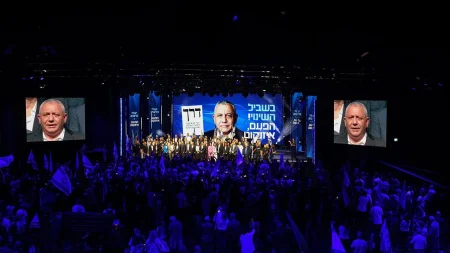
As Election Day approaches, the political landscape remains stunningly fluid. The latest polls show Netanyahu’s bloc slightly behind an opposition led by former IDF chief Gadi Eisenkot and his Yashar party, yet neither side appears to have a clear route to the 61 seats required for a governing majority. This is where Ben-Gvir’s leverage becomes decisive. Netanyahu, ever the survivor, is fully aware that he may need Ben-Gvir to remain in power—or he may decide that the cost of embracing him is too high for Israel’s international standing. Ayalon believes Netanyahu would drop Ben-Gvir in an instant if he could, describing him as brilliant and capable of changing his mind “on a dime.” But politics rarely leaves room for clean breaks, and the chemistry between Netanyahu and Ben-Gvir will likely determine the shape of Israel’s next government. The election is not simply a referendum on Ben-Gvir, of course. It is a broader decision about the future of Israeli identity, security, and democracy. But the rise of a figure once considered marginal has forced a conversation about what kind of country Israel wants to be. Is it a nation that embraces toughness and no-nonsense security, even at the risk of diplomatic isolation? Or is it one that seeks a more moderate, internationally palatable path, even amid relentless threats? The voters will answer, and Ben-Gvir is determined to be at the center of whatever comes next. The only certainty is that Israel’s leaders, like observers around the world, will be watching nervously. The man who once stood outside the system, demanding to be heard, is now on the verge of shaping the system itself—and there is nothing gentle about the way he intends to do it.