


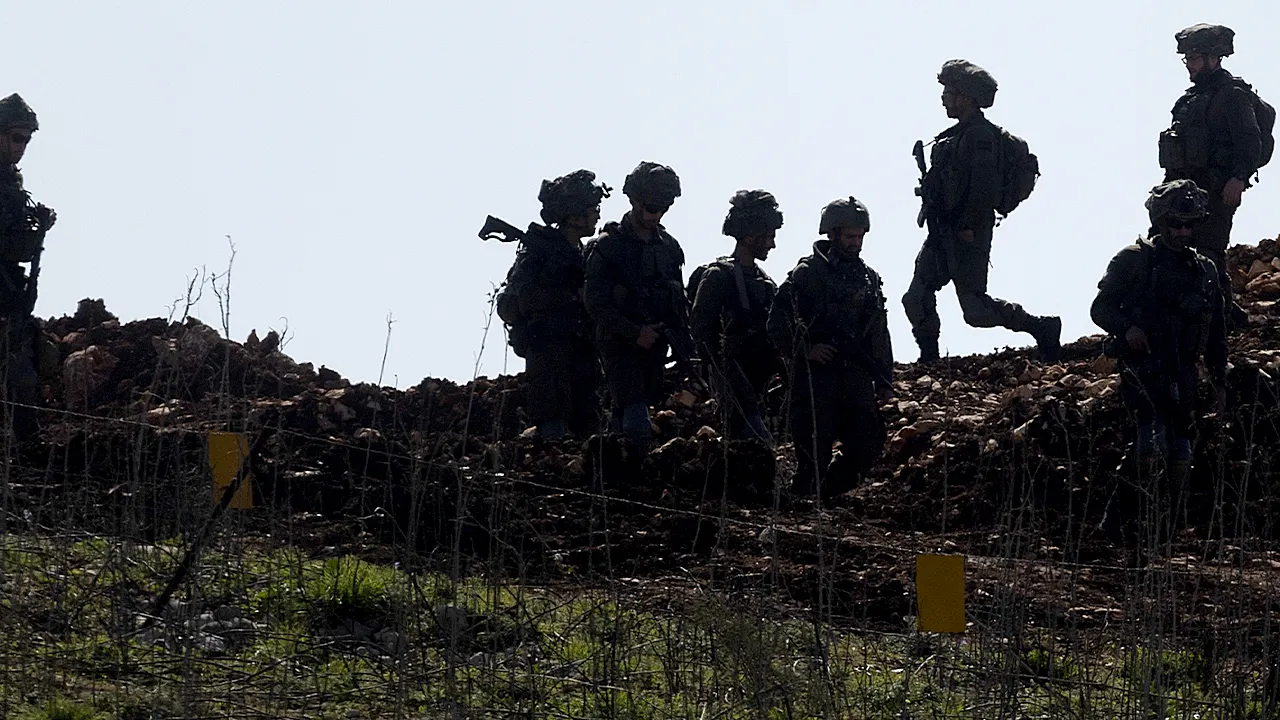
On a Sunday when many Israelis expected quiet, the hum of military vehicles and the distant roar of aircraft replaced the usual stillness. The Israeli military launched a large-scale domestic exercise, one of the most sweeping in recent years, designed to rehearse responses to surprise border infiltrations and ground raids across northern and central Israel. The 48-hour drill mobilized multiple divisions and air assets, sending a clear signal that the home front remains on high alert. But behind the practical logistics, a deeper anxiety is stirring. Israeli security experts see parallels with the lead-up to the 1973 Yom Kippur War, when Egypt and Syria used military exercises as a disguise for a coordinated surprise assault. With tensions across the region already running dangerously high, some warn that today’s maneuvering could spiral into what one analyst called a “dangerous miscalculation.” The exercise is not happening in a vacuum. It is timed just ahead of Israel’s national elections on October 27, and it is meant to reassure a public still haunted by the devastating Hamas-led attacks of October 7, 2023. The Israeli Defense Forces described the drill as a critical measure to keep forces ready, defend border communities, and integrate airpower into ground defense. For citizens, it is both a comforting show of readiness and a grim reminder that the threat of infiltration has not disappeared.
The scale and precision of the exercise reflect lessons hard-learned from recent tragedy. According to the IDF, the maneuvers involve the Northern Command’s 210th Division, the West Bank Division, and the Central Command’s 98th and 96th divisions, working alongside the Israeli Air Force. The scenarios are not hypothetical. Troops are practicing for surprise attacks, infiltrations by both air and land, and the kind of fast-moving ground raids that could target villages and towns near the border. This is not abstract training. It is an attempt to close the gaps that proved so catastrophic on October 7, when Hamas fighters breached fences, overwhelmed outposts, and attacked civilian communities with horrifying speed. The IDF has openly said the drill incorporates lessons from that day, and the choice of scenarios reflects a deep institutional effort to ensure that no community is ever left exposed again. The timing, too, is critical. With elections less than two weeks away, leaders want to project strength and stability. But there is more than politics at play. The exercise is a message to hostile actors across the region that Israel’s defense establishment is watching, ready, and willing to respond. The inclusion of the West Bank Division underscores that the threat landscape is broad, stretching from Lebanon and Syria in the north to Jordan’s border and the Palestinian territories. For ordinary Israelis, the familiar sight of troop convoys and military checkpoints is a reminder that vigilance has become part of daily life.
National security analyst Dr. Ehud Eilam, a former researcher with the Israeli Ministry of Defense, offered deeper insight into the thinking behind the exercise. He told Fox News Digital that the drill is largely focused on “non-state actors with or without Iranian support.” These are groups operating in Syria, Lebanon, and Jordan that might attempt to infiltrate into Israeli territory or launch ground raids. Some of these groups are backed by Tehran; others are independent or locally motivated. The danger is not just a single organized attack but a chaotic array of threats from multiple fronts. Eilam described the exercise as “massive, the biggest one in recent years,” emphasizing that its primary purpose is to protect the borders and ensure that election day on October 27 goes smoothly. “It’s also a message to Iran and others: don’t try to provoke us during election day, so nothing will be disrupted.” This is mutual deterrence in action. A few days earlier, Iran conducted its own large-scale military exercise, firing roughly 30 ballistic missiles across two distinct weapon classes. That live-fire display was meant to showcase Iran’s strike capabilities, and it sent a shiver through the region, renewing concerns about commercial shipping in the Strait of Hormuz and prompting the Israeli military to raise its alert level. Eilam noted that from Israel’s perspective, the Iranian exercise was intimidating because it involved actual missile launches and appeared to simulate preparations for a war with Israel. Sunday’s drill, by contrast, is aimed at Iran’s proxies and allies along Israel’s borders. It is a quieter, more defensive kind of deterrence, but no less important.
The backdrop to these maneuvers is a volatile cat-and-mouse game between Israel and Iran, punctuated by shows of force and counter-demonstrations. Earlier in October, Israeli fighter jets and aerial refueling tankers flew roughly 800 miles across Syrian and Iraqi airspace to reach Iran’s border. That mission was a dramatic, non-kinetic display of Israel’s reach and capability. Washington was notified in advance, and the flight was seen as a message that Israel can strike deep into Iranian territory if necessary, even after a broader strike package was postponed. The mission was also a signal to Tehran that Israel’s air force can operate far from home, with precision and resolve. Days later, Iran conducted its own ballistic missile exercise, effectively replying that it too can launch powerful weapons. This back-and-forth has heightened the sense that the region is perched on a knife’s edge. Israeli Chief of Staff Lt. Gen. Eyal Zamir visited the IDF’s Central Command on Wednesday and delivered an unmistakable warning: “Given the numerous warnings across all fronts and the sensitivity of the current period, the potential for escalation has increased.” He announced that troop deployments had been reinforced across all sectors, including moving the 98th Division into the area to strengthen security and stability. Zamir’s language was careful but grave. He spoke of operational control, ground readiness, and the need to be prepared for every possibility. For those listening, the message was clear: Israel is bracing for the possibility that local skirmishes could ignite a wider conflict.
The risk, however, is that these very preparations can become the spark they are meant to prevent. Eilam pointed to the classic example of the 1973 Yom Kippur War, when Egypt and Syria conducted major exercises just before the war, and those exercises turned into the actual attack. Israeli intelligence at the time largely dismissed the massive troop movements as routine, leading to one of the most painful surprises in the country’s history. The memory of that failure still haunts Israeli military planning. Today, Israel and Iran are watching each other with intense suspicion. Every movement, every deployment, every signal can be read in multiple ways. Eilam warned that both sides suspect the other might strike first, and that creates the possibility of “miscalculation — that each side suspects the other and strikes first by mistake.” This is the paradox of deterrence: the more ready you are, the more threatening you appear; the more threatening you appear, the more likely the other side is to preempt. During the Cold War, every major NATO or Soviet exercise carried the same danger. With so many troops in the field, it was impossible to know for certain whether an exercise was just practice or the opening move of an invasion. The situation between Israel and Iran today is not exactly the same, but the psychological dynamics are familiar. Both sides are signaling strength, but neither seems eager to start a full-scale war. As Eilam put it, “Right now, both sides are signaling: ‘We are ready, don’t mess with us, but we don’t want to start a war right now.'”
In the end, the ultimate question is whether Israel will launch a targeted strike against Iran, and that decision may not be entirely in Israel’s hands. Eilam noted that an Israeli attack on Iran would likely depend on U.S. authorization, or at least on Washington’s tacit approval. The relationship between the two allies is deep but complicated, and any major strike would have enormous regional consequences. For now, the focus is on sending messages, not starting wars. Israel’s drill is a reminder of its military strength and its determination to protect its citizens, especially during a politically sensitive time. Iran’s live-fire exercise is a counter-reminder that it too can respond with force. Between these two displays of readiness lies a fragile space where accidents, misread signals, or overreactions could still trigger a conflict no one truly wants. For ordinary people, the sound of jets overhead and the sight of soldiers on the roads are not abstract news items. They are the texture of life in a region where peace remains elusive. Sunday’s exercise is about preparing for the worst while hoping for the best. It is a sobering reality that the lessons of 1973 still feel fresh, and that even the most carefully planned drill can cast a long shadow over the future. The hope, expressed by analysts and officials alike, is that this time, readiness will prevent rather than provoke. But the uncertainty remains, and with elections approaching, no one is willing to take that chance.